 PalV's Kasti

On this page
- Why are the first four days after death so important?
- Which prayers do the priests perform, day by day?
- What can family members pray at home during these days?
- What prayers follow after the fourth day?
- Can these prayers be said for a Parsi who is cremated?
- About the 2024 workshop that first appeared on this page
- Frequently asked questions
For the first three days and nights after a Zoroastrian dies, the prayers said for the soul are addressed to Sraosha (Srosh Yazad), its protector during that time. Priests recite the Srosh Baj in every geh, the Yasna in the Agiary, and the Sarosh no Kardo (also called Sarosh nu Patru) each evening in the Aiwisruthrem geh. The Uthamna follows on the third day. Late in the third night, four Baj ceremonies are performed, and on the morning of the fourth day the Afringan of Dahm Yazad and the Chaharum rites mark the soul's crossing to the next world. Family members can pray alongside, at home or at the bungli.
The order below follows two scholars of the rites: Jivanji Jamshedji Modi, in The Religious Ceremonies and Customs of the Parsees (1922), and Ervad Dr. Ramiyar Karanjia, in his published notes on death rituals.
સરોશ રોજ
Sarosh Roj, Tir Mah · 1396 Y.Z.
Why are the first four days after death so important?
The soul stays in this world for three days and three nights after death, in the care of Sraosha. That is why the ceremonies of those days are all performed with the Khshnuman of Sraosha, and the Pahlavi text Shayast ne Shayast asks for the ceremonial of Srosh in every geh of the three days.
At dawn after the third night, the soul goes on to the Chinvat bridge. There Mihr Dawar, helped by Rashnu and Ashtad, judges it, weighing the deeds of the life just ended. Souls cross to the other world on the fourth day after death, and this dawn is called Chaharum ni bamdad.
The prayers do not buy the soul a better place. Karanjia states plainly that the rites said on behalf of the departed neither add merit nor change where the soul goes, because only the deeds done in life decide that; Noshir Dadrawala made the same point in Parsi Times on 18 July 2020. In Karanjia's account, the first three days of rites help the soul reach its station by the fourth dawn, and the later rites comfort it from there.
Practice varies between families and Agiaries; your family priest's guidance comes first.
Which prayers do the priests perform, day by day?
Karanjia lists the rites in this order. Modi's 1922 list of the "Sarosh ceremonies" covers the same core, and his notes on what is essential are added where they help.
| When | Rite | Where, and by whom |
|---|---|---|
| Soon after death | Sachkar (the last bath and dressing), then Sagdid at each geh | At the bungli; Sachkar by the Doongerwadi staff or relatives |
| Until the funeral | Bhoi agal nu bhantar: Khordeh Avesta prayers beside the fire | A priest near the body, or a lay Zoroastrian if no priest is free |
| Funeral day, daytime | Geh Sarna (the Ahunavad Gatha), then Paydast | Two priests holding a paiwand |
| Every geh, until the fourth day | Baj-dharna of Sarosh | Agiary or Atash Behram |
| Nights 1 to 3, Aiwisruthrem geh | Sarosh no Kardo / Sarosh nu Patru | Two priests, not where the body is lying |
| Day 3, afternoon | First Uthamna | Priests with family and friends |
| Night 3, Ushahin geh | Night Uthamna, then the four Bajs | Priests; the Bajs in an Agiary |
| Morning of day 4 | Afringan of Dahm Yazad; Chaharum | Priests |
Srosh Baj and Yasna in the Agiary
A Baj-dharna in honour of Sarosh is performed in every geh, in an Agiary or Atash Behram, from death until the Chaharum. Three Yasnas with the Khshnuman of Srosh are recited in the morning hours; Modi treats them as essential, while the Vendidad at night is optional. For a child under seven, one Yasna is enough.
Sarosh no Kardo each evening
On the first, second and third evenings, at the start of the Aiwisruthrem geh, two priests sit facing each other for an Afringan in honour of Sraosha. The senior priest (the Zoti) opens with the Pazand Dibache, in which the deceased is named. Modi writes that the two priests then recite together the seventh section (Kardeh) of the Srosh Yasht, and he calls this rite indispensable. Karanjia's list gives the Sarosh Yasht Vadi, the Afringan of Sarosh with a special Kardeh, and then the Patet Ravan-ni. How the name is said is covered in our guide to the Deceased's name in prayers.
The Kardo cannot be done in the bungli while the body is lying there, so when the funeral is on the second day, the first evening's Patru is not performed. Ervad Marzban Hathiram gave the same rule in a reply on Frashogard dated 23 February 2010: the Kardo is not said in the place where the body has been kept.
Uthamna on the third day
There are two Uthamnas: one on the afternoon of the third day, when friends and relatives gather, and one in the last part of the Ushahin geh before the fourth dawn, usually for close family. Modi notes that some families do both but that only one is required, the one at the end of the third night above all. At both, the priests recite the Sarosh Baj, the geh, the Srosh Yasht Hadokht and the Patet Ravan-ni, among other prayers. The full order is in our Uthamna ceremony guide.
The four Bajs at the end of the third night
Late in the third night, four Baj ceremonies are performed one after another, in this order: Rashnu and Ashtad, Ram (Vayu, "Wāy ī Weh" in Karanjia's spelling), Ardafravash (the fravashis of all the departed), and Srosh. With the Baj of Ardafravash a set of white clothes, the Siyav, is consecrated. These clothes are usually given to the priest or to the poor.
The morning of the fourth day
The Afringan of Dahm Yazad is recited at dawn on the fourth day, and only in the four-day rites for a newly departed person. The Chaharum ceremonies follow. Karanjia adds a Machi, offered in the Havan geh of the fourth day "if possible".
Practice varies between families and Agiaries; your family priest's guidance comes first.
What can family members pray at home during these days?
Kersey H. Antia's guide for families, first printed in the FEZANA Journal in Winter 2005, suggests prayers for relatives from the Sachkar until the Chaharum at dawn on the fourth day. They add to the priests' ceremonies and do not replace them. His list goes by geh:
- Every geh: Kusti, Sarosh Baj and the prayer of that geh.
- Havan, Rapithwin and Uziran: Khorshed and Meher Nyaesh, said twice if time allows, once for yourself and once for the departed soul. Add the Patet Ravan-ni in Havan and Rapithwin.
- Aiwisruthrem: Sarosh Yasht Vadi, Atash Nyaesh, Patet Ravan-ni.
- Ushahin: Sarosh Yasht Hadokht, Atash Nyaesh, Patet Ravan-ni.
The Patet Ravan-ni is said by someone else on the deceased's behalf, unlike the Patet Pashemani, which a person recites for his own wrongs. If the full list is too much, Antia says, reciting Yatha Ahu Vairyo continuously is enough.
Karanjia's advice for mourners at the bungli and the Uthamna is close to this. Do your own daily prayers first, then repeat the Khorshed and Meher Nyaesh for the deceased, leaving out Ahmai Raeshcha and Kerfeh Mozd and shortening Jasa me Avanghe Mazda. A short Yasht and the Patet Ravan-ni can follow. Near the body any prayer may be recited except the Avan Ardvisur Nyaesh and the Satum no Kardo.
Both writers hold the Satum back in these days, with a small difference in wording. Antia rules it out "during the first four days" after a death. Karanjia says not until the dawn of the fourth day. For Dastur Dhalla's personal prayer in English, see our page on the Zoroastrian prayer for the dead.
One more household custom: meat is not eaten for the first three days and is allowed again from the fourth.
Practice varies between families and Agiaries; your family priest's guidance comes first.
What prayers follow after the fourth day?
The later occasions for Afringan and Baj in honour of the dead are the Chaharum (fourth day), Dehum (tenth day), Siroz (thirtieth day) and Salroz (first anniversary). Antia's guide adds the monthly roj, and suggests the Satum and the Farvardin Yasht for relatives to recite on them. For the wider sequence of funeral customs, see our guide to Parsi death rituals.
Can these prayers be said for a Parsi who is cremated?
This has been argued over within the community for years. In a report updated on 11 February 2014, Open magazine quoted Parsis who favour cremation as complaining that the high priests had barred priests from saying funeral prayers for the cremated. The same report described the prayer hall planned at the Worli crematorium in response, and quoted a high priest, Dastur Mirza, angrily opposing it.
Writing in Parsi Times on 18 July 2020, Noshir Dadrawala argued that no scripture links the soul's progress to the method of disposal. He also reported Dasturji Dr. Firoze Kotwal's suggestion that two priests perform the Geh Sarna facing the Dokhma for Covid victims who had to be cremated, and the uproar that followed. For what priests or the Bombay Parsi Punchayet allow today, ask your family priest or Agiary directly.
About the 2024 workshop that first appeared on this page
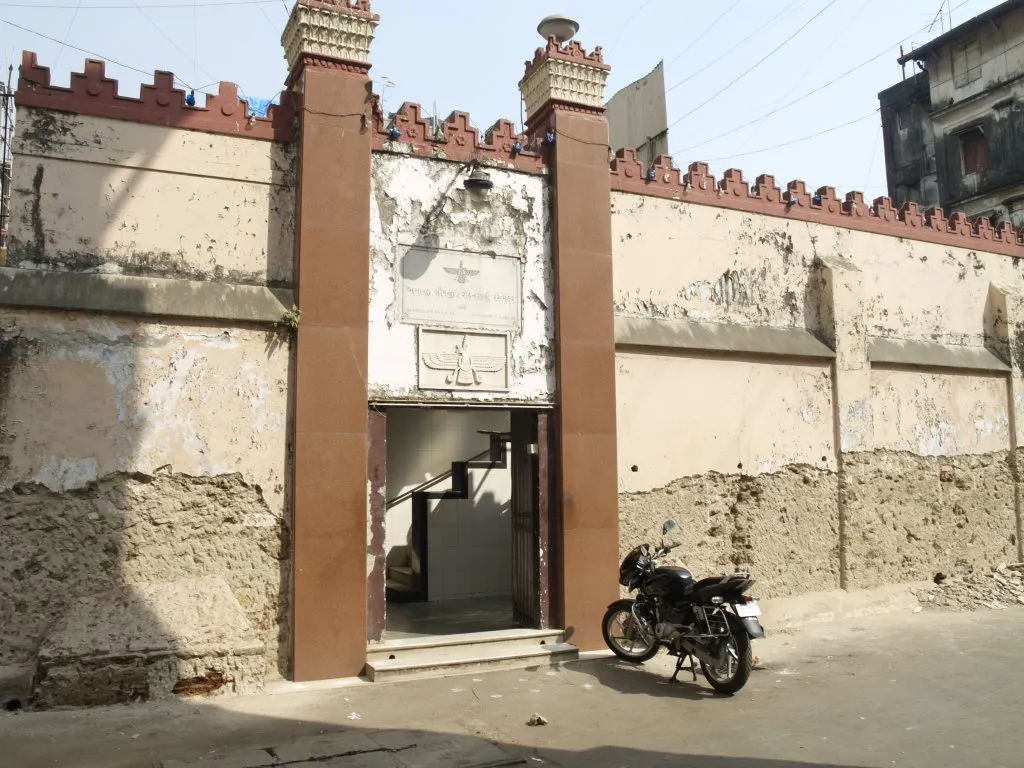
This address first carried a notice, dated 4 August 2024, for a religious workshop titled "Dokhmenishini and the Importance of First 4 days' After death Prayers". It was scheduled for Sunday, 22 September 2024, at Sir Navroji Vakil Community Hall in the Parsi Sanatorium compound, Navrangpura, Ahmedabad, with Ervad Marzban Hathiram leading the discussion. The guide above has replaced that notice.
Frequently asked questions
What is Sarosh nu Patru?
Sarosh nu Patru, or Sarosh no Kardo, is an Afringan in honour of Sraosha, performed by two priests at the start of the Aiwisruthrem geh on the first three evenings after a death. The senior priest names the deceased in the Pazand Dibache. Modi records that both then recite the seventh Kardeh of the Srosh Yasht.
Why is the Satum no Kardo not recited in the first three days?
Both Karanjia and Antia say it should be held back until the Chaharum. Antia gives the reason that the soul is still near the earth in those days. Karanjia places the limit at the dawn of the fourth day, while Antia's wording is the first four days, so check the exact timing with your priest.
What is the Chaharum?
Chaharum means the fourth day. At its dawn the soul crosses the Chinvat bridge and faces judgment. The Afringan of Dahm Yazad is recited that morning, and the Chaharum is the first of the later remembrance days, followed by the tenth day, the thirtieth day and the annual Salroz.
Can a lay person pray near the body if no priest is available?
Yes. If no priest is free for the Bhoi agal nu bhantar beside the body, any Behdin may sit and pray there instead. Any prayer may be recited except the Avan Ardvisur Nyaesh and the Satum no Kardo. Your Agiary or Doongerwadi staff can tell you what is arranged locally.
Why is meat avoided for three days after a death?
Parsi families do not eat meat for the first three days after a death and may eat it again from the fourth day, as both J.J. Modi and Mary Boyce, in Encyclopaedia Iranica, record. Neither gives a reason, so ask your family priest about it.