 PalV's Kasti
On this page
Kolmi fry is fried prawns. Kolmi is the word Parsis use for prawns or shrimp, so the name simply means a prawn fry. The one published recipe under that exact name we could find was printed by Parsi Times in its Chomp & Cheers food column in December 2017. In it, the prawns sit for half an hour in a marinade of ginger and garlic paste, lemon juice, degi mirch, salt, three flours and egg, then get wrapped in onion rings and deep-fried until crisp and brown. None of the Parsi cookbooks we checked lists a dish called kolmi fry, so we don't present it as an old community classic. This page explains the word, gives the Parsi Times method, and points you to the prawn dishes that the cookbooks do record.
અદીબેહેસત રોજ
Ardibehesht Roj, Tir Mah · 1396 Y.Z.
What does "kolmi" mean in Parsi cooking?
Kolmi means prawns. Chef Sanjeev Kapoor, introducing his kolmi no patio in How to Cook Indian (2011), describes shrimp as "kolmi, as the Parsi call them". Kurush Dalal uses the word the same way on his food blog, where his family's malai ma kolmi is glossed as prawns cooked in clotted cream.
You'll also meet "jhinga" in Parsi recipe titles. Niloufer Mavalvala's The Art of Parsi Cooking (2016) calls her spicy prawns Tumtumta Jhinga. In her introduction she writes that the dish is specially liked by prawn-lovers who enjoy pure seafood, which Parsis call "naki maal".
Is kolmi fry a traditional Parsi dish?
We can't say that it is. We looked for kolmi fry in the work of named Parsi cookbook authors and found no recipe or description under that name. The only published recipe we could open is the Parsi Times one, and it carries a "PT Reporter" credit with no chef, restaurant or family named. So the honest description is this: a deep-fried prawn dish that appeared in a Parsi community weekly in 2017.
Prawns themselves are well recorded in Parsi kitchens, though. Kapoor's book calls kolmi no patio, shrimp in a strong, tangy, garlicky sauce, a popular Parsi dish usually served with steamed rice and a plain lentil dish, and our page on Kolmi no patio covers that curry properly. Dalal writes that his recipe for malai ma kolmi came from the kitchen of his maternal great-great-grandmother, Soonamai, in Tadgam, a small village north of Nargol in south Gujarat, and that the dish had almost disappeared from Parsi tables. You can read more in our post on Malai ma kolmi. Mavalvala, for her part, describes Tumtumta Jhinga as an "ancient family treasure", and ckbk files the recipe under starters.
How do you make kolmi fry?
This method follows the Kolmi Fry recipe published in Parsi Times (Chomp & Cheers, December 2017), rewritten in our words. The column gives weights for 80 g of prawns and doesn't say how many it serves. Scale everything up in the same proportion for a bigger batch.
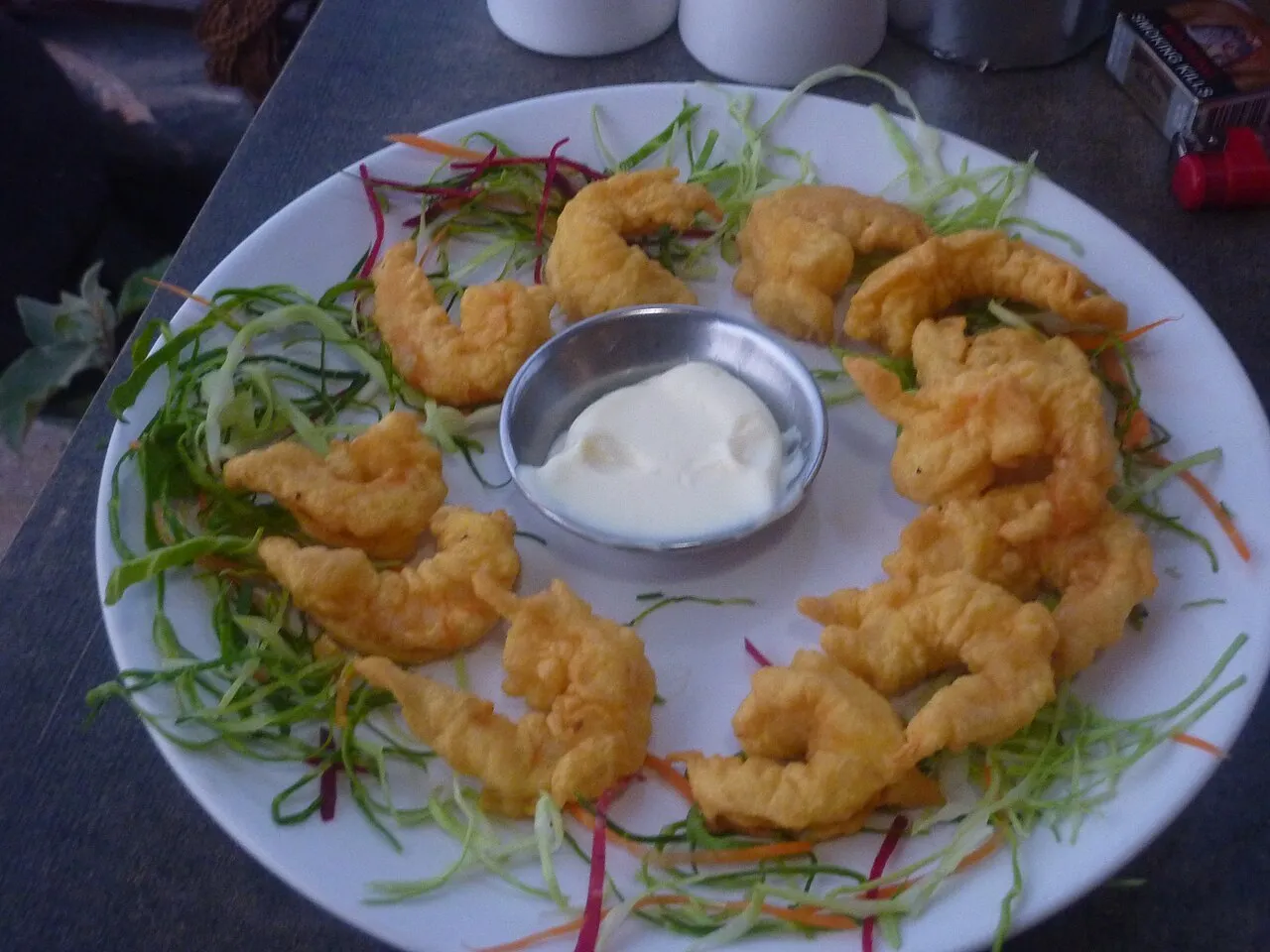
Ingredients (as printed for 80 g prawns)
- 80 g prawns
- 5 g ginger paste (the column prints "5mgs", which reads as a slip for grams)
- 5 g garlic paste
- 10 g degi mirch
- 8 ml lemon juice
- 5 g salt
- 10 g cornflour, 7 g refined flour (maida) and 6 g rice flour
- Half an egg
- 100 g ring onions
- Refined oil for deep-frying
Method
- Put the prawns in a bowl with the ginger and garlic pastes, lemon juice, degi mirch and salt. Add the cornflour, maida, rice flour and egg, and coat the prawns well.
- Leave the coated prawns to rest for 30 minutes.
- Give them a stir, wrap each prawn in onion rings, and deep-fry until crisp and brown.
That is the whole of the printed method. Parsi Times gives no oil temperature, frying time or serving suggestion, and we haven't added any of our own.
Where do fried prawns turn up at a Parsi meal?
No source we found says where kolmi fry itself belongs at the table. Fried and stuffed prawns do appear in other written accounts of Parsi meals. Sona Bahadur, in An Invitation to Feast (excerpted in Scroll, July 2025), recalls a Sunday mutton dhansak lunch at a Parsi home in Mumbai that came with caramelised white rice and golden prawn kavabs. Shabnam Minwalla, writing about the Parsi breakfast for Outlook Traveller, lists prawns among the extravagant stuffings for a poro, the Parsi omelette.
Mavalvala's column on daar for The Cook's Cook gives the everyday pattern: lentils served with rice and patiyo, together with fried fish or cutlets. She is talking about fish, not prawns, so treat that as a picture of how a fried side fits a Parsi lunch rather than a rule about kolmi fry.
Frequently asked questions
What is kolmi?
Kolmi is the Parsi word for prawns or shrimp. Sanjeev Kapoor's How to Cook Indian explains it as shrimp, "as the Parsi call them", and Kurush Dalal's malai ma kolmi is prawns in clotted cream. Recipe titles also use jhinga, as in Niloufer Mavalvala's Tumtumta Jhinga, a spicy prawn starter.
What goes into the Parsi Times kolmi fry marinade?
The 2017 Parsi Times recipe coats 80 g of prawns in ginger paste, garlic paste, lemon juice, degi mirch and salt, bound with cornflour, refined flour, rice flour and half an egg. The prawns rest for 30 minutes before being wrapped in onion rings and deep-fried until crisp and brown.
Is kolmi fry the same as kolmi no patio?
No. In the Parsi Times recipe, kolmi fry is prawns coated in a flour-and-egg marinade, wrapped in onion rings and deep-fried. Kolmi no patio is a prawn curry: Sanjeev Kapoor describes prawns cooked in a strong, tangy, garlic-flavoured sauce, usually served with steamed rice and a plain lentil dish. Both take their name from kolmi, the word for prawns.
How do Parsis eat fried prawns?
Two published accounts put prawns on a Parsi table. Sona Bahadur describes golden prawn kavabs served with a Sunday mutton dhansak lunch in Mumbai. Shabnam Minwalla mentions prawns as a stuffing for the Parsi poro omelette. We found no source describing how kolmi fry specifically is served, so we don't prescribe a pairing.


