PalV's Kasti

On this page
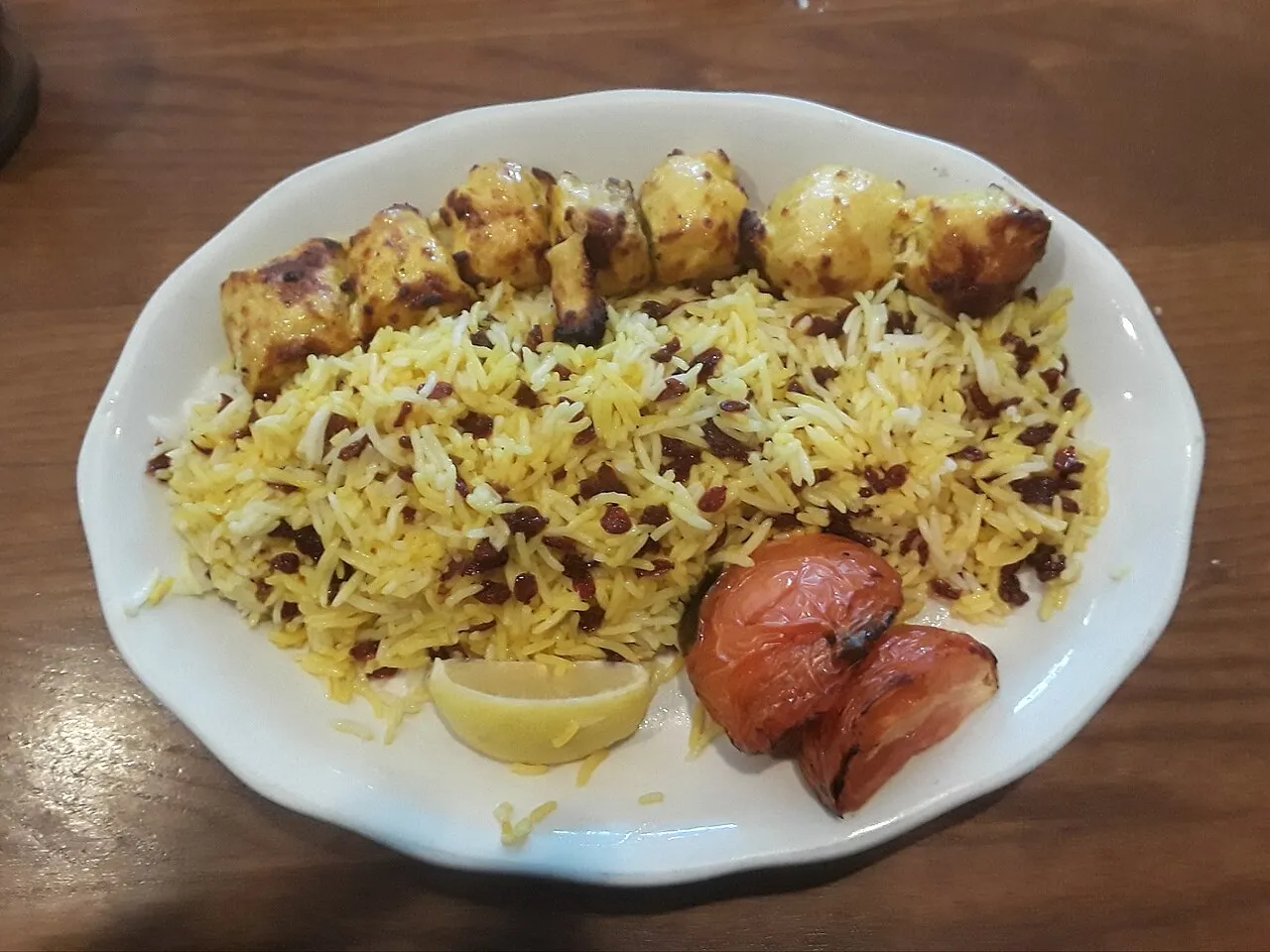
Zereshk palau is Iranian rice layered with barberries. Zereshk is the Persian word for the barberry, a small red fruit with a sharp sour taste, and palau (also written polow, polo or pulao) is the rice. In the Iranian home recipe Nadia Sajadi wrote for SBS Food, the rice is soaked, parboiled and steamed, the berries are sautéed in butter with sugar and saffron, and chicken is served around the rice. Mumbai knows the dish as berry pulao from the Irani restaurant Britannia & Co., where a gravy was added for Indian diners. Parsi cookbook author Niloufer Mavalvala cooks a milder family version without garam masala. Below we look at the fruit, the Iranian method and where the Irani and Parsi versions part ways.
અદીબેહેસત રોજ
Ardibehesht Roj, Tir Mah · 1396 Y.Z.
What is zereshk, the barberry?
Encyclopaedia Iranica's entry on the barberry gives it as zerešk, from the genus Berberis, and says that over most of Iran the shrub and its berries share that one name. The species grow in the country's northern, eastern and south-eastern highlands. Iranica points to Berberis integerrima as the main source of the berries used in cooking, though in northern Iran the word usually means Berberis vulgaris. The BBC, in a 2023 feature, says the berry is found particularly in South Khorasan, in Iran's east.
It is the dried berry that reaches the kitchen. Iranica names three uses for it: soups, polows and stuffing for chicken.
Why are barberries hard to find outside Iran?
Najmieh Batmanglij, the Iranian cookbook author, offers one reason in Food of Life. Europeans once pickled barberries and turned them into syrups and jams, she writes, but once the bush was found to harbour a wheat blight, planting it was prohibited in the West. There it is now grown mainly as an ornamental hedge.
What does zereshk polo taste like?
Sour, first of all. Batmanglij describes the fruit as high in malic and citric acids and usually too tart to eat raw. That is why both recipes we follow in this post, Sajadi's and Mavalvala's, cook the berries with sugar before they go into the rice. SBS Food says the dish is known as "celebration rice" or "jewelled rice" and is often made for weddings, and that the rice is the centrepiece while the chicken is the accompaniment.
How do Iranians cook zereshk polow?
Iranica reduces the dish to one line: washed barberries are scattered over strained boiled rice, more rice is added on top, and the pot simmers. Sajadi's SBS recipe gives the fuller method, which we outline here in our own words without quantities.
- Soak the rice in salted water for one to two hours.
- Boil it for 10 to 15 minutes, until al dente, and drain.
- Lay thin potato slices in the oiled base of the pot. They protect the rice and turn into a crisp crust.
- Pile the rice back in. Once it is steaming, lower the heat and wrap the lid in a tea towel so condensation doesn't drip onto the grains. It steams for 45 to 60 minutes.
- Sauté the barberries for a few minutes in butter, then add sugar and saffron water.
- On a platter, layer rice, barberries, slivered almonds and pistachios into a cone. Arrange the chicken around it and spoon rice mixed with saffron and melted butter over the top.
The chicken in Sajadi's recipe is baked on its own, with turmeric, garlic and lemon juice, and only meets the rice on the platter.
Where does the tahdig come in?
Tahdig is Persian for "bottom of the pot": the crisp layer of rice at the base. The tips published with Mavalvala's BBC recipe say the Persian berry pollo is traditionally made as a rice cake. The rice at the bottom of a buttered pot caramelises, and the pot is turned over onto a plate so the crust comes out on top. Sajadi's potato slices form a crust in the same spot.
How is berry pulao in Mumbai's Irani cafes different?
Most Mumbaikars know the Irani version as the berry pulao of Britannia & Co. The Tribune reported in January 2023 that Rashid Kohinoor, a businessman from Yazd, opened the restaurant in 1923 and that it first served continental food. Afshin Kohinoor, Boman Kohinoor's son, told the paper that his mother, Bacha Kohinoor, introduced the Iranian berry pulao. In Iran, he said, zereshk polo is served dry with meat, so she created a gravy because Indian diners would not want rice without one. The Tribune adds that the barberries are imported from Tehran.
Accounts of her differ in detail. The Better India spells her name Bachan and also calls her Boman's wife. The BBC dates the dish to August 1982, the same year Afshin gave Deccan Herald for the start of Britannia's Iranian menu, but it calls Bachan the wife of Rashid Kohinoor and says she added leftover mutton and garam masala. We cover the cafe dish in full in our post on Berry pulao.
How do Parsi home cooks make it?
Niloufer Mavalvala grew up in Karachi before moving to Canada, and her book The World of Parsi Cooking includes her mother Shireen's version, which she says is also known as shirini palao and was made for special occasions. According to the BBC, her palau is milder than the Mumbai style, leaving out garam masala, and she cooks the rice fully in chicken stock instead of parboiling it. Her full method is on our page for Shirini zereshk palau.
We found no reliable source linking zereshk polow to the food of Iran's Zoroastrians in Yazd or Kerman, so we don't call it a Zoroastrian festival dish. For what those communities do cook, see our guide to Iranian Zoroastrian cuisine.
| Version | Rice | Meat | Berries |
|---|---|---|---|
| Iranian (Sajadi, SBS Food) | Soaked, parboiled, steamed over a potato crust | Chicken baked separately, set around the rice | Sautéed in butter with sugar and saffron |
| Britannia & Co. (The Tribune, BBC) | Served with a house gravy | Meat and eggs, or a vegetarian version (the BBC mentions mutton) | Imported from Tehran |
| Mavalvala's shirini palao (BBC) | Cooked fully in chicken stock, no parboiling | Poached chicken pressed into the rice | Simmered in a sugar syrup with orange peel and lemon juice |
Frequently asked questions
What is zereshk?
Zereshk is the Persian name for the barberry, the small red fruit of the Berberis shrub. Encyclopaedia Iranica says the berries used in cooking come especially from Berberis integerrima, a species of Iran's northern, eastern and south-eastern highlands. The dried berries go into soups, rice dishes such as polow, and stuffing for chicken.
Is zereshk palau the same as zereshk polo?
Yes. They are different English spellings of one dish name. The BBC glosses palau as pulao or pilaf, seasoned rice cooked in stock, and calls pollo a variation of the spelling. Encyclopaedia Iranica writes zerešk-polow, Mumbai's Britannia & Co. sells berry pulao, and Niloufer Mavalvala's cookbook calls her family's version chicken palao with barberries, or shirini palao.
How is Britannia's berry pulao different from Iranian zereshk polo?
The main change is the gravy. Afshin Kohinoor told The Tribune in 2023 that zereshk polo is served dry with meat in Iran, and that his mother added a gravy at Britannia because Indian diners expect one with rice. The BBC says the Mumbai-style dish also brought in Indian pantry staples such as garam masala.
What can I use instead of barberries?
Niloufer Mavalvala's recipe, published by the BBC, lists goji berries, dried tart cherries or cranberries as substitutes for zereshk. In her method the berries are simmered for a minute in a sugar syrup with orange peel, lemon juice and saffron, which the BBC says plumps them up. The BBC says she created the recipe with her mother, Shireen.
What is tahdig?
Tahdig is Persian for "bottom of the pot" and means the crisp layer of rice that forms at the base of the pan. The tips with Mavalvala's BBC recipe say the Persian berry pollo is traditionally cooked as a rice cake and turned out onto a plate. Nadia Sajadi's SBS recipe lays sliced potato underneath to form the crust.