 PalV's Kasti
On this page
Wafer per eedu is a Parsi dish of eggs cooked over potato wafers (potato chips) in one covered pan. To make it, splutter cumin and mustard seeds in ghee, add ginger-garlic paste and a pinch of turmeric, crush the wafers into the pan, pour beaten salted eggs over them, cover and cook on low heat for two to three minutes. Finish with chopped coriander and eat it with warm toast. That is the method Perzen Patel, a Parsi food writer and caterer, published in The Spinoff in January 2023, and she says it comes together in five minutes. Sanjeev Kapoor's version starts with fried onion and green chillies and sets whole eggs on top instead.
અદીબેહેસત રોજ
Ardibehesht Roj, Tir Mah · 1396 Y.Z.
What is wafer per eedu?
The name says it plainly. "Wafer" here means a potato wafer, the potato chip, and Perzen Patel translates eede as egg and "per eedu" as "egg on top". Food52 spells the same dish wafer par eedu and calls it "eggs over chips". Sanjeev Kapoor's cookbook How to Cook Indian (2011) lists it as wafer per eda and describes this way of cooking eggs as native to India's Parsi community.
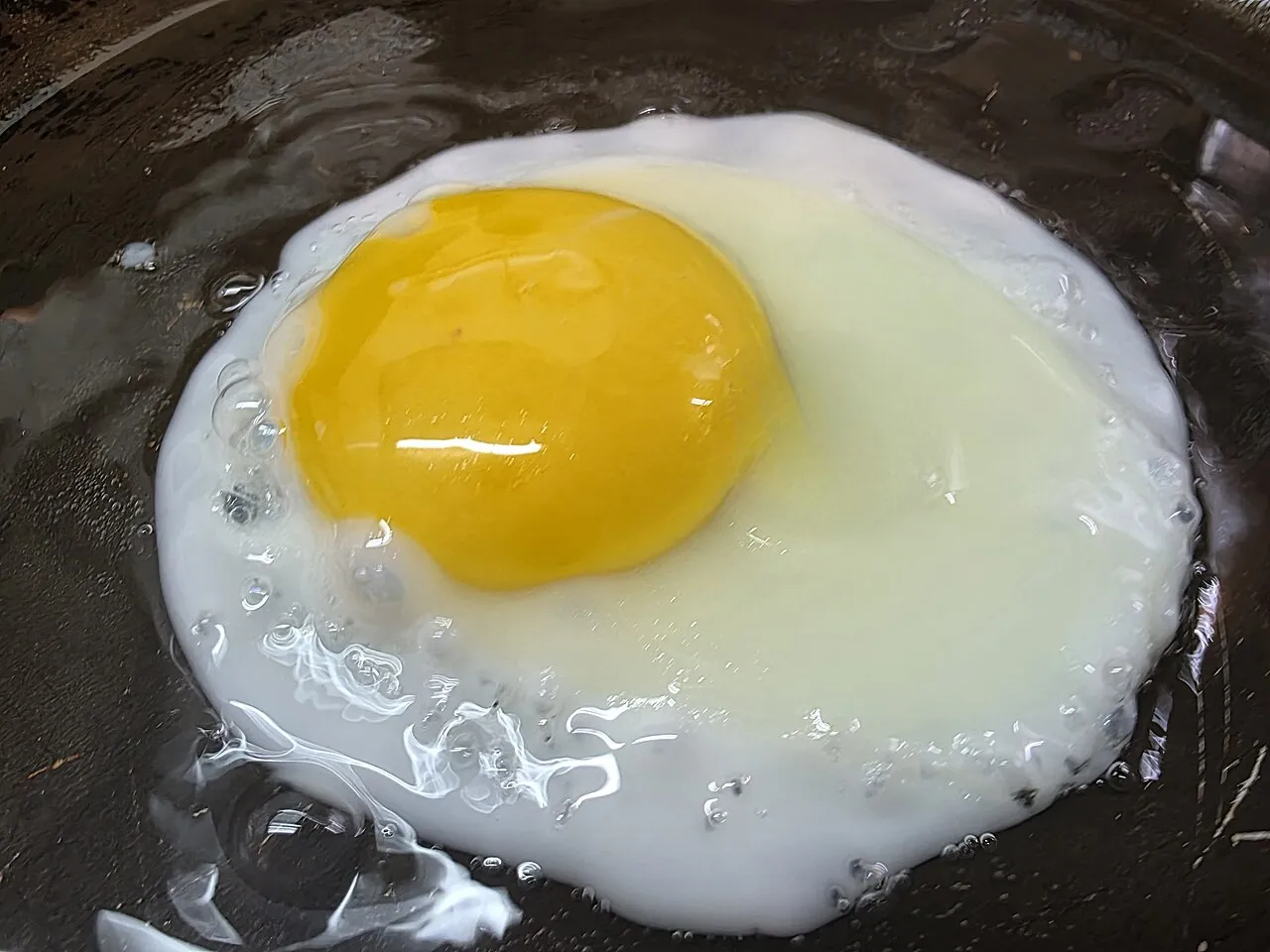
It belongs to a whole family of Parsi "per eedu" dishes, where something is cooked in a pan and eggs are set over it. Food52 calls the family kasa par eeda, "eggs cooked on something", and says the something can be anything from potato chips to okra. Niloufer Mavalvala, writing in The Cook's Cook in February 2026, notes that the egg goes on either well beaten, like a frittata, or whole and sunny side up. Wafer per eedu can be made either way, as the two recipes below show. For why eggs turn up across so much of the Parsi table, see our guide to Eggs in Parsi cuisine.
None of the sources we read says when the dish first appeared, so we don't offer a date. What Perzen does say is when she makes it: the day after a party, when half-finished bags of chips are lying around. For her, it's a way to use up leftovers.
How do you make wafer per eedu?
This method follows Perzen Patel's recipe in The Spinoff (29 January 2023), rewritten in our words. It serves two. Perzen grew up avoiding eggs, and she writes that she still can't eat scrambled eggs but does like a good wafer per eedu.
Ingredients
- 4 eggs
- 3 tbsp ghee
- 100 g potato wafers (potato chips)
- 1 tbsp ginger-garlic paste
- ½ tsp cumin seeds
- ½ tsp black mustard seeds
- ¼ tsp turmeric powder
- Salt, to taste
- A handful of chopped fresh coriander
- Warm toasted bread to serve (optional)
Method
- Heat the ghee in a small saucepan. Once it's hot, add the cumin, the mustard seeds and the ginger-garlic paste, and stir until the paste no longer smells raw. Stir in the turmeric.
- Crush the wafers between your palms straight into the pan and mix gently so every piece picks up the spiced ghee.
- In a separate bowl, whisk the eggs with salt.
- Pour the eggs over the wafers. Poke a few holes in the wafer layer so the egg runs down and holds the potato together. Turn the heat down and cover the pan.
- Cook for two to three minutes, until the egg has set.
- Uncover, scatter the coriander over, cut it into two portions and serve with warm toast.
Is there another way to make wafer per eda?
Yes. Sanjeev Kapoor's wafer per eda appears on his website (dated 15 November 2014) and in How to Cook Indian, and both versions serve four. It builds a different base. In the website version he fries cumin seeds and a sliced onion in oil until golden, then softens two chopped green chillies in it. The wafers go in with salt and two tablespoons of water and are covered for a minute or two so they soften. He then spreads the mixture flat, breaks four whole eggs over it so they cover the surface, and covers the pan with a lid holding hot water on top, cooking on low heat until the eggs set. Coriander goes on at the end.
Two things to know before you cook from that recipe. Both printings of his method cook tomato with the chillies, but the website's ingredient list leaves tomato out and gives no amount, and the cookbook page we could open shows only the start of its list. Add a tomato only if you want it. And the oil quantity differs between the two printings: the website lists 100 g of oil, while the cookbook's ingredient list starts with 1 tablespoon of vegetable oil. We'd start with the smaller amount and add more only if the pan looks dry.
Food52's description sits close to Kapoor's: the chips are tossed with sharp-tasting onions and an egg is broken over the lot. So the real choice is yours. Perzen's version sets beaten egg through crushed wafers in spiced ghee. Kapoor's sets whole eggs on a bed of onion and softened wafers.
Can you use any potato chips?
The recipes we followed ask for plain potato chips or potato wafers and nothing more specific. Perzen Patel lists "potato chips (or potato wafers)", Kapoor lists potato wafers, and Food52 says potato chips. None of them calls for a flavoured chip, and Perzen makes hers with the open bags left over from a party. Because both recipes add their own salt, taste one of your chips first and go easy on the salt in the eggs if they're well salted.
How is wafer per eedu different from salli per eedu and papeta per eedu?
All three put eggs over potato, but the potato changes. Wafer per eedu uses potato chips, the kind Perzen has left over in open bags after a party. Salli per eedu uses salli instead, and Perzen Patel describes the version she served as a caterer as spiced tomato and potato crisps on eggs. In Mumbai, the Free Press Journal reported in December 2025 that the Ripon Club serves salli par edu on Tuesdays. Papeta per eedu starts from fresh potatoes sliced and cooked slowly under a lid before the eggs go in, and our Papeta per eedu guide gives that recipe in full.
What do you eat with wafer per eedu?
Perzen Patel serves it cut in two with warm toasted bread. Kapoor says to serve it immediately, garnished with coriander. Neither recipe pairs it with anything else.
Frequently asked questions
What is wafer per eedu?
Wafer per eedu is a Parsi egg dish in which eggs are cooked over potato wafers, also known as potato chips or crisps. "Per eedu" means "egg on top" according to food writer Perzen Patel. The wafers are warmed in spiced ghee or fried onion, eggs go over them, and the covered pan cooks on low heat.
How long does wafer per eedu take to cook?
Perzen Patel says her wafer per eedu comes together in about five minutes. Once the wafers are in the spiced ghee, the beaten eggs need two to three minutes covered on low heat. Sanjeev Kapoor's website gives a cook time of 11 to 15 minutes, and his method fries the onion golden before the wafers go in.
Can you use any potato chips for wafer per eedu?
The published recipes ask for plain potato chips or potato wafers, about 100 g for four eggs, and none asks for a flavoured variety. Perzen Patel makes the dish with leftover party chips. Taste a chip before salting the eggs, because both Perzen Patel's and Sanjeev Kapoor's recipes add salt of their own to the pan.
What is salli per eedu?
Salli per eedu is a related Parsi dish that sets eggs over salli instead of over potato wafers. Perzen Patel, who served it from her catering kitchen in India, describes it as spiced tomato and potato crisps on eggs. The Free Press Journal reported in December 2025 that Mumbai's Ripon Club puts salli par edu on its Tuesday menu.
Should the eggs be beaten or left whole?
Either works. Niloufer Mavalvala notes that Parsi per eedu dishes take the egg well beaten, frittata-style, or whole and sunny side up. Perzen Patel whisks the eggs with salt and pours them over the wafers. Sanjeev Kapoor breaks four whole eggs over the wafer mixture and cooks them covered until set.


