 PalV's Kasti
On this page
Restaurants reinterpret the Irani cafe berry pulao mainly by adding gravy. In Iran the dish, zereshk polo, is saffron rice with tart barberries, served dry with meat. Britannia & Co. in Mumbai serves it with an onion and tomato masala gravy that Boman Kohinoor's wife created because, as the family tells it, Indian diners would not eat rice without gravy. Small kebabs and fried onions go on the same plate. Newer places such as SodaBottleOpenerWala serve it in vegetarian, chicken and mutton versions inside a playful Irani cafe setting. Home cooks go further: Chef Peri of Simply Bhonu uses lamb and swaps cranberries for barberries. Below we set out each version, who changed what, and her recipe if you want to cook it.
અદીબેહેસત રોજ
Ardibehesht Roj, Tir Mah · 1396 Y.Z.
What is berry pulao, and is it Iranian or Parsi?
Berry pulao is the Mumbai name for zereshk polo, a Persian rice dish. Zereshk means barberries, the small red berries that give the rice its sharp, sour bite. Afshin Kohinoor, the third generation of his family at Britannia & Co., told Deccan Herald that the original is simply rice, saffron and a leg piece of chicken with barberries.
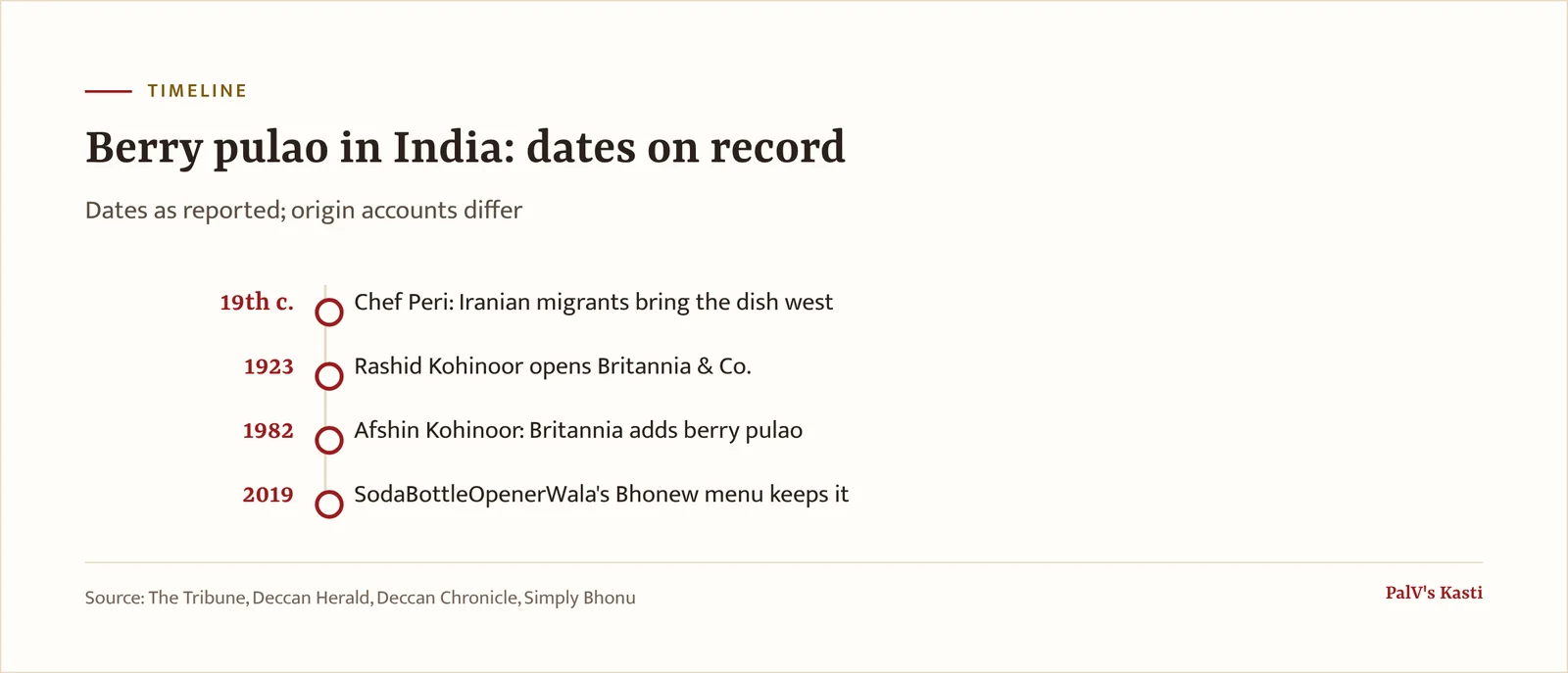

So the dish is Iranian at root. In Mumbai, though, it is eaten as part of the wider Parsi and Irani table, and Chef Peri of Simply Bhonu calls it "a popular Parsi comfort meal". The two accounts of how it reached India don't agree, and we give both:
- Chef Peri writes that Iranian immigrants brought the dish to Western India in the 19th century, and that it took on Parsi influences over time before becoming a staple of Mumbai's Irani cafes.
- Afshin Kohinoor told Deccan Herald that Britannia's Iranian and Parsi menu began only in 1982, when his mother introduced berry pulao, and said of the dish: "We pioneered it in India."
We have not found an independent record that settles it. Both accounts do point to the same place, though: Chef Peri names Britannia as the cafe leading the way with this dish.
How did Britannia & Co. change the Iranian dish?
Britannia was opened in 1923 by Rashid Kohinoor, an Irani from Yazd, and began with continental food rather than Persian dishes. The berry pulao came later, from Boman Kohinoor's wife. Her name is spelt two ways in print: The Tribune (2023) calls her Bacha Kohinoor, while The Better India (2019) calls her Bachan Kohinoor. According to The Better India, she had worked as a legal adviser in Iran for several years and added the dish to the menu after she retired and came back to Mumbai.
Her big change was the gravy. The Tribune reports that zereshk polo is served dry in Iran, and that she created a gravy because Indians would not want rice without one. Afshin Kohinoor described it to Deccan Herald as an onion and tomato masala gravy that his mother worked out by trial and error. The Better India puts it slightly differently: she added spices and more gravy to the dry Iranian dish. Either way, Britannia's plate is wetter and spicier than the dry Iranian original.
The barberries still come from Iran (The Tribune says from Tehran). The gravy recipe has stayed with the family, and both The Tribune and Deccan Herald call it secret.
What goes into Britannia's berry pulao?
Going by what Afshin Kohinoor listed for Deccan Herald, a plate of Britannia's berry pulao is built from:
- rice coloured with saffron that has been soaked in boiled water
- barberries
- marble-sized kebabs of chicken, mutton or potato, matched to the version you order
- crispy fried onions
- the masala gravy, with boneless chicken, mutton, egg, paneer or vegetables
The Better India describes the chicken version as chicken cooked with spices and tomatoes over basmati rice, topped with barberries, fried shallots, cashews and caramelised onions. The Tribune notes that a vegetarian version is served as well.
How do newer restaurants serve berry pulao?
The clearest example is SodaBottleOpenerWala, a chain built around the look and food of the Bombay Irani cafe. When its Lavelle Road branch opened in Bengaluru, Deccan Herald reported that the menu carried Berry Pulao in vegetarian, chicken and mutton versions. AD Singh of The Olive Group called it a concept restaurant and the Irani cafe "a dying legacy".
Here the reinterpretation is less about the recipe and more about the setting. The same Deccan Herald report describes Parsi dishes, Irani specialities and Bombay street food served in a quirky, contemporary room, with a jukebox in the bar area. In November 2019, Deccan Chronicle reported that a new menu called Bhonew, led by Chef Irfan Pabaney, kept Berry Pulao among the best-loved dishes and added a Mutton Berry Pulao to its combo meals with Salli Chicken. The chain then had eight outlets in four cities, so a dish tied to one Mumbai cafe had become a regular item on a multi-city menu.
How do home cooks adapt berry pulao?
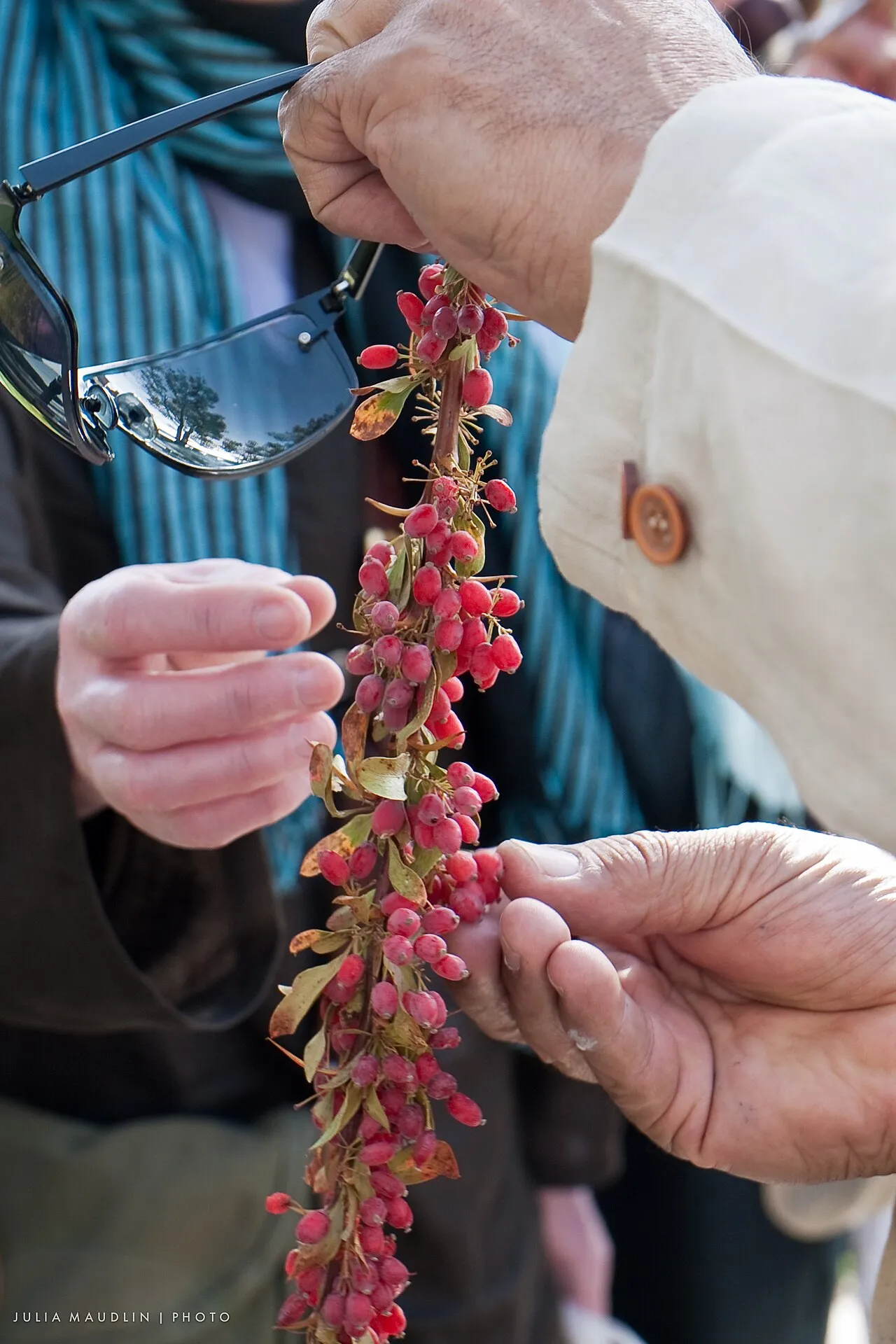
Outside India, barberries can be hard to buy. Chef Peri, whose Simply Bhonu business ships across the US, uses cranberries. She says they are a bit sweeter than barberries, which are more tart than sweet, so expect a softer, less sour pulao. If you can find barberries, she suggests them for a more authentic flavour.
She also uses lamb rather than the chicken leg Afshin Kohinoor describes in the Iranian original, and adds optional meatballs, which she calls a traditional favourite twist. Her method layers the lamb gravy under the rice and finishes the pot covered on a medium-low flame. For another slow-cooked Parsi meat dish, see our Parsi lamb stew.
How do you make lamb berry pulao at home?
This method follows Chef Peri's "Mumbai's Famous Lamb Berry Pulao" recipe for Simply Bhonu, written in our own words. It serves four.
Ingredients
- For the marinade: 1 lb (about 450 g) lamb cubes, boneless or on the bone; ½ cup yogurt; 1 tbsp ginger-garlic paste; 1 tsp each of red chilli powder, ground coriander, ground cumin and dried mint; ½ tsp ground cardamom; ½ tsp garam masala; ¼ tsp ground nutmeg; ¾ tsp salt.
- For the berries and gravy: 2 tbsp ghee or butter; about ¼ cup cranberries or barberries; 2 tbsp each of cashews and pistachios; whole spices (2 green cardamom, 1 star anise, 1 cinnamon stick); 1 cup chopped onion.
- For the rice: 2 cups basmati, rinsed and drained; 10 cups water with 1½ tbsp salt and 1 tbsp oil.
- To assemble: ½ tsp saffron; 1 tsp sugar; a little rose water; ¼ tsp ground cardamom mixed with ⅛ tsp ground nutmeg; 1 tbsp ghee or butter; meatballs if you like; chopped coriander leaves.
Method
- Mix the marinade ingredients, stir in the lamb, cover and refrigerate overnight, or for at least 4 to 6 hours.
- Heat the ghee, fry the berries and nuts briefly, then lift them out and keep aside.
- In the same fat, fry the whole spices and onion until the onion is golden brown.
- Add the lamb with all its marinade and sauté on medium-low for about 5 minutes. Cover and cook until the meat is tender, adding water only if it needs it. A pressure cooker is quicker.
- Once the lamb is cooked, boil away any extra liquid so you are left with a thick gravy.
- Bring the 10 cups of water to a boil, add the salt, oil and rice, and cook at a rolling boil for 8 minutes, stirring now and then. The grain should be cooked but still firm. Drain.
- Warm ¼ cup water with the saffron, sugar and rose water until it turns deep yellow and the sugar dissolves.
- Layer the pot: all the lamb, half the berries and nuts, then all the rice. Sprinkle over the saffron water, then the rest of the berries and nuts, the cardamom-nutmeg mix and the ghee. Add meatballs here if using.
- Cover and cook on medium-low for 15 to 25 minutes, depending on your pot and flame.
- Mix the layers just before serving, scatter coriander over the top, and serve warm with a yogurt sauce.
If you are planning a New Year table, berry pulao sits well beside the dishes in our Pateti recipes, and our guide to Parsi recipes covers the classics to cook first. For the bigger picture of the community's cooking, start with Parsi food.
Frequently asked questions
What are zereshk or barberries?
Zereshk is the Persian word for barberries, the small red berries in berry pulao. The Tribune describes them as sweet and sour, and Chef Peri says they are more tart than sweet. Afshin Kohinoor told Deccan Herald that Britannia & Co. imports its barberries from Iran, so the sour note in its pulao comes from the Iranian fruit itself.
Can you use cranberries instead of barberries?
Yes. Chef Peri's lamb berry pulao uses cranberries because they are easy to find, and she notes they are a bit sweeter than barberries. The pulao will taste less sharp than the Mumbai cafe version. If you can buy barberries, she recommends using them instead for a flavour closer to the original Persian zereshk polo.
Who introduced berry pulao at Britannia & Co.?
Boman Kohinoor's wife introduced berry pulao at Britannia & Co. in Mumbai. The Tribune names her Bacha Kohinoor and The Better India names her Bachan Kohinoor. Her son Afshin Kohinoor told Deccan Herald she added it in 1982, and that she created the masala gravy that makes Britannia's version different from Iran's dry zereshk polo.
Is berry pulao served dry or with gravy?
Both, depending on where you eat it. In Iran, according to The Tribune, zereshk polo is served dry with meat. Mumbai's Britannia & Co., the same report says, serves it with a gravy created for Indian diners. Chef Peri's home recipe sits in between: the lamb is cooked down to a thick gravy and layered under the rice.
Is there a vegetarian berry pulao?
Yes. The Tribune reported in 2023 that Britannia & Co. serves a vegetarian berry pulao, and Afshin Kohinoor has listed paneer and vegetables among its options, with potato kebabs in place of meat ones. SodaBottleOpenerWala's Bengaluru menu also carried a vegetarian version. At home, Chef Peri says a simpler vegetarian version is easy to make.


