 PalV's Kasti
On this page
To make Parsi coconut curry, you grind your own masala: dry-roasted coriander, cumin, poppy and sesame seeds, peanuts and cashews, blended with coconut, garlic, Kashmiri chillies and tomatoes. Flour goes into hot oil first, then the paste, then prawns and quartered potatoes, which simmer until the prawns are done. Lemon juice goes in at the end. This Parsi curry recipe follows Perzen Patel's "Mumma's Prawn Curry", published in her newsletter Beyond Butter Chicken in March 2022, and it serves four. The method is hers, retold in our own words. For fish, the masala is the same, but we found no measured fish version from a named Parsi cook, so we explain below what we can and can't tell you.
અદીબેહેસત રોજ
Ardibehesht Roj, Tir Mah · 1396 Y.Z.
What do you need for Parsi prawn curry?
For the masala
- Half a coconut, fresh or frozen, chopped (about 150 g). Desiccated works too: use 200 g.
- 2 tbsp coriander seeds
- 1 tsp each of cumin, poppy and white sesame seeds
- 50 g raw peanuts and 30 g chopped cashews
- 15 dried Kashmiri chillies
- 10 garlic cloves
- 400 g tinned diced tomatoes
For the prawns
- 350 g prawns, shelled and deveined, tails left on
- ½ tsp turmeric and 1 tsp salt
- ½ tsp red chilli powder (leave out for a milder curry)
For the curry
- 100 ml oil
- 2 tbsp wheat flour
- 1 tsp turmeric, 1 tsp curry powder, and 1 tsp red chilli powder if you want the heat
- 2 or 3 stalks of curry leaves (Patel says frozen will do)
- 2 large potatoes, cut in quarters
- Salt, and the juice of 1 lemon
How do you make Parsi prawn curry?
- Lay everything out on one plate before you light the stove.
- Dry-roast the seeds, peanuts and cashews in a pan until the kitchen smells of them.
- Put the roasted mix in the grinder along with the coconut, tomatoes, garlic and chillies. Add water as you go, 600 to 800 ml in all, until you have a thick paste with no grit left in it. Patel warns that a coarse masala gives a curry that isn't smooth.
- While the masala grinds, coat the prawns in the ½ tsp turmeric, the salt and the ½ tsp chilli powder, then set them aside for roughly 30 minutes.
- Heat the oil in a heavy pot. Fry the flour in it, stirring out every lump.
- Tip in the masala and keep it moving for around five minutes, until the flour has vanished into it and the paste stops catching on the sides.
- Stir in the turmeric, chilli powder and curry powder. Add water to loosen the gravy, but go easy.
- Add the prawns, potatoes and curry leaves. Simmer for 20 to 25 minutes, until the prawns are cooked.
- Taste for salt and finish with a generous squeeze of lemon.
- Serve hot with steamed rice and kachumbar, the onion salad Patel's recipe calls for.
Patel's essay on the recipe, also printed by the New Zealand site The Spinoff in June 2022, puts the texture down to three habits her family relearned. Roast the peanuts and cashews on their own. Grind the dry things before the wet ones. And fry the flour in oil before the paste goes in.
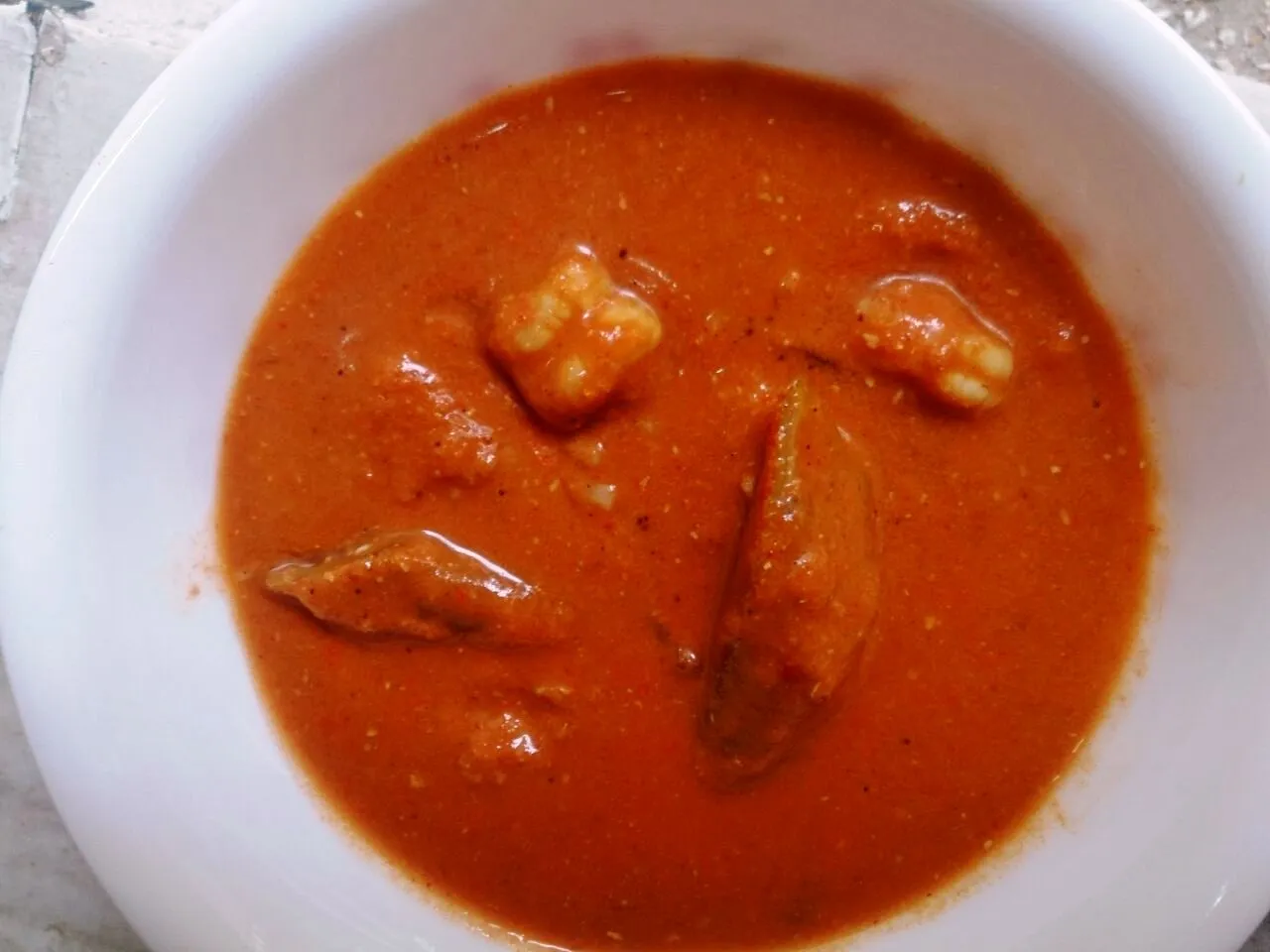
One detail to know about. The recipe card says wheat flour. In the Spinoff essay, though, Patel says her mother wasn't frying the chickpea flour, or besan, before adding the paste. We have followed the recipe as printed. Either flour gets the same treatment: into the hot oil first.
Can you make Parsi fish curry instead of prawns?
The recipe itself points both ways. A loose sheet in Patel's grandmother's diary, written in Gujarati, is headed "Machi (Fish) ni Curry for vahli (dear) Perzen", yet the version Patel published uses prawns. FEZANA's 2012 cookbook Eat, Live, Pray shows the swap working the other way in a different dish: Nergish Dinshaw's saas ni machi, a fish in white sauce, asks for a white fleshy fish such as sole or tilapia "or substitute shrimp".
We could not find a published Parsi fish curry from a named cook that gives quantities and timings, so we are not offering one. Fish cooks faster than potatoes, and we have not tested what that does to Patel's 20 to 25 minute simmer, so we won't put a number on it.
How do other Parsi cooks make prawn curry?
Food writer Meher Mirza's recipe for her mother's red prawn curry, published by Saveur in 2021, takes the same idea a long way. Poppy seeds and gram flour thicken the gravy. Tomatoes and tamarind sour it. Coconut milk and coconut cream make it richer, almonds go into the paste, and the prawn shells are simmered for about an hour into a stock that goes back into the pot. Then it rests for a couple of hours, or overnight, and is served at room temperature with basmati and lime wedges.
The same masala family also cooks meat. Anahita Dinshaw's Mutton Curry in the FEZANA book grinds garlic, ginger, dry red chillies, coriander, cumin, poppy seeds and desiccated coconut into a paste with no nuts at all. Onions are fried light brown first, and the potatoes go in partway, cooking on until the meat is tender. She serves it with white rice, kachumber, papadum and lemon wedges. For mutton in a different style altogether, our Parsi lamb stew is the one to cook next, and if you want a rice dish that isn't curry rice, try Navsari ghee khichri.
How is Parsi curry different from patio?
They are separate prawn dishes. Patio, or paatio, is a thick tomato and onion gravy with a sweet-sour taste, according to both Al Arabiya English and The Telegraph's My Kolkata, and both say it is eaten with dal and rice. The Telegraph piece credits sugarcane for the sweetness and brown vinegar for the sour note. Neither curry recipe on this page uses sugar or jaggery. Their body comes from coconut and ground seeds or nuts.
Prawn curry is one of many dishes in our guide to Parsi recipes, and our wider look at Parsi food covers the rest of the table.
Frequently asked questions
Can you use desiccated coconut in Parsi curry?
Yes. Perzen Patel's family recipe asks for half a fresh or frozen coconut, about 150 g, or 200 g of desiccated coconut instead. Anahita Dinshaw's Mutton Curry in FEZANA's cookbook uses desiccated coconut in its paste. Either way, the coconut is ground with the roasted spices, garlic, chillies and tomatoes into a fine paste.
Should Parsi curry use wheat flour or besan?
Perzen Patel's printed recipe uses 2 tbsp of wheat flour, while her Spinoff essay calls the flour chickpea flour, and Meher Mirza's Saveur recipe thickens with gram flour. What both Patel sources agree on is the order: fry the flour in hot oil until no lumps remain, then add the masala paste.
Is Parsi curry made with prawns or fish?
Both family recipes we used are made with prawns. Perzen Patel's grandmother headed her diary recipe "Machi (Fish) ni Curry" but the published version uses prawns, and FEZANA's cookbook gives a mutton curry with a similar paste. We could not find a published Parsi fish curry with measured quantities from a named cook.
Can you make Parsi prawn curry a day ahead?
Meher Mirza's recipe in Saveur says yes. Her mother's prawn curry rests for a couple of hours or overnight so the flavours settle, and it is served at room temperature. Perzen Patel's recipe is served hot from the pot, so the answer depends on whose method you are following.
How is Parsi curry different from prawn patio?
Patio is a thick tomato and onion gravy with a sweet-sour taste, eaten with dal and rice, according to Al Arabiya English and The Telegraph's My Kolkata. The two curry recipes we follow get their body from coconut and ground seeds or nuts, use no sugar or jaggery, and are served with plain rice.


