 PalV's Kasti
On this page
- What is the ghee khichri custom in Navsari?
- When is ghee khichri held in Navsari?
- Why is ghee khichri linked to rain?
- Why does Bahman month matter for a meatless khichri?
- How is the communal ghee khichri cooked?
- How is khichri eaten in Parsi homes the rest of the year?
- When is khichri not served in Parsi homes?
- Frequently asked questions
Navsari's ghee khichri is a rain custom more than a recipe. Young Zoroastrian men from the town walk from house to house, singing and asking for rice, dal, oil and ghee. The women of each home fill their bags. Everything collected is taken to one place, cooked into a single khichri and shared as a community meal, and the whole effort is a prayer for a good monsoon after the long Indian summer. ParsiCuisine.com ties the custom to Bahman mahino and Bahman roj. How is the big pot itself cooked? No published source we could find records the quantities, the ratio of rice to dal or the method, and we won't invent one.
શહેરેવર રોજ
Shehrevar Roj, Tir Mah · 1396 Y.Z.
What is the ghee khichri custom in Navsari?
It is a door-to-door collection of khichri ingredients by Navsari's young Parsi men. Writing in Parsi Times in June 2023, editor Anahita Subedar described how the town's young men go knocking at Zoroastrian households and ask for alms of rice, dal, oil, ghee and water while they sing a poem unique to the occasion. She called it a tradition "being kept alive by our Navsari youth" and said it stirs "nostalgia, pride and belonging" all at once.
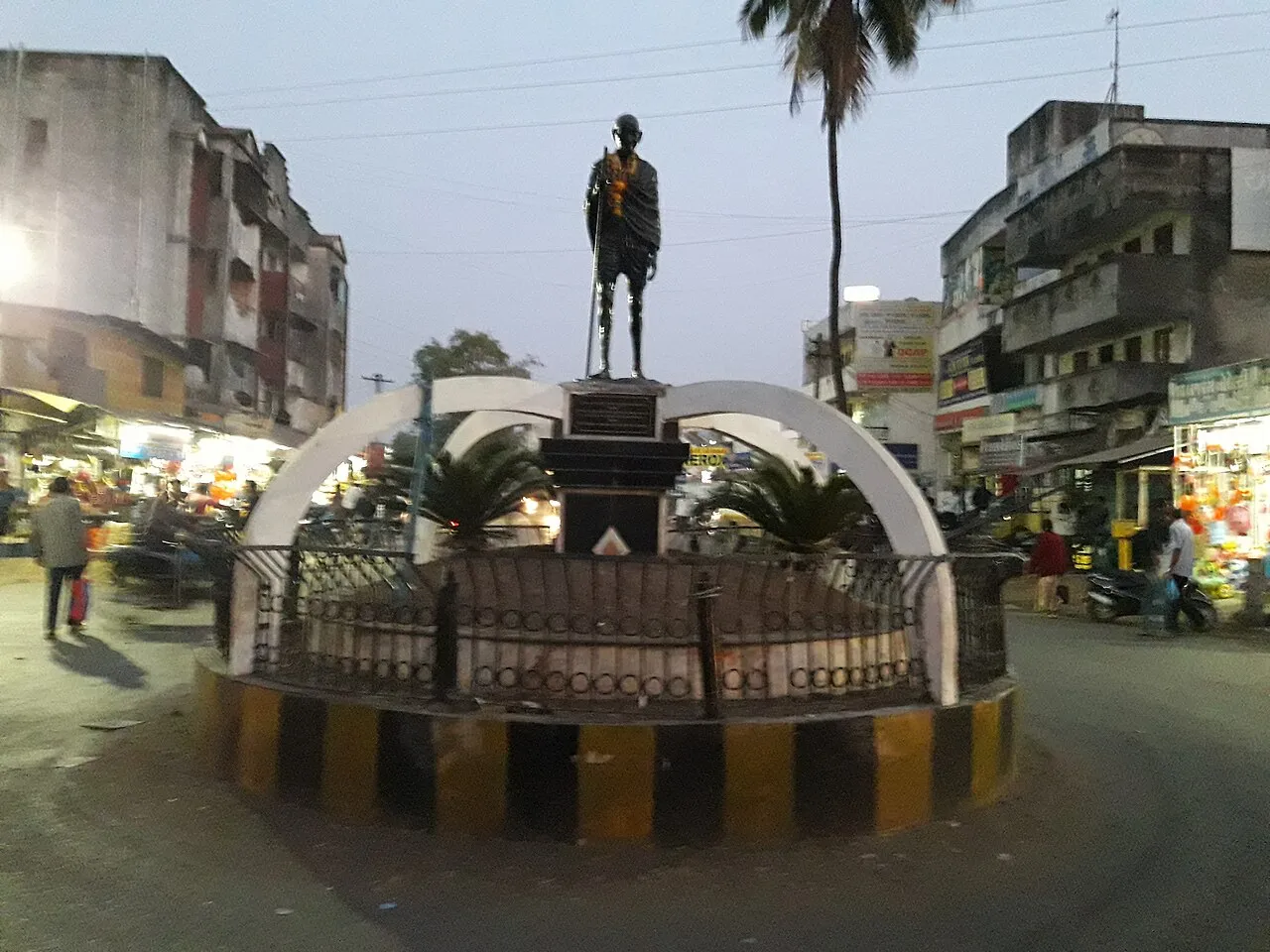
A 2021 post on ParsiCuisine.com, signed by the site's Rita Jamshed Kapadia, adds the street scene. The ladies of the house pour generous helpings into the collection bags. The boys also get splashed with water, and they have to dodge it. A folk song is heard from one mohalla of Navsari to the next. All the uncooked grain is then brought to one spot and cooked into a communal feast.
When is ghee khichri held in Navsari?
ParsiCuisine.com names the occasion as Bahman mahino and Bahman roj. In the Zoroastrian calendar, as FEZANA's cookbook Eat, Live, Pray explains, Bahman is the eleventh month of the year and Bahman roj is the second day of every month. The Free Press Journal, reporting from Mumbai in June 2024, likewise marked the second day of Bahman month. Neither Navsari account gives a calendar date. Both written accounts we read appeared in June: ParsiCuisine.com on 13 June 2021 and Parsi Times on 22 June 2023.
ParsiCuisine.com also noted that the coronavirus affected the ritual in 2021. We could not find any reliable source for how old the custom is, so we have left its origin out.
Why is ghee khichri linked to rain?
The custom is a plea for rain. Subedar wrote that the young men go out to "appease the Rain Gods" and ask for adequate monsoons. ParsiCuisine.com put it in almost the same terms: the boys ask the rain gods to come and give Mother Earth water after the long summer months in India. That post describes the splashing of the collectors with water but doesn't explain it, and neither does Subedar.
Why does Bahman month matter for a meatless khichri?
Bahman is a month in which Parsis are asked to keep off meat. In Eat, Live, Pray, Noshir H. Dadrawala writes that Bahman is the guardian of animals, and for that reason devout Parsis give up meat for the whole of Bahman month. Those who don't keep the full month try to avoid meat on Bahman roj of Bahman month and on the days of Bahman's co-workers, Mohor, Gosh and Ram. Most still eat eggs. The Free Press Journal's 2024 report said the same in short: the faithful are asked to live on vegetarian food in Bahman.
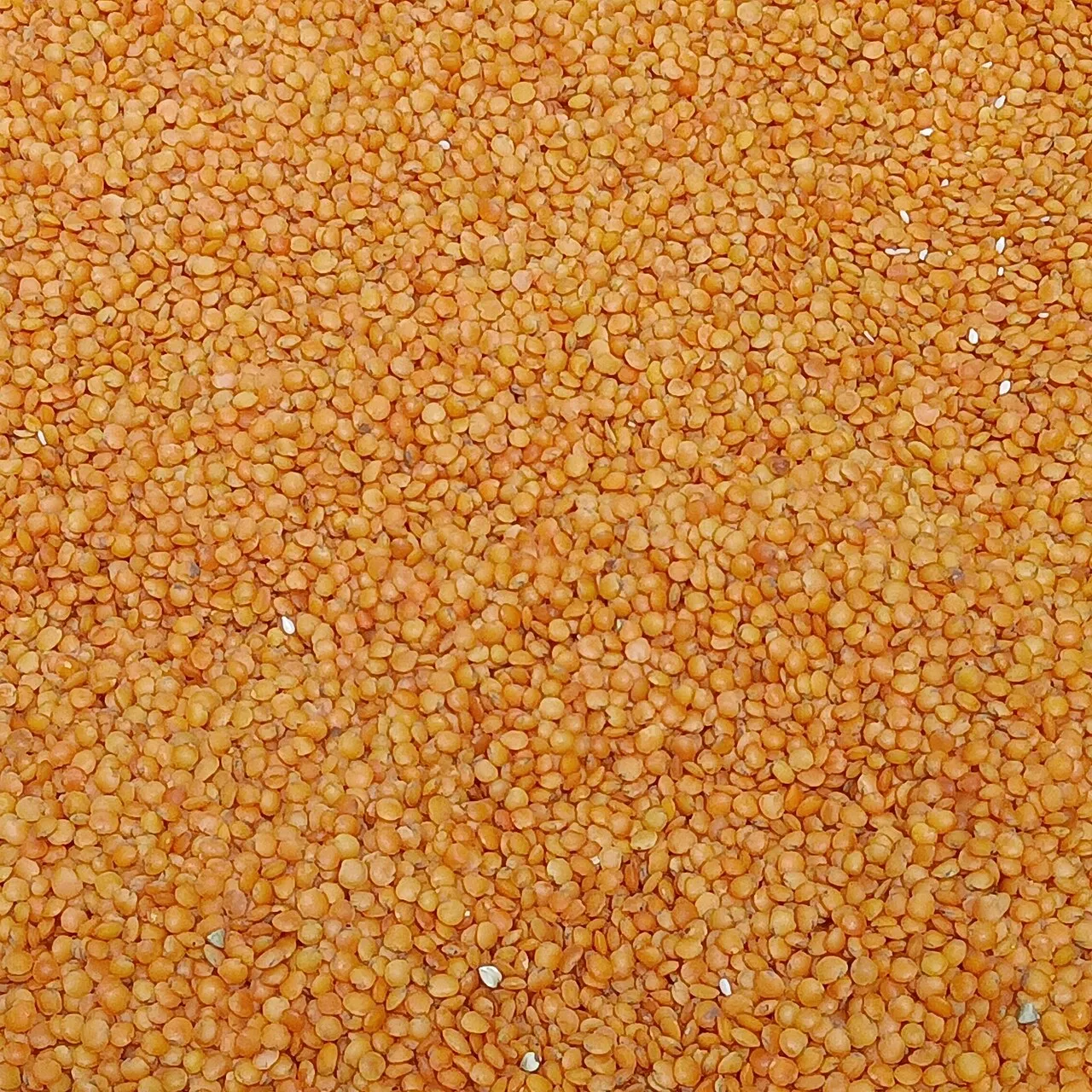
Dadrawala's own childhood memory of Bahman is plain khichdi, rice cooked with daal and turmeric, eaten with baffenu (a ripe mango pickle) or doru (a runny tamarind preparation). Neither Navsari account says the communal pot is kept meatless because of Bahman. We only note that rice, dal, oil and ghee contain no meat.
Practice varies between families and Agiaries; your family priest's guidance comes first.
How is the communal ghee khichri cooked?
The sources tell us what goes into the pot (rice, dal, oil and ghee from the homes the boys visit, plus other uncooked products according to ParsiCuisine.com) and that it is cooked in one place for everyone. They do not record the size of the pot, the ratio of rice to dal, how much ghee goes in or who does the cooking. We would rather say that plainly than guess at a Navsari "recipe" that nobody has written down.
How is khichri eaten in Parsi homes the rest of the year?
At home, the usual Parsi khichri is a plain rice and lentil dish eaten with fish. Niloufer Mavalvala writes in The Cook's Cook that it is the standard partner for macchi no saas, and that its mild taste also goes with spicier dishes such as patiyo, kheemo and dahi ni kudhi. FEZANA's Eat, Live, Pray prints a home version by Nergish Dinshaw made with rice, red masoor, onions, whole spices and turmeric, and notes that Parsis eat it with fish sauce. Her recipe uses oil, not ghee. That home dish, with its fish curry, has its own guide on our site. If you want a curry to pour over khichri, our Parsi prawn curry works too.
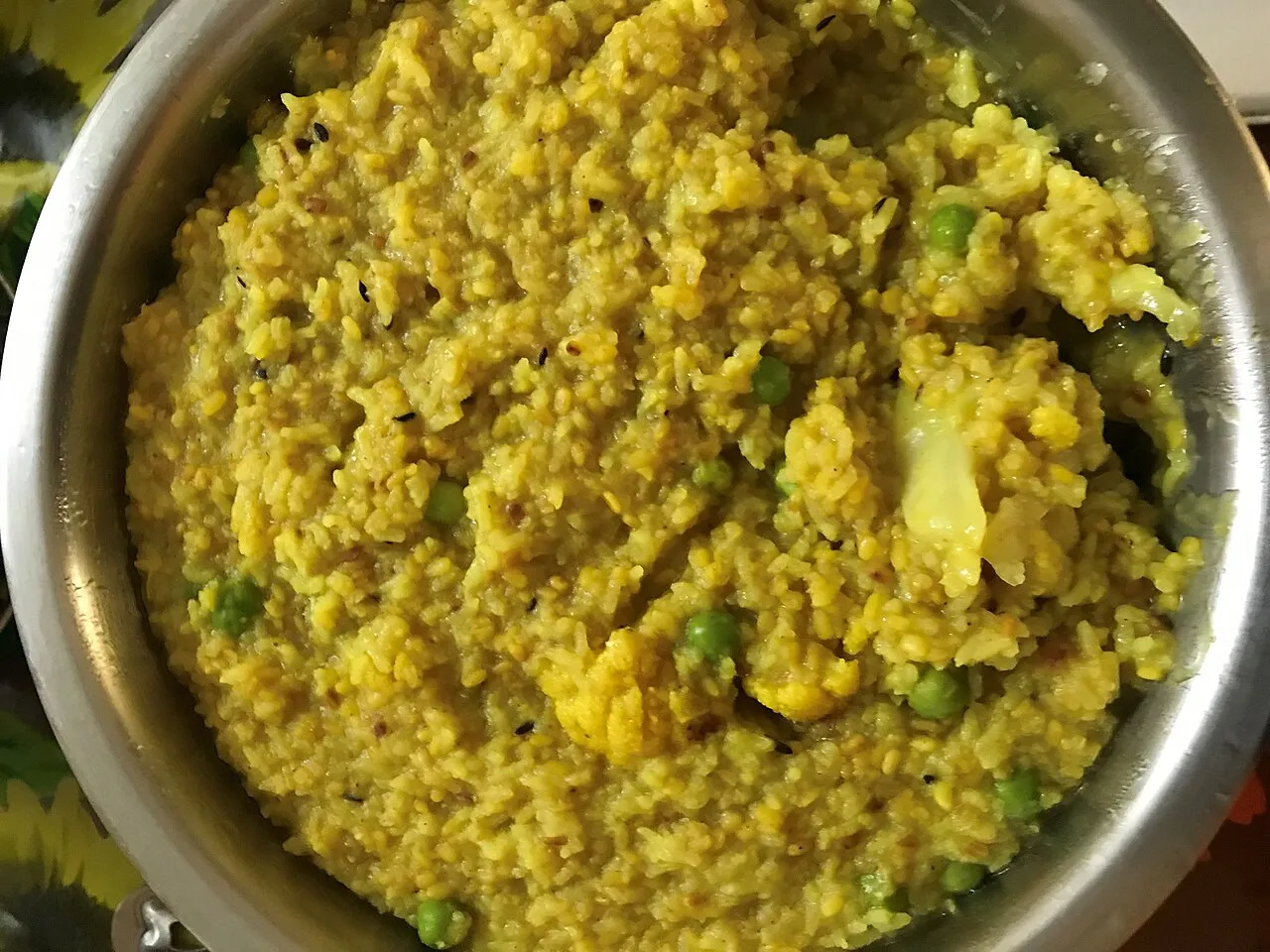
Dinshaw's notes add that a plain khichdi of rice and lentils without spices, often eaten with yogurt, is what people turn to for an upset stomach. For more dishes from the Parsi kitchen, see our guide to Parsi recipes.
When is khichri not served in Parsi homes?
Writers disagree on khichri and weddings. Mavalvala says Parsis eat khichri at the khichri ni reet dinner in the days before a wedding feast, yet she says it is "never served at a wedding or any auspicious occasion". FEZANA's sample lagan nu bhonu (wedding feast) menu, on the other hand, lists khichdi saas, fish in sauce with yellow rice, as one of its fish course choices. We name both and leave the decision to your family.
Khichri is also a food of mourning. In a Parsi Times column of April 2023, Dadrawala wrote that mora daar chawal or khichri was the usual fare for three days after a death, because meat was kept for happier times and not for grief. FEZANA's cookbook gives the same three-day rule: when someone in the family dies, the household goes without meat for three days.
Practice varies between families and Agiaries; your family priest's guidance comes first.
For a fuller picture of how food runs through Parsi life, start with our page on Parsi food. And once Bahman month is over, our Parsi mutton kebabs are waiting.
Frequently asked questions
What is ghee khichri in Navsari?
Ghee khichri is a Navsari custom in which young Zoroastrian men go from house to house singing and collecting rice, dal, oil and ghee. The women of each home fill their bags, the ingredients are cooked together in one place, and the meal is shared. The aim, according to Parsi Times and ParsiCuisine.com, is to ask for a good monsoon.
When is the ghee khichri custom held?
ParsiCuisine.com ties the Navsari ghee khichri to Bahman mahino and Bahman roj. Bahman is the eleventh month of the Zoroastrian calendar, and Bahman roj is the second day of each month. Neither account we read gives a calendar date, though both were published in June, in 2021 and 2023. No source gives the custom's age.
Why is the Navsari khichdi linked to rain?
The collection is a plea for rain. Parsi Times editor Anahita Subedar wrote that the young men do it to appease the rain gods so that they bless the town with adequate monsoons. A 2021 ParsiCuisine.com post describes the same wish: water for Mother Earth after the long summer months in India.
What goes into Navsari's ghee khichri?
The collectors ask households for rice, dal, oil and ghee, and Parsi Times adds water to that list. ParsiCuisine.com says other uncooked products are given too. No published source records the quantities, the ratio of rice to dal or the cooking method used for the communal pot, so we have not invented one.
Do Parsis avoid meat in Bahman month?
Devout Parsis give up meat for the whole of Bahman month, writes Noshir H. Dadrawala in FEZANA's Eat, Live, Pray, because Bahman guards animals. Others avoid it on Bahman roj in that month and on the days of Mohor, Gosh and Ram, and most still eat eggs. Practice varies, so follow your family priest's guidance.


