 PalV's Kasti

On this page
Irani cafe culture was special because the rooms looked alike from one cafe to the next and the rules on the wall were impossible to forget. You walked into high ceilings, bentwood chairs, marble-topped tables, long mirrors and glass jars of biscuits, often under a portrait of Zarathushtra or the British Queen. A board told you what not to do: no combing your hair, no asking for addresses, no arguing, no sitting too long. And yet people of every class and community shared those tables, read the free newspapers and stayed on over chai. The rules were strict on paper. The welcome was wide in practice.
અદીબેહેસત રોજ
Ardibehesht Roj, Tir Mah · 1396 Y.Z.
Why is an Irani cafe also called a Parsi cafe?
The cafes were opened by Iranian migrants to Bombay, both Zoroastrian and Muslim, as the Deccan Herald and TRT World both describe them. Gateway House, in a 2019 history by Sifra Lentin, says that of the roughly 350 cafes the city once had, most were run by Zoroastrians and about 15% by Shia Iranians. "Parsi cafe" is the name you'll often see in foreign reporting: NPR's 2019 piece on Britannia & Co. uses it in its headline. Columnists such as Priya Ramani also write of Irani restaurants.
For the wider story of how these cafes arrived and spread across the city, see our guide to the Irani cafes of Mumbai.
What does a classic Irani cafe look like inside?
Reporters who have visited these cafes since 2013 keep listing the same furniture. The South China Morning Post names high ceilings, bentwood chairs, long mirrors, checkerboard tiles and marble tables. Gateway House lists mirrored walls, European bentwood chairs, marble-topped tables and chequered flooring. An Al Jazeera photo essay from 2014 adds vintage clocks and posters.
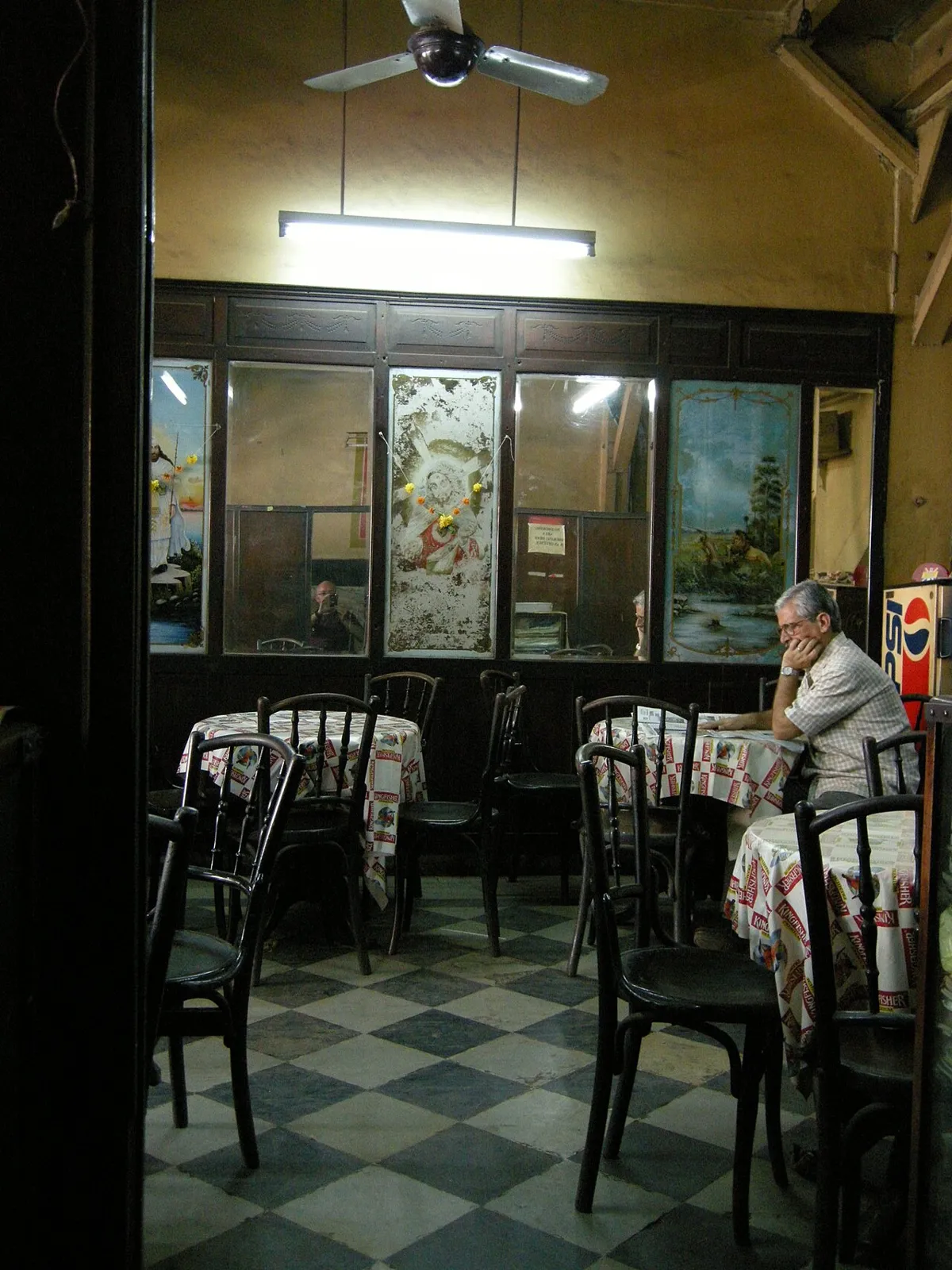
Kyani & Co. at Dhobi Talao, which Al Jazeera calls the oldest operating Irani cafe in Mumbai (opened in 1904), is the one most often described in detail. DNA India's 2018 visit noted Burmese teak tables with Italian marble tops under checked cloth, Belgian bentwood chairs, a grandfather clock, a mosaic floor and mirrored walls.
What hangs on the walls?
Portraits, mostly. NPR found Queen Elizabeth II hanging next to a painting of Gandhi at Britannia & Co., with several depictions of the Prophet Zarathushtra nearby. The Guardian, reporting in 2013, wrote of Zarathushtra watching over the room. At Kyani, Al Jazeera photographed pictures of Parsi family members and religious images above the waiters, and at Sassanian Boulangerie it found photographs of monuments from Iran. On the shelves sit glass jars of biscuits, a detail both Al Jazeera and Hindustan Times picked up.
Some of this furniture has simply never been replaced. Writing in BloombergQuint, Priya Ramani says the bentwood chairs, marble-topped tables and wooden shelves may have been around for 100 years. Our piece on the Oldest Irani cafes in Mumbai gives the founding years.
What were the house rules on Irani cafe boards?
Each cafe wrote its own board, so no single list is "official". Here is what reporters have recorded on boards in Mumbai, with a few from Pune, and where each rule was seen:
- No sitting for a long time. DNA India saw it on a board, the Deccan Herald's list has "No sitting long", and Hindustan Times counts it among the core rules.
- No asking for addresses or directions. Bastani's board said "No address enquiry", according to DNA.
- No combing. It was on Bastani's list, and again on the Pune Irani Cafe board that went viral in 2021.
- No arguing. A sign at Britannia & Co. asked customers not to argue with the management, the Guardian reported.
- No gambling (Hindustan Times), or even discussing it (the Pune board).
- No leg on the chair, from Bastani's board as DNA listed it.
- No smoking, no bargaining and no loud talking, from the list the Deccan Herald opens its report with.
Hindustan Times adds "no discussing politics". The Pune board went further with "no flirting with cashier" and "no free advice", Business Today reported.
The boards were funny enough to become literature. Priya Ramani writes that Nissim Ezekiel laughed at these lists of prohibitions in his poem "Irani Restaurant Instructions", and the Deccan Herald opens its report with a list of rules it credits to Ezekiel.
Who sat in an Irani cafe?
Almost everyone. In the 2013 Guardian piece these are democratic places where people of every background, class and sex meet. NPR wrote that people of all classes, religions and ethnic groups mixed at the tables at a time when caste and old taboos still shaped daily life. Gateway House notes that the cafes mainly served mill and factory workers, whose first shift started at 6 am, and the South China Morning Post says businessmen and labourers both ate there.
People came to stay, whatever the board said. The Press Trust of India described customers sitting for hours, chatting or reading newspapers while music played, and quoted the Mumbai heritage writer Rafique Baghdadi calling the cafe the "Barrista of those times". DNA India recalled free Gujarati, Hindi and English papers on every table.
What were the everyday rituals of an Irani cafe?
The day began early. Gateway House describes workers stopping for chai and brun maska before or after their shifts between the 1940s and the 1960s. Al Jazeera reported that B. Merwan & Co. opened at 5.30 am and that its breads were usually sold out by 7. Chai is its own subject, so we've written separately about Irani chai.
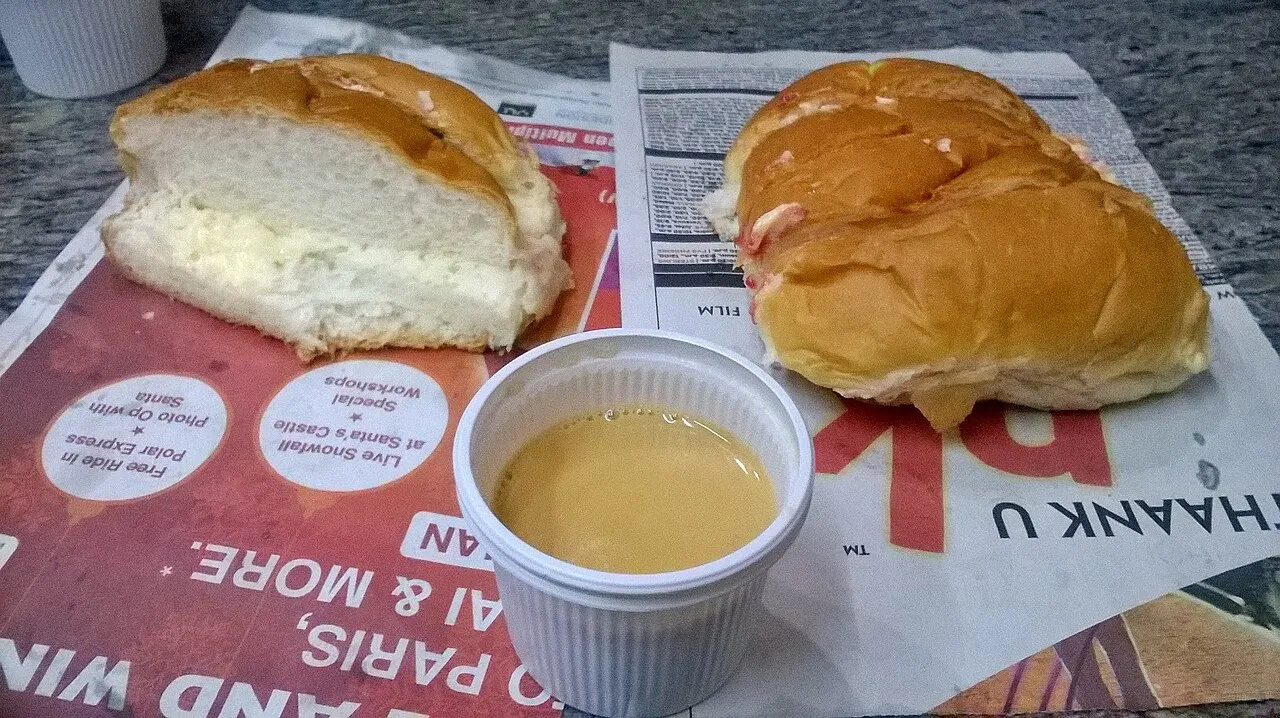
The owner was part of the ritual. The best-known case is the late Boman Kohinoor of Britannia & Co., who died in 2019 at 97, Scroll reported. NPR describes him moving from table to table during the busy lunch hour that year, and the Deccan Herald also wrote that he looked after each customer himself. Service elsewhere could be gruff. Priya Ramani calls brusque servers a common feature of Irani restaurants.
A few customs show up in a single report, so we give them as that writer told them. DNA India says Mumbaikars would arrange to meet "at the Irani shop on the corner", and that Iranis did not serve cutting chai, though two people could split one cup. The Deccan Herald mentions that some cafes once had jukeboxes.
Can you still find this culture today?
Yes, though only in a few rooms. Counts differ by source. The Guardian gave about 550 cafes in 1950 and 15 to 20 open in 2013. City historian Deepak Rao counted 350 in a 1950 directory, and DNA India put the 2018 figure at 25. The Press Trust of India and the Deccan Herald both give a peak of about 400 and about 30 left, and Gateway House says 35 remained in 2019. Whichever number you take, the bentwood chairs and rule boards now survive in a few dozen cafes at most. Our list of Famous Irani cafes in Mumbai covers the ones you can still visit.
Frequently asked questions
What is a Parsi cafe?
A Parsi cafe is another name for an Irani cafe, the tea rooms opened in Bombay by Iranian migrants. Gateway House says most were run by Zoroastrians and about 15% by Shia Iranians. Reporters describe them by their bentwood chairs, marble-topped tables, mirrored walls, glass jars of biscuits, chai with brun maska and boards of house rules.
What rules did Irani cafes have?
Each Irani cafe wrote its own board, but reports from Mumbai and Pune record the same favourites again and again: no sitting for a long time, no asking for addresses or directions, no combing, no arguing and no gambling. Some boards also banned loud talking, bargaining and political discussion. Nissim Ezekiel laughed at these lists in a poem.
Why do Irani cafes have bentwood chairs and marble tables?
Bentwood chairs and marble-topped tables are the standard Irani cafe furniture, and reporters still find them in surviving cafes like Kyani & Co., where DNA India counted Belgian bentwood chairs and Italian marble tops on teak tables. The sources we used describe this furniture but don't explain why owners chose it, so we won't guess.
Who goes to Irani cafes?
Irani cafes have always drawn a mixed crowd. Gateway House says they mainly fed mill and factory workers whose first shift began at 6 am, and the South China Morning Post adds businessmen. Reporters from the Guardian and NPR stress that people of different classes, religions and communities shared the tables, often staying for hours over chai.
Whose portraits hang in Irani cafes?
Irani cafe walls often carry portraits of the Prophet Zarathushtra, family members and British royalty. NPR found Queen Elizabeth II beside a painting of Gandhi at Britannia & Co. Al Jazeera photographed family portraits and religious images at Kyani & Co., and pictures of Iranian monuments at Sassanian Boulangerie, along with old clocks and posters.


