 PalV's Kasti
On this page
Parsi fish patio is a sweet, sour and mildly hot fish dish, most often made with pomfret. The fish simmers in a masala of onion, cumin, garlic and chilli, soured with vinegar and sweetened with jaggery. Cooks and food writers describe it less as a main curry than as an accompaniment, something sharp to eat beside plain dal and rice. To cook it, you brown onion, add chilli, a pounded cumin-garlic paste and spice powders, lay in the fish, pour over vinegar, cover and simmer, then stir in jaggery near the end.
અદીબેહેસત રોજ
Ardibehesht Roj, Tir Mah · 1396 Y.Z.
What is Parsi fish patio?
Patio (plural patia) is a Parsi seafood preparation with a gravy that is sweet, sour and gently spicy at once. Perzen Patel, the Mumbai caterer who writes as the Bawi Bride, calls the basic patio a seafood accompaniment built on coriander seeds, cumin, garlic, sugarcane and brown vinegar. Chef Sanjeev Kapoor's site files it as a Parsi fish dish that is sweet, sour and slightly spicy. Meher Mirza, writing in SAVEUR, calls prawn or fish patio a seafood condiment, bright with vinegar and chilli.
The prawn version is the one most people know, and we cover it separately in our guide to Kolmi no patio. This page stays with fish.
Why is it called patio?
According to Perzen Patel, the dish takes its name from the vessel it was once cooked in, the patio tapeli. She describes this pot as wide and flat at the base with rounded, bulging sides. That explanation comes from one writer. We have not found a second published source that confirms or disputes it.
Which fish is used for patio?
Pomfret turns up in nearly every recipe we read. The family recipe printed by FEZANA calls for one large chamno (pomfret) cut into four pieces. Sanjeev Kapoor uses four whole silver pomfret, scored on both sides. Perzen Patel's lagan no patio, a wedding-style patio, is made with pomfret too, though the photograph at the top of her article shows a surmai (kingfish) lagan no patio.
Dried fish has its own patio. Tarapori patio is made with dried Bombay duck. Perzen Patel calls it a pickled patio and says it is named after the small Gujarat town of Tarapore, where the recipe began. Meher Mirza writes that Parsis torch the fish with chilli powder and vinegar to make it. In 2015 Patel wrote that Tarapori patio could be bought all year at Parsi eateries such as RTI and P.A.C., which made it the easiest patio to try without cooking.
What gives patio its sweet and sour taste?
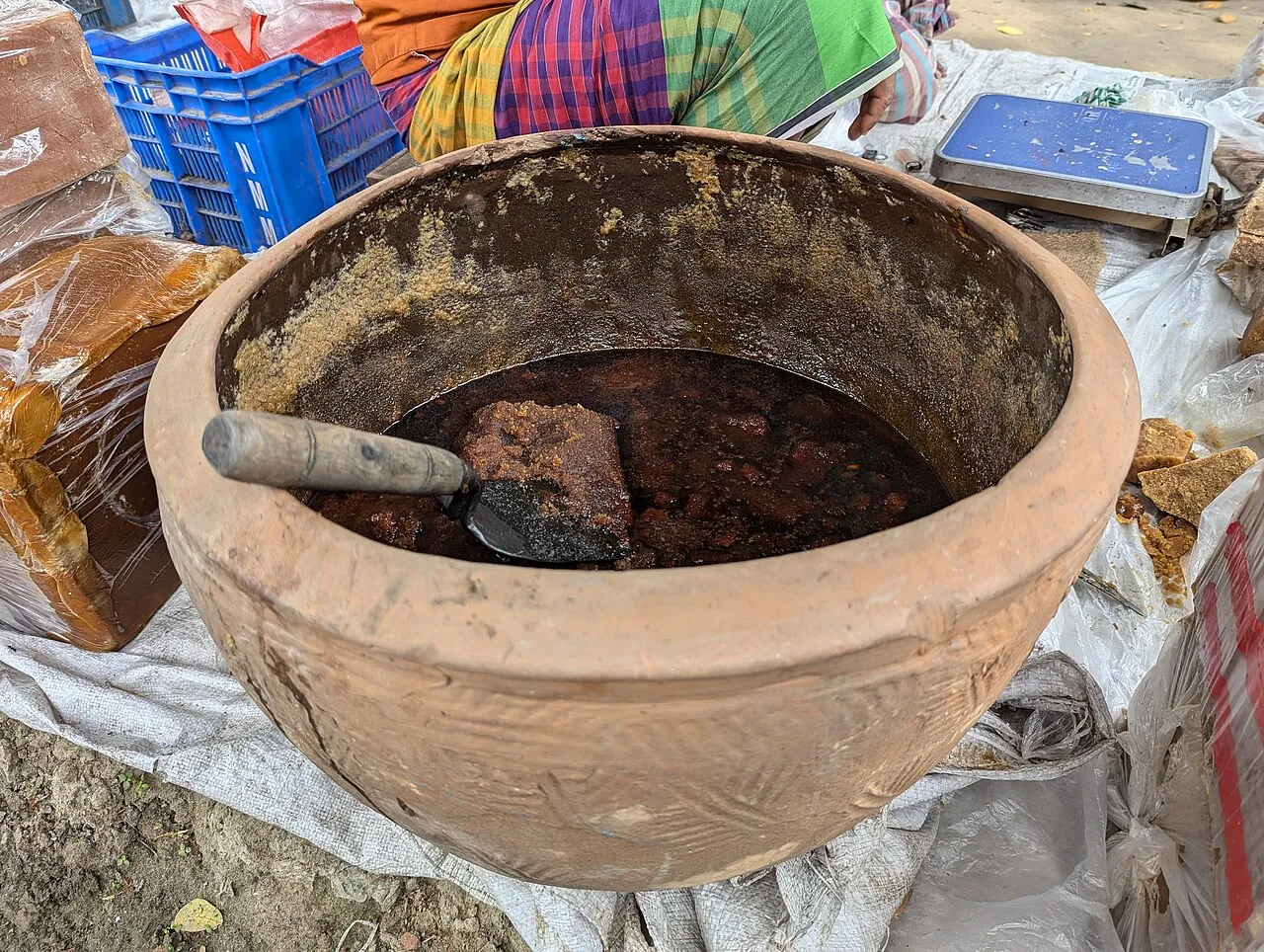
Vinegar brings the sourness and jaggery the sweetness. How much of each goes in varies a great deal. The FEZANA family recipe pours about one and a half cups of brown vinegar (malt or apple cider) over the fish, enough to cover it, and finishes with half a cup of jaggery. Sanjeev Kapoor uses one tablespoon of sugarcane vinegar and two tablespoons of jaggery, and lets chopped tomatoes make up most of the gravy. So one patio comes out sharp and almost pickled, the other much milder.
Which vinegar? Meher Mirza, writing in 2021, says most Parsis reach for Kolah's dark, aged sugarcane vinegar, made only in Navsari in Gujarat. She adds that patio, fish saas and Parsi pickles all lean heavily on vinegar, its bite often softened with jaggery or sugar. If you cannot find sugarcane vinegar, the FEZANA recipe works with malt or apple cider vinegar.
How do you cook fish patio?
The village method, with vinegar and jaggery
Our outline follows "Gaam no Patio" (patio from the village), contributed by Dinaz Kutar Rogers to FEZANA's cookbook Eat, Live, Pray: A celebration of Zarathushti cuisine (2012). The book says the recipe travelled from the village of Nargol to Bombay with her grandmother, who cooked without measuring, so its quantities are estimates. It serves four.
A large pomfret is cleaned and cut into four. Cumin seeds, garlic cloves and seeded green chillies are pounded into a paste. Onion is browned in oil, then red chilli powder, the paste, turmeric, dhana jeeru (cumin-coriander powder) and Parsi-style sambhar masala go in, with salt. The fish pieces follow, with roughly one and a half cups of vinegar poured over until they are just covered. The pan is covered and the fish simmers gently until done. About half a cup of jaggery is stirred in towards the end, and the patio is served with dhan dar.
A milder, tomato-based patio
Sanjeev Kapoor's recipe takes a different route. He crackles cumin and curry leaves in oil, softens onion, green chilli, garlic and ginger, adds turmeric, chilli powder and two chopped tomatoes, then cooks this base covered with half a cup of water for about ten minutes. Whole pomfret rubbed with salt, turmeric and chilli go into the pan and cook on both sides. Only then does the tablespoon of sugarcane vinegar go in, followed by the jaggery, which cooks until it melts. For more dishes from the same kitchen, see our collection of Parsi recipes.
What is patio eaten with?
Patio goes with dhan dar, plain boiled rice with a lightly seasoned yellow dal. The FEZANA cookbook calls gaam no patio the perfect side dish for dhan daar, and the dal recipe printed beside it suggests prawn or fish patio alongside. Perzen Patel explains the pairing. Parsi dal is seasoned with little more than garlic and cumin, so adults want something with more bite next to it, and on days that call for something special, that is patio.
How is patio different from saas ni machhi?
Both are Parsi fish dishes with vinegar and a sweetener, but they are built very differently. FEZANA's cookbook prints both, which makes a fair side-by-side. Its saas ni machi (fish in sauce), contributed by Nergish Dinshaw, thickens an onion and tomato base with a flour-and-water paste. It is finished off the heat with a mix of Worcestershire sauce, 1½ tablespoons of vinegar, a tablespoon of sugar and beaten eggs. The gaam no patio has no flour or egg. Its fish cooks in a cup and a half of vinegar, with half a cup of jaggery, so it comes out far sharper and sweeter.
What other kinds of patio are there?
Perzen Patel points out that most recipes online describe only one patio, the tatrelo prawn patio, though at least four more exist. Besides the Tarapori dried Bombay duck version above, she names these:
- Lagan no patio: pomfret with coconut and Sankeshwari chillies. She writes that it was originally served to close family on the afternoon of a wedding.
- Koru no patio: a vegetarian patio of red pumpkin and Kashmiri chillies, made much like the tatrelo patio.
- Goovar gharab no patio: cluster beans with fish roe, coconut and peppercorns.
Frequently asked questions
What is Parsi patio?
Parsi patio is a sweet, sour and slightly spicy seafood dish, made with fish such as pomfret or with prawns. The fish cooks in a masala of onion, garlic, cumin and chilli, with vinegar for sourness and jaggery for sweetness. Writers describe it as an accompaniment, and it is usually eaten with plain dal and rice.
Why is it called patio?
Mumbai caterer and food writer Perzen Patel says the name comes from the patio tapeli, the pot the dish was historically cooked in. She describes it as wide and flat at the bottom with round, bulging sides. We have found only her account of the name, so treat it as one writer's explanation rather than settled history.
What fish is used for patio?
Pomfret is the usual choice. A family recipe in FEZANA's cookbook uses one large pomfret cut into four, and Sanjeev Kapoor uses four whole silver pomfret. Perzen Patel's lagan no patio is also made with pomfret, while Tarapori patio uses dried Bombay duck. Prawns make kolmi no patio, the version most people know.
What is patio eaten with?
Patio is usually eaten with dhan dar, which is plain white rice with a lightly seasoned yellow dal. FEZANA's cookbook pairs gaam no patio with dhan dar. Perzen Patel notes that the dal tastes mostly of garlic and cumin, so the sharp, sweet patio gives that mild plate the bite adults look for.
What is the difference between patio and saas ni machhi?
Saas ni machhi is fish in a sauce thickened with flour and finished with beaten eggs, using only a little vinegar and sugar. Patio uses no flour or egg. Its fish cooks in a generous amount of vinegar sweetened with jaggery, so the result is tangier and sweeter. Both appear as separate recipes in FEZANA's 2012 cookbook.


