 PalV's Kasti
On this page
Most Parsis eat meat. Mutton, chicken, fish and eggs sit at the centre of the Parsi table, and Noshir Dadrawala, writing in Parsi Times, says Zoroastrians do not appear to have been vegetarian at any point in their history. On beef and pork, none of the Zoroastrian texts we read forbids either one. In India, beef dishes were put away out of regard for the community's new neighbours, writes Meher Mirza, and not because of any religious text. Dadrawala calls diet a matter of individual choice. Vegetables and dals are still a regular part of Parsi cooking, and there are two times when families who keep the custom cook no meat at all: Bahman, the eleventh month of the Zoroastrian calendar, and the three days after a death in the family.
શહેરેવર રોજ
Shehrevar Roj, Tir Mah · 1396 Y.Z.
Do Parsis eat meat?
Yes, and plenty of it. A 2024 Free Press Journal report on Bahman put it bluntly: it is hard to picture Parsi cooking without fish, eggs and meat, and even dishes built around a vegetable usually carry an egg somewhere. Our guide to Parsi food covers the wider cuisine and its signature dishes.
There is no single Parsi diet, though. Writing in Parsi Times in April 2023, Dadrawala listed the range he sees in the community: people who eat only mutton, people who eat only chicken, people who skip both but eat fish, vegetarians who eat eggs (unfertilised ones, they argue), and vegans who also give up milk and honey. His one condition was mutual respect, with no preaching and no name-calling.
Do Parsis eat beef?
Practice differs from family to family, and no religious text we read bans beef. What changed was practice in India. In her essay "Parsi Food and Flux" for G5A Imprint, Meher Mirza writes that beef dishes, a staple of ancient Iran, were put away after the Parsis settled in India, as allyship with their new neighbours rather than through any scripture. Chicken and mutton took their place.
Was giving up beef one of the conditions the Raja set when the Parsis landed at Sanjan? The Qissa-i Sanjan, the Parsi verse account of that arrival, does not say so. In S. H. Hodivala's translation, the king asks the newcomers to adopt the local language, to dress their women like local women, to lay down their arms and to hold weddings in the evening. Food is not on the list. The cow does appear, but on the Parsi side: the Dastur tells the king that his people hold the cow, fire and water in honour.
Personal accounts differ too. The writer Farrukh Dhondy, recalling his Parsi childhood in Outlook in 2022, writes that his family ate beef in the company of Muslims and pork in the company of Christians, free of the food taboos their neighbours kept. Read Mirza and Dhondy side by side and you get two honest pictures of one community, not a rule in either direction.
Do Parsis eat pork?
Some Parsis eat pork, and we found no scriptural ban on it. Dhondy's memoir is the clearest first-hand account: pork was eaten, but his household and others like it took care not to ask a Muslim cook to fry the bacon or curry the pork. Pork also appears in print in a community cookbook. FEZANA's 2012 collection Eat, Live, Pray: A celebration of Zarathushti cuisine lists a "Porc Vindalho", a pork vindaloo, among its meat recipes.
Are Parsis vegetarian?
As a community, no. Dadrawala's verdict in Parsi Times was simple: historically, Zoroastrians do not seem to have been vegetarian. But the idea that Parsis never touch vegetables is wrong as well.
The archaeologist and culinary anthropologist Dr Kurush Dalal told the Free Press Journal that Parsis eat a lot of okra, brinjal and dals such as chana and masoor, and that most Parsi meat dishes are cooked with vegetables in them. In his view, Parsi restaurants and the meat-heavy habits of South Mumbai Parsis are what spread the carnivore image. The cookbook author Niloufer Mavalvala made a similar point to Slurrp in 2022. When she was growing up, she said, a vegetable dish was on the table to start the meal, all year round.
There has even been an organised vegetarian movement. According to the Free Press Journal, the Parsi Vegetarian and Temperance Society was founded in 1911 by the Masani brothers, who came from a priestly family, and more than 750 Parsis attended its annual celebration at Cama Baug, Khetwadi, in June 2024.
Which vegetarian dishes do Parsis cook?
Mavalvala wrote a whole book on the subject, The Vegetarian Parsi: Inspired by Tradition. The dishes below are named by her, by the Free Press Journal, and by Perzen Patel, who ran a Parsi catering service when she wrote about Bahman cooking for India Food Network in 2015.
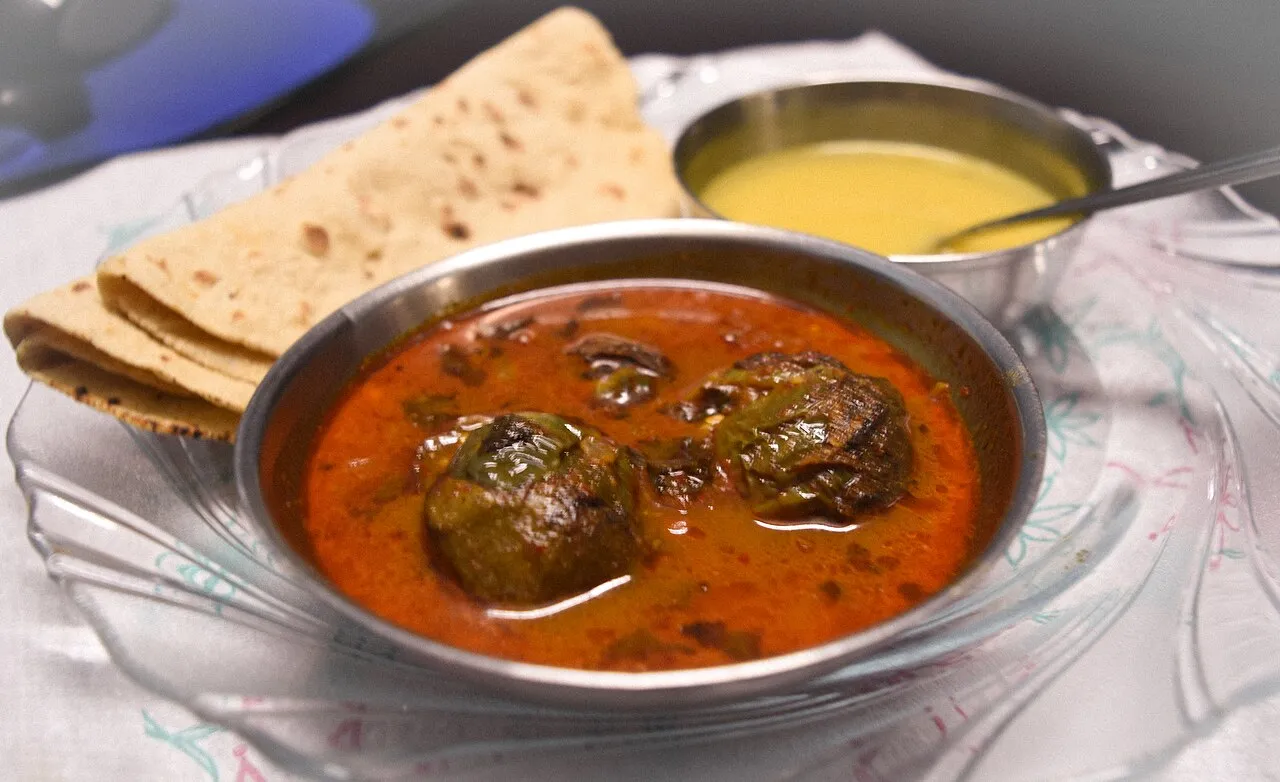
- Lagan nu stew (also written lagun nu stew or lagan sara istoo): diced vegetables such as potato, yam, sweet potato and carrot in a tomato base. Mavalvala calls it the dish served at every wedding feast and sweetens hers with dried fruit such as apricots. Patel's version uses jaggery, raisins and dates soaked in cane vinegar.
- Bhaji dana: four leafy greens cooked together, namely spinach, fenugreek, amaranth and dill.
- Vengna no patiyo: eggplant in an onion and tomato chutney, made the same way as the prawn patiyo with brinjal in place of the shrimp.
- Koru nu doru: a pumpkin patiyo, from Patel's Bahman menu.
- Masoor with a simple onion tadka, a favourite on Patel's Bahman menu.
- Parsi dahi ni kadhi: a yoghurt curry, thicker than the Gujarati kadhi it resembles.
Patel said that cooking through Bahman for her clients taught her more than 20 different vegetarian dishes. Mavalvala's other picks include dahi na vengna, khatti mithi guar and keri kanda.
Why do Parsis not eat meat in Bahman month?
Bahman (Vohu Manah) is the Amesha Spenta who guards Ahura Mazda's good creation of animals. Dadrawala's entry on Mah Bahman in FEZANA's Eat, Live, Pray (2012) explains the meat fast this way, and a June 2025 Parsi Times article gives the same account. Slurrp's 2022 profile of Mavalvala also describes the month as one of respect for the animal kingdom. The second day of every month and the whole eleventh month are dedicated to Bahman. FEZANA names the goshpands, meaning cow, goat and sheep, as the animals in Bahman's particular care. Devout Parsis give up meat for the entire month. Those who don't keep the full month still try to skip meat on Bahman roj in Bahman mah and on the days of Bahman's co-workers: Mohor, Gosh and Ram.
The expected food for the month is ann, fal and shak, meaning grain, fruit and vegetables. Eggs, fish and fowl are argued over. FEZANA says most Parsis treat eggs as acceptable, and both FEZANA and Parsi Times record the further view that fish and two-legged birds are not goshpand and so are allowed. Perzen Patel found the same split among her clients: some ate fish because it is not a land animal, and most treated eggs as acceptable. Dalal's own estimate, given to the Free Press Journal, is that at least half the community eats vegetarian on one day of the month. Parsi Times adds that the Zoroastrian calendar sets aside no day for going without food entirely, which makes the Bahman meat fast the only traditional fast. Our post on the Bahman Mah meat-free month goes into the month in more detail.
Practice varies between families and Agiaries; your family priest's guidance comes first.
Why do Parsi families eat vegetarian food for three days after a death?
Dadrawala traces the custom to the Vendidad, Fargard 8, verse 22, and quotes the three-day rule in his 2023 Parsi Times piece. In James Darmesteter's translation on avesta.org, the verse comes after the purification of the path along which the body was carried, and it says the Mazda-worshippers may then once again cook meals with meat and wine in that house. The three-day limit appears in Darmesteter's footnote to the verse, which cites the commentary: for three days and nights after the death, cooking meat in the house is forbidden.
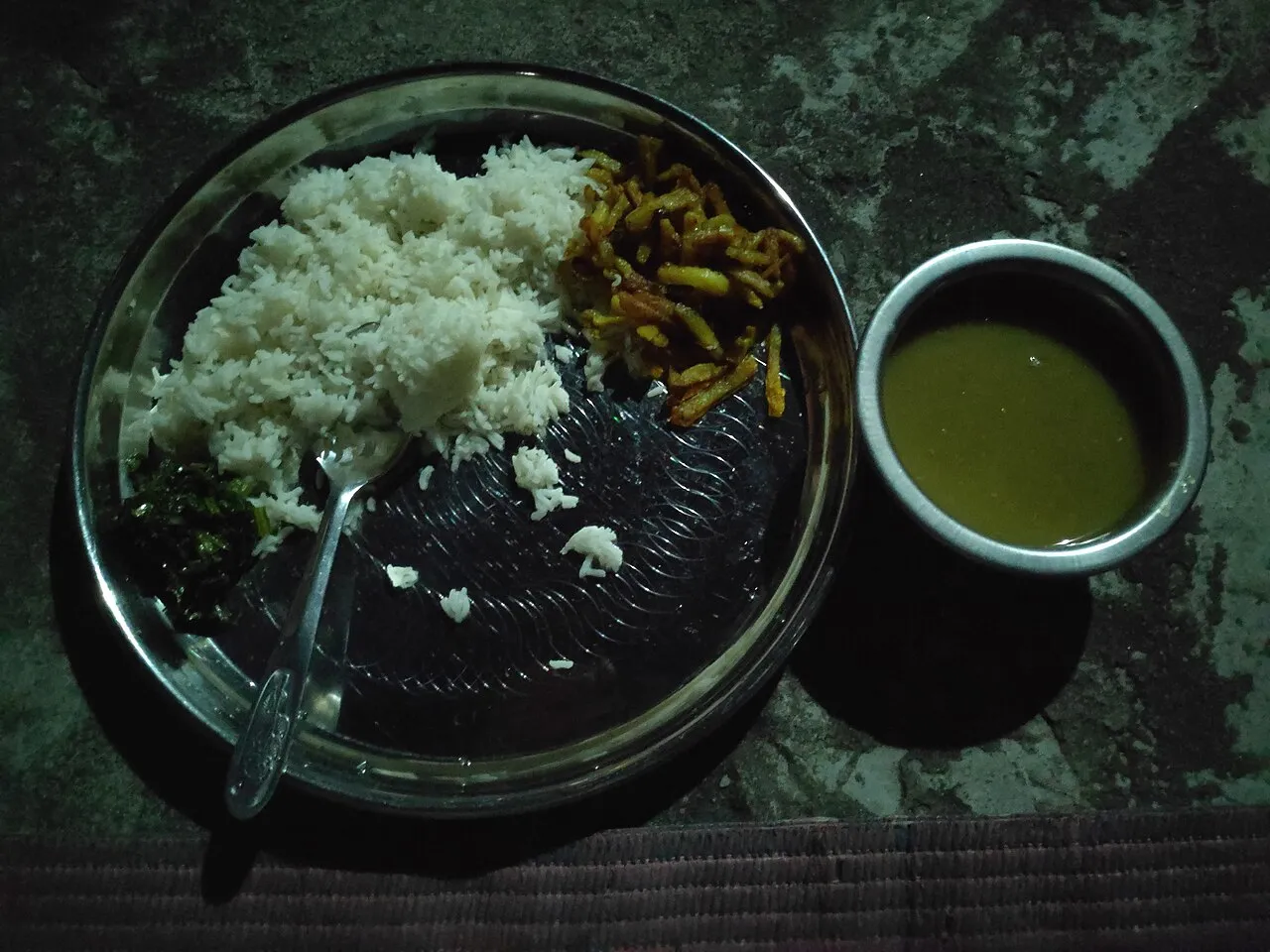
In practice, Dadrawala writes, the usual food for those three days is mora daar chawal (plain dal and rice) or khichri. Slurrp's profile of Mavalvala also notes that only vegetarian food is cooked for the first three days after a loved one dies. On the fourth day, Dadrawala writes, the house is cleaned and the family serves dhansak, a full meal of lentils, vegetables and rice, to which mutton or chicken may now be added. In the past it was shared with the neighbours who had brought food during the mourning, and he reads the meal as a sign of accepting the loss and moving on. He is clear that meat on the fourth day is not compulsory.
Practice varies between families and Agiaries; your family priest's guidance comes first.
Frequently asked questions
Is beef forbidden in Zoroastrianism?
No scripture or community text we read forbids beef. Meher Mirza writes that beef was a staple of ancient Iran and that Parsis in India set it aside out of allyship with their neighbours, not because of religious teaching. The Qissa-i Sanjan's conditions for settling in Gujarat cover language, dress, arms and wedding times, but not food.
Do Parsis eat eggs and fish during Bahman?
Eggs, usually yes. FEZANA's Eat, Live, Pray says most Parsis treat eggs as acceptable in Bahman, and Perzen Patel found the same among her clients. FEZANA and Parsi Times also record the argument that fish and two-legged birds are not goshpand, so some eat them. The strict expectation is grain, fruit and vegetables.
What do Parsis eat on the fourth day after a death?
Dhansak. Noshir Dadrawala writes that after three meat-free days of mora daar chawal or khichri, the house is cleaned on the fourth day and the family serves dhansak, with mutton or chicken added if they wish. He stresses that eating meat that day is not mandatory. The meal marks the family's return to everyday life.
Is there a fasting day in the Zoroastrian calendar?
No day is set aside for going without food entirely. Parsi Times notes that the only traditional fast is abstaining from meat during Bahman month, and FEZANA's Eat, Live, Pray states that fasting or deprivation has no place in Zarathushti tenets. Giving up meat for Bahman is a dietary observance, not a hunger fast.
What is lagan nu stew?
Lagan nu stew, or lagan sara istoo, is a sweet-sour Parsi vegetable stew of potato, yam, sweet potato and carrot in a tomato base. Niloufer Mavalvala calls it the dish served at every wedding feast and sweetens it with dried fruit. Perzen Patel's version uses jaggery, raisins and dates soaked in cane vinegar.


