 PalV's Kasti

On this page
Sev ni kheer is khir made with sev instead of rice. The sev here is a very fine wheat vermicelli, not the yellow gram-flour snack. Milk is boiled down until it is about as thick as heavy cream, and the vermicelli cooks in that sweetened milk to make a soft, spoonable pudding. Niloufer Ichaporia King, in her cookbook My Bombay Kitchen, writes that the khir in her mother's household was made either with rice or with sev. She is also clear that khir isn't a dish only Parsis make. We couldn't open a full sev ni kheer recipe from a named Parsi cook, so this page gives the method in outline, without quantities, and leaves the exact proportions to your family's recipe. The same goes for saffron: we found no published Parsi recipe that lists it, so add it only if your family's version calls for it.
શહેરેવર રોજ
Shehrevar Roj, Tir Mah · 1396 Y.Z.
What kind of sev goes into sev ni kheer?
The sev for this pudding is a wheat pasta, drawn out into very thin threads. King describes it as far finer than capellini and warns readers away from the bright yellow besan sev sold as a savoury snack in Indian shops. Beyniaz Edulji's sev recipe in NewsMeter likewise calls for "very fine vermicelli".
How is sev ni kheer made?
The one Parsi cookbook passage we could read describes khir as milk boiled down until it reaches the thickness of heavy cream. For sev ni kheer, the fine sev takes the place that rice takes in a rice khir. That is the core of the dish: reduced milk, sugar and vermicelli.
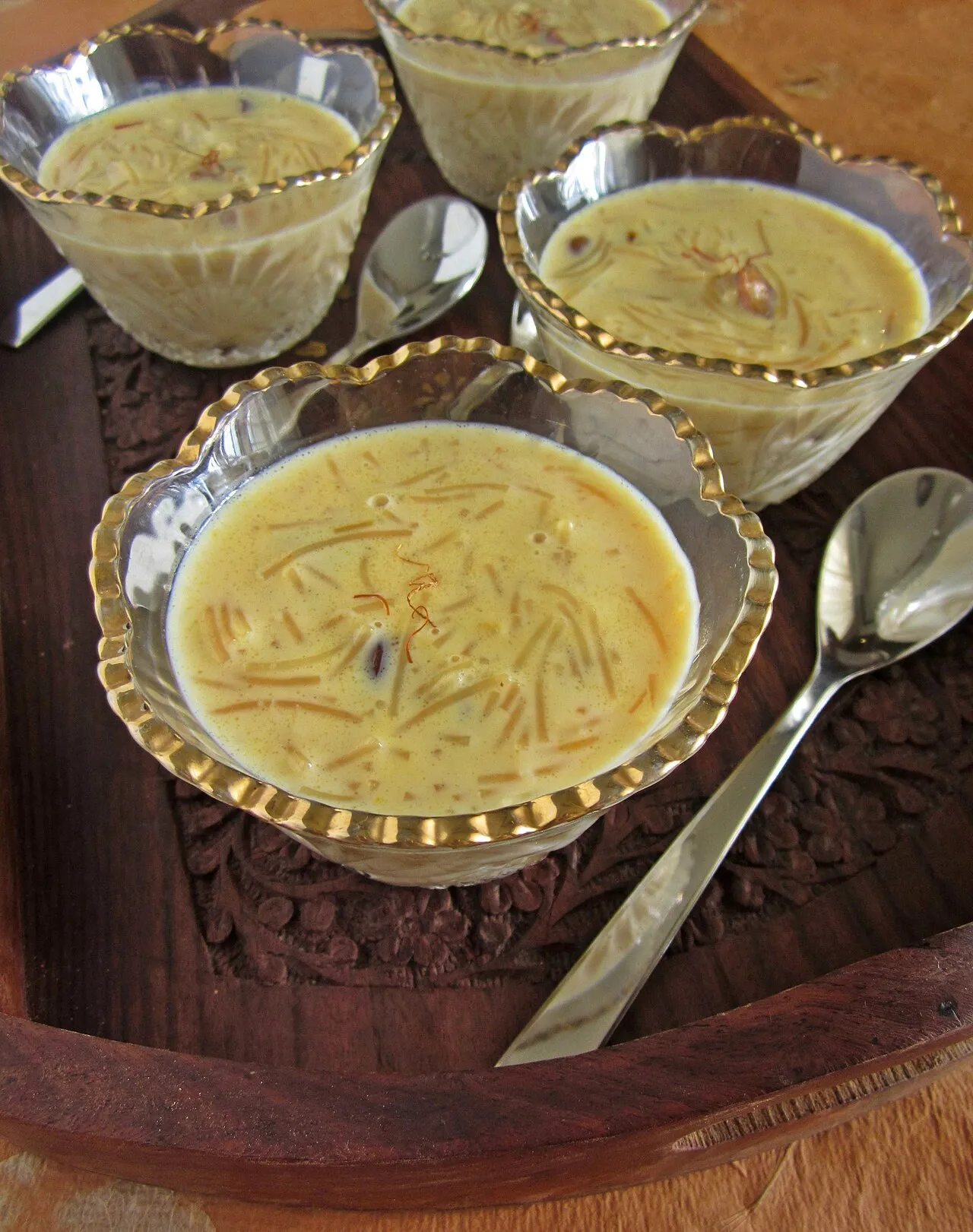
For flavour, Niloufer Mavalvala's The Route to Parsi Cooking names rose water, cardamom and nutmeg as the scents familiar to most Parsi sweets. A Homegrown feature on Parsi desserts also links the community's fondness for cardamom and nutmeg to the sweets it absorbed after settling in Gujarat.
How is sev ni kheer different from Parsi sweet sev?
Parsi sweet sev, the one eaten with sweetened yoghurt as sev-dahi, is a drier, separate dish: the vermicelli is browned in ghee or oil and cooked in a thin sugar syrup until the liquid is absorbed. Sev ni kheer keeps the vermicelli swimming in milk instead.
The line between the two isn't always sharp. Writing in Life & Thyme, Meher Mirza described sev as vermicelli simmered with butter, sugar, milk, rose water and nutmeg until it turns into a silky cream. That sounds closer to a kheer than to the syrup method.
Where does sev ni kheer sit among Parsi desserts?
Sev ni kheer belongs to the milk-pudding side of Parsi sweets. Homegrown names doodh pak, a milk-rich pudding, among the local sweets Parsis took up in Gujarat. Mavalvala calls doodh pak an almond and rice pudding and lists it among Parsi delicacies with both Persian and Indian influences. A sev khir sits close to it, with vermicelli in place of rice.
Milk is also the base of Parsi ravo, where semolina is slow-cooked in milk and ghee. Mirza counts Parsi caramel custard among the milk puddings Parsi kitchens borrowed from the British and made their own. Parsi malido is a different kind of sweet altogether, which Mavalvala describes as an example of halva. Our guide to Parsi sweets sets all of these side by side.
Frequently asked questions
What is sev ni kheer?
Sev ni kheer is a sweet milk pudding made with very fine wheat vermicelli. Milk is boiled down until it thickens like heavy cream, and the vermicelli softens in it. Niloufer Ichaporia King records that her mother's household made khir with either rice or sev, so both versions have a place in a Parsi home.
Is sev ni kheer a Parsi-only dessert?
No. Niloufer Ichaporia King states plainly in My Bombay Kitchen that khir is not a Parsi proprietary dessert, and that many Indian regional cuisines make their own versions of a pudding of milk boiled down until it is creamy. Parsi homes make it with rice or with fine sev, and flavourings follow each family's recipe.
Can I use besan sev for sev ni kheer?
No. The sev used for Parsi sweets is a very fine wheat vermicelli. King specifically separates it from the yellow besan sev sold as a savoury snack, and Beyniaz Edulji's sweet sev recipe in NewsMeter asks for very fine vermicelli too. The snack sev is a different food made from chickpea flour.
Is sev ni kheer the same as Parsi sev with dahi?
No. For sev-dahi, the vermicelli is browned in ghee or oil and cooked in a thin sugar syrup until the liquid is absorbed, then eaten with sweetened yoghurt. Sev ni kheer keeps the vermicelli in thickened, sweetened milk, and is eaten as a pudding with a spoon.
Is sev ni kheer made for a particular Parsi occasion?
We have not found a published Parsi source that ties sev ni kheer to a fixed day or ceremony. The festive custom described in Parsi cookbooks belongs to dry sweet sev with sweetened yoghurt, a different dish. Practice varies between families and Agiaries; your family priest's guidance comes first.


