PalV's Kasti

On this page
There's no written Navjote ceremony dress code for the family or guests. What is fixed is the child's dress. After the sacred bath (nahan), the child puts on trousers or a pyjama and a cap, and comes to the priest with a white cloth or shawl over the shoulders. During the ceremony the priest puts the white sadra on the child and ties the kusti over it. Everyone else has more freedom. J.J. Modi wrote in 1914 that a Zoroastrian "may put on any dress he likes", provided the sadra and kusti are worn. What the sources do expect of the Parsis present is a covered head while the prayers are said.
શહેરેવર રોજ
Shehrevar Roj, Tir Mah · 1396 Y.Z.
What does the Navjote child wear?
The child's clothes change at three points in the ceremony. The steps below follow Modi's 1922 account and the one Dr Ramiyar P. Karanjia gives on his website. For the ceremony as a whole, start with our Navjote ceremony guide.
After the sacred bath
Modi calls the nahan at a Navjote "indispensable". In his chapter on the nahan, he adds that a few drops of consecrated water are usually sprinkled over the new clothes to be worn once the bath is done. Karanjia says the women of the house take the child to bathe, and afterwards the child wears a pyjama and a cap, with a shawl or white cloth draped over the shoulders. Modi's version is close to his. The upper body, the part the sadra will cover, is wrapped in a white sheet that can come off easily, and the child sits on a low stool that also has a white cloth over it.
During the investiture
The priest puts the sadra on the child while reciting the Yatha Ahu Vairyo, at the word shyaothananam, according to both Karanjia and FEZANA's lesson plan on the Sudreh and Kushti. He then ties the kusti over the sadra. In their Encyclopaedia Iranica entry on the kusti, Jamsheed K. Choksy and Firoze M. Kotwal describe every boy or girl at initiation putting on a white undershirt and tying the kusti round the waist over it. Why the sadra is made the way it is, and what it stands for, is explained in Parsi Sadra meaning.
Families buying the child's first sadra will find ours on the Navjote sadra page.
After the ceremony
Then come the auspicious touches. Karanjia lists a kanku tika on the forehead, a flower garland and a coconut, and adds that a girl has a sari draped around her shoulders. Modi's list of things set out before the priest includes a tray holding a new set of clothes for the child. Karanjia closes his account with the child being dressed in new clothes and taken to the nearest Agiary or Atash Behram.
Practice varies between families and Agiaries; your family priest's guidance comes first.
Do you need to cover your head at a Navjote?
Yes, while the prayers and ritual are going on. Modi wrote in 1922 that "all Zoroastrians are required to have their heads covered", and that leaving the head uncovered is improper. Karanjia notes how far everyday practice has moved: most Parsis now cover their heads only while praying, taking part in a ritual or visiting a fire temple. A Navjote is a ritual, so it falls inside even that narrower habit.
What to cover it with? Karanjia names the matha-bana, a white cotton cloth, or a scarf for women, and a topi, paghdi or pheta for men, and says the covering should preferably be white. James R. Russell writes in the Encyclopaedia Iranica that Parsi women don't cover their faces, but on solemn occasions the sari is drawn over the head. The child, as described above, wears a cap from the bath onwards. We found no source on what non-Parsi guests are expected to wear on their heads, so ask the hosts.
Practice varies between families and Agiaries; your family priest's guidance comes first.
Is white compulsory at a Navjote?
For the child's sadra, yes. Karanjia calls it a white cotton vestment made of white muslin, FEZANA's lesson plan says it is made of white muslin (mul mul), and Choksy and Kotwal call it a white undershirt. Modi and FEZANA both give white as the colour of innocence and purity and the symbol of the Zoroastrian religion, and the kusti, FEZANA adds, is woven from white lamb's wool.
For everyone else, it's a preference. Karanjia's view is that Zoroastrians should preferably wear white on festive as well as serious occasions. None of the sources we read makes white a rule for parents or guests.
Practice varies between families and Agiaries; your family priest's guidance comes first.
What do the parents, family and guests wear?
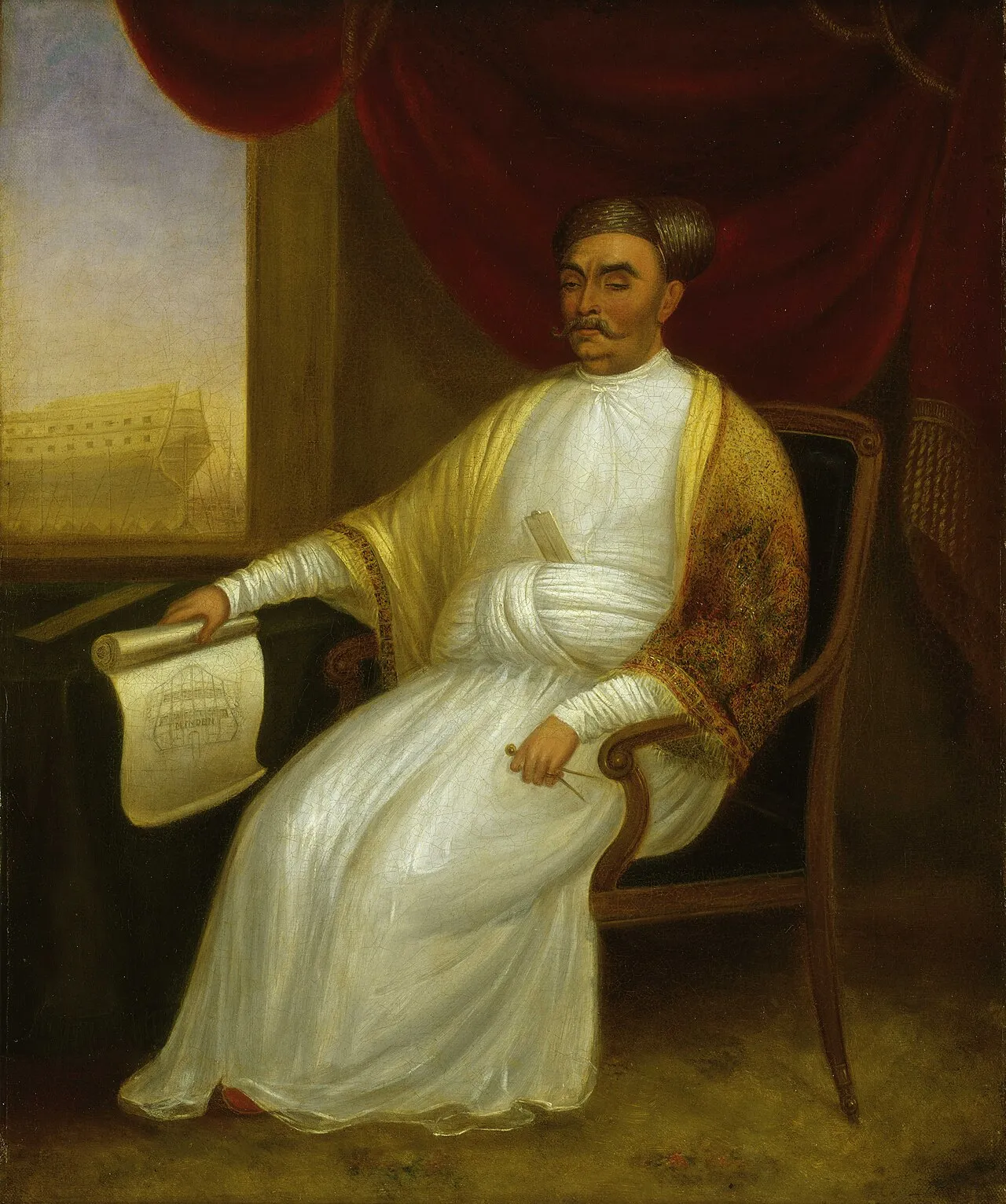
There's no written rule, so families go by custom. Karanjia's list of traditional Parsi clothes gives men the dagli with a paghdi or pheta, women the sari with a matha-bana, and children the zablu. Writing in Parsi Times in 2016, Dara M Khodaiji says the duglo, by then cut with open lapels, was worn even to weddings and Navjotes up to the 1950s. He also describes an old painting of a family taking a girl to her navjot, with the women's heads covered by white matha-banas. How these clothes look at a wedding, and how they changed, is covered in Parsi wedding attire, so we won't repeat it here.
Menswear tailor Kaizad Wadia, in a 2016 piece that Parsi Times labels an advertorial, suggested that male guests at a Navjote could wear a Nehru jacket or a smart waistcoat with a shirt and formal trousers, or a well-fitted pair of indigo jeans. He wanted the jacket in a dark shade such as navy, charcoal or black. That's one tailor's advice, not a rule. If you're unsure, ask the hosts. For how the card itself is worded, see Navjote invitation wording.
Frequently asked questions
Is there a dress code for a Navjote ceremony?
Not for guests, as far as the sources we read show. J.J. Modi wrote in 1914 that a Zoroastrian may wear any dress he likes as long as the sadra and kusti are worn. The child's clothing is set by the ritual: a cap and pyjama after the sacred bath, then the white sadra and kusti.
What does the child wear after the Navjote bath?
According to Dr Ramiyar P. Karanjia, a pyjama and a cap, with a shawl or white cloth over the shoulders. J.J. Modi describes the upper body wrapped in a white sheet that is easy to remove, because that is where the priest will put the sadra. The child sits on a stool covered in white cloth.
Should guests cover their heads at a Navjote?
Parsis do while the prayers are said. Dr Ramiyar P. Karanjia notes that most Parsis now cover their heads at least while praying or taking part in a ritual, women with a matha-bana or scarf and men with a topi, paghdi or pheta. J.J. Modi wrote in 1922 that all Zoroastrians are required to keep their heads covered.
Does a girl wear a sari at her Navjote?
Dr Ramiyar P. Karanjia describes a sari being draped around a girl's shoulders after the sadra and kusti are on and the tika and garland are given. Before that, Karanjia's account gives every child the same pyjama, cap and shoulder cloth. Customs differ between families, so the family priest will tell you what to have ready.
Do guests have to wear white to a Navjote?
No source we read makes it a rule. White is the colour of the child's sadra and, for Dr Ramiyar P. Karanjia, the symbol of the Zoroastrian religion. His view is that Zoroastrians should preferably wear white on festive and serious occasions. A 2016 Parsi Times advertorial by a menswear tailor even recommended dark jackets for men.