PalV's Kasti
On this page
Kustis are still woven by hand, and Parsi women weave them. A Parzor Foundation record says Parsi women "today constitute all the weavers of the kusti", and Navsari in Gujarat is still where the cords come from: the Bombay Parsi Punchayet's website says it buys Kustis from Navsari, Surat and other mofussil towns and sells them at cost. Navjote.">Sadras are a stitching job. Parzor calls Parsi women "creators of the core religious symbols - the sudreh and kusti", but we found no survey of who stitches sadras across the community today. So who makes sadras and kustis today? Women weavers in Navsari and nearby towns, and family workshops such as ours. Parsis buy Kustis through the BPP, from Navsari's weavers and from makers like PalV's Kasti in Ahmedabad, where we weave Kustis by hand and a Parsi lady stitches each sadra to the customer's measurements.
શહેરેવર રોજ
Shehrevar Roj, Tir Mah · 1396 Y.Z.
Who weaves Kustis today?
Traditionally, women from priestly families. Encyclopaedia Iranica's entry on the Kusti, by Firoze Kotwal and Jamsheed Choksy, says that in Iran and India Kustis "have been woven by women from āthornān or priestly families". J.J. Modi, in the 1937 edition of The Religious Ceremonies and Customs of the Parsees, calls weaving and preparing the sacred thread "the privilege of the women of the priestly class". Parzor puts it more plainly: "Earlier a priest or his wife wove the kustis."
That has widened. Parzor's crafts page says women of the laity have also started weaving, and that a skill once taught at Parsi girls' schools has become "a specialized craft practiced mainly by elderly women". Iranica records an earlier widening in Iran: during the 1920s, behdin (lay) women in the towns and villages around Yazd were trained to weave the cords. Mobeds sometimes wove Kustis themselves, a practice Iranica calls "now very infrequent".
Practice varies between families and Agiaries; your family priest's guidance comes first.
Where are the Kusti weavers?
Navsari is the name that keeps coming up. Iranica, published in 2014, says Parsis at Navsari "became well known for supplying the holy cords" to Zoroastrians in India and abroad, naming Great Britain and the United States. The BPP's own page says the Punchayet buys Kustis from Navsari, Surat and other mofussil areas to give employment to women in need there, and supplies wool imported from Australia at subsidised rates to those who weave.
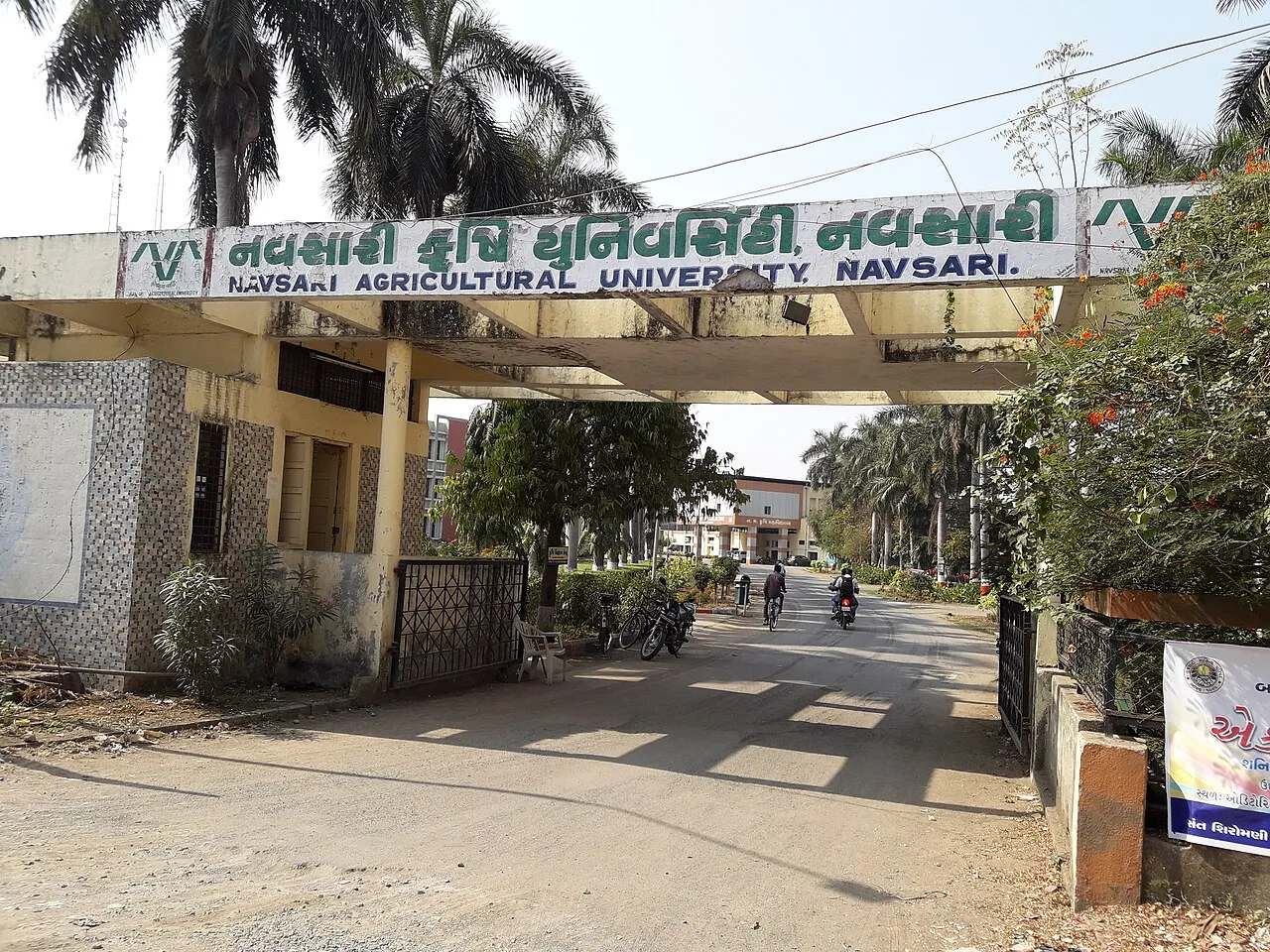
Parzor's photo records of the craft were made in Navsari homes, with images dated from 2012. They credit the weavers Navaz and Erna Bamji and the late Katy Sorabji. Our page on Kusti weavers looks at these women and the craft's future in more detail.
Teaching is harder to date. Iranica's 2014 entry said girls at the Tata Girls' School in Navsari were still taught to weave Kustis, and that Mrs. Najamai M. Kotwal had taught Parsi girls for almost three decades. We haven't found a recent source on the school's classes, so treat that as the position in 2014. Who teaches the craft now is covered in learning to weave a Kusti.
Family workshops outside Navsari exist too. Ours is one. Kusti weaving is our family's main occupation, and we have woven Kustis in Ahmedabad for more than 35 years.
Who stitches sadras?
Women, traditionally, though the record is thin. Parzor's Google Arts & Culture story says women are "creators of the core religious symbols - the sudreh and kusti". Beyond that, we found no institutional survey of sadra tailors, no count and no list of who stitches for the shops. We won't guess.
We can describe our own method. At PalV's Kasti, each sadra is cut from maal-maal to the measurements you send, then stitched by a Parsi lady, our Masi, which takes about 10 days. When it comes back we soak it for 12 hours, wash it, dry it, iron it and check it before it is packed.
Sewing one at home? Our guides cover how to measure for a Parsi sadra and how to stitch a Parsi sadra.
What are sadras and Kustis made from?
Wool for the Kusti and white cloth for the sadra. The sources differ on the details, so here is what each one says.
| Garment | Material | Source |
|---|---|---|
| Kusti | Lamb's wool | Modi, 1937; Encyclopaedia Iranica |
| Kusti | Goat's wool, "less frequently" | Encyclopaedia Iranica |
| Kusti | "White lamb's wool or camel's white hair" | Parzor Foundation |
| Kusti | Cotton "can be used as well" | Encyclopaedia Iranica |
| Sadra | White cambric | Modi, 1937 |
| Sadra | Maal-maal | PalV's Kasti |
Modi ties the colour to meaning: the white of the shirt is "symbolic of innocence". Our sadra page describes the garment as "the white cotton vestment" Zoroastrians wear after Navjote, and we make ours in 100% maal-maal. Our Kustis are 100% wool, 72 threads, woven to the length you order.
Is Kusti weaving still a living craft?
Yes, but Parzor is worried about it. Its crafts page says the craft "is on a steady decline", that at one level its religious meaning "has been overshadowed by a monetary motive", and that the use of alternative materials in the Kusti is a problem to be tackled. Most weavers, Parzor adds, feel the craft will flourish only "With the will of God."
Our Kustis are woven by hand, not by machine. The thread is prepared on the rethio, trakh and jantar, and the 72 threads are woven on the jantar with the khangu and vishu. The full process is in how a Kusti is made.
Where do Parsis buy sadras and Kustis?
Our sources point to three routes for Kustis, and fewer for sadras.
- **The Bombay Parsi Punchayet.** Its website says it sells ready Kustis from 3½ to 7 gaj, bought from Navsari and sold at cost, and that Kusti wool and Kustis are sold on the spot.
- **Navsari's weavers.** Iranica names Navsari as the long-standing supplier of Kustis to Zoroastrians in India and abroad.
- **Online makers.** We are one. PalV's Kasti sells hand-woven Kustis and made-to-measure sadras from Ahmedabad and ships to 26 countries.
For ready-made sadras from shops, we found no source we could cite on who makes them, so we've left shops out.
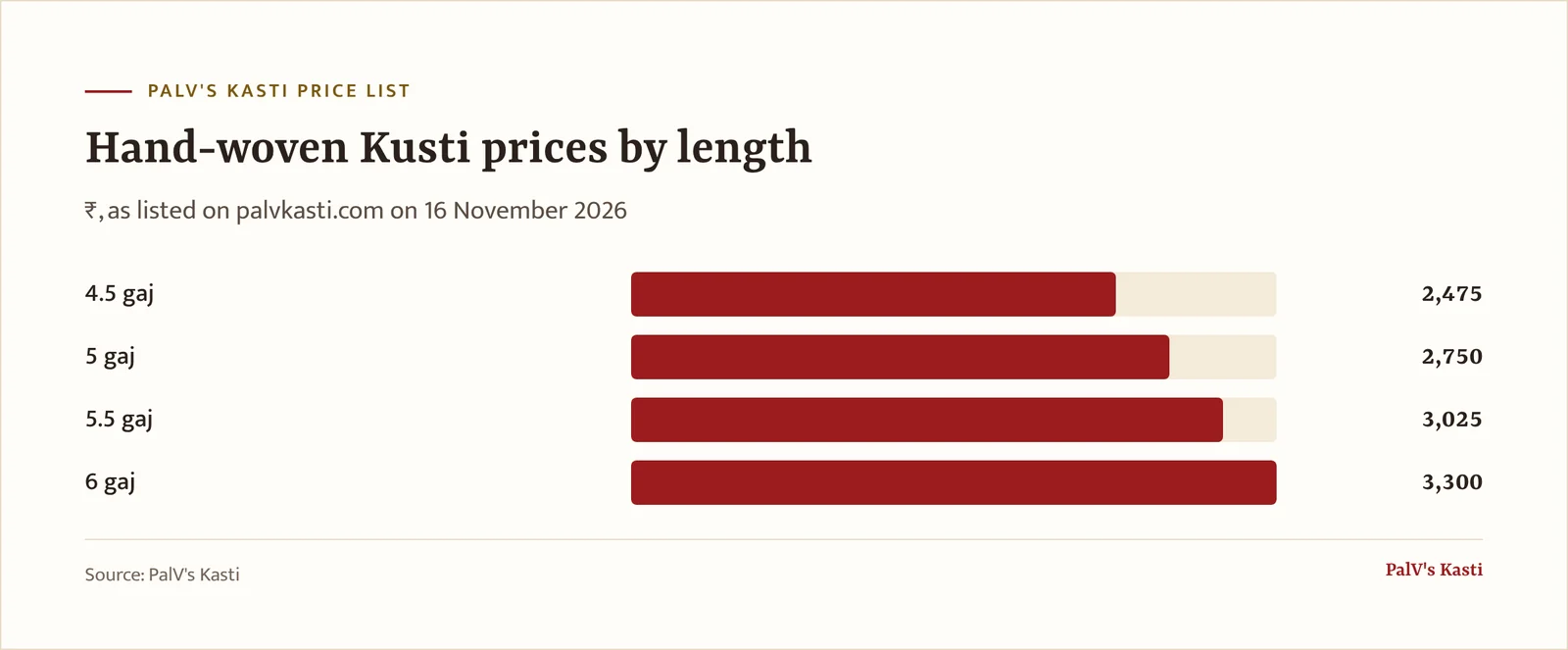
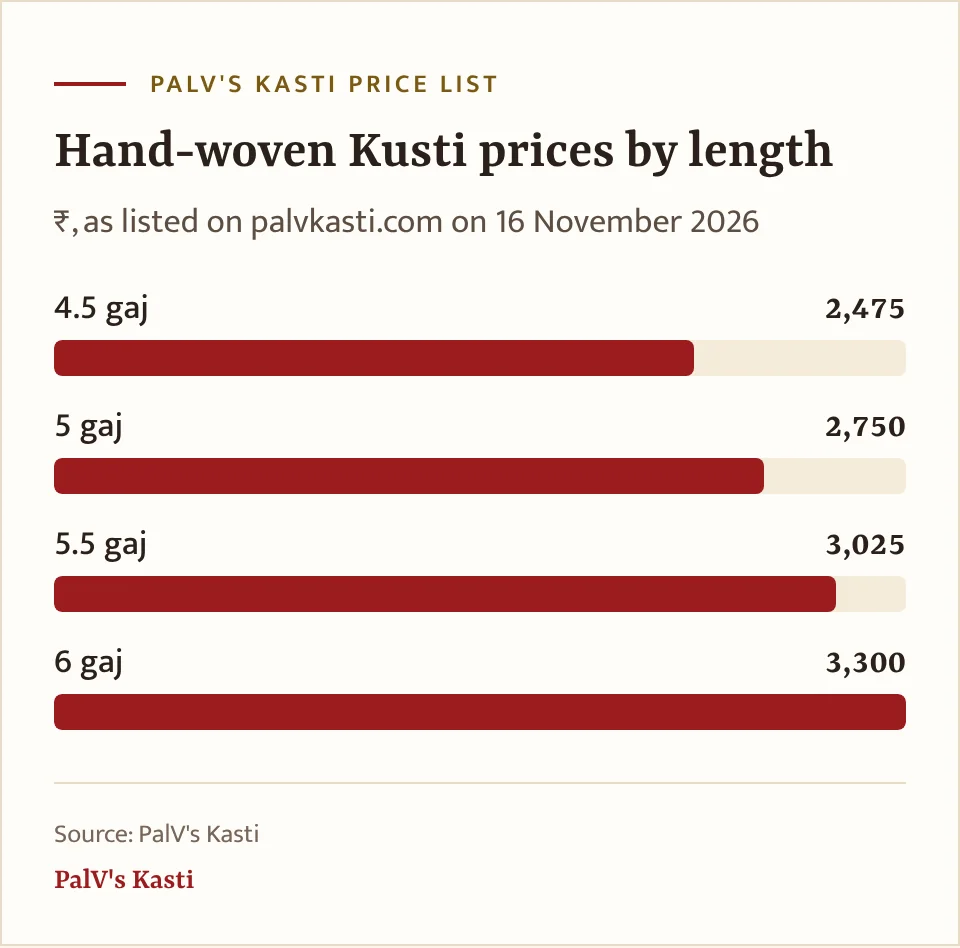
Our own prices, as listed on palvkasti.com on 16 November 2026:
| Item | Price | Delivery in India (free) |
|---|---|---|
| Kusti, 4.5 gaj (121.5 in) | ₹2,475 | Sent within 1-2 working days; arrives 4-5 working days after dispatch |
| Kusti, 5 gaj (135 in) | ₹2,750 | Sent within 1-2 working days; arrives 4-5 working days after dispatch |
| Kusti, 5.5 gaj (148.5 in) | ₹3,025 | Sent within 1-2 working days; arrives 4-5 working days after dispatch |
| Kusti, 6 gaj (162 in) | ₹3,300 | Sent within 1-2 working days; arrives 4-5 working days after dispatch |
| Sadra, made to measure | ₹300 per sadra, whatever the quantity | Stitched and dispatched in about 15 working days, delivered 4-5 working days later |
International orders go by DHL or UPS, with a free quotation, and our sadra page says extra freight applies outside India. To order, see buy a Parsi sudreh online or buy a Parsi Kusti online.
Frequently asked questions
Who weaves Kustis today?
Parsi women. A Parzor Foundation record says Parsi women "today constitute all the weavers of the kusti". Traditionally they came from priestly families. Parzor says laywomen now weave too and the craft is practised mainly by elderly women. Navsari in Gujarat is the best-known centre, and family workshops such as ours in Ahmedabad also weave by hand.
Are sadras stitched by Parsis?
Some are, but there is no survey that says how many. Parzor describes Parsi women as creators of both the sadra and the Kusti, and that is the traditional picture. At PalV's Kasti, a Parsi lady stitches each sadra to the customer's measurements, and we soak and wash it before it is dispatched.
What fabric is a sadra made of?
A sadra is made of plain white cloth. J.J. Modi's 1937 book names white cambric and links the white to innocence. PalV's Kasti stitches its sadras in 100% maal-maal. The Kusti, by contrast, is woven from lamb's wool, and Encyclopaedia Iranica notes that goat's wool and cotton are also used.
Where can Parsis buy a Kusti?
The Bombay Parsi Punchayet's website says it sells ready Kustis from 3½ to 7 gaj, bought from Navsari, at cost. Encyclopaedia Iranica names Navsari's weavers as long-standing suppliers in India and abroad. PalV's Kasti weaves Kustis to order in Ahmedabad and ships to 26 countries by DHL or UPS.
How much does a hand-woven Kusti cost?
It depends on the length and the maker. On 16 November 2026, PalV's Kasti listed hand-woven Kustis from ₹2,475 for 4.5 gaj (121.5 inches) to ₹3,300 for 6 gaj (162 inches), with free delivery in India. The Bombay Parsi Punchayet says it sells Kustis at cost.