PalV's Kasti
On this page
Kusti weavers have traditionally been women from priestly (athornan) families, in Iran as well as India, according to Encyclopaedia Iranica. J.J. Modi, writing in 1922, called weaving the sacred cord "the privilege of the women of the priestly class". That is no longer the whole picture. UNESCO Parzor records that women of the laity now weave Kustis too, and that the craft is practised mainly by elderly women. In India, Navsari in Gujarat is closely tied to the craft: Iranica states that its Parsis became well known for supplying the cords to fellow Zoroastrians. The future is less certain. Shernaz Cama of Parzor writes that, because of poor returns, very few women take up Kusti weaving as a profession.
શહેરેવર રોજ
Shehrevar Roj, Tir Mah · 1396 Y.Z.
Who traditionally wove the Kusti?
The Parsi Kusti (also spelt Kushti or Kasti, and kustīg in Encyclopaedia Iranica) was a craft of the priestly household. Iranica, in a 2014 entry by Firoze M. P. Kotwal and Jamsheed K. Choksy, says that in Iran and India the cords were traditionally woven by women from āthornān, or priestly, families. The same entry says priests themselves sometimes wove the cords, and calls that "a practice now very infrequent".
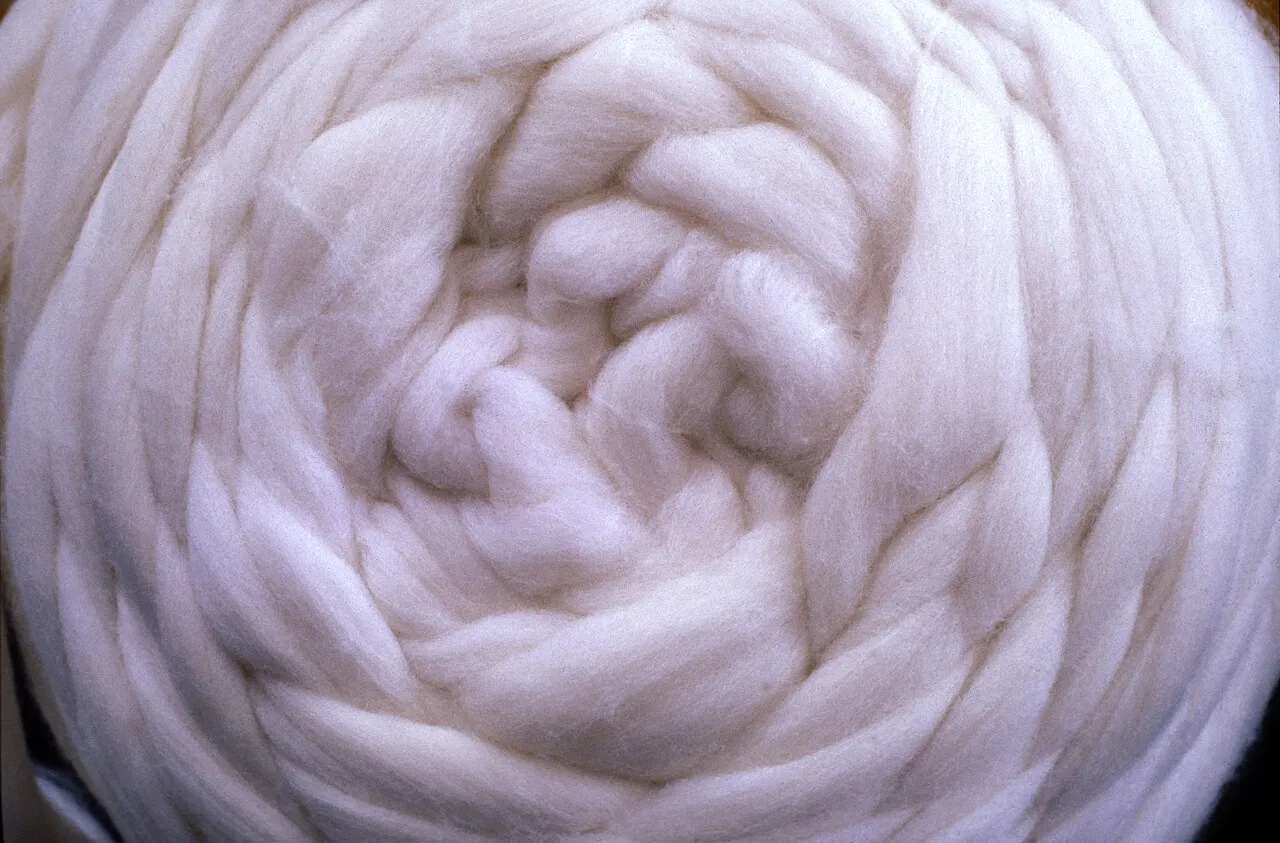
Modi describes a division of roles in the Parsi practice of his day. The women of the priestly class wove and prepared the cord, and a priest then cut and consecrated it. Cama's essay "Sacred Armour" describes the same older pattern, and adds that it has changed: women now rarely send the Kusti to a priest for cutting, and the weavers cut it themselves after reciting the Nirang. The prayers and purity rules behind this are covered in our guide to Kusti making rituals.
Practice varies between families and Agiaries; your family priest's guidance comes first.
Who are the Kusti weavers today?
Today the weavers are women, and they no longer come only from priestly families. Parzor's online exhibition "Keepers of Tradition" describes "Parsi women, who today constitute all the weavers of the kusti". Its crafts department explains the shift: as the boundaries between the priestly class and the laity faded, women of the laity started weaving Kustis too.
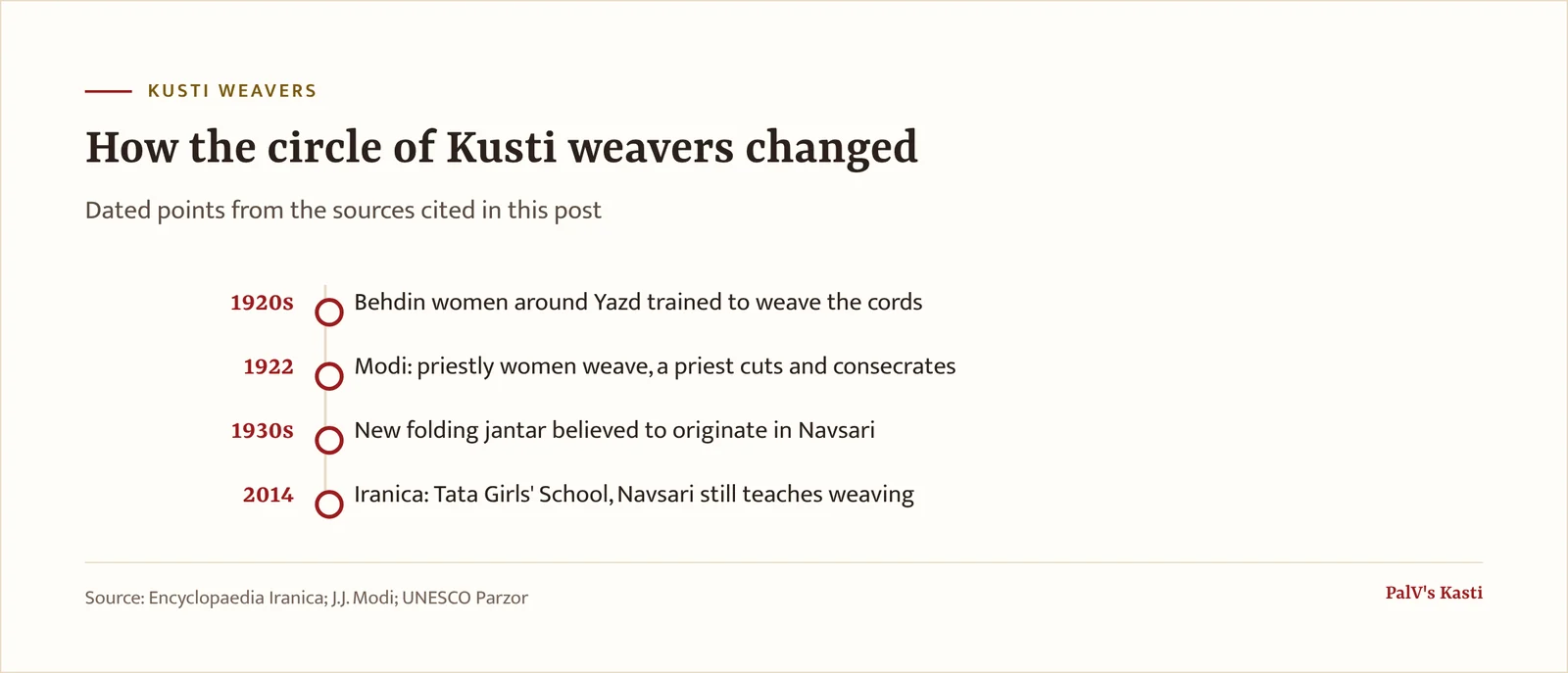
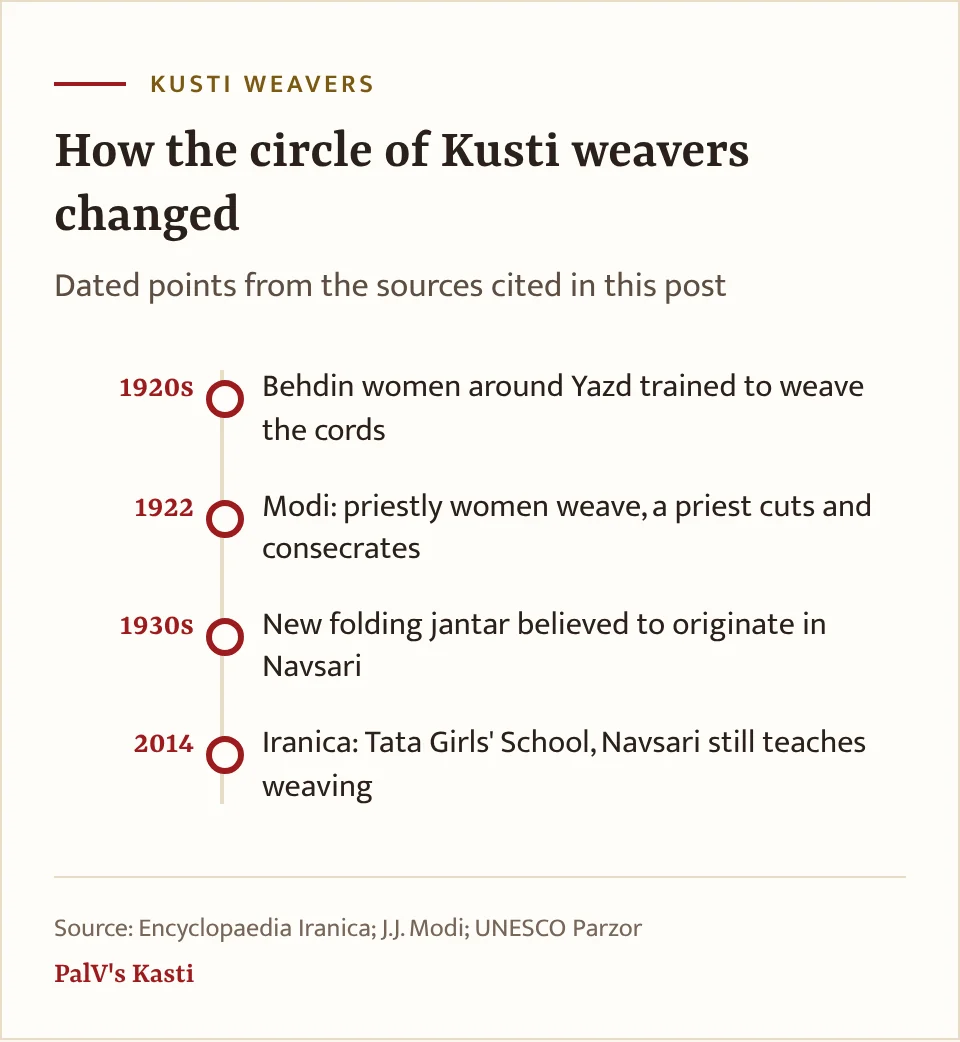
The same Parzor page says the change went further. A skill once expected of every young girl, and taught at Parsi girls' schools, has become "a specialized craft practiced mainly by elderly women".
Iran widened the circle earlier. Iranica records that during the 1920s, lay (behdin) Zoroastrian women in towns and villages around Yazd were trained as weavers.
| Period and place | Who wove the Kusti | Source |
|---|---|---|
| India, as described in 1922 | Women of the priestly class, with a priest cutting and consecrating the cord | J.J. Modi |
| Iran and India, traditionally | Women from athornan (priestly) families, and occasionally priests | Encyclopaedia Iranica |
| Iran, 1920s | Behdin women around Yazd, trained to weave | Encyclopaedia Iranica |
| India, today | Women of the laity as well as priestly families, mainly elderly women | UNESCO Parzor |
Why is Navsari known for Kusti weaving?
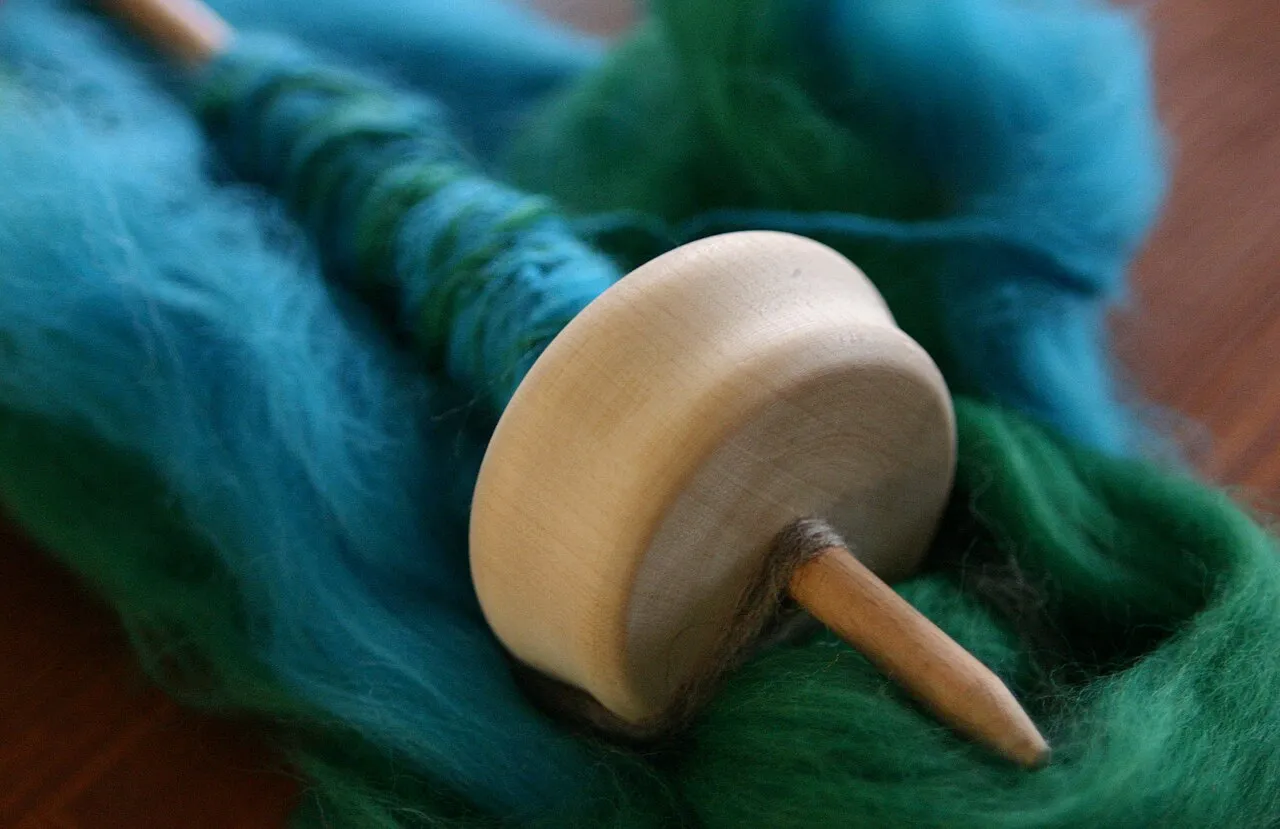
Encyclopaedia Iranica states that Navsari's Parsis "became well known for supplying the holy cords" to fellow Zoroastrians. Cama describes walking through the Parsi vads (colonies) of Navsari and seeing women spinning on their verandahs with their chaaterdis and chaaterdos. Both are spindles. Parzor's "Spinning the Kusti" exhibition describes the chaatardi as a spindle 8-10 inches long and the chaaterdo as a wooden drop spindle with a thicker shaft and a wider whorl.
The loom is linked to the town as well. According to Cama, most weavers believe the new jantar, the light folding Kusti loom, originated in Navsari around the 1930s, and Parzor's "Spinning the Kusti" repeats that belief. We describe the loom and its parts in the Kusti loom (jantar) and the tools used to weave a Kusti.
Parzor built its record of the craft with Navsari's weavers. The credits of "Spinning the Kusti" thank "the craftswomen of Navsari", naming Navaz and Erna Bamji and the late Katy Sorabji. Navaz Bamji of Navsari is photographed at her jantar in Parzor's "Weaving the Kusti" exhibition. The same credits thank the late Vada Dastur Meherjirana of Navsari for explaining the cord's symbolism.
How do spinners and weavers share the work?
Spinning and weaving can be done by different women. Cama records an old custom that links them without money. The spinner hands over enough yarn for two Kustis. The weaver weaves both, gives one finished cord back to the spinner and keeps the other. No cash changes hands, and Cama calls it "an equitable barter".
The work is social too. Iranica calls producing the cords "a joyful activity", one where the women sing, laugh and share. For the full sequence from wool to finished cord, see our hub on Kusti weaving.
Is Kusti weaving dying out?
The people closest to the craft are worried. Parzor's crafts department reports "a level of fear" among most Zoroastrians that the craft is in steady decline. It names two problems: the religious significance has, at one level, been overshadowed by a monetary motive, and the use of alternative materials in Kustis is an issue still to be tackled. Most weavers, Parzor adds, feel the craft will flourish only "With the will of God."
Money explains much of it. Cama calls Kusti weaving "an art that takes years to master", and says that with such poor returns, very few women choose it as a profession.
There are signs of continuity. When Iranica published its entry in 2014, it reported that girls at the Tata Girls' School in Navsari "are still taught how to weave kustīgs". The craft is also on record now. Ashdeen Lilaowala, then a student at the National Institute of Design, Ahmedabad, did the first textile study of Kusti weaving in Navsari for Parzor. That research became the book Threads of Continuity, co-written with Shernaz Cama. Our post on books and films on Kusti weaving covers that record.
Our reading of the sources is simple. The knowledge has been written down. What no book can supply is the next generation of weavers willing to spend years on a skill that pays poorly. If you want to try, start with learning to weave a Kusti. For where Parsis get their Kustis today, see who makes sadras and Kustis today.
Frequently asked questions
Who weaves the Kusti?
Traditionally, women from priestly (athornan) families wove Kustis in both Iran and India, according to Encyclopaedia Iranica, and priests occasionally wove them too. UNESCO Parzor records that women of the laity now weave Kustis as well, and that today the craft is practised mainly by elderly Parsi women.
Can a woman from a non-priestly family weave a Kusti?
Yes, in current practice. UNESCO Parzor records that as the boundaries between the priestly class and the laity faded, lay women also began weaving Kustis. Encyclopaedia Iranica notes that lay Zoroastrian women around Yazd in Iran were trained to weave the cords during the 1920s. Your family priest's guidance comes first.
Why is Navsari famous for Kustis?
Encyclopaedia Iranica states that the Parsis of Navsari in Gujarat became well known for supplying sacred cords to fellow Zoroastrians. Shernaz Cama of UNESCO Parzor describes women spinning Kusti yarn on their verandahs in Navsari's Parsi colonies, and most weavers believe the new Kusti loom originated there around the 1930s.
Do men ever weave Kustis?
Rarely. Encyclopaedia Iranica records that priests sometimes wove the cords themselves but calls this a practice that is now very infrequent. In the Parsi division of roles that J.J. Modi described in 1922, women wove the Kusti and the priest's role was to cut and consecrate it.
Is Kusti weaving still taught in schools?
Kusti weaving was once taught at Parsi girls' schools as a domestic skill, according to UNESCO Parzor. When Encyclopaedia Iranica published its Kusti entry in 2014, it reported that girls at the Tata Girls' School in Navsari were still being taught how to weave the sacred cord.
Why are fewer women weaving Kustis?
Shernaz Cama of UNESCO Parzor writes that Kusti weaving takes years to master and that, because of poor returns, very few women take it up as a profession. Parzor also records worries about a monetary motive overshadowing the craft's religious meaning and about alternative materials being used.