PalV's Kasti
On this page
A Kusti is woven on a jantar, a hand-loom whose ends can be moved so the warp can be set to the length the cord needs. Parzor Foundation describes the jantar as a narrow, foldable wooden loom. Around it the weaver keeps a small kit of hand tools. Two wooden drop spindles, the chaaterdi and the chaaterdo, spin and ply the wool. The tan khuta, veesoon, sali and khangu hold the warp threads in their groups, and gargari pulleys keep them taut. A naru carries the weft and a kateli beats it in. Finishing calls for a needle, a bleaching vessel, a wooden cylinder and two wooden blocks. Below, each tool is described under the name the weavers of Navsari use for it, as recorded by J.J. Modi and the Parzor Foundation.
શહેરેવર રોજ
Shehrevar Roj, Tir Mah · 1396 Y.Z.
What is the jantar, the Kusti loom?
The jantar is the loom a Kusti is woven on. J.J. Modi, in The Religious Ceremonies and Customs of the Parsees, called it a hand-loom with movable ends, so it can be set to whatever length the Kusti needs. The twisted yarn is passed round it 72 times, which gives the Kusti its 72 threads, divided into six strands of twelve.
Parzor Foundation describes the jantar as "a wooden, foldable loom, which is narrow and tubular", and says it was always an important part of a Zoroastrian household. Dr Shernaz Cama of Parzor adds that the loom is light enough to be carried from room to room. Cama also describes a larger loom: two flat wooden uprights carrying pegs, held together by a horizontal bamboo pole.
Parzor's captions also name the charavana hatha. The tan khuta slides along it to set the warp length, and an extra gargari pulley is placed on the right charavana hatha.
What types of jantar are there?
| Type | What it is |
|---|---|
| Junu jantar (also spelt junnu jantar) | The older loom. Cama notes it is still used in Iran, where the weaver sits on the floor to weave. |
| Foldable jantar | The newer loom, light and foldable, that can be moved around the house. |
| Goriwala jantar (also spelt ghoriwalu jantar) | A jantar with an extra stool added at the base, so the weaver can work sitting on a chair or stool. |
Which tools are used to spin Kusti yarn?
Spinning uses two wooden drop spindles.
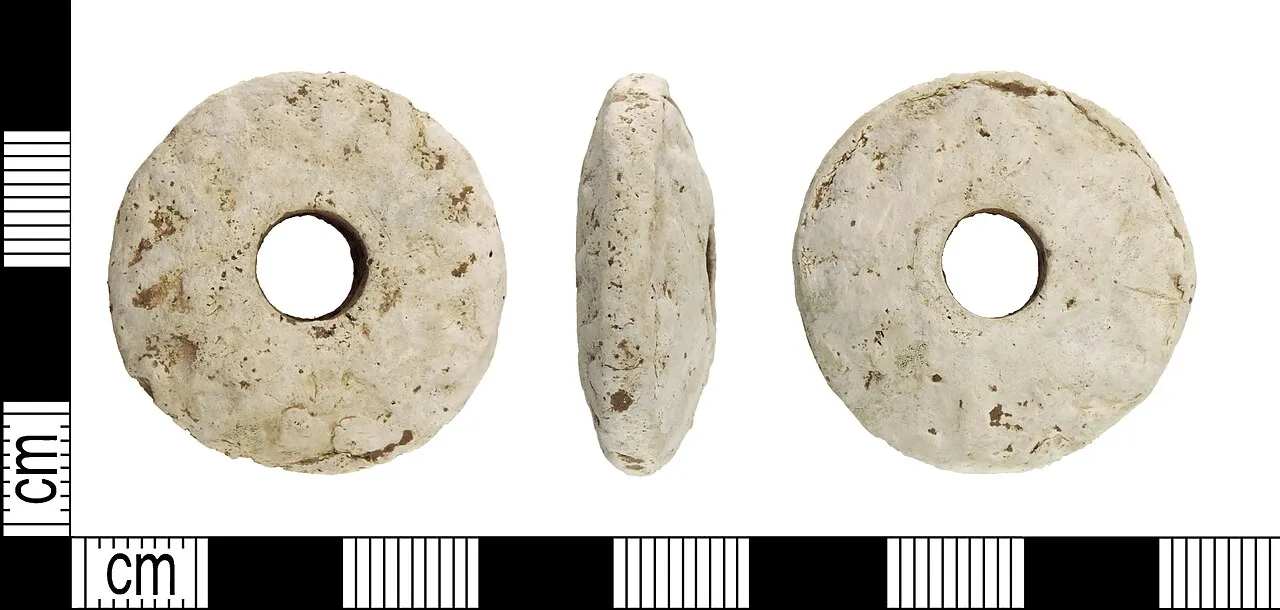
The chaaterdi (Parzor also spells it chaatardi) spins pooni wool into yarn. Cama describes it simply as a drop spindle on which the wool is spun into fine yarn. Modi gives the hand-spindle's name as châtri, and notes that two threads are prepared on two such spindles.
The chaaterdo is also a wooden drop spindle, but it has a thicker shaft and a wider whorl known as moti bhimri. Two single yarns are combined into a yarn called durry, and Cama writes that the double-plying, val dewanu, "is done on a bigger spindle or chaaterdo". In Parzor's photographs of the warping sequence, the chaaterdo is also used to stretch the warp.
Which tools hold the warp in place?
The warp of a Kusti is 72 threads handled in units of 12. Several small tools keep those units separate and the warp taut. Parzor Foundation documents six of them:
| Tool | Also spelt | What it does |
|---|---|---|
| Tan khuta | tan-khuta | A wooden piece attached to the loom during warping, with wooden pegs on which the threads are wound. It moves along the charavana hatha to set the warp length. Parzor shows 12 threads on each fork. |
| Veesoon | the lease | A short hollow tube with slots that keeps the different units of yarn apart during warping and weaving. All six units of 12 threads end up locked in it. |
| Sali | none | The stick that locks the threads in the veesoon. A loop made on the sali is also used to lift a heald shaft. |
| Khangu | none | A hollow cylindrical tool that separates the warp yarns. It sits in front of the veesoon and is tied to it, so the two move together along the warp. |
| Doro | daro | Nylon thread used for making the shafts. |
| Gargari | the pulley | A pulley hung on the warp and fastened with a chain or string. It holds the warp and gives it tension. Parzor notes an extra one on the right charavana hatha. |
The gargari is worth a note. Parzor is clear that the pulley "is not a part of the loom". It hangs from the warp itself. Cama, too, describes the gargari as hung on the warp.
Which tools are used while weaving?
Once the warp is set, the naru and the kateli come into play.
The naru carries the weft. Cama writes that "the weft or naru is passed with one hand" while the weaver works the shafts. Parzor photographs the naru in place with the warp.
The kateli is the beater. Parzor describes it as a comb-shaped tool with a rounded handle, its upper part thicker at one end and tapering smoothly. Katelis differ in thickness but are mostly the same length, and a less thick kateli may be used to weave thin Kustis. Most are made of sheesham, Parzor explains, because the wood must be "extremely smooth" so that it does not break the warp threads. The weaver also uses the beater to select the 12 threads that form each heald shaft. Handling it is a skill in itself. Cama says it takes years of practice to master the thok, the force used when beating.
The whole warp can also be taken off the jantar before the weaving is done. Cama calls this "alko karididho", removing the warp from the loom, and counts it among the most salient features of Kusti weaving. When and by whom a Kusti may be woven is a separate question, covered in our guide to purity rules and prayers while making a Kusti.
Which tools are used to finish a Kusti?
Once the Kusti is off the loom, these are the tools Modi, Parzor and Cama record for finishing it:
| Tool | Stage | What it does |
|---|---|---|
| Needle | Kusti otlavanu (turning inside out) | Inserted into the hollow cord and pulled through its whole length to invert it |
| Earthen vessel, heated coal and sulphur | Dhupvanu (bleaching) | Sulphur sprinkled on heated coal bleaches the new Kusti, with the earthen vessel as a cover |
| Small brass or copper vessel (pital or tamba) and white muslin | Dhupvanu (bleaching) | Filled with ash or burning coal and set on the Kusti, the vessel wrapped in white muslin |
| Sambhelu or sariya (wooden cylinder) | Patti parvani (flattening) | The Kusti is flattened on it. Cama calls it a wooden cylinder or rolling pin |
| Two wooden blocks | Pressing | The rolled Kusti is placed between them to even it out. Cama describes the blocks being screwed together |
The order these steps follow, from cutting to pressing, is set out in our hub guide on how a Kusti is made.
Where can you see these tools in use?
Parzor Foundation's two online exhibits on Google Arts & Culture, Spinning the Kusti and Weaving the Kusti, photograph each tool with the craftswomen of Navsari, who shared their homes with Parzor's researchers. They show Navaz Bamji working on her jantar and the late Katy Sorabji on a junu jantar. For the women behind the craft, read our piece on the Kusti weavers of Navsari. Our guide to books and films on Kusti weaving covers the wider record, including film of the craft, and learning to weave a Kusti looks at who teaches it. For what the finished cord means and how it is worn, start with our guide to the Parsi Kusti.
Frequently asked questions
What is a Kusti loom called?
The Kusti loom is called the jantar. J.J. Modi described it as a hand-loom with movable ends, so the warp can be set to the length the cord needs. Parzor Foundation describes it as a narrow, foldable wooden loom. The older form is the junu jantar, and a jantar fitted with a stool is a goriwala jantar.
What is a kateli?
A kateli is the comb-shaped wooden beater used to press the weft into place while a Kusti is woven. Parzor Foundation notes that katelis are mostly made of sheesham, because the wood must be extremely smooth and must not break the warp threads. A less thick kateli may be used for thin Kustis.
What does the veesoon do on a Kusti loom?
The veesoon, or lease, is a short hollow tube with slots in it. It keeps the different units of yarn apart during warping and weaving. Parzor Foundation documents the threads being locked into it with a stick called a sali, until all six units of 12 threads are held in the veesoon.
Is the gargari part of the jantar?
No. Parzor Foundation describes the gargari as a pulley that is not part of the loom. It is suspended on the warp and fastened with a chain or string, holding the warp and giving it tension. Parzor notes that one extra gargari sits on the right charavana hatha.
Which spindles are used for Kusti wool?
Two wooden drop spindles are used. The chaaterdi spins the wool into fine yarn. The chaaterdo, which has a thicker shaft and a wider whorl called moti bhimri, is used to double-ply two yarns into a yarn called durry. J.J. Modi gave the hand-spindle's name as châtri.
Can the warp be taken off the jantar mid-weave?
Yes. Shernaz Cama of Parzor Foundation calls the removal of the warp from the loom, alko karididho, one of the most salient features of Kusti weaving. She writes that even while weaving is in progress, the whole warp can be taken off the loom, then kept aside or moved to another loom.