 PalV's Kasti

On this page
Ancient Persian cooking reaches modern Iranian kitchens through three routes we can actually document. The ingredients survived: saffron, pistachio, pomegranate, quince, dried fruit and nuts appear in Greek accounts of the Achaemenian king's table and are still everyday Iranian ingredients. The communal feast survived: the gahambar, where everyone once added something to one shared pot, is still marked with a shared stew called aush. And the Nowruz (Navroz) spring table survived, with sprouted grain, sweets and, in Zoroastrian homes, one baked cake called komaj. What the sources do not support is the idea that today's named dishes are unchanged ancient recipes. The writers who make that link use careful words like "reportedly" and "similar to", and so do we.
અદીબેહેસત રોજ
Ardibehesht Roj, Tir Mah · 1396 Y.Z.
Which ancient Persian ingredients are still used in Iran today?
The most useful list is the one the Macedonian writer Polyaenus gave for the Achaemenian king's dinner, as quoted by K. E. Eduljee in FEZANA's 2012 cookbook Eat, Live, Pray. It includes grape jelly, salted candied turnips and radishes, pistachio (terebinth) oil, cumin and saffron from Media. Eduljee adds that other references mention dates, pomegranates, figs, apples, raisins and almonds, along with quince and pear.
Put that list beside a modern Iranian pantry and the overlap is plain. Eduljee's chapter quotes the British Museum's view that fruit, nuts and saffron are classic Iranian ingredients dating from the Achaemenid period and still in use. One Sasanian-era fruit jelly made from apple and quince has a modern cousin too: Eduljee notes that a quince marmalade in Iran today is called mojassameh-ye beh.
Boz ghormeh and eshkeneh: dishes with a claimed past
Two dishes are linked to older periods in the FEZANA book, each with a hedge we keep.
- Boz ghormeh. A lamb dish with saffron, whey and walnuts. The book says it is served today in Yazd, Kerman and Azerbaijan and is "similar to" what was eaten in Sasanian times.
- Eshkeneh. An onion soup finished with fenugreek and egg. Eduljee writes that soldiers of Arshak I, the first Parthian king, "reportedly" ate an onion soup that was its predecessor.
How has the gahambar feast carried into modern Iranian food?
The gahambar is the clearest case of a ceremony, not just a dish, passing down the centuries. Farishta Murzban Dinshaw, editor of the FEZANA book, explains that ancient gahambars ran for five days, with feasting on the last. An old Avestan injunction, later known as the Afringan e Gahambar, asked every participant to bring whatever they could afford for the communal pot: meat, vegetables or grain. Those with nothing to give could offer firewood or their labour. Dinshaw calls that all-day stew the forerunner of Iranian aush and of the Parsi dhansak still served at gahambars.
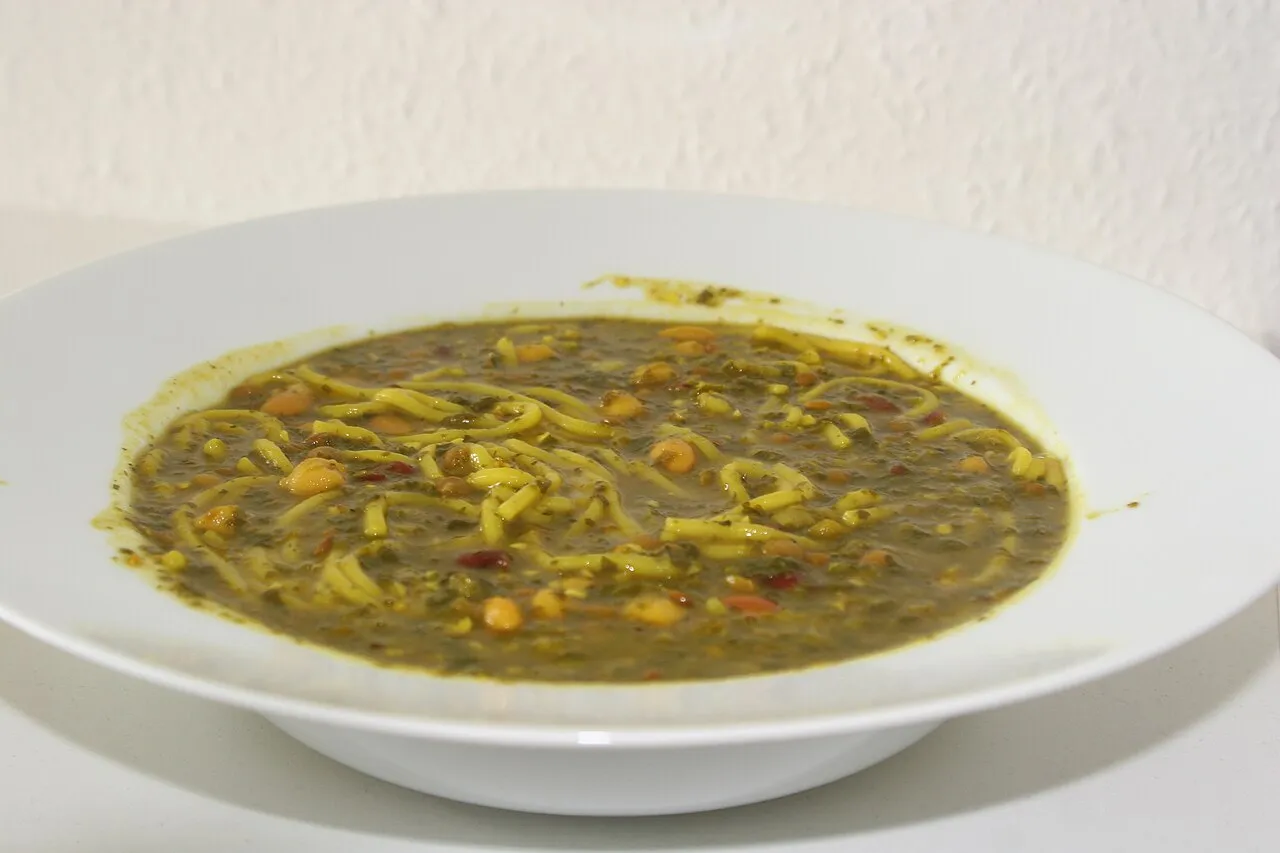
The pattern is still there. Armin Wandrewala, in the same book, describes each gahambar today as five days: four of prayers beginning with the Afrin, and a fifth for eating together. Eduljee writes that aush is the food most often served to the congregation, whether at a seasonal gahambar, at Pir-e-Sabz or at a wedding. Our guide to Iranian Zoroastrian cuisine covers how aush is made and blessed.
An independent account comes from Shahin Bekhradnia, writing in the New Statesman in 2007. She describes gahambars as endowed feasts in memory of departed family members, where priests once handed out dried fruit, nuts and bread, or pounded lamb with coriander and chickpeas. Those household handouts, she writes, have largely given way to feasts in the community halls of Zoroastrian centres. In India the same communal meal took a different shape, and our guide to Parsi food covers dhansak and the Parsi table.
Practice varies between families and Agiaries; your family priest's guidance comes first.
What foods go on the Nowruz table?
Nowruz, the spring new year at the equinox, is where ancient custom is most visible on a modern Iranian table. It is also kept by Shi'a Muslims, Baha'is and Kurds, as Dinshaw points out, so the version most people know is the Haft Seen: seven items whose Persian names begin with the letter "seen". Mobed Mehraban Firouzgary lists them in the FEZANA book.
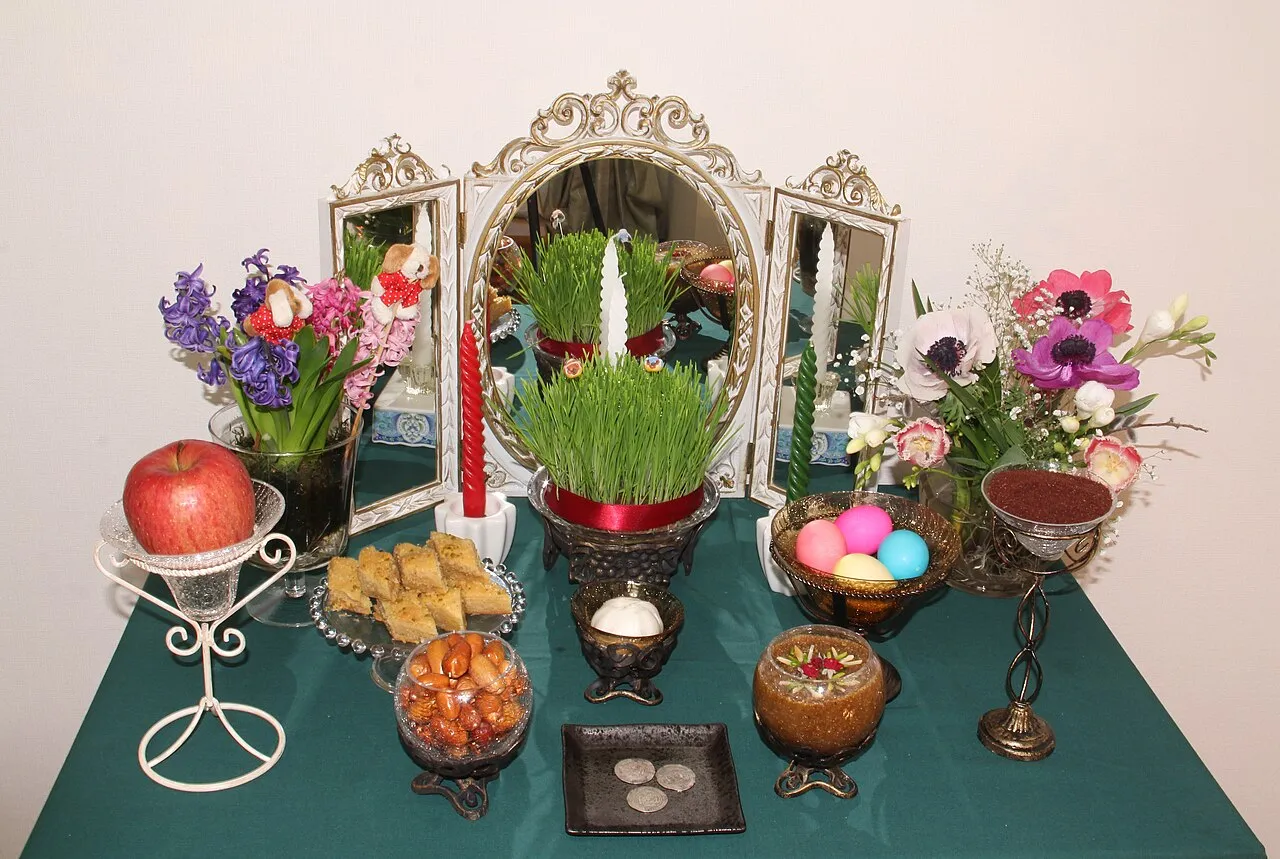
- Sabzeh: sprouted wheat, barley or lentils, for rebirth
- Samanu: a sweet wheat-germ pudding, for plenty
- Senjed: dried oleaster fruit, for love
- Sir: garlic, as medicine
- Sib: apples, for beauty and health
- Somaq: sumac, the colour of sunrise
- Serkeh: vinegar, for age and patience
Bekhradnia calls the spread by the name her own Zoroastrian community uses, the Haft Shin table. Her list is built around what each thing stands for rather than its first letter. Green shoots and evergreens represent plant life. Bread, cheese and milk stand for our bond with animals. Wine is there for merriment and medicine, sweets and rosewater for happiness, coins for prosperity. Both accounts end the same way: on the thirteenth day families go out for a picnic and the sprouted grain is thrown into running water.
Why does komaj stand for all six Amesha Spentas?
According to Mobed Firouzgary, no cooked food goes on the Nowruz table except komaj (also spelt komach), a cake of flour, sugar, ghee, walnuts, almonds and rosewater baked in a copper pot. He explains it as a dish that brings in the Amesha Spentas. Butter and milk stand for Bahman, the baking fire for Ardibehesht, the metal pot for Shahrivar, flour and sugar for Spenta Armaity, water for Khordad, and raisins, dates and nuts for Amordad. Firouzgary also describes how falooda starch, served at Nowruz, was once made at home from wheat soaked from the start of winter, its water changed for 40 days.
Practice varies between families and Agiaries; your family priest's guidance comes first.
Do "hot" and "cold" foods still shape Iranian cooking?
Yes, according to the FEZANA book. Its section on hot and cold foods explains that Persian cooking aims to balance foods with a "hot" or "cold" effect on the body. The words have nothing to do with temperature, so tea counts as cooling even when it is served steaming. Persians believed, the writer says, that too much cold food slowed digestion and caused tiredness, while too much hot food sped it up. The writer is frank that modern nutrition gives no basis for the labels, but says they are so ingrained that cooks follow them without thinking. Eduljee gives aush as an example, a dish put together to restore the hot-and-cold balance in the body.
Is modern Iranian food the same as ancient Persian food?
No, and we would be wary of anyone who says it is. The continuity is real at the level of ingredients, the shared feast and the seasonal table. At the level of named recipes, even the enthusiasts hedge: eshkeneh is "reportedly" descended from a Parthian soup, boz ghormeh is "similar to" a Sasanian dish, aush is a "forerunner" story. Close to two thousand years separate Polyaenus's list from a Yazdi kitchen today.
For what Zoroastrian families in Iran cook now, including the food set out for prayers for departed souls, and how it compares with the Parsi table in India, read our guide to Iranian Zoroastrian cuisine.
Frequently asked questions
Is modern Iranian food like ancient Persian food?
In ingredients and customs, yes. Saffron, nuts, dried fruit, pomegranate and quince run from Achaemenian accounts to today, and the gahambar and Nowruz tables carry old ceremonies. Specific recipes are another matter. Writers only say eshkeneh is reportedly descended from a Parthian soup, or that boz ghormeh resembles a Sasanian dish.
Which ancient Persian ingredients are still used today?
Polyaenus's list for the Achaemenian king's dinner includes saffron, pistachio oil, cumin and candied turnips, and other references add dates, pomegranates, figs, almonds and quince. K. E. Eduljee, writing in FEZANA's Eat, Live, Pray, quotes the British Museum's view that fruit, nuts and saffron date from that period and are still used.
How did the gahambar feast shape Iranian food?
In ancient Iran each gahambar ended in a feast where every participant added what they could afford to one communal pot. Farishta Dinshaw, editor of FEZANA's Eat, Live, Pray, calls that stew the forerunner of Iranian aush and Parsi dhansak. K. E. Eduljee writes that aush is still the dish most often served to the congregation at gahambars.
What foods go on the Nowruz table?
The Haft Seen spread holds sprouts, samanu pudding, oleaster fruit, garlic, apples, sumac and vinegar. Shahin Bekhradnia writes that her Zoroastrian community calls it the Haft Shin table, with bread, cheese, milk, wine, sweets, rosewater and coins. Mobed Mehraban Firouzgary writes that komaj, a baked nut cake, is the only cooked food placed on it.
What are "hot" and "cold" foods in Persian cooking?
They describe a food's supposed effect on the body, not its temperature, so hot tea still counts as cooling. FEZANA's Eat, Live, Pray explains that Persian cooking balances the two. The same writer says modern nutrition gives no basis for the labels, yet they are so ingrained that cooks follow them without thinking.


