PalV's Kasti
On this page
- Who founded the Central Bank of India?
- When was the Central Bank of India established?
- Why is it called India's first swadeshi bank?
- What did the Central Bank of India introduce in its early years?
- When was the Central Bank of India nationalised?
- How did the bank mark 100 years?
- Where does the Central Bank of India stand today?
- Frequently asked questions
Sir Sorabji Pochkhanawala, whom Outlook Business describes as a Parsi banker from Mumbai, founded the Central Bank of India on 21 December 1911. In the words of the President of India's 2010 centenary speech, it was founded as a "swadeshi bank" against the backdrop of the freedom struggle. The bank today describes itself as the first Indian commercial bank wholly owned and managed by Indians, and says Sir Pherozeshah Mehta served as its first chairman. According to the bank, Pochkhanawala called his creation "the property of the nation". The bank was nationalised with effect from 19 July 1969 and is still a public sector bank.
અસપંદામેદ રોજ
Asfandarmad Roj, Tir Mah · 1396 Y.Z.
Who founded the Central Bank of India?
The founder was Sir Sorabji Pochkhanawala. Outlook Business describes him as a Mumbai Parsi banker shaped by the swadeshi movement. The bank's own profile page calls its establishment "the ultimate realisation of the dream" of its founder, and quotes his pride in it: he proclaimed the bank "the property of the nation and the country's asset".
When President Pratibha Patil opened the bank's centenary celebrations in Mumbai in December 2010, she described the bank as the outcome of Pochkhanawala's vision. In her words, he focused on the needs of ordinary people and sought to work for the economic independence of India. He belongs to the wider story of Parsi enterprise that we trace in Parsi business history.
Was Sir Pherozeshah Mehta a co-founder?
The two accounts we checked frame his role differently. The bank names Pochkhanawala alone as founder and lists Sir Pherozeshah Mehta as the first chairman of what it calls "a truly 'Swadeshi Bank'". Parsi Times, in October 2025, wrote that the bank was established by Pochkhanawala and Mehta together.
When was the Central Bank of India established?
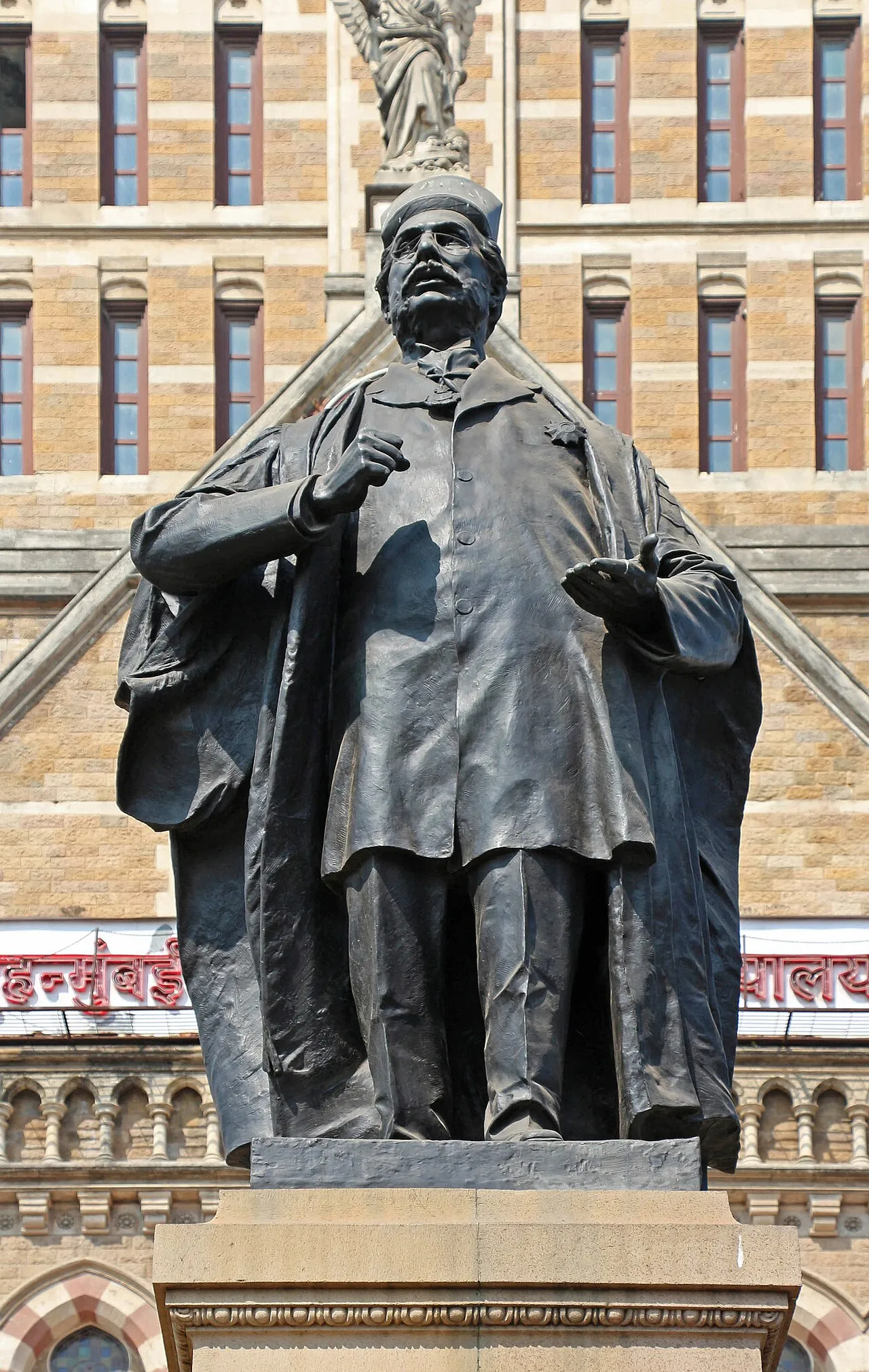
The founding date is 21 December 1911. President Patil's centenary speech gives that date, and so does Parsi Times, which adds that the bank was established in Mumbai. Parsi Times reported that on 21 December 2021, the bank's Foundation Day, its MD and CEO, M V Rao, and other officials paid floral tributes to Pochkhanawala at its Mumbai corporate office and unveiled a newly installed bust of the founder, with a granddaughter of his as guest of honour.
Why is it called India's first swadeshi bank?
President Patil described the Central Bank as founded "as a 'swadeshi bank' in the backdrop of the freedom struggle of India".
The "first" in the title is the bank's own claim. Its profile calls it the first Indian commercial bank wholly owned and managed by Indians, Outlook Business repeats the point, and Parsi Times calls it the country's first Swadeshi bank.
What did the Central Bank of India introduce in its early years?
The bank's profile lists a run of new services. By the bank's account:
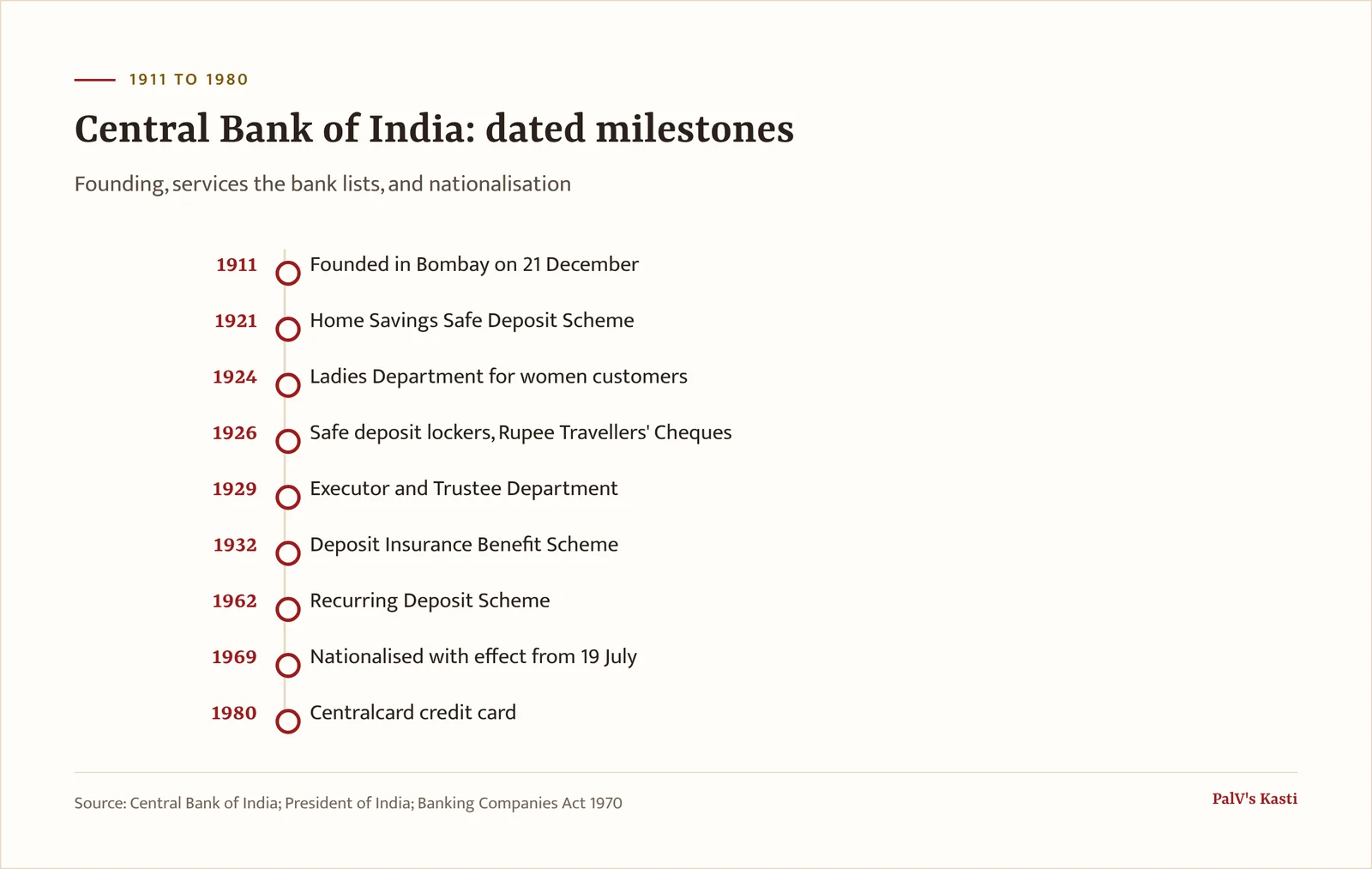
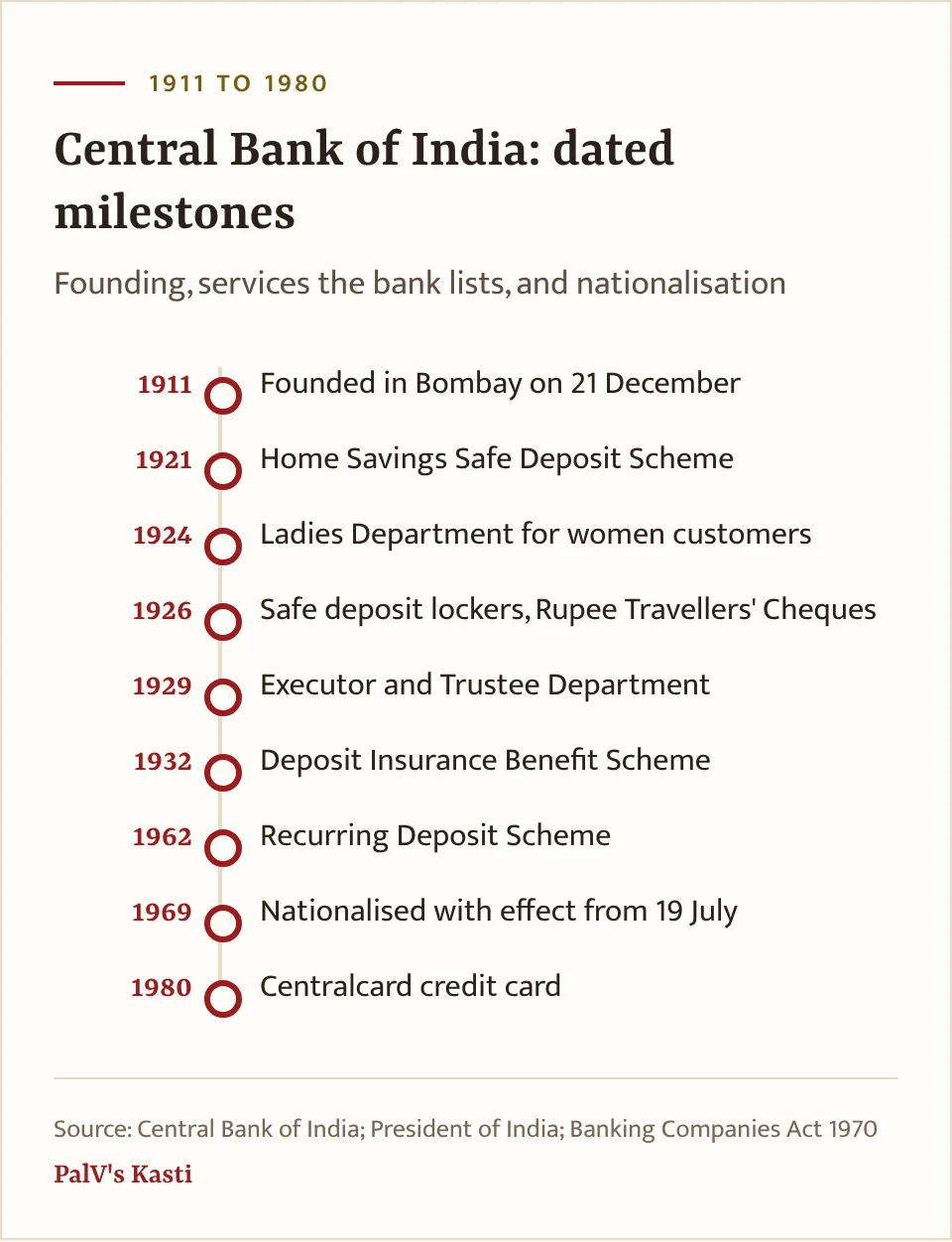
- 1921: the Home Savings Safe Deposit Scheme, to build a saving habit across all sections of society.
- 1924: an exclusive Ladies Department for women customers.
- 1926: safe deposit lockers and Rupee Travellers' Cheques.
- 1929: an Executor and Trustee Department.
- 1932: a Deposit Insurance Benefit Scheme.
- 1962: the Recurring Deposit Scheme.
After nationalisation the list continues with a Merchant Banking Cell in 1976 and Centralcard, the bank's credit card, in 1980.
When was the Central Bank of India nationalised?
The bank was nationalised with effect from 19 July 1969, together with 13 other large Indian banks. The law that governs this today is the Banking Companies (Acquisition and Transfer of Undertakings) Act, 1970. Section 1(2) says the Act is deemed to have come into force on 19 July 1969, and its repeal section also refers to the 1969 Ordinance and the 1969 Act that came before it.
The Act's First Schedule names the 14 banks taken over, and "The Central Bank of India Limited" is the first entry. Its Second Schedule fixes the compensation paid to each old company. Central Bank's figure is 1,750 lakh rupees (Rs 17.5 crore), the largest of the 14. Bank of India comes next at 1,470 lakh. That ranking is our reading of the schedule.
The Reserve Bank of India is a separate institution with its own story, which we cover in our post on Parsis and the RBI.
How did the bank mark 100 years?
Business Standard reported on 20 December 2010 that the bank was beginning its centenary celebrations, and described it then as the country's third largest public sector bank by branch network. President Patil formally inaugurated the celebrations in Mumbai on 23 December 2010. In the same speech she noted that the bank would adopt 100 villages as part of its financial inclusion plan.
Where does the Central Bank of India stand today?
According to the bank, it had 4,541 branches as of December 2024, spread across all 28 states and 7 of the 8 union territories. Parsi Times, in October 2025, described it as having remained an important public sector institution since its 1969 nationalisation.
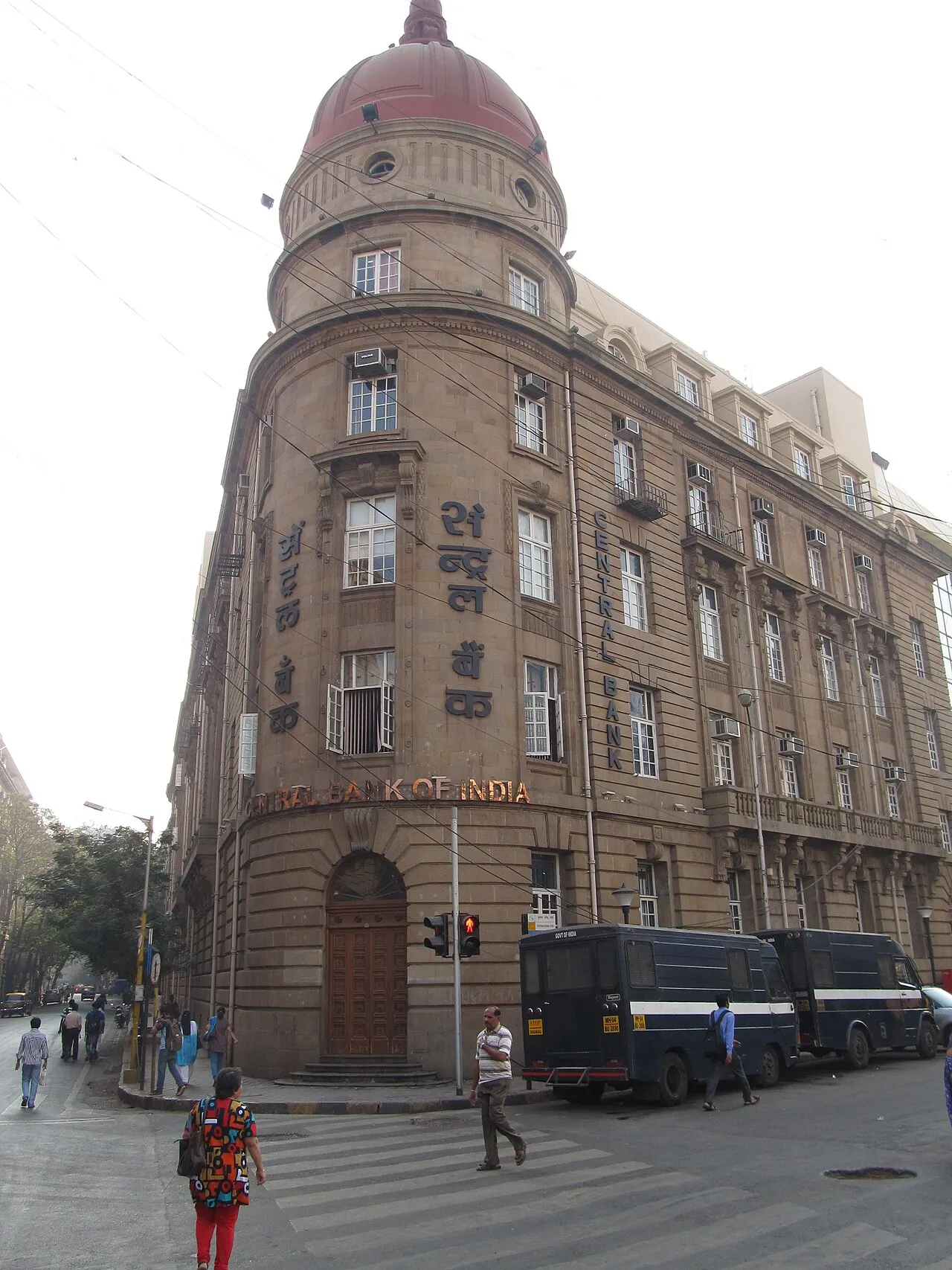
The bank's Parsi origins still matter to the community. In October 2025 Parsi Times reported concern over news that the Central Bank could be merged with another bank in the next round of public sector consolidation. Citing news reports, it said Dr Homi Doodhwala, President of the Surat Parsi Panchayat Funds and Properties, warned that a merger would erase the bank's historic identity, and that the Panchayat had written to Prime Minister Narendra Modi asking for the name and legacy to be preserved. We found no later decision in the sources we checked, as of that October 2025 report.
Frequently asked questions
Who founded the Central Bank of India?
Sir Sorabji Pochkhanawala, described by Outlook Business as a Parsi banker from Mumbai, founded the Central Bank of India in 1911. The bank calls its establishment the realisation of his dream, and by its account he described it as "the property of the nation and the country's asset". Parsi Times also names Sir Pherozeshah Mehta alongside him at the founding.
When was the Central Bank of India established?
The Central Bank of India was established on 21 December 1911. The date appears in the President of India's 2010 centenary speech and in Parsi Times, which places the founding in Mumbai. The bank began its centenary celebrations in December 2010, and Parsi Times reported it marking Foundation Day on 21 December 2021.
Why is Central Bank of India called the first swadeshi bank?
Its founder, a Parsi banker from Mumbai, was influenced by the swadeshi movement, according to Outlook Business. The bank describes itself as the first Indian commercial bank wholly owned and managed by Indians, meaning both its capital and its management were Indian. The President of India called it a swadeshi bank founded against the backdrop of the freedom struggle.
When was the Central Bank of India nationalised?
It was nationalised with effect from 19 July 1969, along with 13 other banks. The Banking Companies (Acquisition and Transfer of Undertakings) Act, 1970 is deemed to have come into force on that date. Central Bank of India is the first of the 14 banks listed in the Act's First Schedule.
Who was the first chairman of the Central Bank of India?
According to the bank's own profile, Sir Pherozeshah Mehta was the first chairman of the Central Bank of India. Parsi Times, writing in 2025, names him alongside Pochkhanawala at the founding. The bank describes him as the first chairman of "a truly Swadeshi Bank", and names Sir Sorabji Pochkhanawala as the founder.