 PalV's Kasti
On this page
The Zoroastrian Housing Society case was a fight over one bungalow plot in Ahmedabad. The Zoroastrian Co-operative Housing Society, registered in 1926, had a bye-law saying every member must be a Parsi. When a member tried to sell his plot to a non-Parsi builders' association, the Society refused. Gujarat's co-operative authorities and the Gujarat High Court ruled against the Society. On 15 April 2005 the Supreme Court of India reversed them. It held that nobody has a fundamental right to join a co-operative society, that a society may limit membership by its registered bye-laws unless the state's Co-operative Societies Act says otherwise, and that the Parsi-only rule was not an absolute restraint on selling property. The case is reported as (2005) 5 SCC 632 and AIR 2005 SC 2306.
શહેરેવર રોજ
Shehrevar Roj, Tir Mah · 1396 Y.Z.
What was the Zoroastrian Co-operative Housing Society case about?
The full title is Zoroastrian Co-operative Housing Society Ltd & Anr v District Registrar, Co-operative Societies (Urban) & Ors, Civil Appeal 1551 of 2000. Justice P. K. Balasubramanyan wrote the judgment for a bench he shared with Justice B. N. Agrawal.
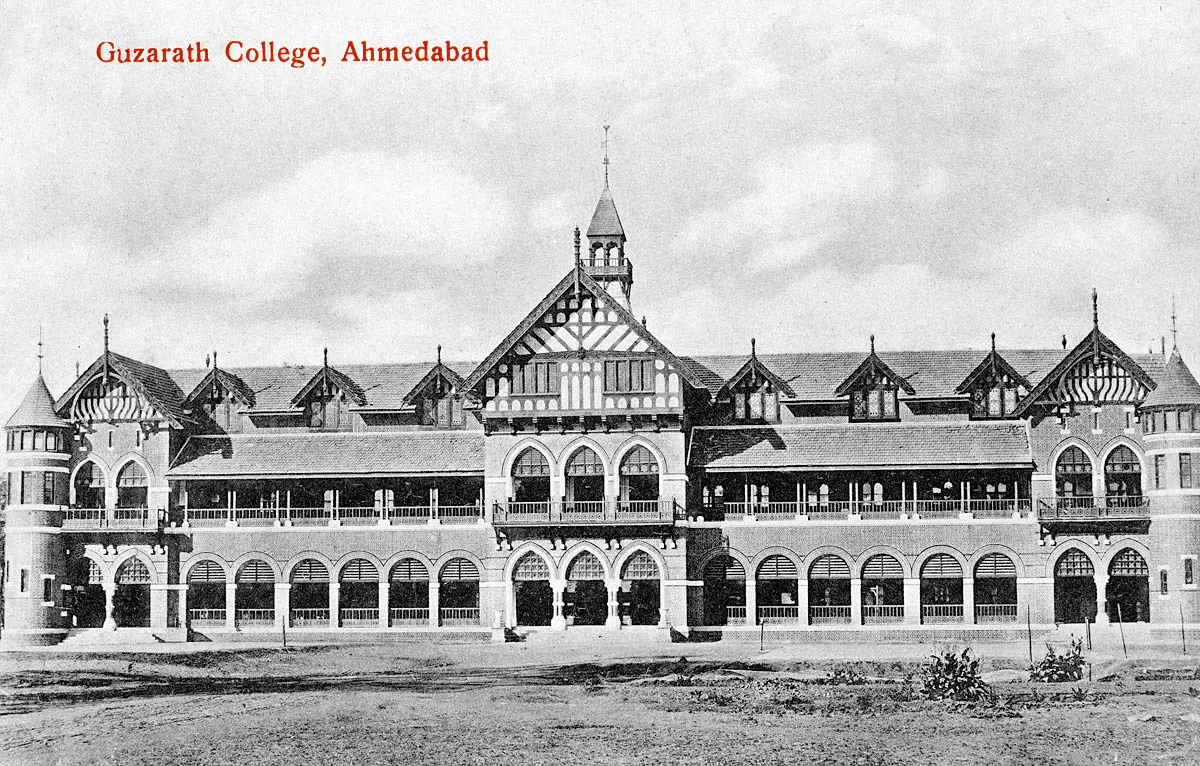
The Society was registered on 19 May 1926 under the Bombay Co-operative Societies Act, 1925. On 17 February 1928 it signed an agreement with the Government of Bombay, and land in Ahmedabad District was acquired for it, at the Society's own cost, so that members could build homes. The judgment puts the acquired area at 6 acres 12 guntas. After the states were reorganised, the Society came under the Gujarat Co-operative Societies Act, 1961.
Two bye-laws sat at the centre of the dispute:
- Bye-law 7: new members are elected by the Committee, and all members must belong to the Parsi community.
- Bye-law 21: a member could sell his share only with the Committee's prior sanction, which the Committee was free to grant or withhold.
How did the dispute over plot no. 7 start?
Plot no. 7 had been bought, with the Society's consent, by a man who qualified for membership under the bye-laws. His son later inherited it and became a member. The son first asked to pull down the bungalow and put up a commercial building. The Society said no, because its bye-laws did not allow commercial use. He then asked to build residential flats, and on 17 May 1988 the Society agreed on the condition that the flats be sold only to Parsis. According to the Supreme Court, he did nothing with that permission for seven years. He then opened talks with a builders' association, the third respondent, and applied to transfer his share to it. The Society rejected the application as contrary to the Act, the Rules and its bye-laws.
What did the Gujarat authorities and the High Court decide?
In the end, every forum in Gujarat went against the Society. The Board of Nominees first granted it an interim injunction, then told it that membership could not be confined to Parsis and should stay open to everyone, and later vacated the injunction. The Gujarat State Co-operative Societies Tribunal, in an interim order, held the Parsi-only bye-law invalid under Article 300A of the Constitution, the right to property.

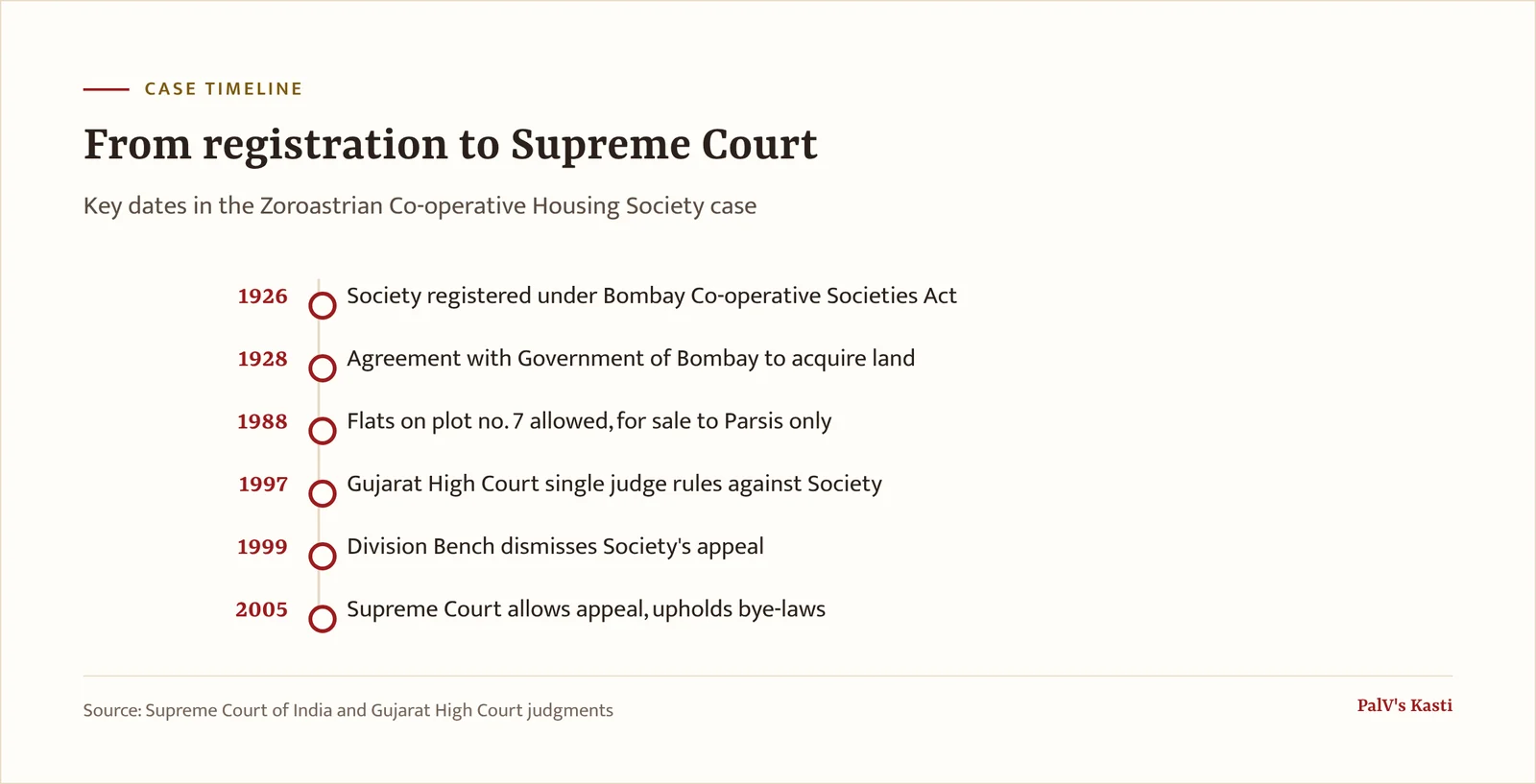
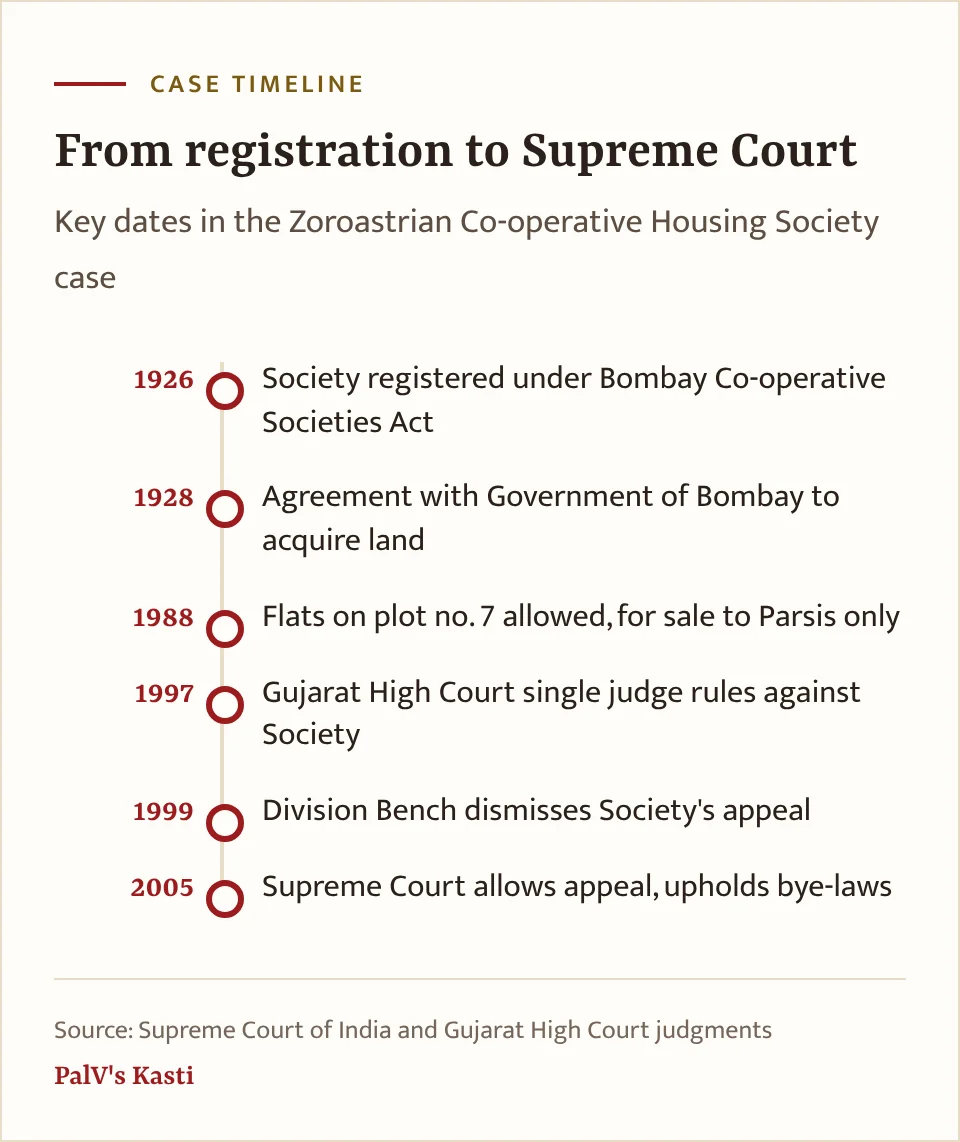
The Society went to the Gujarat High Court in Special Civil Application 6226 of 1996. On 16 January 1997 Justice M. S. Parikh dismissed the petition (reported as AIR 1997 Guj 136). Citing the co-operative principle that membership should be open without religious discrimination, he held that a Parsi-only bye-law was an unfair restriction that the authorities could deal with under the open-membership rule in Section 24 of the Gujarat Act, read with Rule 12(2) of the Gujarat Co-operative Societies Rules, 1965. He also called a ban on selling to a non-Parsi prima facie illegal under Section 10 of the Transfer of Property Act, which makes void any condition that absolutely restrains a transferee from parting with property. A Division Bench dismissed the Society's Letters Patent Appeal 129 of 1997 on 23 July 1999, broadly agreeing with him.
What arguments reached the Supreme Court?
Senior counsel Soli J. Sorabjee argued for the Society. His case, as the judgment records it, was that Parsis have a fundamental right under Article 19(1)(c) to form an association, and that this right is infringed if members it does not want are forced on it. He added that Article 29 lets Parsis conserve their culture, that nothing in the Act or Rules barred a membership qualification based on belief, and that bye-law 7 was at most a partial restraint on sale, which the law allows.
The member and the builders argued the opposite. Section 4 of the Gujarat Act bars registering a society that is opposed to public policy, they said, and confining a co-operative to one community, caste or creed is exactly that. They also relied on Section 10 of the Transfer of Property Act and on the Registrar's power under Section 14 to order a society to amend its bye-laws.
What did the Supreme Court decide in 2005?
The Supreme Court allowed the Society's appeal on four main points.
- No fundamental right to membership. Joining a co-operative creates a contractual relationship among members, subject to the Act and Rules. Fundamental rights in Part III are normally enforced against the State, and the Court found no claim that this Society was "State" under Article 12.
- Open membership means open to qualified people. Section 24(1) bars refusing admission without sufficient cause only to a person qualified under the Act, the Rules and the bye-laws. The Court found nothing in the Gujarat Act stopping a society from setting a membership qualification based on belief, persuasion or religion.
- Public policy is read from the statute. Courts must be wary of riding what the bench called "the unruly horse of public policy". Until the state legislatures amend their Co-operative Societies Acts, the Court said, societies cannot be directed to act against bye-laws that restrict membership by their own criteria.
- Not an absolute restraint on sale. The member could still sell to anyone qualified under the bye-laws, so the rule was at most a partial restraint he had accepted by joining. The lower finding that it was invalid as an absolute restraint on alienation was reversed.
The order set aside the High Court judgments and the authorities' orders, cancelled the direction to admit the builders' association as a member, and restrained it from entering the plot or building on it under any transfer made in breach of the bye-laws. Plot no. 7 could be assigned, in whole or in part, only to people qualified under the bye-laws. The Society also got its costs in both courts.
Why does the Zoroastrian Housing Society case still matter?
For Parsi housing, the plain effect was that a 1920s community society kept its Parsi-only rule. The 1997 Gujarat High Court judgment records the Society's own claim that in its 70 years there had not been a single transfer to a non-Parsi.
For co-operative law in general, the case is about who decides. Writing in Business Standard on 20 April 2005, M. J. Antony read it as giving societies wide powers: their bye-laws, he wrote, can restrict membership by vocation, community, persuasion or sex. He also flagged a loose end. A member may sell freehold property to someone who does not qualify, and other laws may recognise the sale, yet the buyer can still be refused membership. Antony called that an area of law "not yet clear".
The Court tied its conclusion to the statute. It said the position would hold unless the various Co-operative Societies Acts were amended to bar societies from confining membership to people of a particular persuasion, religion, belief or region. Each state has its own Act, so the question for any society today turns on its current state law and its registered bye-laws. We have not traced later amendments, or later judgments applying or distinguishing this case, so read it as the 2005 position. Housing in the Parsi baugs was not part of this case, and the wider story of how Indian courts and statutes have dealt with the community is in our Parsi law history.
Frequently asked questions
What did the Supreme Court decide in the Zoroastrian Co-operative Housing Society case?
On 15 April 2005 the Supreme Court upheld the Society's Parsi-only membership bye-law. It ruled that nobody has a fundamental right to join a co-operative society, that open membership applies only to people qualified under the bye-laws, and that the restriction on selling a plot was a partial, not absolute, restraint on alienation.
Can a housing society restrict membership to Parsis?
In this 2005 case, yes. The Supreme Court held that a registered bye-law limiting membership to Parsis was enforceable under the Gujarat Co-operative Societies Act, because nothing in that Act forbade it. The Court added that state legislatures could change this by amending their Acts, so the answer depends on current state law.
What is the citation of the Zoroastrian Housing Society case?
The Supreme Court judgment is Zoroastrian Co-operative Housing Society Ltd v District Registrar, Co-operative Societies (Urban), decided on 15 April 2005 in Civil Appeal 1551 of 2000. It is reported as (2005) 5 SCC 632 and AIR 2005 SC 2306. The earlier Gujarat High Court ruling is AIR 1997 Guj 136.
Did the Gujarat High Court agree with the Society?
No. On 16 January 1997 Justice M. S. Parikh dismissed the Society's petition, calling a Parsi-only bye-law an unfair restriction and a ban on selling to non-Parsis prima facie illegal. A Division Bench dismissed the Society's appeal on 23 July 1999. The Supreme Court set both judgments aside in 2005.
Does the judgment apply to every housing society in India?
Not automatically. The reasoning rests on the Gujarat Co-operative Societies Act as it stood in 2005 and on the Society's registered bye-laws. Each state has its own co-operative law, and the Court said legislatures could bar such restrictions by amendment. Any particular society's position depends on its state's current Act and its own bye-laws.
This is general information, not legal advice; for a specific case, speak to a lawyer.


