PalV's Kasti
On this page
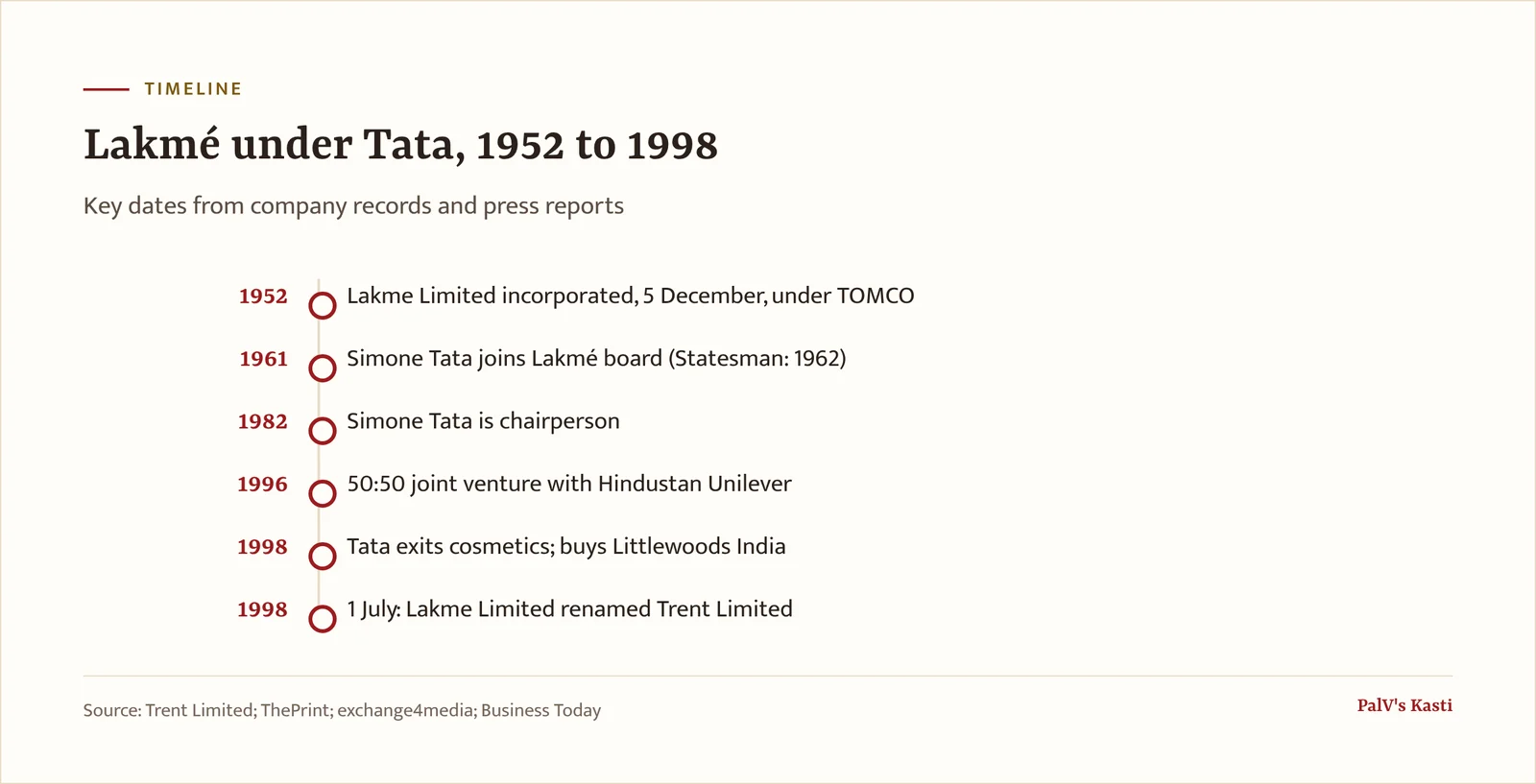
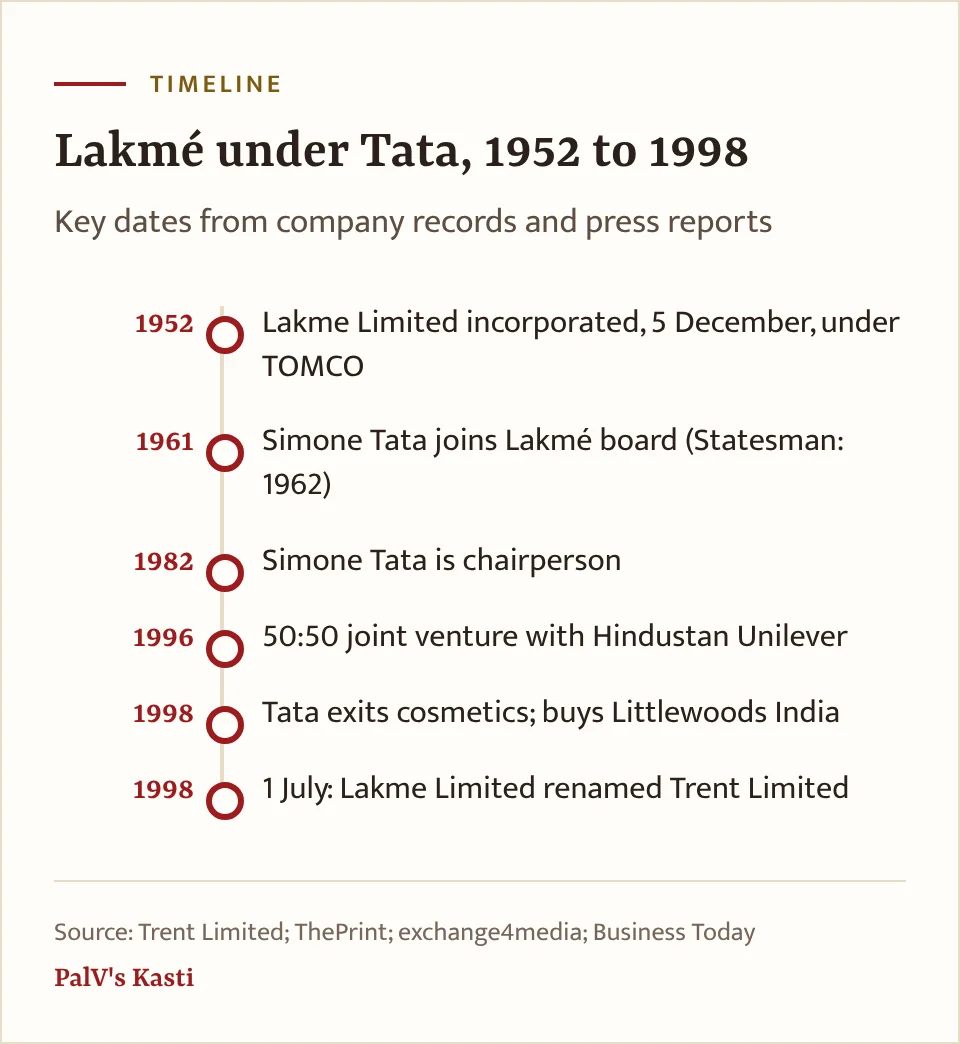
Lakmé began in 1952 as a Tata company set up to make cosmetics in India. According to ThePrint and to a December 2025 account in the Free Press Journal, Prime Minister Jawaharlal Nehru asked JRD Tata for an Indian make-up brand so that the country would stop spending scarce foreign exchange on imported Western products. The company was incorporated as Lakme Limited on 5 December 1952, Trent Limited's own website records, and it sat under Tata Oil Mills Company (TOMCO). Simone Tata later turned it into a household name, joining its board in the early 1960s and becoming chairperson by 1982. In 1996 Lakmé went into a 50:50 venture with Hindustan Unilever, and in 1998 Tata sold out. The old Lakmé company then became Trent, the firm behind Westside.
શહેરેવર રોજ
Shehrevar Roj, Tir Mah · 1396 Y.Z.
Why did Nehru want an Indian cosmetics brand?
Both published accounts give the same reason: foreign exchange. ThePrint's 2022 brand history says Nehru learnt that Indian women were spending the country's foreign reserves on Western make-up, and that he went to JRD Tata for an answer. Carol Goyal, executive director of the advertising agency Rediffusion, wrote in the Free Press Journal in December 2025 that JRD launched Lakmé in 1952 at Nehru's personal request. In her telling, the brand had two jobs: save foreign exchange, and make products suited to Indian skin tones.
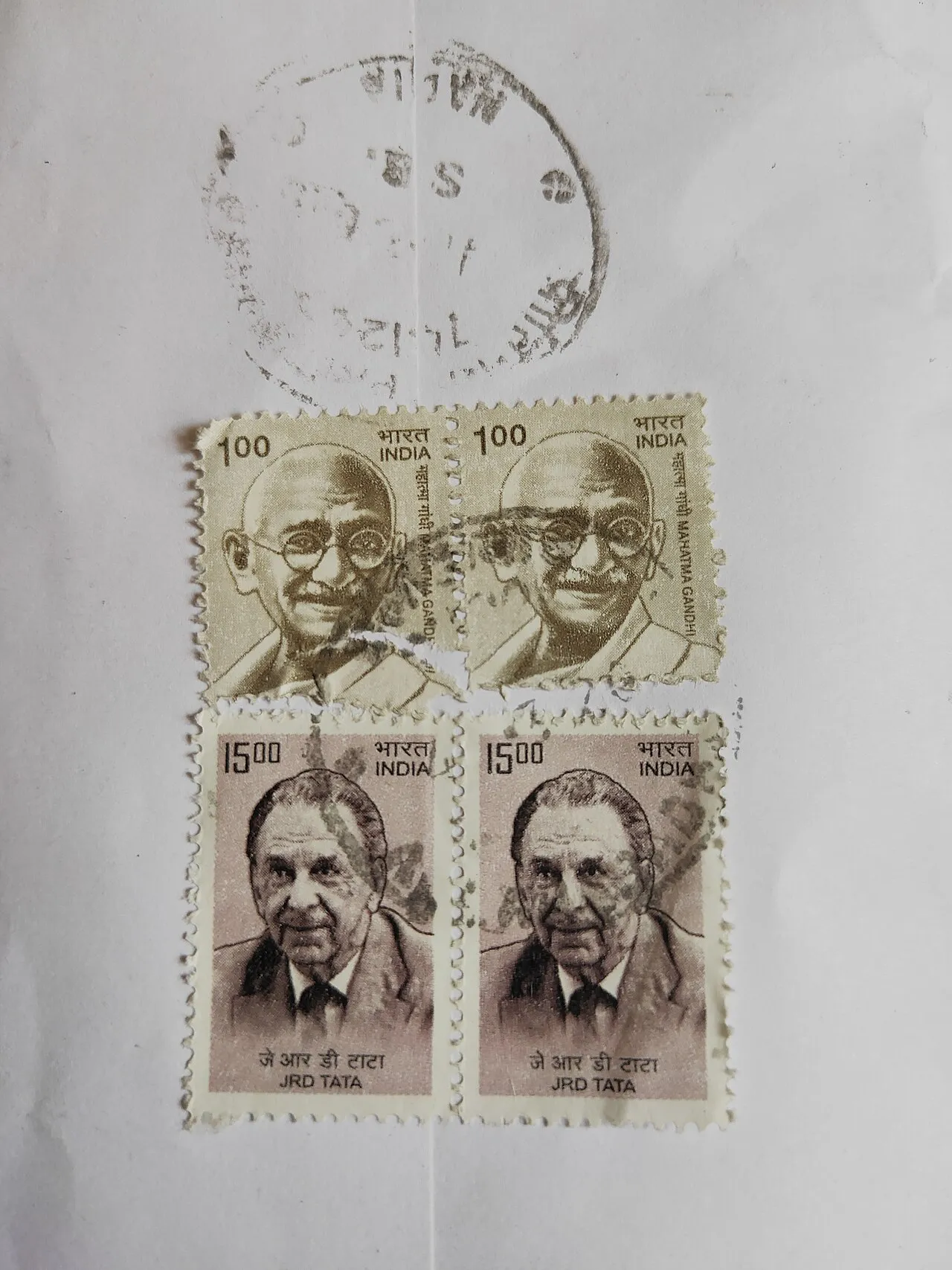
Hindustan Unilever, which owns the brand today, describes Lakmé on its brand page as launched in 1952 and as the first successful home-grown cosmetics brand in India.
How did Lakmé start inside Tata Oil Mills?
Lakmé was not a stand-alone venture at birth. ThePrint, exchange4media and The Statesman all describe it as a subsidiary of Tata Oil Mills Company, the Tata firm known as TOMCO. ThePrint notes that TOMCO was first set up to crush copra for coconut-oil exports. Exchange4media adds that TOMCO was then known for soaps such as Hamam and OK.
The company itself was incorporated as Lakme Limited on 5 December 1952, according to the corporate history on Trent Limited's website. Trent describes Lakme Limited as a business that made, sold and exported cosmetics, toiletries and perfumery.
Lakmé is one small chapter in the much longer Tata Group history. For another Tata woman in public life, read our profile of Lady Meherbai Tata.
Why is it called Lakmé?
ThePrint gives the only account of the name we could find in a reliable source. It says Lakmé is the French form of Lakshmi, a goddess it describes as known for her beauty, and that the name was suggested by the brand's French collaborators, Robert Piguet and Renoir. ThePrint also links it to Léo Delibes' opera Lakmé, whose heroine draws on the Indian goddess. We could not find a second independent source naming the French collaborators, so treat that detail as ThePrint's.
What was Simone Tata's role in Lakmé?
The Statesman says Simone Tata is widely credited with making Lakmé a leading cosmetics brand. Born in Geneva, she married Naval H. Tata in 1955, according to Business Today and exchange4media. Exchange4media says she first came to India as a tourist in 1953.
The year she joined Lakmé depends on which report you read. Business Today and exchange4media say she joined the Lakmé board in 1961. The Statesman says she was appointed to the board in 1962. ThePrint says she became managing director in 1961. All three agree on the next step: by 1982 she was chairperson. Business Today and exchange4media both record the title she earned, "Cosmetic Czarina of India".
Simone Tata died in Mumbai in December 2025, aged 95. Business Today reported that the Tata Group remembered her for making Lakmé India's leading cosmetics company and for laying the groundwork of modern fashion retail with Westside.
The 1978 "Is it bad to look good?" campaign
Carol Goyal's Free Press Journal piece tells how Rediffusion pitched Simone Tata a black-and-white, four-ad series built on questions women were afraid to ask. Its four headlines asked: "Is it bad to look good?", "Is make-up a difficult art to learn?", "Do men look down on make-up?" and "Does make-up label you 'fast', 'loose' or 'that type'?". Goyal writes that Mrs Tata at first disliked the pitch, then bought it, and that the campaign won several awards in 1978, Campaign of the Year among them. She is candid that her stories come from advertising folklore and the recollections of the people involved, so read the colourful details in that spirit.
When did Tata sell Lakmé to Hindustan Unilever?
Tata let go of Lakmé in two steps. In 1996, Lakmé formed a 50:50 joint venture with Hindustan Unilever (HUL), according to ThePrint and exchange4media. Two years later, in 1998, the Tata side sold its brands and its half of the venture to HUL and walked away. Exchange4media puts the stake sale at around ₹200 crore. Trent's own history confirms the timing from the company's side: in 1998, it says, Lakme decided to divest its cosmetics business and move into clothing retail.
One source tells it differently. The Statesman's 2025 obituary of Simone Tata says that "in 1996, Tata sold Lakme to Hindustan Lever Limited (HLL)". ThePrint, exchange4media and Trent's own corporate history instead describe two steps: the venture in 1996 and the Tata exit in 1998.
What happened to the Lakmé company after the sale?
The brand went to HUL. The company that had owned it went into fashion. Trent Limited's corporate history sets out the steps:
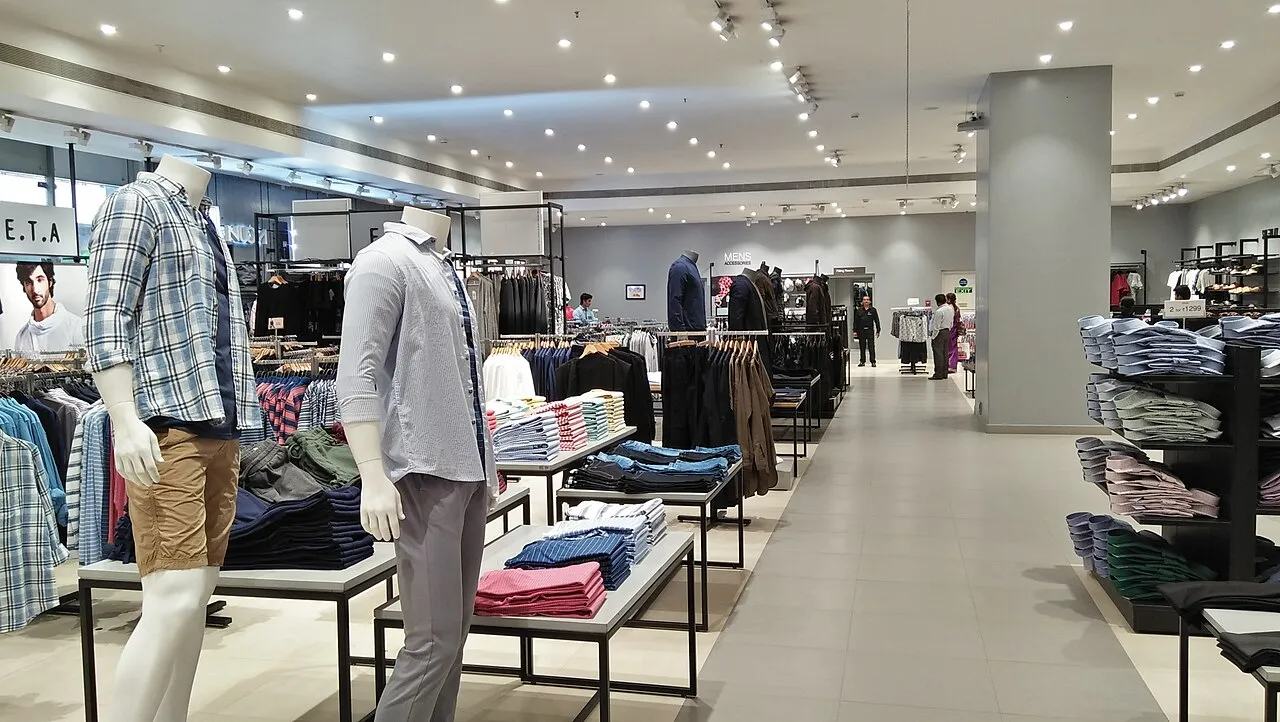
- March 1998: Lakme Limited bought Littlewoods International (India) Private Limited, a ready-made garment retailer, from its British parent.
- From 1 January 1998, Lakme Exports Limited, a Lakmé subsidiary, was merged into the Littlewoods company, and the combined firm took the name Trent Limited.
- From 1 July 1998, that Trent was merged into Lakme Limited, and Lakme Limited changed its name to Trent Limited.
So the Trent that runs Westside and Zudio today is, on paper, the company incorporated as Lakme Limited in December 1952. The Statesman says Simone Tata used the proceeds of the Lakmé sale to set up Trent.
Frequently asked questions
Who founded Lakmé?
Lakmé was set up by the Tata Group in 1952 under JRD Tata, as a subsidiary of Tata Oil Mills Company. ThePrint and the Free Press Journal both say the idea came from Prime Minister Jawaharlal Nehru, who wanted an Indian cosmetics brand to cut spending on imported make-up. Simone Tata later led and grew the company.
Is Lakmé an Indian brand?
Yes, by origin. Lakmé was created in India by the Tata Group in 1952 to make cosmetics locally for Indian buyers. Since 1998 it has been owned by Hindustan Unilever, which still describes Lakmé on its brand page as the first successful home-grown cosmetics brand in India.
Why is it called Lakmé?
According to ThePrint, Lakmé is the French form of Lakshmi, the goddess known in mythology for her beauty. ThePrint says the brand's French collaborators, Robert Piguet and Renoir, suggested it, and links the name to Léo Delibes' opera Lakmé. We found no second reliable source for the collaborators' names.
When did Tata sell Lakmé to Hindustan Unilever?
In two stages. In 1996 Lakmé and Hindustan Unilever formed a 50:50 joint venture. Then, in 1998, the Tata side sold its brands and stake to HUL for around ₹200 crore according to exchange4media. The Statesman gives 1996 as the sale year, but ThePrint, exchange4media and Trent's own history point to 1998.
What was Simone Tata's role in Lakmé?
Simone Tata joined the Lakmé board in 1961 (The Statesman says 1962), ran the company as managing director and became chairperson by 1982. She earned the title "Cosmetic Czarina of India". After Lakmé left cosmetics in 1998, the company became Trent, which runs Westside. She died in December 2025, aged 95.