 PalV's Kasti
On this page
You can make traditional Parsi recipes heart-healthy by keeping what gives them their flavour and trimming what the health guidelines flag. Flavour sits in the spices, the sourness of vinegar or lime, and the vegetables. WHO and the ICMR-National Institute of Nutrition ask home cooks to watch four other things: salt (no more than 5 g a day), sugar, saturated fat such as ghee, and deep frying. The spices can stay. This is general guidance, not medical advice. If you have a heart condition, diabetes or high blood pressure, follow your own doctor or dietitian.
શહેરેવર રોજ
Shehrevar Roj, Tir Mah · 1396 Y.Z.
What do WHO and ICMR-NIN actually ask home cooks to change?
The World Health Organization's healthy diet fact sheet and the ICMR-NIN Dietary Guidelines for Indians (2024 edition) agree on salt. On sugar, the Indian guideline is stricter.
| Area | WHO healthy diet fact sheet | ICMR-NIN Dietary Guidelines for Indians |
|---|---|---|
| Salt | Under 5 g a day for adults | Added salt capped at 5 g a day; use iodised salt |
| Sugar | Free sugars under 10% of energy (about 50 g, or 12 level teaspoons, on 2,000 calories); 5% may add benefit | Sugar under 5% of total daily energy for adults |
| Ghee and butter | Listed as saturated fat; keep saturated fat under 10% of energy | Limit oils and fats high in saturated fat, such as ghee and butter |
| Vanaspati and trans fat | Trans fat under 1% of energy; industrial trans fat should be avoided | Avoid partially hydrogenated fats such as vanaspati as a cooking medium |
| Cooking method | Steam or boil instead of frying | Prefer pressure or steam cooking to deep frying; avoid reheating used oil |
| Vegetables | At least 400 g of fruit and vegetables a day | Vegetables in every meal, to reach at least 400 g a day |
Which Parsi dishes are already close to the guidelines?
More of the Parsi table than you might think. Dhansak is built on lentils and vegetables. Sona Bahadur, in An Invitation to Feast (Aleph), describes the basic recipe as pumpkin, onions, eggplant, methi and mint cooked with the dal, and Perzen Patel's recipe on her Beyond Butter Chicken newsletter uses three dals (toor, moong and masoor) with pumpkin, brinjal and fenugreek leaves. ICMR-NIN asks Indians to combine cereals with pulses and to eat plenty of legumes, and the American Heart Association's guide to Asian heritage diets, written with Oldways, lists high-fibre South Asian dishes built on lentils, peas and beans.
Ashoka University's InHERIT project describes patra ni machhi as fish steamed in banana leaves with a green masala, and Saveur's Meher Mirza writes of pomfret with green chutney wrapped in banana leaves. Steaming is the method both WHO and ICMR-NIN prefer to frying. The kachumber of diced onion, cucumber and tomato beside the dhansak is raw vegetables, which count towards the 400 g a day.
Where these dishes came from is told in our guide to Parsi food.
How do you keep tikhu-khatu-mithu with less sugar and salt?
Tikhu-khatu-mithu, the spicy-sour-sweet balance, does not need a heavy hand with sugar. Bahadur breaks the flavour of dhansak down this way: sweetness from pumpkin and onions, bitterness from methi, tartness from tomatoes, heat from red chillies. Saveur's Meher Mirza writes that the sting of Parsi vinegar is "often soothed by a lick of jaggery or sugar". A lick. Not a ladle.
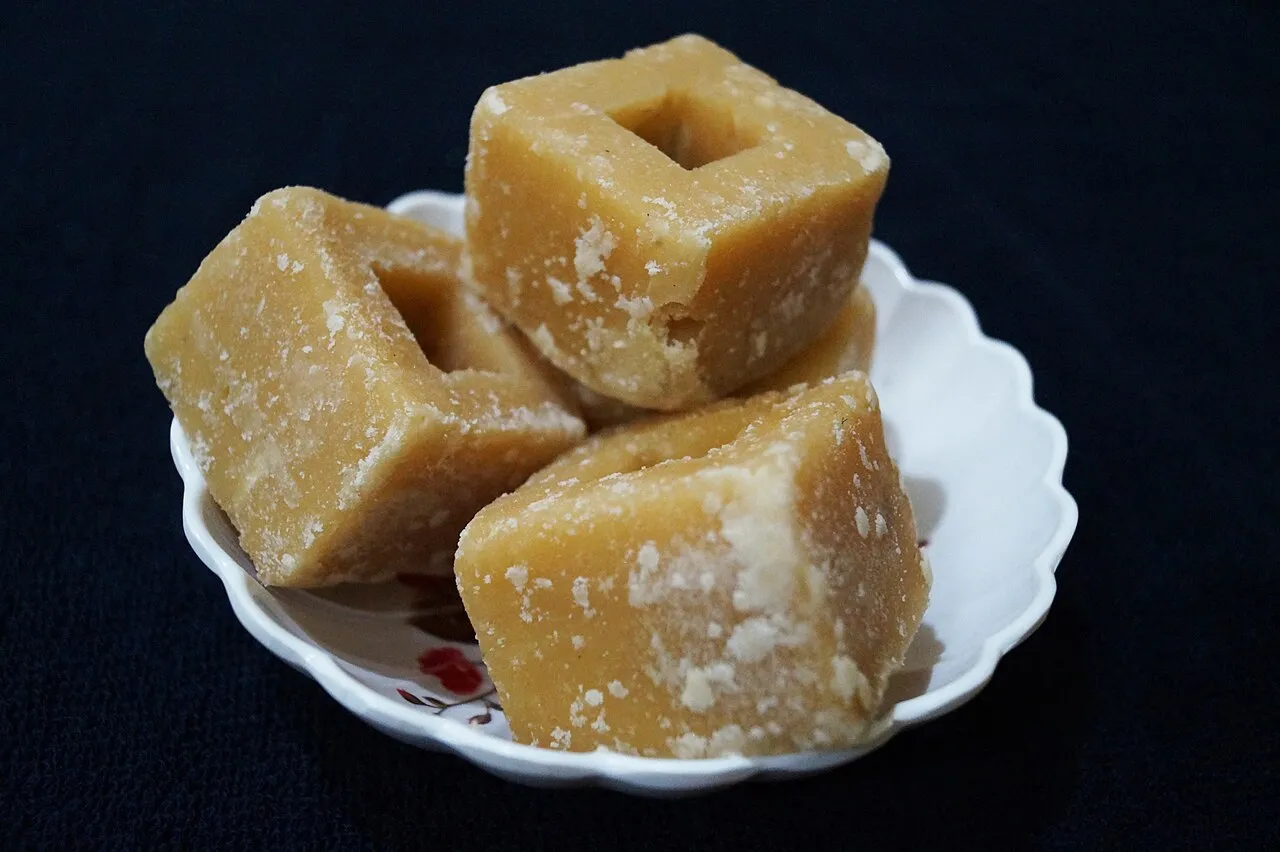
Cooks disagree here. Bahadur notes that some add jaggery to dhansak and others shun it, and she quotes Mahrukh Mogrelia, who runs the food brand Mahrukh's Kitchen, as saying: "Dhansak shouldn't be obviously sweet; it should have that spiciness." If your family recipe calls for sugar in the dal, try halving it and leaning on the pumpkin.
The caramelised "brown rice" is where most of the sugar goes. Patel's recipe uses 50 g of jaggery for 250 g of basmati. That pot feeds a family, but for scale, 50 g is WHO's whole-day upper limit for free sugars for one adult on 2,000 calories. Plain rice on some days, or less jaggery, cuts it sharply.
On salt, two kitchen habits matter. ICMR-NIN warns against adding baking soda when cooking pulses and vegetables, because it adds sodium just as salt does. The British Heart Foundation uses individual spices rather than ready pastes or mixes to keep salt down, so read the label on a bought dhansak masala.
Which oil or ghee should you use for the vaghar?
Use oil for everyday cooking and keep ghee for occasions. WHO lists ghee, butter, palm and coconut oil as saturated fats and suggests replacing them with oils rich in polyunsaturated fat, naming soybean, canola, corn, safflower and sunflower. ICMR-NIN says to use oils in moderation, limit ghee and butter, and avoid vanaspati as a cooking medium.
Patel's dhansak already allows the swap: it lists "ghee/oil" for the rice and the dal, 5 tablespoons in all. Choosing oil, and measuring it instead of pouring, is the simplest change in this post.
One more rule from ICMR-NIN: don't reheat oil that has already been used for frying. Repeated heating produces harmful oxidative compounds, the guideline says.
How can you lighten fried and egg dishes?
Change what sits under the egg, and change how the fish is cooked. The par eedu family means "eggs cooked on something", and Food52 notes that the something can be anything from potato chips to okra, or spinach, tomatoes and brinjal. Eggs set over okra, spinach or tomatoes give you the same dish on a bed of vegetables instead of fried wafers.
Sali, the crisp fried potato sticks, can stay as a garnish of a few strands rather than a heap, since ICMR-NIN asks Indians to avoid deep-fried foods. For fish, take the patra ni machhi route and steam it. For mutton, WHO advises trimming the visible fat from meat.
Who kept these recipes alive at home is told in Parsi women and food. How the same dishes are cooked across the border is the subject of Parsi food: India vs Pakistan, and full methods to try these swaps on are in our Parsi recipes.
Frequently asked questions
Is dhansak healthy?
Dhansak's base of lentils, pumpkin, brinjal and methi fits what ICMR-NIN recommends, since its guidelines ask Indians to eat plenty of legumes and vegetables. How healthy a given pot is depends on the cooking: the ghee in the vaghar, the salt, and the jaggery in the caramelised rice served alongside.
Is ghee bad for the heart?
WHO classes ghee as a saturated fat and advises keeping saturated fat under 10% of daily energy. ICMR-NIN's guideline is to limit ghee and butter. In a Parsi kitchen, one way to follow both is oil for daily cooking and a small, measured spoon of ghee for festive dishes. Your doctor's advice comes first if you have a heart condition.
How much salt should an adult eat in a day?
WHO and ICMR-NIN give the same limit: no more than 5 g of salt a day for adults, which WHO equates to 2 g of sodium. ICMR-NIN also asks Indians to use iodised salt, avoid baking soda in pulses and vegetables, and cut down on salty processed foods such as sauces, chips, cheese and salted fish.
Is steamed fish better than fried fish?
WHO lists steaming or boiling instead of frying as a way to cut fat, and ICMR-NIN advises pressure or steam cooking over deep frying. Patra ni machhi, fish steamed in banana leaves with a green masala, follows that method. ICMR-NIN also recommends marine fish such as mackerel and tuna, around 200 g a week, for their omega-3 fats.


