 PalV's Kasti
On this page
Lagan nu achar is the Parsi wedding pickle: a sweet, tangy relish of finely cut carrots and dried fruit cooked down in vinegar and sugar with chilli, garlic and ginger. It is the first thing spooned onto the banana leaf at a Parsi wedding feast, eaten with rotli and wafers before the chicken, fish and pulao arrive. FEZANA's 2012 cookbook, Eat, Live, Pray, gives the reason it belongs at a wedding. The pickle is sweeter than other achaars, and serving it signifies starting a relationship with a sweet mouth instead of a salty or spicy one. The Asian Age describes it simply as a pickle considered auspicious.
શહેરેવર રોજ
Shehrevar Roj, Tir Mah · 1396 Y.Z.
What goes into lagan nu achar?
Carrots are the base. FEZANA calls it a carrot and raisin pickle, and Outlook Traveller describes it as a carrot and dry fruit pickle. The dried fruit changes from kitchen to kitchen. The FEZANA recipe uses dried apricots, dried figs and golden raisins. Zee Zest lists carrot, raisins, sultanas, figs and apricot, and Torie True's headnote adds dates to the mix.
The other half of the pickle is the sweet and sour syrup. In the FEZANA version that means sugar melted into cider vinegar, with crushed red chilli, sliced garlic and sliced ginger. Torie True's 2025 cookbook Seven Kitchens sweetens hers with jaggery or light brown sugar. Saveur's Meher Mirza notes that Parsi pickles in general are doused in vinegar, with jaggery or sugar used to soften its bite, and the FEZANA recipe follows that pattern.
Niloufer Ichaporia King, in My Bombay Kitchen (2007), describes her wedding pickle as hot, sweet and mustardy. So there is no single fixed recipe. The versions whose ingredients we could read all start from carrots, dried fruit, vinegar and a sweetener.
Is lagan nu achar the same as gajar mewa nu achar?
Yes. FEZANA prints its recipe under the name Gajar Mewa nu Achaar, glossed as carrot and raisin pickle, before explaining that the same pickle is called Lagan nu Achaar or Wedding Pickle. Zee Zest also gives Gajar Mewa Nu Achar as its other name. You will see it spelt lagan nu achaar, laganu achar and lagan nu achar on menus and in cookbooks.
Why do Parsis serve a sweet pickle at weddings?
The one explanation we found in print comes from FEZANA's Eat, Live, Pray. Its note on the wedding pickle says the achaar gets its name because it is served at weddings, and it is served there because it tastes sweeter than other pickles. That sweetness stands for starting a relationship with a sweet mouth, not a salty or spicy one.
We could not find a second written source that gives the same reason, so treat it as FEZANA's account. Other writers confirm the setting without explaining it. The Asian Age calls the pickle auspicious, Torie True calls it a staple at every Parsi wedding, and Zee Zest calls it the opening act of any Parsi wedding feast. We found no record of when or where the custom began.
Practice varies between families and Agiaries; your family priest's guidance comes first.
When is lagan nu achar served at a Parsi wedding feast?
It comes first. FEZANA notes that in India the Parsi wedding dinner was customarily a sit-down meal served course by course on banana leaves, and its menu for the feast opens with lagan nu achaar, rotli and laganshala, the wedding vegetable stew. FEZANA adds that side dishes and condiments go on the top part of the leaf, with the main courses and rice placed on the lower part.
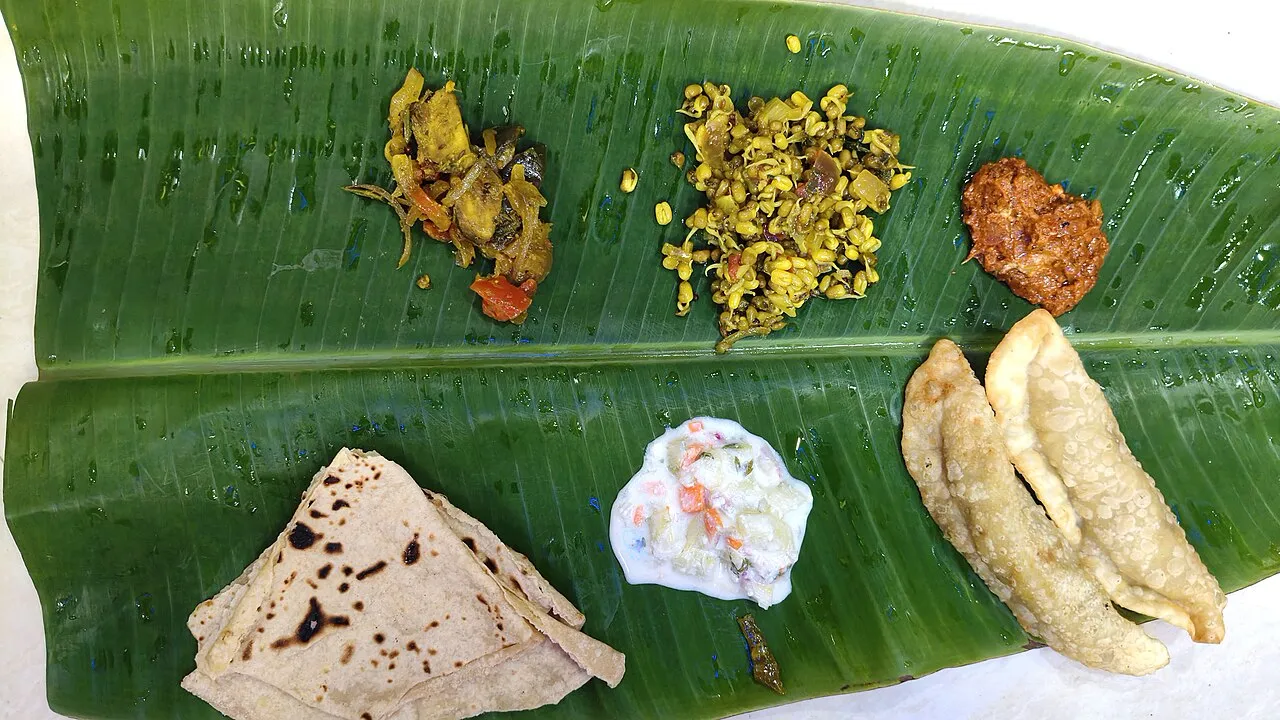
Shabnam Minwalla, writing in Outlook Traveller, describes waiters moving down the tables with spoonfuls of the tangy pickle, followed by a stack of rotis and long white wafers. King's headnote names the wafers as potato wafers. The main courses follow. The Asian Age says the pickle is eaten with rotlis and kachumbar. Our guide to the Lagan nu bhonu walks through the rest of the menu, and the wider ceremony is covered in our post on the Parsi wedding.
Weddings are not the only place it turns up. Niloufer Ichaporia King writes that it is the first thing served at a navjote as well. Zee Zest and Torie True both call it a staple of Parsi homes, and Zee Zest suggests it with plain steamed rice and yellow dal.
How do you make lagan nu achar at home?
This method follows the recipe of the late Khorshed Sidhwa of Pakistan, contributed by her daughter-in-law Anahita Sidhwa to FEZANA's Eat, Live, Pray (2012). The book does not give a yield. Expect a large batch, since it starts with 1.4 kg of carrots.
Ingredients
- 1.4 kg (3 lb) carrots
- 45 g (3 tbsp) salt
- 60 g (2 oz) crushed red pepper flakes
- 1 kg sugar
- 1.2 litres cider vinegar, divided into 180 ml and 1 litre
- 16 cloves of garlic, sliced fine
- A 5 cm (2 inch) piece of ginger, sliced fine
- 345 g (12 oz) dried apricots
- 345 g (12 oz) dried figs, cut small
- 170 g (6 oz) golden raisins
Method
- Cut the carrots into thin matchsticks. The recipe prefers a knife, because a food processor leaves them mushy.
- Toss the carrots with the salt and keep them in a large closed container for 24 to 48 hours, mixing them three or four times in that period.
- Pour off the liquid the carrots have released, rinse them and pat them dry on paper towels.
- Blend the chilli flakes with the 180 ml of vinegar into a paste.
- In a large pan, warm the sugar with the remaining 1 litre of vinegar over medium heat until the sugar melts.
- Add the garlic, ginger, apricots, figs, raisins, carrots and the chilli paste.
- Turn the heat to high and let the pickle boil hard, stirring often so it does not catch on the bottom.
- Once it has thickened to the consistency you like, taste and adjust the salt, vinegar and chilli.
How were Parsi achaars kept in the old days?
FEZANA's note on achaars says homemade pickles were usually made in summer and set out in the sun during the day. They were then stored somewhere dark and cool in bannies, glazed porcelain jars with airtight lids. For North American kitchens the book suggests stoneware crocks, as long as the jar is opaque so the pickle does not discolour. It also recommends sea salt over table salt, since anti-caking agents can make a pickle look muddy.
Frequently asked questions
What is lagan nu achar made of?
Lagan nu achar is made of thinly cut carrots and dried fruit such as raisins, apricots and figs, cooked in vinegar with sugar or jaggery, chilli, garlic and ginger. FEZANA's recipe uses cider vinegar, dried apricots, figs and golden raisins. The result is a sweet pickle with sour and spicy notes.
Why is a sweet pickle served at Parsi weddings?
According to FEZANA's 2012 cookbook Eat, Live, Pray, lagan nu achar is served at weddings because it is sweeter than other pickles. The sweetness signifies starting married life with a sweet mouth rather than a salty or spicy one. The Asian Age also describes the pickle as auspicious.
What does lagan mean in lagan nu achar?
Lagan means wedding, so lagan nu achar translates as the wedding pickle. Outlook Traveller describes it as a carrot and dry fruit pickle served at weddings or lagans. The same word appears in lagan nu bhonu, the wedding feast, and lagan nu custard, the baked custard served at its end.
What do you eat lagan nu achar with?
At a Parsi wedding, lagan nu achar is eaten with rotli and wafers as the first course on the banana leaf. The Asian Age adds kachumbar to the plate. At home, Zee Zest suggests it with a simple meal of steamed rice and yellow dal.
Is lagan nu achar only eaten at weddings?
No. Niloufer Ichaporia King writes in My Bombay Kitchen that the pickle is the first thing served at a navjote as well as at a wedding. Torie True and Zee Zest both describe it as a staple in Parsi homes, and Zee Zest suggests it alongside an everyday plate of rice and dal.


