 PalV's Kasti

On this page
The Navjote ritual runs in a fixed order. First the child takes the nahan, a ritual bath given by a priest. Then the mother or a senior lady of the family does achhu michhu, and the child sits on a low stool among the priests. The priests recite the Patet Pashemani. The child stands, recites the Din no Kalmo and is dressed in the sadra. The priest then ties the first kusti with the child, the child receives the sagan, and the ceremony closes with the Doa Tandarosti blessing and a shower of rice, raisins, coconut and petals. This order follows two priests' accounts, by Ervad Dr Ramiyar Karanjia and Ervad Dr Kersey Antia, checked against J.J. Modi's 1922 book.
For what the Navjote means and at what age it is done, see our guide to the Navjote ceremony. This page stays with the sequence itself.
અસપંદામેદ રોજ
Asfandarmad Roj, Tir Mah · 1396 Y.Z.
When does the Navjote ritual start?
Karanjia writes that, by religious tradition, the Navjote is performed in the morning during the Havan geh, and that the child should not eat or drink before it. He links the fast to the nahan, which is taken on an empty stomach. Modi, writing in 1922, recorded that both customs had already loosened. Until a few years before his book, he says, the child fasted until after the investiture and the ceremony was always held in the morning. By then it was also being held in the evening, to suit the families.
What happens during the nahan before the Navjote?
The FEZANA lesson plan on the Navjote calls the nahan a physical and spiritual purification. Karanjia, Antia and FEZANA describe the same core steps.
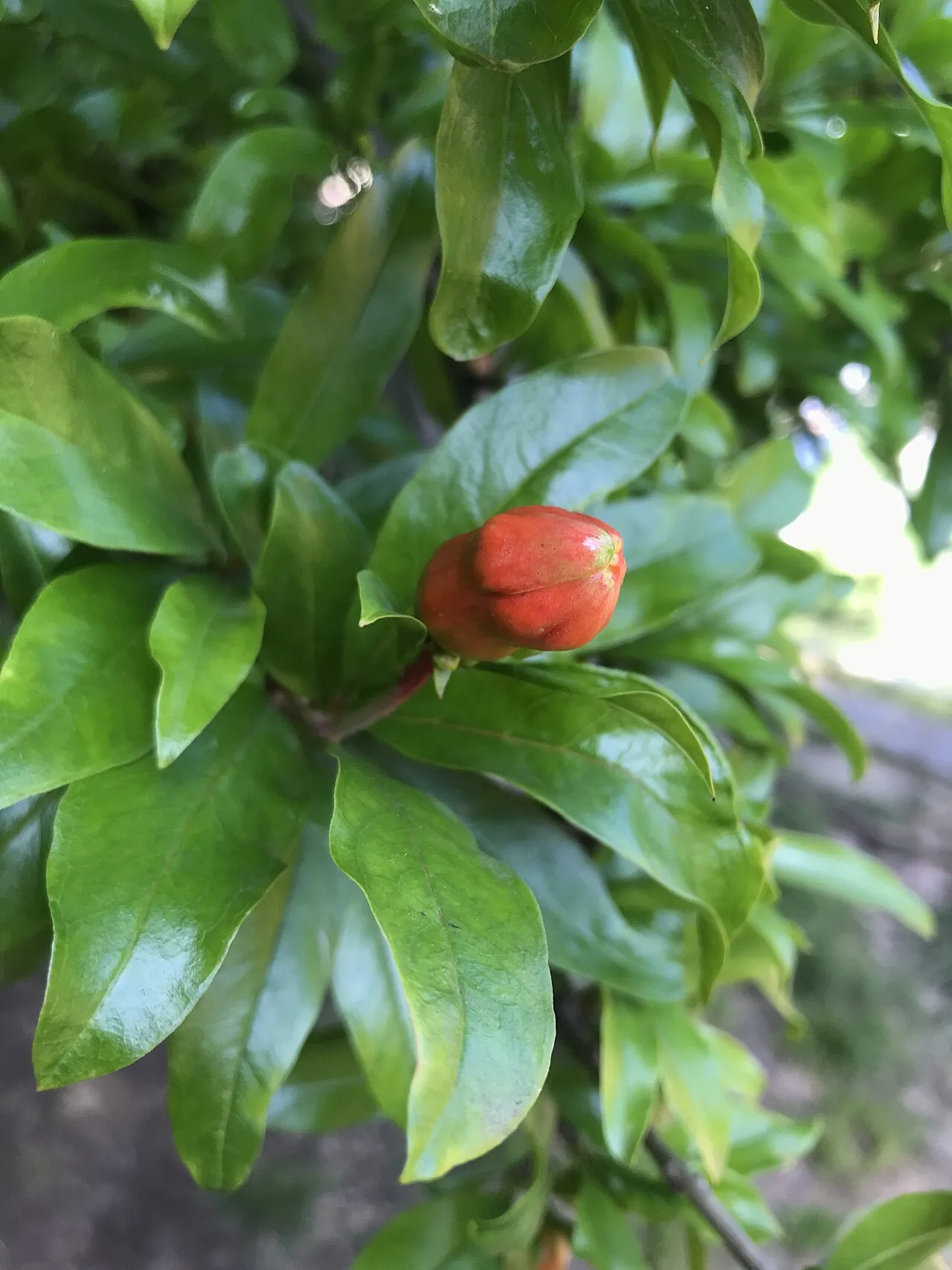
- The priest brings nirang (consecrated bull's urine), taro or gaomez (unconsecrated bull's urine) and a few pomegranate leaves, according to Karanjia.
- The child washes, says the kusti prayers and chews a few tender pomegranate leaves.
- The child sips a little nirang three times. Karanjia gives the line said each time as "In khuram in paki-e tan yaozdathri-e ravan ra"; Antia renders it in English as drinking "for cleansing (my) body and purifying (my) soul".
- Antia says pomegranate juice is used if there is no nirang; FEZANA adds lemon juice as another substitute.
- In Karanjia's account the Patet Pashemani comes next. He notes that the child once recited it here, but today the priest giving the nahan recites it on the child's behalf while the child says a Yatha Ahu Vairyo.
- Taro is applied to the body and, once it dries, the child has a full bath.
After the bath, Karanjia writes, the child wears pyjamas and a cap, with a shawl or white cloth over the shoulders; our separate guide on what to wear to a Navjote covers these clothes. He adds that from here until the Navjote is over, the child should not talk or touch anyone. The child is then led in a small procession to the place of the ceremony.
Practice varies between families and Agiaries; your family priest's guidance comes first.
What is achhu michhu at a Navjote?
Achhu michhu is a short welcome done before the child steps onto the mat. Karanjia and Antia both say it is done by the child's mother or a senior lady of the family. Karanjia describes it as a precaution against any mishap in the child's life. FEZANA's lesson plan lists what is on the tray and what each item stands for: an egg for life, a coconut, water for purity, a betel leaf, a turmeric stick, a dried date, a betel nut, sugar crystals, an almond and rice for abundance. Antia, a priest himself, describes achhu michhu as a Hindu custom for inviting good luck.
What are the steps of the Navjote on the mat?
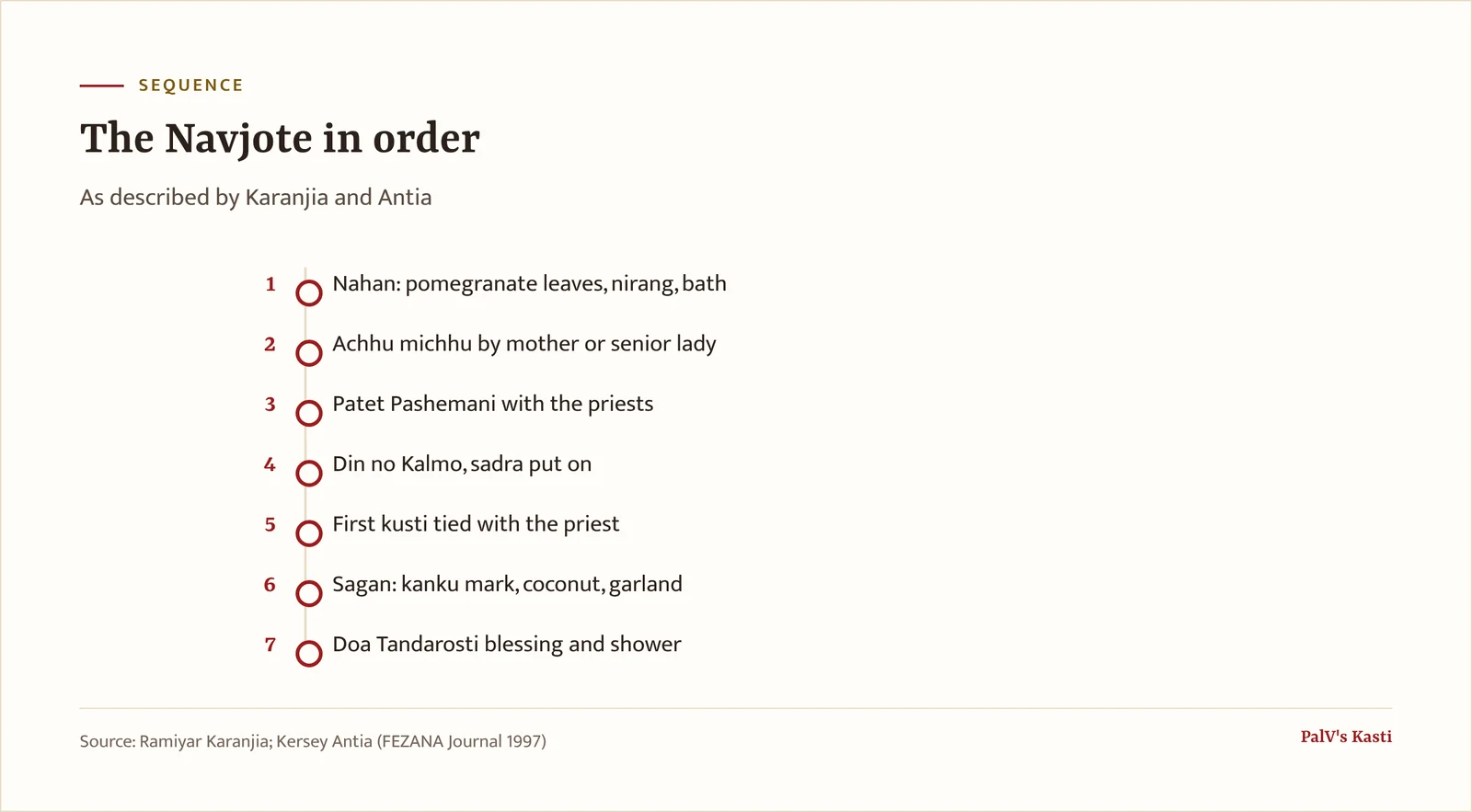
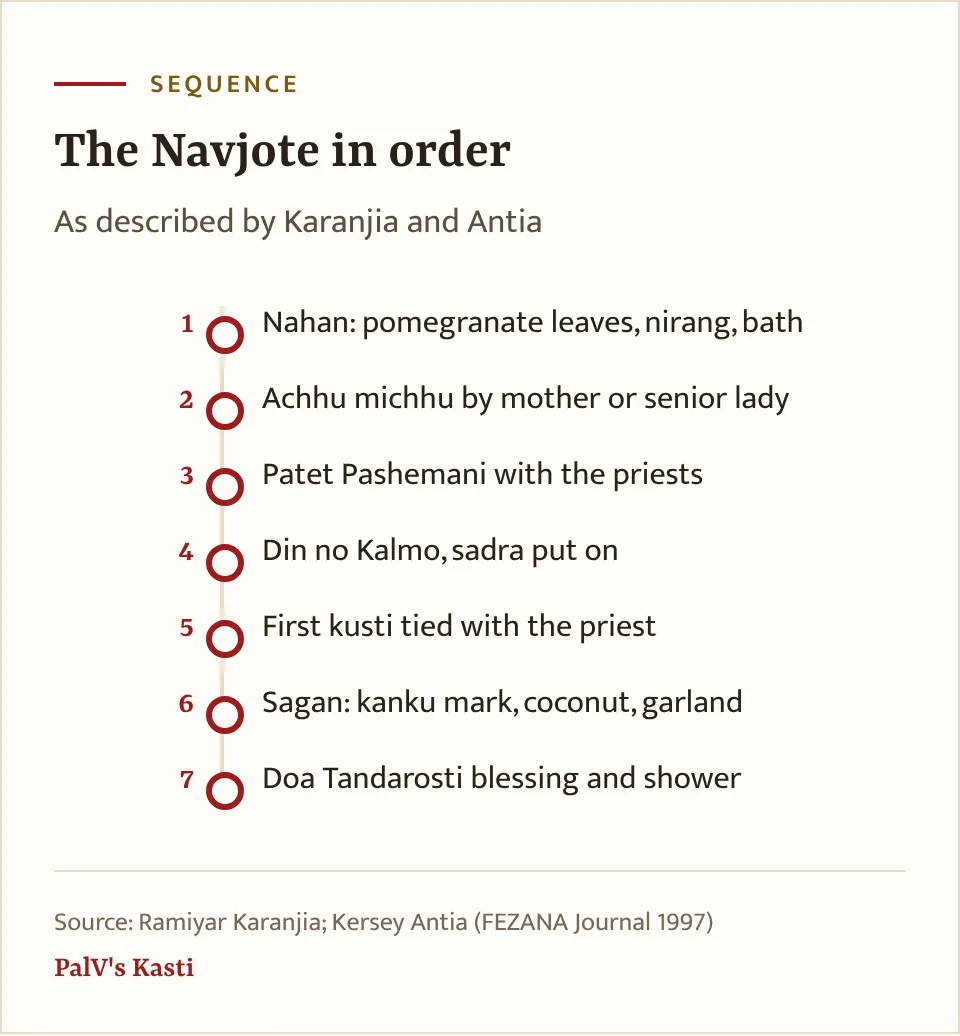
Seating and the Patet
The child sits on a patlo, a low wooden stool covered with white cloth, facing east. Modi and Karanjia both give east; Antia says the child faces the sun and never the north. Priests sit around the child: Karanjia gives four, six or eight, Antia "usually" four. Karanjia adds that, counting the child, the number of people on the mat should be odd. The senior priest begins the Patet Pashemani and the others join in at the words "okhe awākhsh". A child who knows the Patet recites it with them; otherwise, Karanjia says, the child recites 21 Yatha Ahu Vairyo and 12 Ashem Vohu.
The Din no Kalmo and the sadra
The child and the officiating priest stand facing each other. The child holds the new sadra by its sleeves and recites the Din no Kalmo with the priest, the short declaration of faith in Ahura Mazda, Zarathushtra and the Mazdayasni religion. Then, during a Yatha Ahu Vairyo, the priest puts the sadra on the child at the word "shyaothananam". Karanjia, Antia and FEZANA agree on this moment. What the declaration means is covered in our post on the Navjote declaration of faith, and the garment itself in Parsi Sadra meaning.
Tying the first kusti
The priest moves behind the child holding the kusti. In Karanjia's account the child holds the priest's little finger while the priest recites the opening of the Hormazd Yasht, and then the two say the Ahura Mazda Khodae together. Modi and Antia describe the knots. In Modi's version the kusti goes round the waist and the first front knot is tied at the word "shyaothananam". The second front knot follows on the same word in the next Yatha Ahu Vairyo. On the third round, with an Ashem Vohu, the two back knots are tied.
Priest and child then recite the Jasa me avanghe Mazda, the declaration from the 12th chapter of the Yasna in which, in Modi's translation, the worshipper says "I am a worshipper of God". Karanjia writes that the priest passes his hands over the child's shoulders during this prayer, a gesture he explains as the transfer of divine energy from the priest into the child.
Practice varies between families and Agiaries; your family priest's guidance comes first.
How does the Navjote end?
The child sits down again and the priest does the sagan. He puts a red kanku mark on the forehead with a few grains of rice on it. Modi notes a long vertical mark for a boy and a round one for a girl. The child is given a garland, a coconut, betel leaf, sopari and an envelope of money, and is handed a bouquet. Karanjia adds that a girl has a folded sari placed over her shoulders, which may later become her first sari.
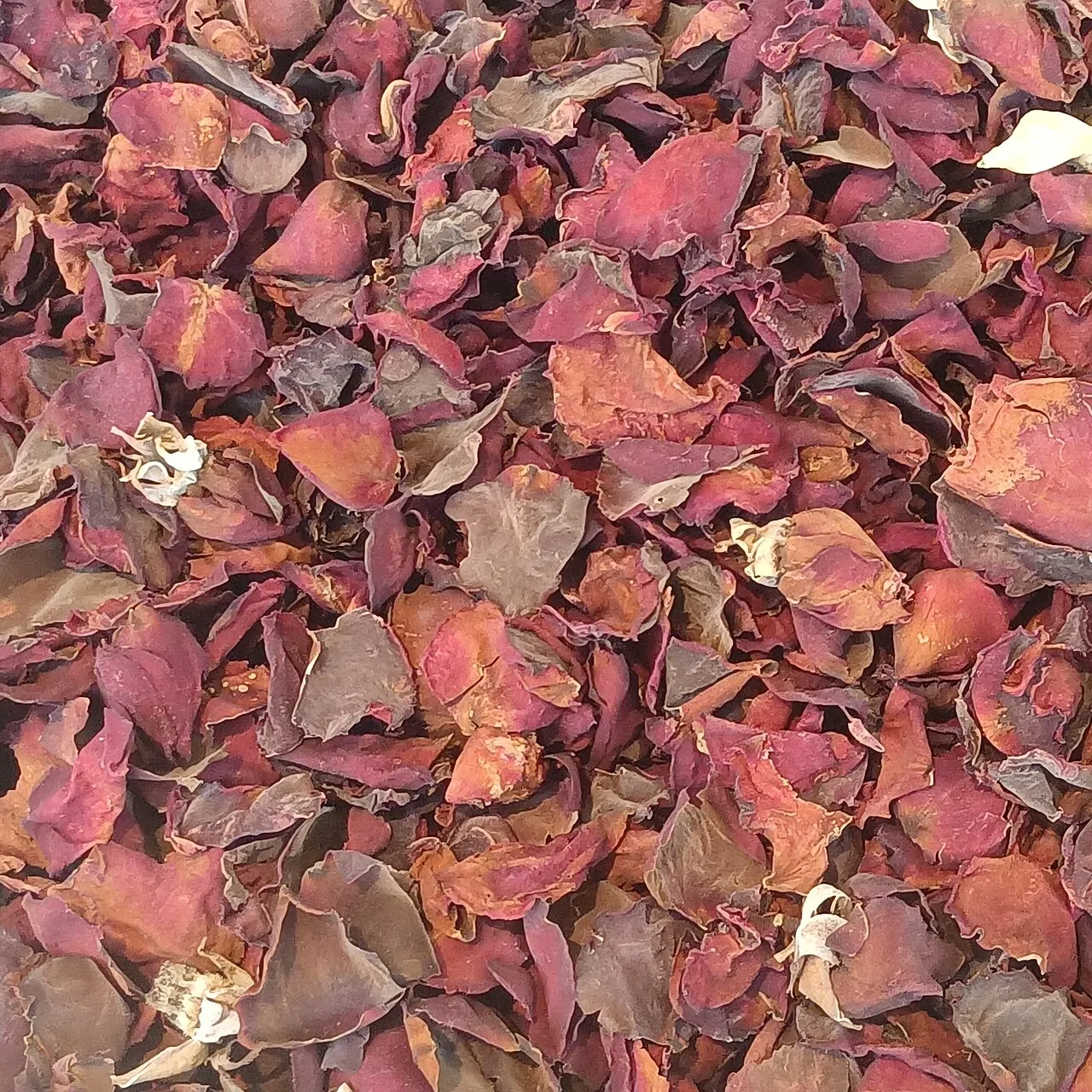
Last comes the Doa Tandarosti, the prayer for the child's health. The priest stands before the child and recites it while showering the child from a metal tray. Karanjia lists rice, shredded almonds, raisins, coconut pieces, rose petals and pomegranate seeds, and in his 2020 column notes that almonds are rarely used now. Antia names rice, rose petals, coconut flakes and pomegranate seeds; Modi names rice, pomegranate seeds, almonds and raisins. Karanjia's account ends with the parents thanking the priest with flowers and money. The child then changes into new clothes and is taken to the nearby Agiary or Atash Behram to offer sandalwood to the fire.
Practice varies between families and Agiaries; your family priest's guidance comes first.
How long does a Navjote take?
The only timing we found in a published source is old. Dosabhai Framji Karaka wrote in 1884 that the full ceremony "occupies about an hour". We found no current source that gives a duration, so ask your priest how long he expects the nahan and the ceremony to take when you plan the day. Our Navjote preparation checklist covers that planning, and if the child later finds the sadra and kusti hard to keep up, see why children stop wearing sadra-kusti.
Frequently asked questions
What are the steps of the Navjote ceremony?
The Navjote starts with the nahan bath, then achhu michhu as the child reaches the mat. The priests recite the Patet, the child recites the Din no Kalmo and is dressed in the sadra, and the priest ties the first kusti with the child. The sagan and the Doa Tandarosti blessing close it, as Karanjia and Antia describe.
What happens during the nahan before a Navjote?
A priest gives the nahan. The child says prayers, chews a few pomegranate leaves and sips a little nirang three times, or pomegranate juice where nirang is not available. Taro is then applied and the child bathes. Afterwards the child wears pyjamas and a cap with a shawl and, in Karanjia's account, stays silent until the Navjote is complete.
Who does achhu michhu at a Navjote?
The child's mother or another senior lady of the family does achhu michhu, just before the child steps onto the mat, as both Karanjia and Antia describe. The FEZANA lesson plan lists the tray as an egg, coconut, water, betel leaf, turmeric, dried date, betel nut, sugar crystals, almond and rice.
Which prayers are recited at a Navjote?
Karanjia and Antia name the Patet Pashemani, the Din no Kalmo, the opening of the Hormazd Yasht, the Ahura Mazda Khodae and the Jasa me avanghe Mazda, with Yatha Ahu Vairyo and Ashem Vohu along the way. The Doa Tandarosti blessing comes at the end. Your family priest will tell you which of these the child should know by heart.
How long does a Navjote ceremony take?
Dosabhai Framji Karaka, writing in his 1884 History of the Parsis, said the full ceremony took about an hour. That is the only published timing we found, and it is old. The nahan comes before it, so ask your priest how much time to keep aside for the whole morning or evening.


