PalV's Kasti
On this page
- What does neo-Zoroastrian mean?
- Why are Iranians turning to Zoroastrianism?
- Is neo-Zoroastrianism really growing in Iran?
- Can Iranians formally convert to Zoroastrianism?
- Do traditional Zoroastrians accept neo-Zoroastrians?
- Is neo-Zoroastrianism the same as the Kurdish Zoroastrian movement?
- Frequently asked questions
Neo-Zoroastrianism is the name scholars such as Benedikt Römer use for the faith as taken up by Iranians who were born Muslim and have chosen Zoroastrianism for themselves, as distinct from the ethnic Zoroastrians born into the community. It looks to be growing because, in anonymous online surveys, far more Iranians call themselves Zoroastrian than the community's recorded size of about 25,000. Researchers link that choice to Iranian heritage, to nationalism and, for some, to a break with the Shi'ite Islam promoted by the state. Real numbers are hard to pin down. Formal conversion from Islam is treated as apostasy in Iran, so most of this identity stays private or is voiced from abroad. The movement is one strand of the wider Zoroastrian revival.
શહેરેવર રોજ
Shehrevar Roj, Tir Mah · 1396 Y.Z.
What does neo-Zoroastrian mean?
In the research we read, a neo-Zoroastrian is a person, usually Iranian and born into a Muslim family, who has adopted Zoroastrianism rather than inherited it. We could not find a definition from Encyclopaedia Iranica or from any Zoroastrian body, so treat it as an academic label, not one the community has adopted.
The most detailed recent study is by Benedikt Römer, published in the journal Entangled Religions in 2024. He works from the life stories of two Muslim-born Iranians who became Neo-Zoroastrians. Earlier scholarship, he argues, was wrong to dismiss their practice as "unauthentic". He reads the movement two ways at once: as religious revival and reform, and as resistance to the state-backed Shi'ite Islam of the Islamic Republic.
Why are Iranians turning to Zoroastrianism?
Religion Watch, the Baylor University newsletter that summarised Römer's research in September 2024, says converts describe the move as a return to their ancient heritage. It reports that this goes with a turn away from Islam, after bad experiences with Islam and with Islamism.
A 2023 paper in the Journal for the Scientific Study of Religion by Michael Stausberg, Pooyan Tamimi Arab and Ammar Maleki reaches a similar view from survey data. Answering a survey outside state control, they argue, gave Iranians room to express identities tied to nationalism and the country's civilisational past. The European Union Agency for Asylum (EUAA), in a May 2025 report, cites the same authors, along with the scholar Paulina Niechciał, for the view that some Muslims may see conversion as a form of opposition to the Islamic Republic rather than a purely religious step.
Is neo-Zoroastrianism really growing in Iran?
The strongest sign is a survey. In June 2020 the research group GAMAAN asked Iranians online which belief was closest to their own. On GAMAAN's results page, 7.7% chose Zoroastrian. The largest answers were Shi'ite Muslim (32.2%) and none (22.2%). Zoroastrian came just behind atheist (8.8%) and ahead of spiritual (7.1%), agnostic (5.8%), Sunni Muslim (5%) and Christian (1.5%). The JSSR authors give the figure after weighting as 8% and call the effect "Survey Zoroastrianism", because it is many times the number of Zoroastrians that scholarship records.
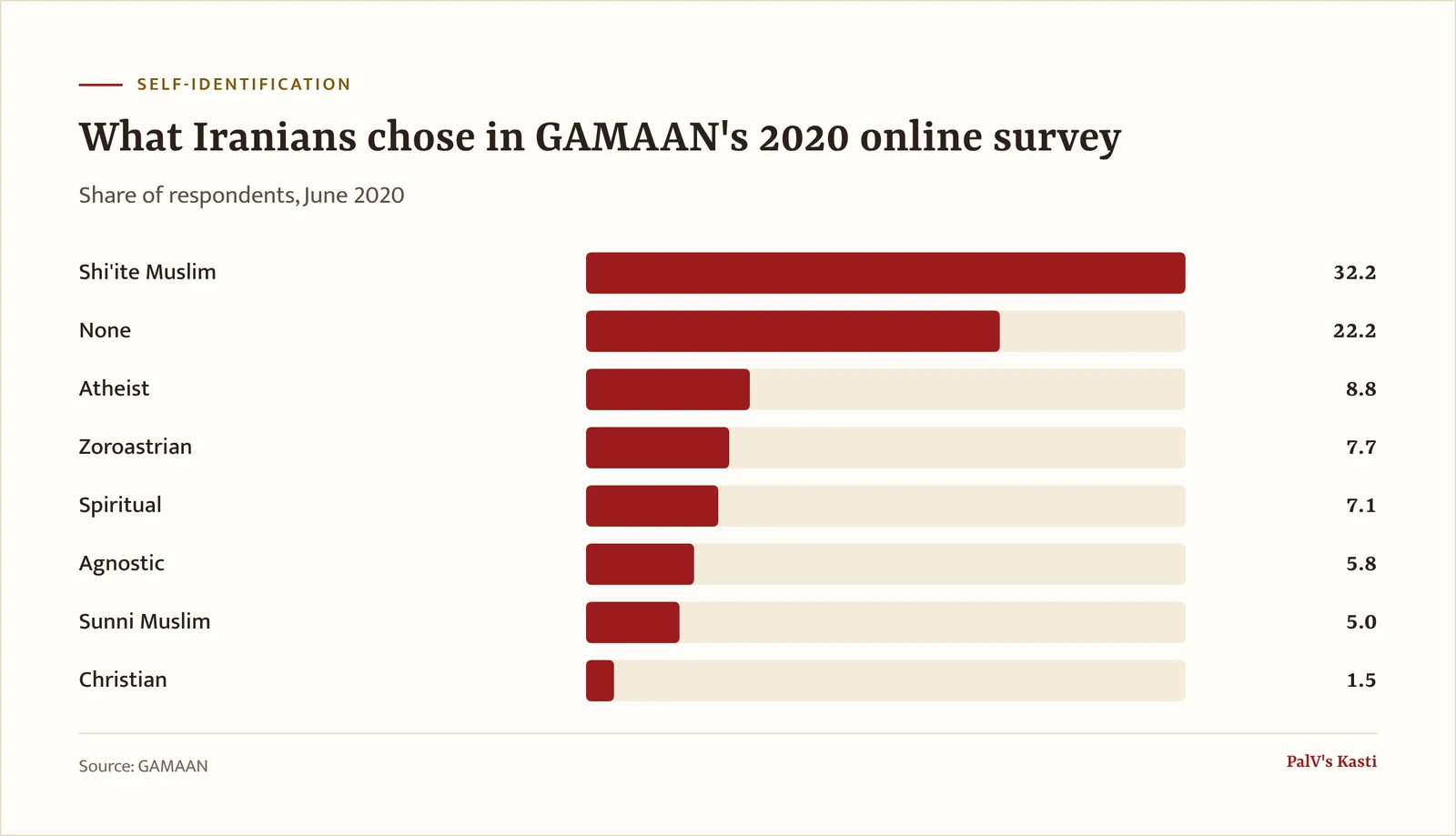
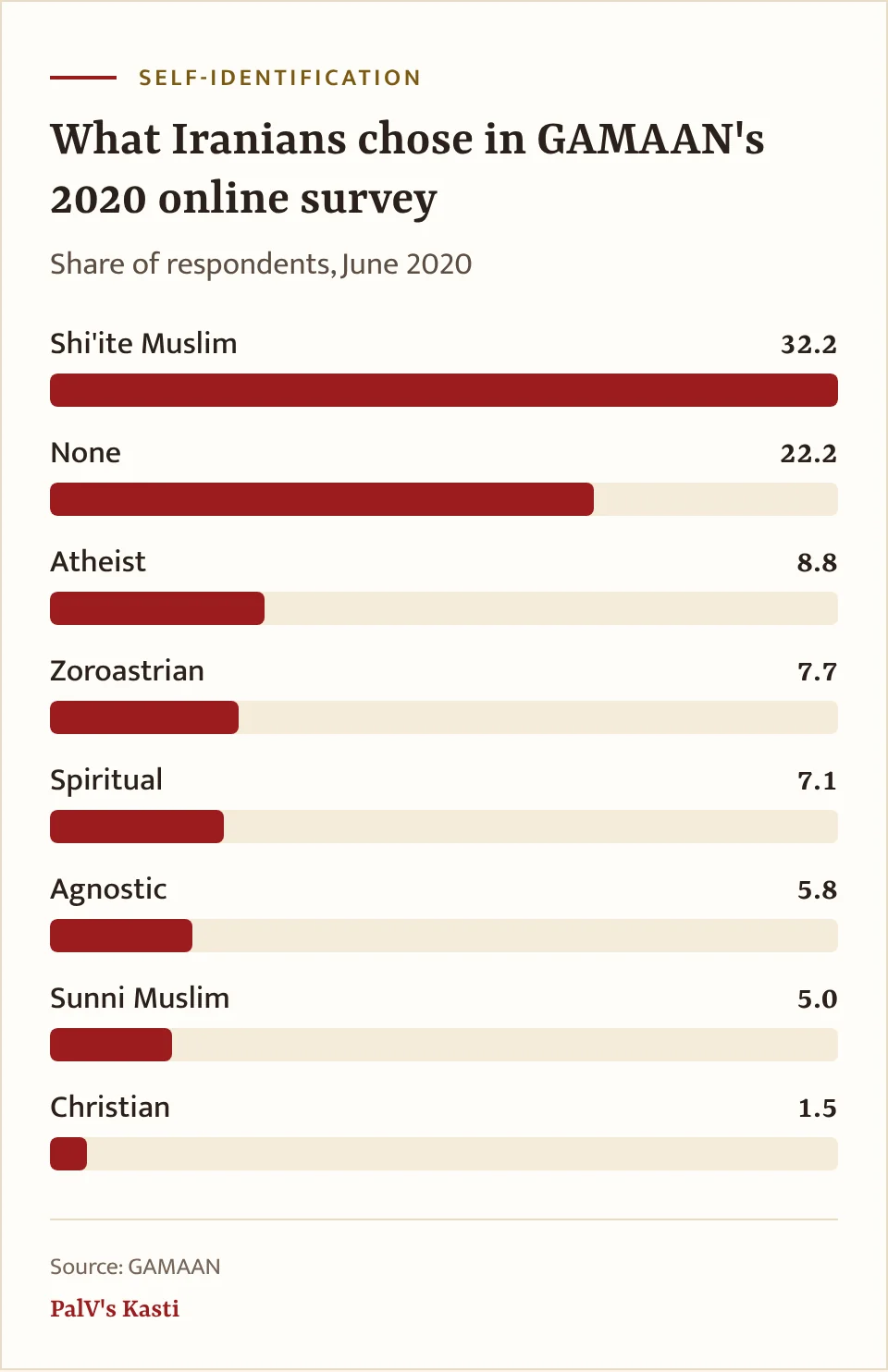
That 8% measures self-identification in an anonymous poll. It is not a count of people who have had a Navjote or belong to a Zoroastrian Anjuman. Results also move between surveys: the EUAA, citing Stausberg and colleagues, notes that in a later GAMAAN survey, in February 2022, 1% of respondents identified as Zoroastrian.
The recorded community is far smaller, and even those figures disagree:
| Source | Zoroastrians in Iran |
|---|---|
| Statistical Center of Iran and Zoroastrian groups, cited by the US State Department (2024) | About 25,000 |
| World Religion Database 2020, cited by the US State Department | 64,000 |
| Religion Watch summary of Römer (2024) | 23,000 |
| Stausberg and colleagues (2023), cited by the EUAA (May 2025) | 11,000 to 25,000 |
| France24 (July 2023), cited by the EUAA (May 2025) | Up to 50,000 |
Other signs come second-hand. The EUAA cites the Immigration and Refugee Board of Canada, which in 2022 referred to a 2015 study reporting a trend among Iranian youth of converting from Islam to Zoroastrianism; the same source says there are no official statistics, because of fear of state persecution. It also cites a Qom cleric, quoted by Iran International in March 2023, who spoke of a "strange tendency" among the Bakhtiari tribe to convert. How young people outside Iran are shaping the faith is covered in our post on Zoroastrian youth.
Can Iranians formally convert to Zoroastrianism?
In practice, no. Iran's constitution recognises Zoroastrians, Jews and Christians as the only religious minorities. According to the US State Department's report on 2023, the government's reading of sharia treats leaving Islam as apostasy, a crime punishable by death, and the law bars Muslims from changing their religion. The EUAA adds that apostasy is not written into the penal code, but conversion can still be treated as apostasy under sharia, and that conversions from Islam to Zoroastrianism are not recognised by the state.
In a paper published in May 2025 and cited by the EUAA, Paulina Niechciał of Jagiellonian University writes that the apostasy ban in practice "precludes conversion to Zoroastrianism" and also keeps pro-conversion opinions out of public view. The Circle of Ancient Iranian Studies, quoted in the same report, says conversions in Iran are done very quietly.
This shapes the whole movement. Stausberg and colleagues found that many who identify as Zoroastrian avoid formal conversion and prefer what they call "a privatized conception of lived religion". Sources cited by the EUAA say converting abroad is easier, while conversions into traditional Zoroastrian communities in Iran have been limited. The general question of who may join the faith is in our guide to Converting to Zoroastrianism.
Do traditional Zoroastrians accept neo-Zoroastrians?
There is no single answer. The EUAA states that Zoroastrians have no unified view on whether conversion into the faith is allowed. Religion Watch puts it this way: some Zoroastrians are open to converts, others, especially in India, are not.
Inside Iran, the two groups barely meet. Religion Watch, summarising Römer, reports little and cautious contact between ethnic Zoroastrians and Neo-Zoroastrians, and says Neo-Zoroastrians can speak openly about their beliefs only outside the country.
Yet their ideas are drifting closer. Römer's abstract notes a certain convergence between the views of reform-minded ethnic Zoroastrians in Tehran and those of Neo-Zoroastrians. Among urban Tehran Zoroastrians, Religion Watch reports, rituals have been shortened and moral principles placed at the centre of religious life, a change it ties to large-scale migration to Tehran. Römer's own conclusion, as Religion Watch gives it, is that if the two groups met more often and strict endogamy were given up, interest in the faith could become a chance for real revival. That is his argument, not a community position.
Practice varies between families and Agiaries; your family priest's guidance comes first.
Is neo-Zoroastrianism the same as the Kurdish Zoroastrian movement?
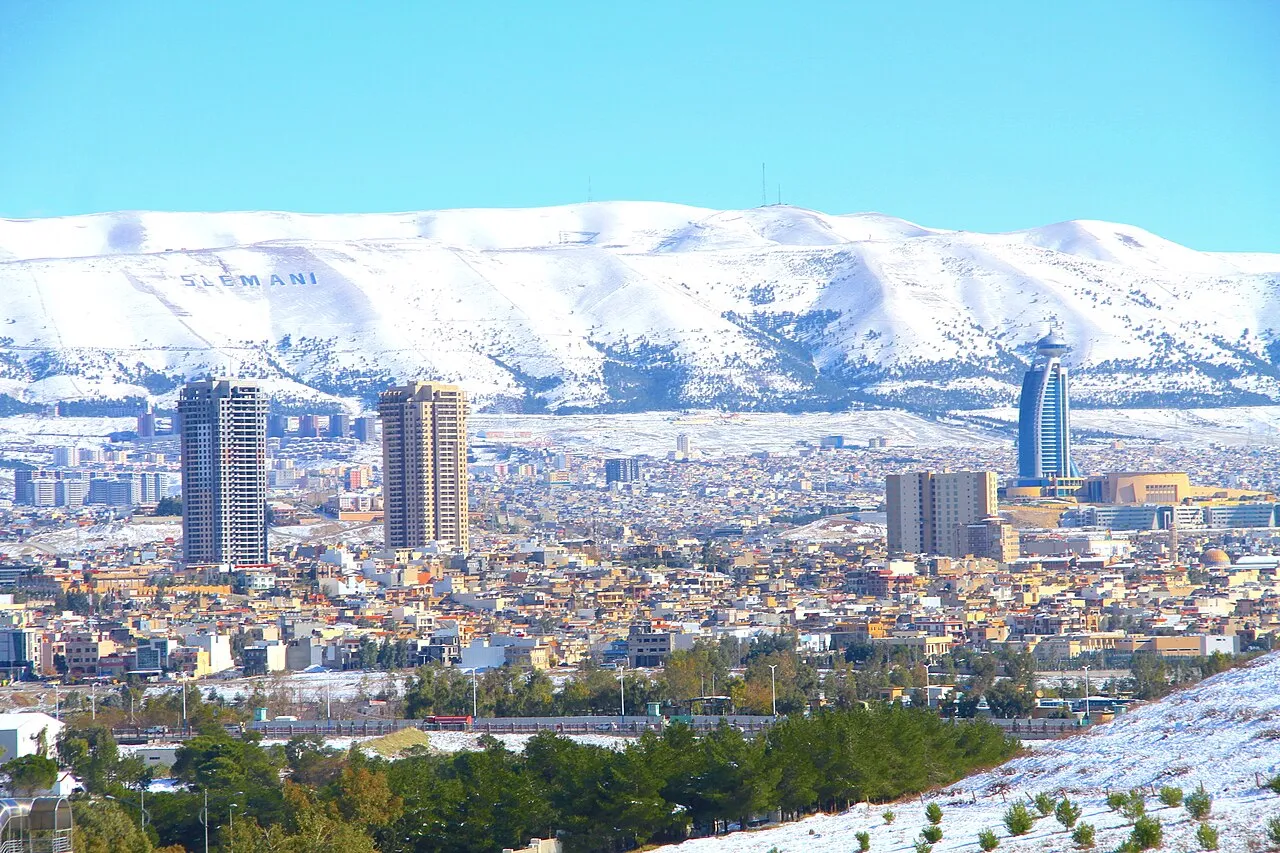
Not quite. Neo-Zoroastrianism here refers to Iran. A separate movement has grown in the Kurdistan Region of Iraq, where a 2015 regional law recognised Zoroastrianism and, as The New Arab reported in 2018, the first temple in Sulaimani was set up that year after the law was passed. An associate professor at the American University of Iraq, Sulaimani, told Canada's refugee board in 2019 that Zoroastrianism there is seen as the Kurds' original religion and that Kurdish converts are "reinventing the tradition". Assos Hardi, a Kurdish journalist based in Sulaimani, told The New Arab the switch was "more about identity than it is about religion". The two movements share that identity theme but run under very different laws.
Frequently asked questions
What does neo-Zoroastrian mean?
A neo-Zoroastrian is someone, usually an Iranian born into a Muslim family, who has adopted Zoroastrianism rather than being born into it. Scholars such as Benedikt Römer use the term. It separates these new adherents from ethnic Zoroastrians, whose communities in Iran and India have long kept strict boundaries around who belongs.
How many Iranians identify as Zoroastrian?
In GAMAAN's anonymous online survey of June 2020, 7.7% of respondents chose Zoroastrian, and researchers put the weighted figure at about 8%. That is self-identification, not membership. The recorded community is far smaller: about 25,000 according to the Statistical Center of Iran, as cited by the US State Department in 2024.
Is conversion to Zoroastrianism allowed in Iran?
No. According to the US State Department, the Iranian government treats leaving Islam as apostasy, punishable by death under its reading of sharia, and the law bars Muslims from changing religion. The EUAA reported in May 2025 that the state does not recognise conversions from Islam to Zoroastrianism, so most conversions stay private.
Is neo-Zoroastrianism the same as Kurdish Zoroastrianism?
They are related but separate. Neo-Zoroastrianism usually refers to Muslim-born Iranians inside Iran or abroad. The Kurdish movement is centred in the Kurdistan Region of Iraq, where a 2015 regional law recognised Zoroastrianism and a temple opened in Sulaimani. Observers describe both as driven strongly by questions of identity.
Do traditional Zoroastrians accept neo-Zoroastrians?
Views differ. The EUAA says Zoroastrians have no unified view on whether converts may join, and Religion Watch reports that some are open while others, especially in India, are not. In Iran, contact between the two groups is described as little and cautious. Your family priest's guidance comes first on any individual question.