PalV's Kasti
On this page
- What do people mean by the Zoroastrian revival?
- Is Zoroastrianism growing in Iran?
- Is there a Zoroastrian revival in Kurdistan?
- What is being done to revive the Parsi community in India?
- Is Zarathushti culture having a revival among the young?
- Can the Zoroastrian revival save the faith?
- Frequently asked questions
The "Zoroastrian revival" is not one movement. The phrase covers at least four separate things: Muslim-born Iranians who now call themselves Zoroastrian, a Kurdish return to the faith in northern Iraq since 2015, the Government of India's Jiyo Parsi scheme to reverse the fall in Parsi numbers, and youth and heritage programmes in the diaspora. Whether any of it can save the faith depends on a question the community has not settled: who counts as a Zoroastrian. Many of the newcomers are converts, and Zoroastrians do not agree on whether converts can be admitted at all. Scholar Benedikt Römer argued in 2024 that the new interest could become an opportunity for real revival, if the groups meet more and strict marriage within the community ends. Others hold that the community has survived precisely because it did not marry out. We set out each side in its own words below.
અસપંદામેદ રોજ
Asfandarmad Roj, Tir Mah · 1396 Y.Z.
What do people mean by the Zoroastrian revival?
The word means different things in different places. In India, the Government's response has been about numbers: a scheme to reverse the fall in the Parsi population. In Iran, researchers use it for people born into Muslim families who adopt a Zoroastrian identity, which the scholars who studied an online survey of Iranians link to nationalism and Iran's ancient heritage. In Iraqi Kurdistan, an academic told Canada's refugee board in 2019 that the faith is widely seen as a marker of "Kurdishness".
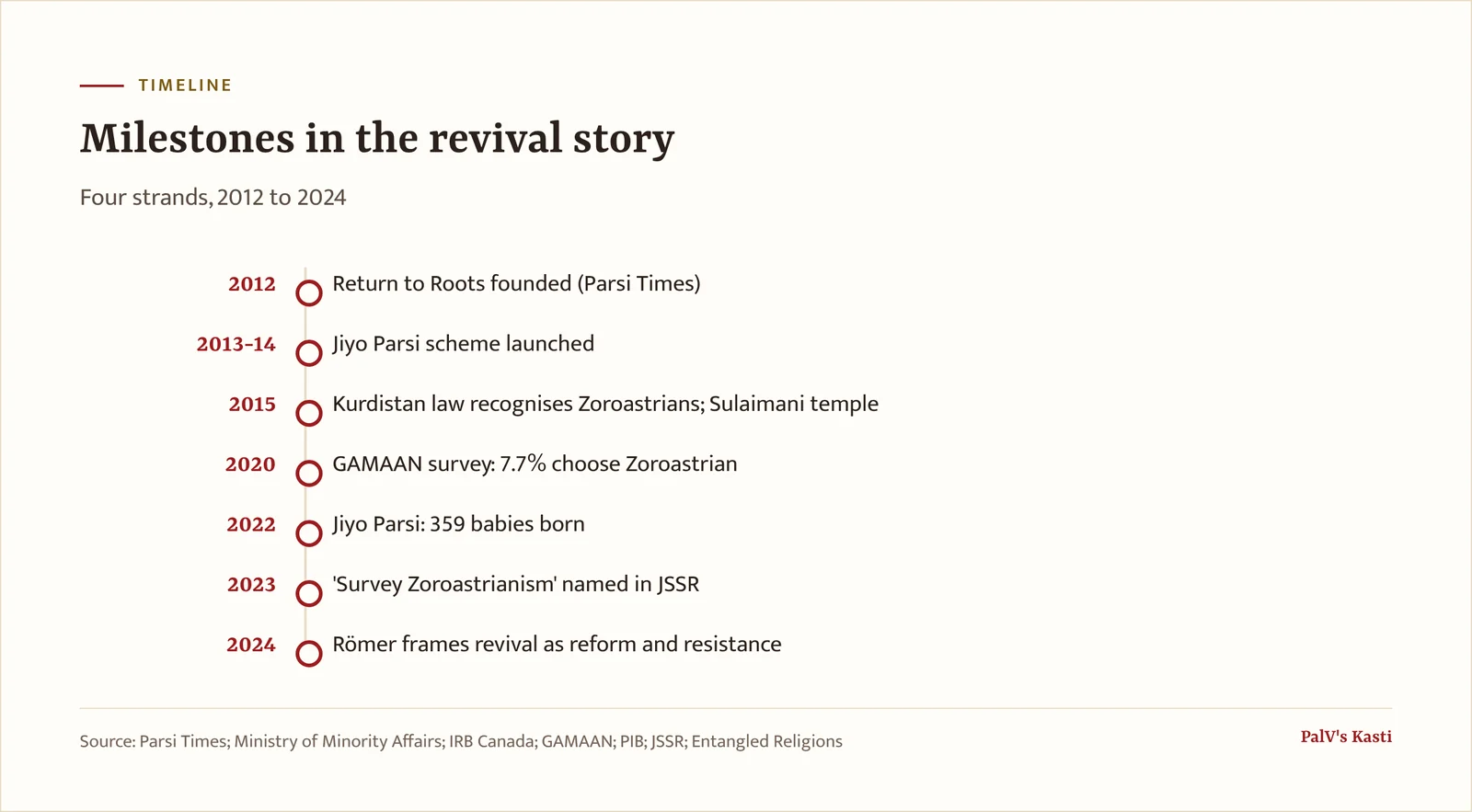
The academic framing comes from Benedikt Römer, whose article in the journal Entangled Religions (volume 15, 2024) studies the life accounts of two Muslim-born Iranian converts. He proposes that Iranian Neo-Zoroastrianism be read both as a revival and reform movement and as a form of resistance to the Shi'ite Islam promoted by the Islamic Republic. His abstract also notes rising interest in conversion among Kurds, Tajiks and Iranians, and growing debate in Iran and India over whether converts should be accepted. Our explainer on Neo-Zoroastrianism covers that movement in detail.
Is Zoroastrianism growing in Iran?
On paper, no. In surveys, it looks very different. The US State Department's report on religious freedom in Iran (published 26 June 2024) gives about 25,000 Zoroastrians, a figure it attributes to Zoroastrian groups and the government-run Statistical Center of Iran. The same report cites a World Religion Database estimate of 64,000 for 2020. The European Union Agency for Asylum (EUAA), in a May 2025 report, says no precise figures exist and that estimates run from 11,000 to 25,000, with some sources going up to 50,000.
Then there is the survey that started the conversation. In June 2020 the research group GAMAAN ran an online survey on religion in Iran. Its results page shows 7.7% of respondents choosing "Zoroastrian". Michael Stausberg, Pooyan Tamimi Arab and Ammar Maleki analysed the data in the Journal for the Scientific Study of Religion (2023): of about 50,000 participants, 8% identified as Zoroastrian after weighting. That is many times the recorded community. The authors named it "Survey Zoroastrianism" and argue that a survey outside government control let people express identity hopes linked to nationalism and Iran's ancient civilisation.
Two cautions. The authors read the result as self-identification, not formal membership of a community. And the EUAA notes that two later GAMAAN surveys in 2022 found 1% and 5%. Article 13 of Iran's Constitution names Zoroastrians among the country's only recognised religious minorities, but the EUAA says the state does not recognise conversions from Islam, and the State Department says the government's reading of sharia treats such conversion as apostasy. Our post on Iran's view of the revival sets out the law and how the authorities have responded.
Is there a Zoroastrian revival in Kurdistan?
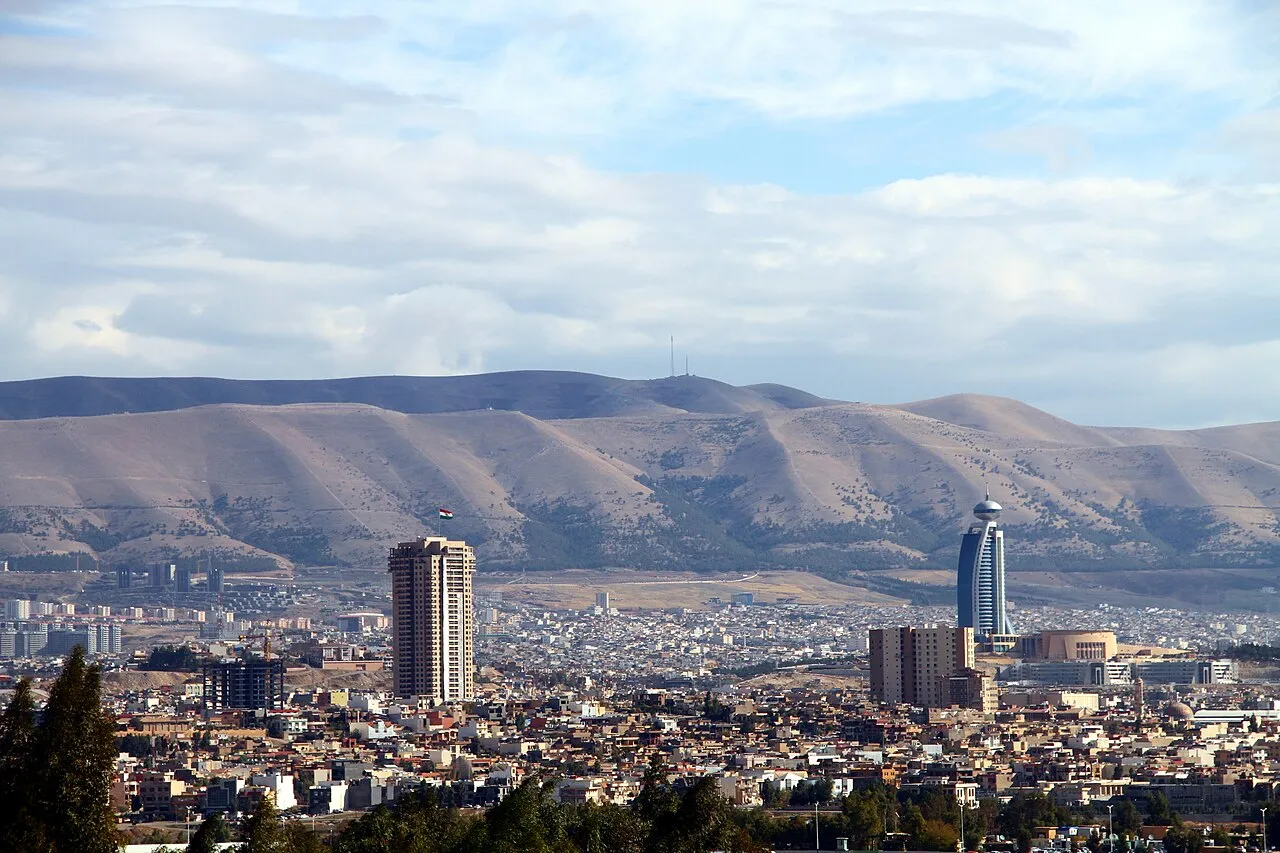
Yes, and it has legal footing. The Kurdistan Regional Government of Iraq passed a law on the rights of religious minorities in 2015 that recognises Zoroastrians, according to a July 2019 response by the Immigration and Refugee Board of Canada. The New Arab reported in 2018 that the community's first temple opened in Sulaimani in 2015, after that law.
The numbers are claims, and they vary widely. A Zoroastrian representative told the Canadian board in 2019 that more than 10,000 people were registered with Zoroastrian organisations, and that up to 250,000 might be counted if online declarations were included. In 2015, Rudaw reported that the movement claimed some 100,000 followers in Iraqi Kurdistan, and Nouri Sharif, one of its founders, described its growth as mainly a reaction to Islamic State violence. Assos Hardi, a Kurdish journalist in Sulaimani, told The New Arab in 2018: "This switch is more about identity than it is about religion." Read more in our post on Zoroastrians in Kurdistan.
What is being done to revive the Parsi community in India?
India's answer is a government scheme. Jiyo Parsi, a Central Sector Scheme of the Ministry of Minority Affairs launched in 2013-14, aims to reverse the declining trend of the Parsi population. The ministry lists three parts. According to the government's 2022 reply to Parliament, these are medical assistance (financial help for assisted reproduction, including IVF and surrogacy), health of the community (help with childcare costs and assistance to the elderly) and advocacy (counselling on fertility, marriage, family and old age).
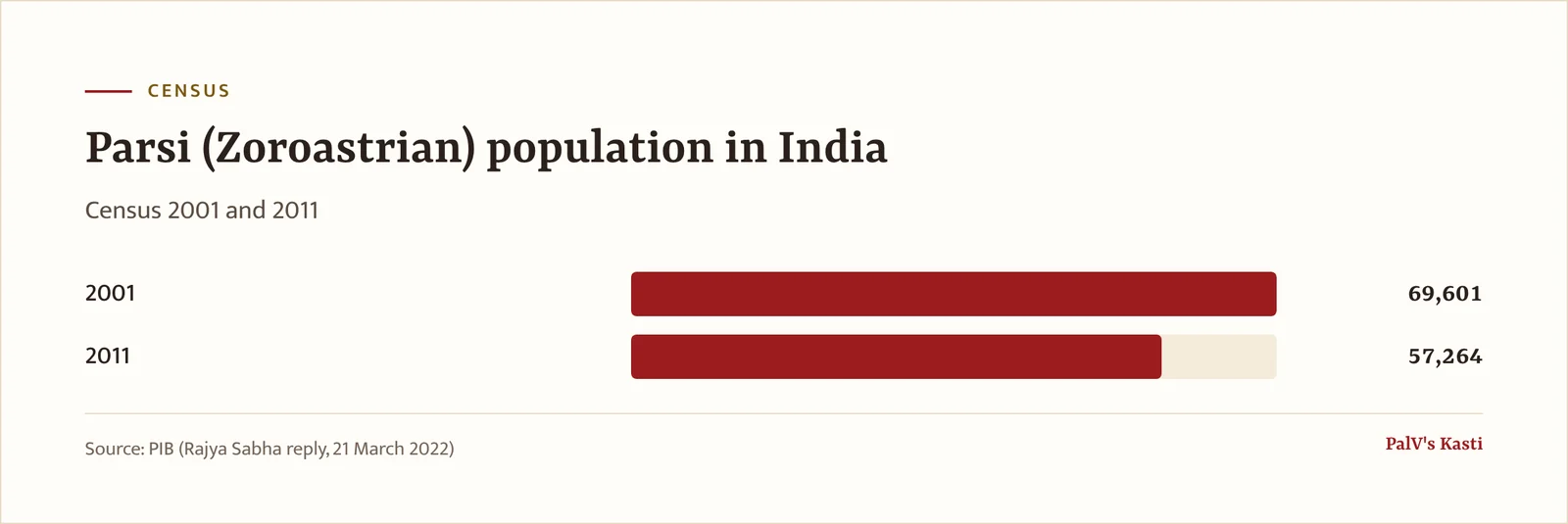
The scale of the problem is in the Census. In a written reply to the Rajya Sabha on 21 March 2022, the then Minister for Minority Affairs, Mukhtar Abbas Naqvi, gave the Parsi (Zoroastrian) population as 69,601 in 2001 and 57,264 in 2011. That is a fall of about 17.7% in ten years (our calculation). The same reply said 359 babies had been born with the scheme's help.
Not everyone reads the numbers as a crisis. Khojeste Mistree, then a trustee of the Bombay Parsi Punchayet, told AFP in 2010 that emigration had simply redistributed the community.
Is Zarathushti culture having a revival among the young?
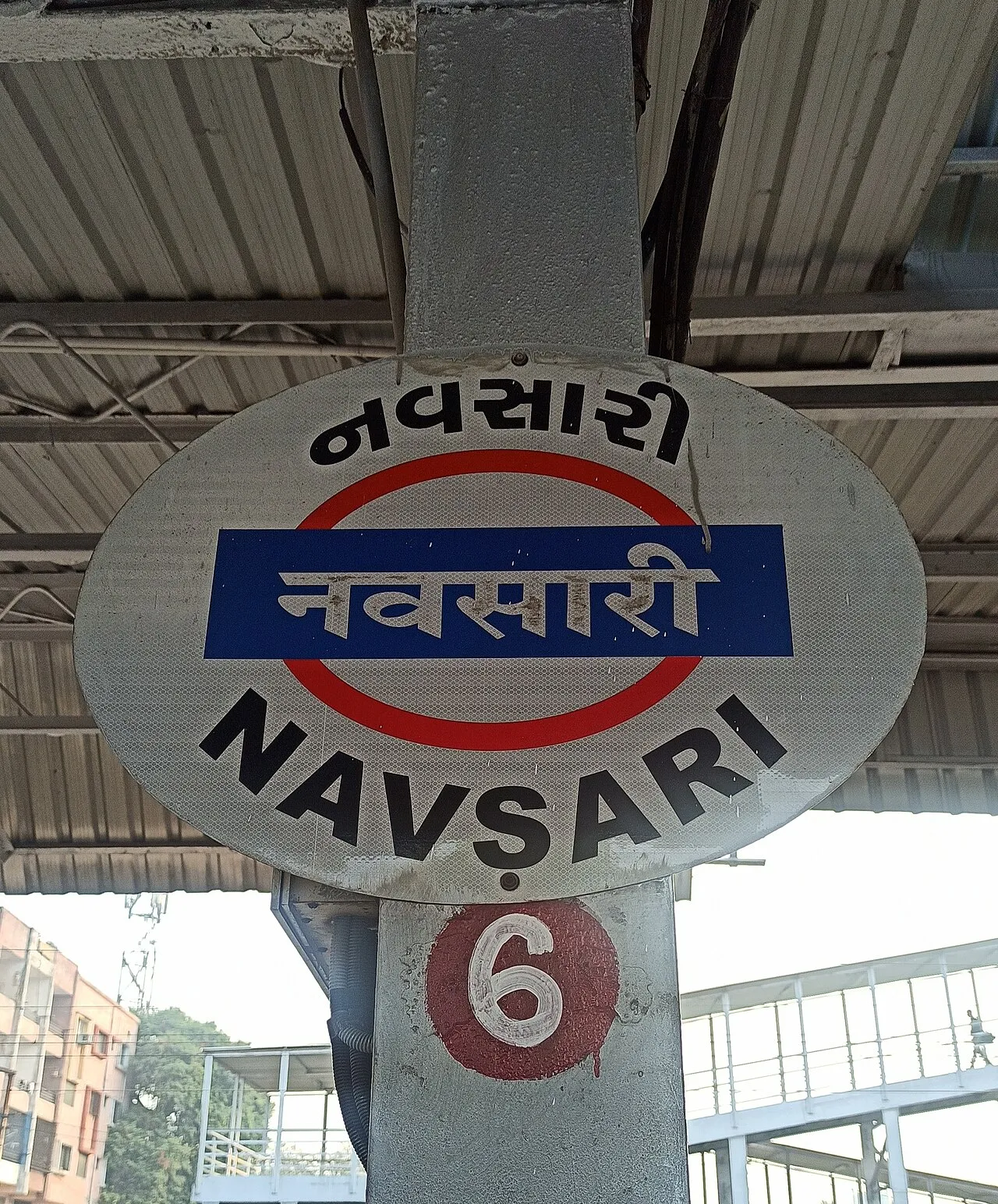
The best-documented example is Return to Roots, which takes diaspora Zoroastrians aged 22 to 35 on trips that begin in Mumbai and take in Udvada and Navsari. Parsi Times describes it as youth-initiated and established in 2012, while UNESCO Parzor dates its pilot to January 2014 and gives the age range as 20 to 35. By January 2019, Religion News Service reported, five trips had taken 81 young people from at least eight countries, and the programme relied on private donations.
Return to Roots is a revival inside the community, not an opening of it. Its 2023 call, as published by Parsi Times, required applicants to practise the faith, have at least one Zarathushti parent and have had their Navjote. Parzor, for its part, has gathered study material from India and Iran and published a four-volume series, The Parsis of India, on the community's demographic decline. Our piece on Zoroastrian youth looks at what young people are doing with the faith.
Can the Zoroastrian revival save the faith?
This is where the community splits, and both sides speak for themselves.
The case for opening up
Vispy Wadia, co-founder of the Association for the Revival of Zoroastrians, told AFP in 2010: "We would love Parsis to survive." If the community keeps shrinking, he added, his group wants the religion itself to live on. The same report said the Association of Inter-Married Zoroastrians, led by Meher Amersey, was campaigning for the children of Parsis who married out to be accepted. Journalist Deena Guzder, a practising Zoroastrian, told NPR in 2009 that the faith "strongly discourages people from trying to convert". With so many marrying out, she called this "a self-annihilating practice in some sense", and said many of her peers hoped the community would become more open. Römer's 2024 conclusion, as summarised by Religion Watch at Baylor University, is that more contact between groups and an end to strict endogamy could turn the new interest into "an opportunity for actual revival".
The case for holding the line
Hoshedar Havewala, a member of ZYNG, the Bombay Parsi Punchayet's youth wing, told AFP in the same 2010 report: "We have survived only because we have not married outside." Author and publisher Marzban Giara told AFP that the faith forbids intermarriage.
Does the faith accept converts?
There is no single answer. The EUAA's 2025 report says Zoroastrians do not agree on whether conversion into the faith is allowed at all, with some holding that one must be born into it. Religion Watch's 2024 summary puts it this way: some Zoroastrians welcome the idea of converts, and others, India's community in particular, reject it. Our guide to Converting to Zoroastrianism goes through the positions. Practice varies between families and Agiaries; your family priest's guidance comes first.
Frequently asked questions
Is Zoroastrianism growing?
It depends on what you count. India's Census recorded the Parsi (Zoroastrian) population falling from 69,601 in 2001 to 57,264 in 2011. In Iran, official figures are about 25,000. But a 2020 online survey by GAMAAN found about 8% of respondents identifying as Zoroastrian, which reflects identity and heritage more than formal membership.
Can you convert to Zoroastrianism?
Zoroastrians themselves disagree. A 2025 European Union Agency for Asylum report says there is no unified view, and some hold that a Zoroastrian must be born one. Religion Watch noted in 2024 that some Zoroastrians are open to converts while others, especially in India, are not. Practice varies between families and Agiaries; your family priest's guidance comes first.
What is "Survey Zoroastrianism"?
It is the name scholars Michael Stausberg, Pooyan Tamimi Arab and Ammar Maleki gave, in a 2023 journal article, to a striking result: in GAMAAN's 2020 online survey of Iranians, 8% identified as Zoroastrian after weighting, many times the recorded community. They link it to identity hopes tied to nationalism and Iran's ancient civilisation.
What is Jiyo Parsi?
Jiyo Parsi is a Central Sector Scheme of India's Ministry of Minority Affairs, launched in 2013-14 to reverse the declining trend of the Parsi population. It funds medical help such as IVF, helps with childcare costs, assists the elderly and offers counselling. By March 2022, 359 babies had been born with its help.
Is there a Zoroastrian revival in Kurdistan?
Yes. The Kurdistan Regional Government of Iraq recognised Zoroastrians in a 2015 minorities law, and a first temple opened in Sulaimani that year. Follower numbers are disputed: a representative cited more than 10,000 registered in 2019, while the movement claimed about 100,000 in 2015. Observers describe it as largely about Kurdish identity.