PalV's Kasti

On this page
- How many Zoroastrians live in Australia?
- When did Zoroastrians first come to Australia?
- How did Sydney's Zoroastrians build their own Darbe Mehr?
- What happens at the Annangrove Darbe Mehr?
- What do Zoroastrians in Melbourne do?
- Is there a Zoroastrian association in Perth?
- How do Australian Zoroastrians celebrate Navroz?
- How do families pass the faith on to children?
- Frequently asked questions
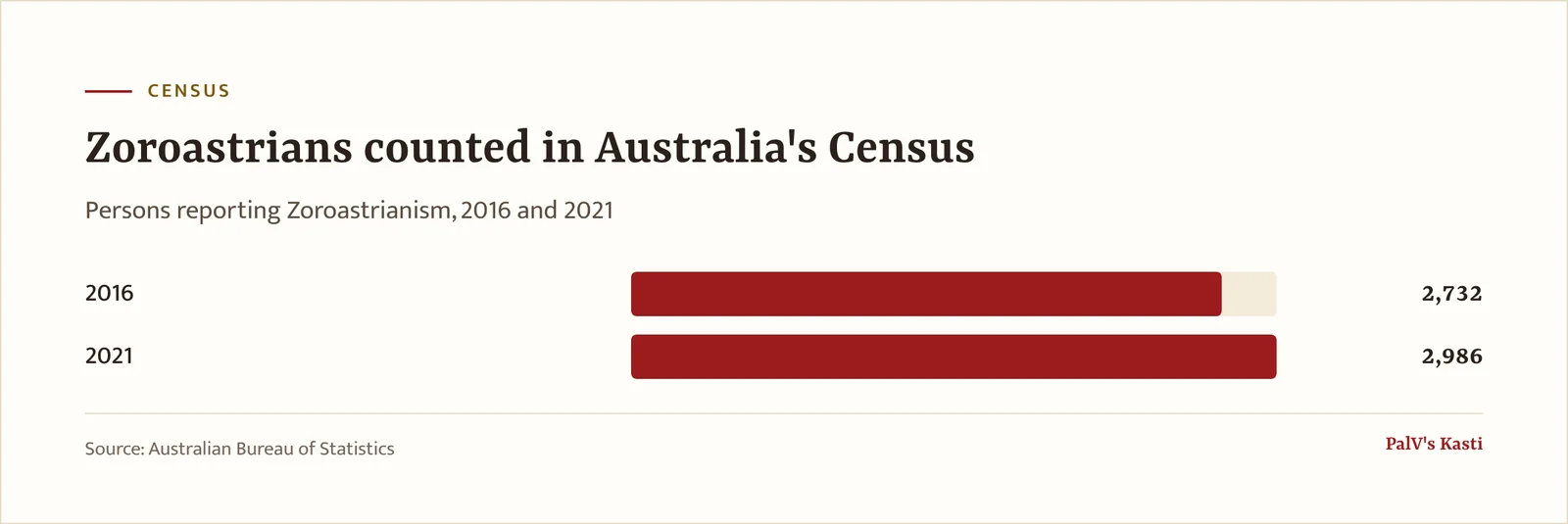
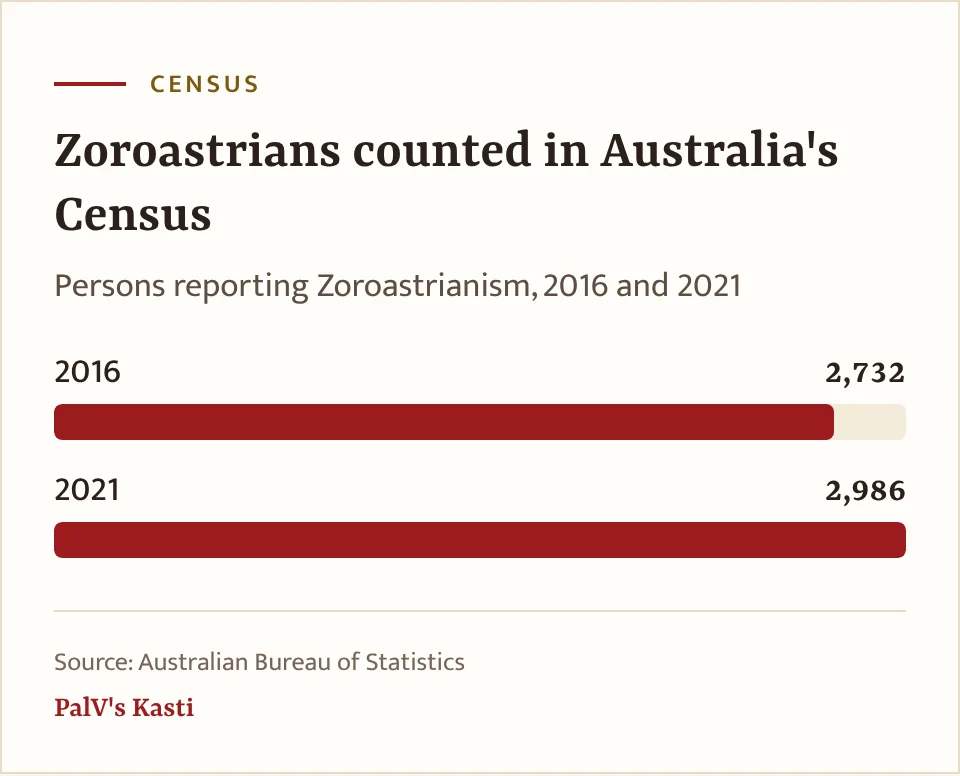
Zoroastrians in Australia keep their faith alive through a handful of community associations in Sydney, Melbourne and Perth. In Sydney, the Australian Zoroastrian Association of NSW (AZA) runs the Arbab Rustom & Morvarid Guiv Darbe Meher at Annangrove, finished in July 1994, where families gather for a monthly Sunday school, Navjotes, weddings and Jashans. In Melbourne, the Zoroastrian Association of Victoria (ZAV) offers similar services and, as of April 2025, was raising money for a centre and Dadgah of its own. The community is small but growing: Australia's Census counted 2,732 Zoroastrians in 2016 and 2,986 in 2021.
This page is part of our series on the Zoroastrian diaspora, the Parsi and Irani families now settled far from India and Iran.
શહેરેવર રોજ
Shehrevar Roj, Tir Mah · 1396 Y.Z.
How many Zoroastrians live in Australia?
The Australian Bureau of Statistics (ABS) counts Zoroastrianism as a religion of its own. In its 2021 Census tables on religious affiliation, released on 4 July 2022, the ABS gives 2,732 Zoroastrians for 2016 and 2,986 for 2021. That is a rise of 254 people, or about 9.3% in five years (our calculation).
A community survey gives slightly lower numbers. FEZANA published a world table in its Fall 2013 journal that put Australia at 2,601 in 2004 and 2,577 in 2012, based on a survey of seven Australian states. Its compiler, Roshan Rivetna, describes the table as a "magazine survey" and not an official census, so the Census counts above are the firmer figures. In July 2022 the Associated Press reported that Zoroastrian numbers were falling in India while rising in North America, Britain, Australia and New Zealand.
For the picture in India, see our page on the Parsi population in India, and for the largest community abroad, Zoroastrians in North America.
When did Zoroastrians first come to Australia?
The fullest short account we found is in a FEZANA lesson on Zoroastrians around the world. It says Zoroastrians reached New South Wales from Britain and China before the 1950s, and that Sydney had only three migrant families in 1968. For Melbourne, it dates the earliest Zoroastrian arrival to 1890 and the first modern migrants to the early 1960s. The same lesson notes that when Sinhala became Ceylon's official language, many Zoroastrians who did not speak it moved to Australia. These points come from FEZANA alone, and we could not check them against a second source.
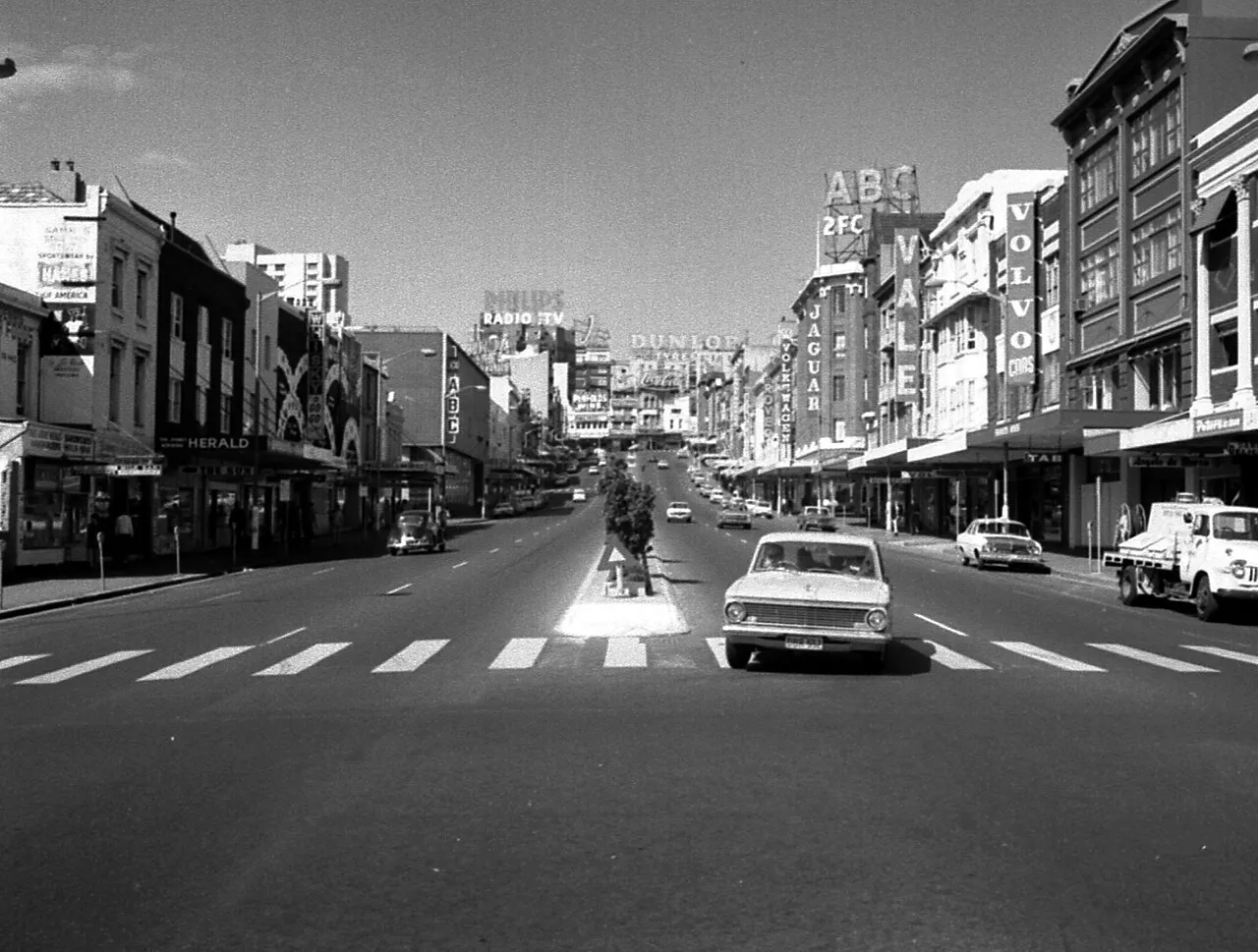
AZA's own website gives two different sizes for Sydney's community in the early 1970s. Its history page says fewer than 40 Zoroastrians; its home page says about seventy-five. We report both, since we cannot tell which is right.
How did Sydney's Zoroastrians build their own Darbe Mehr?
It took Sydney's families more than twenty years to go from dinners in each other's homes to a building of their own. According to AZA's published history, the steps were these:
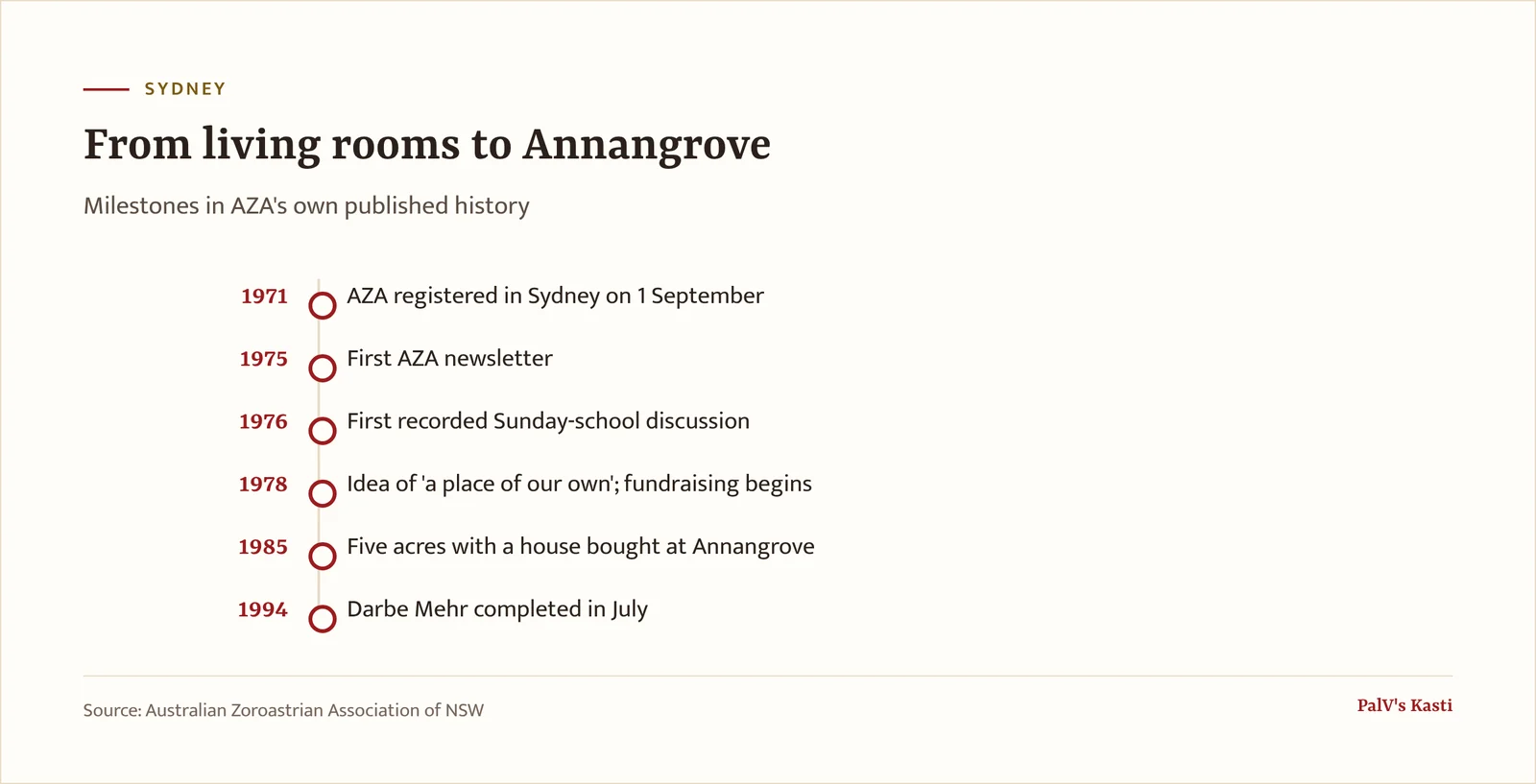

- 1971: AZA was registered in Sydney on 1 September, under the Charitable Collections Act. Committee meetings and functions were held in members' houses.
- 1975: the first AZA newsletter came out.
- 1976: a newsletter dated 1 December carries the first recorded talk of a Sunday school.
- 1978: members took up the idea of "a place of our own" and began collecting money for it.
- 1985: after years of fundraising, and with a large gift from Nawzer and Akhtar Ostowari, AZA bought five acres with a house at Annangrove, New South Wales.
- 1994: the Darbe Mehr was completed in July, helped by further gifts from the Arbab Rustom Banoo Morvarid Guiv Trust and the Zarthosty Brothers Trust, and by members' volunteer work.
The building carries the name Arbab Rustom & Morvarid Guiv Darbe Meher. The Parzor Foundation, in an online exhibition on Google Arts & Culture, gives its address as 196 Annangrove Road, Annangrove, NSW. AZA says it now has more than 500 members and is today an incorporated association under New South Wales law.
What happens at the Annangrove Darbe Mehr?
AZA states its aim as helping members hand down Zoroastrian heritage, culture and traditions to the next generation. On its website it lists these services and gatherings:
- a Sunday school, held every month, with teachers for prayers and traditions
- Navjote (sudreh-kusti) and wedding ceremonies performed by mobeds
- Jashans and other Zoroastrian festivals at the Darbe Mehr
- muktad prayers for the departed and their families
- a Seniors Day, plus youth events and social functions
AZA also keeps a Mobed Services Directory of practising mobeds, the ceremonies each one performs and how to contact them. Its home page shows the day's gah times for Sydney, from Hawan to Ushahin.
What do Zoroastrians in Melbourne do?
FEZANA's lesson says a group of early migrants formed the Zoroastrian Association of Victoria in 1978. Today ZAV's website lists a Sunday school, muktad services, Navjote and wedding ceremonies, youth events and a Seniors Day. Its mission statement speaks of bringing Zoroastrians and their families across Victoria together, and it says mixed Zoroastrian families and people reconnecting with their roots are welcome.
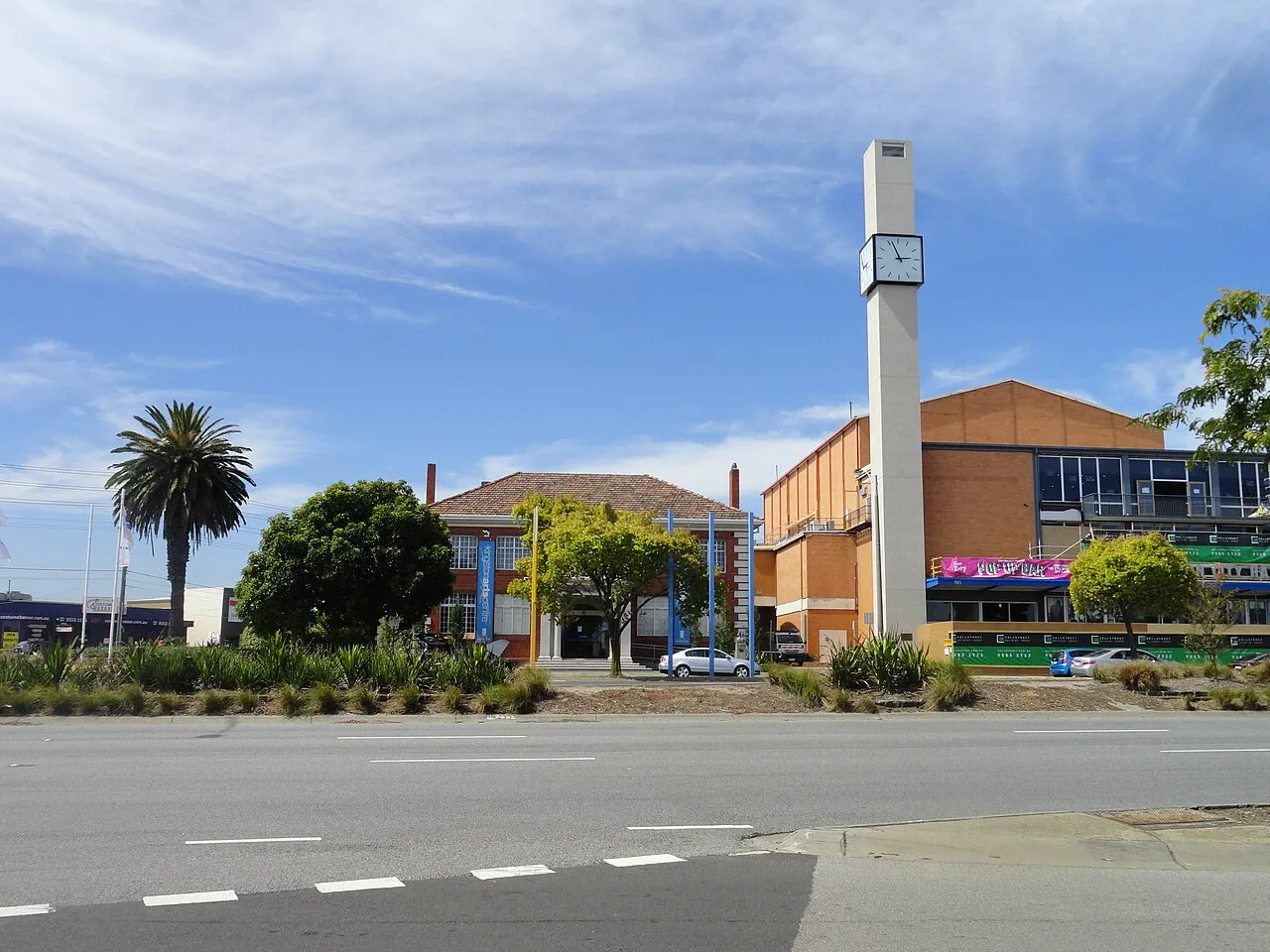
In 2016, ZAV opened its culture to the wider public. Indian Link reported that on Sunday 28 August that year, close to 500 people came to a ZAV event at Kingston City Hall in Moorabbin, held around Khordad Sal. There was an exhibition of religious and cultural objects, some sourced with help from relatives in India and Iran, a documentary titled Zoroastrianism – An Enduring Legacy, and a seven-course lagan nu patra served on banana leaves. ZAV's president, Kazween Boiko, told the paper the event was meant to showcase the community to Victoria and help the public "discover who we are".
Parsi Times, printing a report supplied by ZAV on 12 April 2025, said the Mistry family had pledged AUD 100,000 towards a Community Centre and Dadgah in Melbourne, which members call "a place of our own". That is the same phrase Sydney's families used in 1978. We found no later update on the project.
Is there a Zoroastrian association in Perth?
Yes, though little about it is public. FEZANA's lesson names a Zoroastrian Association of Western Australia (ZAWA) among the country's Zoroastrian centres, alongside AZA and a separate Zoroastrian Association of Sydney. Parsiana magazine ran two Perth items by Parinaz Gandhi in its "Zoroastrians Abroad" section in 2025: "Perth picks up pace" in the 7 May issue and "Powered in Perth" in the 21 October issue. Only the headlines and opening words are public, so we cannot give details. A Perth link also shows up in 2016, when Indian Link credited "the Parsiana Kitchen group from Perth" with helping cook ZAV's Melbourne feast.
How do Australian Zoroastrians celebrate Navroz?
Parzor's online exhibition "Navroze in Asia and Australia", which credits some of its Australian photographs to AZA in Sydney, shows Iranian and Indian customs at the same tables. Families come in Iranian and Parsi traditional dress alongside the priests, children receive cash gifts, and the display includes hyacinths, pomegranates, Iranian ceramics and Persian poetry. Parzor says Southern Hemisphere food and fruit make an Australian Navroz unusual but still authentic, and it notes that three generations now live in this diaspora, with the children growing up as Australians. It also pictures a Dagli boys' band, in the white Parsi coat and trousers.
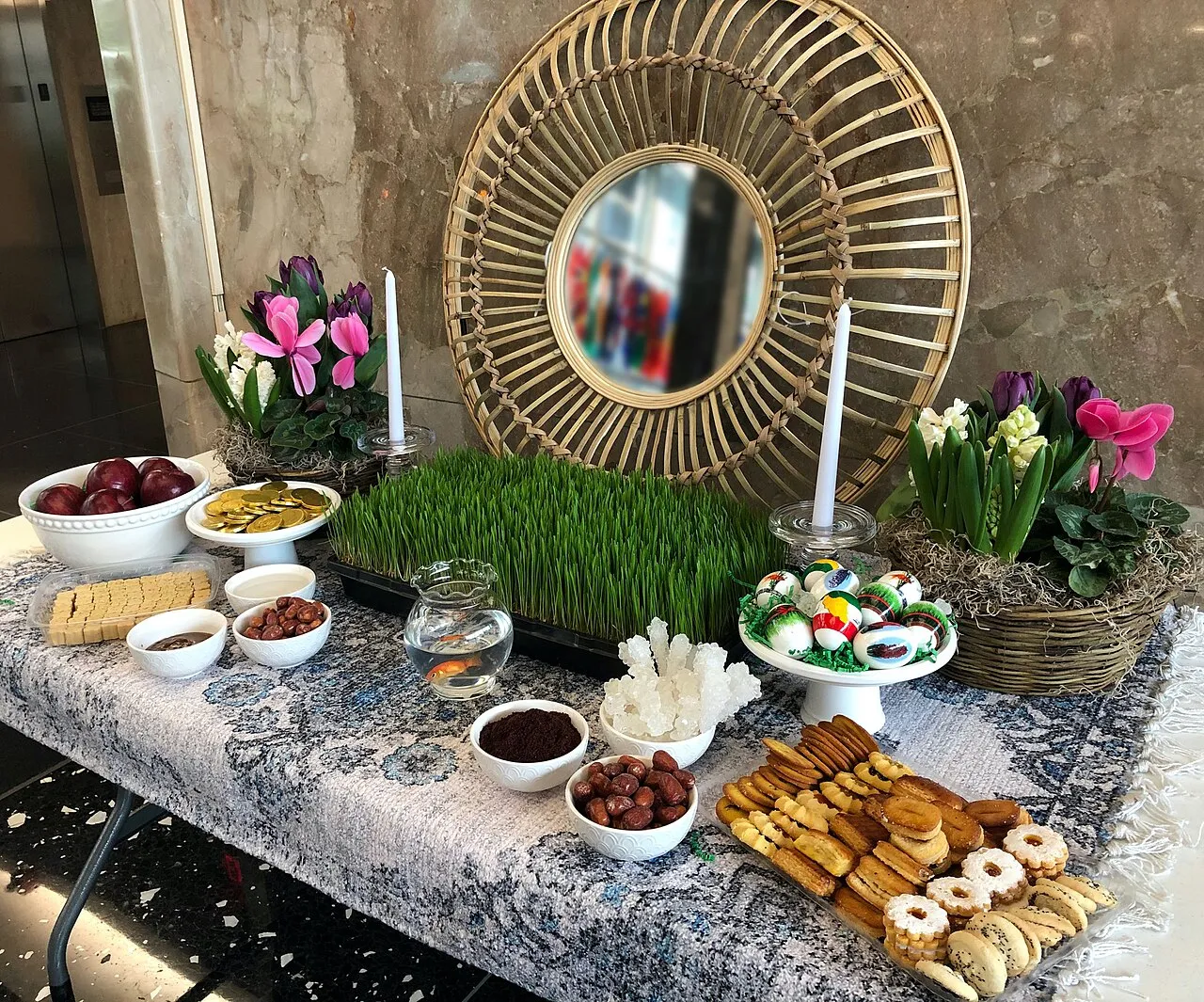
In Melbourne, ZAV's Navroz in 2025 was held at Collingwood Town Hall around a Haft-e-Sheen table, with a children's skit, a walk in traditional dress, a lagan-nu-bhonu and a raffle with a Gara sari as first prize, according to the Parsi Times report.
How do families pass the faith on to children?
Both big associations put children at the centre. AZA's history says concern for handing on the community's heritage to the young was there from the 1970s, and its first recorded Sunday-school discussion dates to 1976. Sunday school, Navjote and festival days are the main tools in Sydney and Melbourne alike.
Marriage is the harder question. The Associated Press reported in 2022 that Zoroastrians do not seek converts and that, in many cases, they do not count the children of mixed marriages as members of the faith, which limits growth. The Italian research centre CESNUR, in its encyclopaedia of religions, also describes Zoroastrianism as a non-proselytising faith. ZAV, for its part, says on its website that mixed Zoroastrian families are welcome. Practice varies between families and Agiaries; your family priest's guidance comes first.
For newcomers, these associations are often the first place to find a mobed, a Sunday school or simply other Bawas. We look at how that works more broadly in our guide to Parsi immigrant support networks.
Frequently asked questions
How many Zoroastrians live in Australia?
The Australian Bureau of Statistics counted 2,986 Zoroastrians in the 2021 Census, up from 2,732 in 2016. FEZANA's 2012 community survey estimated 2,577, but the table's compiler calls it a magazine survey rather than an official census, so the ABS count is the firmer number. In July 2022 the Associated Press reported that Zoroastrian numbers were rising in Australia.
Where is the Zoroastrian Darbe Mehr in Sydney?
It is at 196 Annangrove Road, Annangrove, in New South Wales, on land the Australian Zoroastrian Association bought in 1985. The building, named the Arbab Rustom & Morvarid Guiv Darbe Meher, was completed in July 1994. It hosts the association's monthly Sunday school, Navjotes, weddings, Jashans and other festivals.
Is there a Zoroastrian association in Melbourne?
Yes. The Zoroastrian Association of Victoria, formed in 1978 according to FEZANA, runs a Sunday school, muktad services, Navjote and wedding ceremonies, youth events and a Seniors Day. As of April 2025 it was raising money for its own community centre and Dadgah, helped by a reported AUD 100,000 pledge from the Mistry family.
Are there Zoroastrians in Perth, Australia?
Yes. FEZANA lists a Zoroastrian Association of Western Australia among the country's Zoroastrian centres, and Parsiana magazine ran two items about Perth in its May and October 2025 issues. Few other details are public. In 2016, Indian Link also credited a Perth kitchen group with helping cook a Zoroastrian community feast in Melbourne.
How do Australian Zoroastrians celebrate Navroz?
Communities mix Parsi and Iranian customs. The Parzor Foundation describes Australian celebrations with hyacinths, pomegranates and Iranian ceramics on display, traditional dress, priests, cash gifts for children and dancing. In Melbourne in 2025, ZAV marked Navroz at Collingwood Town Hall with a Haft-e-Sheen table, a children's skit and a lagan-nu-bhonu dinner.