 PalV's Kasti

On this page
A dakhma, the Parsi word for what English calls a Tower of Silence, was once built in almost every town where Parsis lived. Karaka's 1884 History of the Parsis says building one was the first thing the community did on settling anywhere, and Ervad Dr Ramiyar Karanjia, writing in 2017, puts the number in India at about 120 in 1906. We found no current official list of which ones still work. Dated reports and official pages do confirm dakhmas in use in Mumbai, Surat and Ahmedabad in the 2020s, and Parsi Times reported in 2025 that Hyderabad has two. ThePrint gave Delhi in 2022 as a city with none. In Iran, Encyclopaedia Iranica records the towers giving way to cemeteries from 1937 onwards.
This page is a map of where the dakhmas are and what is known about each one. For what a dakhma is and how a funeral there works, start with our guide to the Tower of Silence.
શહેરેવર રોજ
Shehrevar Roj, Tir Mah · 1396 Y.Z.
How many dakhmas were there in India?
The only figure we could trace is Karanjia's: "about 120 Dakhmas in India in 1906". He also writes that Zoroastrians settling in a new place would have a dakhma built and consecrated once there were 8 to 10 families. Karaka, writing in 1884, makes the same point in his own words: a tower for the dead came first wherever Parsis settled.
We found no official count for today.
Where are the oldest Parsi dakhmas?
The table lists dakhmas for which a published source gives a date. Each date is as the named source records it.
| Place | Year recorded | What the source says |
|---|---|---|
| Bharuch (Broach), Gujarat | 1309 | Karaka (1884): built by a Parsi named Pestanji; ruins of an older one stood at Yajalpur, a suburb of the town |
| Sanjan, Gujarat | not dated | Karaka (1884): the ruins of a dakhma were then the only trace left of the Parsi settlement |
| Mumbai, Doongerwadi (first tower) | 1672 | Bombay Parsi Punchayet (BPP): built by Modi Hirjibhai Vacha Gandhi. Encyclopaedia Iranica gives 1670 |
| Mumbai, Doongerwadi (later towers) | 1751 to 1844 | BPP: Maneckji Sett 1751, Anjuman 1779, Chotra 1800, Banaji 1832, Bisni 1844 |
| Secunderabad (Bhoiguda) | 1839 | Parsi Times (2025): built by the Meherji brothers, consecrated on 19 October 1839 |
| Navsari | 1878 | Karaka (1884): a new dakhma built by Nasarvanji Ratanji Tata |
| Deolali, Maharashtra | before 1922 | J.J. Modi (1922): the Tana ceremony for its tower took place "a few years ago" |
| Bengaluru (Hebbal) | 1940 | Parsi Times (2024): consecrated in March 1940 and described as the world's last dakhma |
Several of these dates rest on a single source, named in the table. Karaka is our only source for Bharuch in 1309. The Bengaluru consecration comes from a June 2024 Parsi Times article by Adil J. Govadia, who draws on a report published in 1939. He records that two priests from Udvada began the consecration on 17 March 1940 and that it ended on 23 March. His "world's last" label sits oddly with Mary Boyce's account of a new tower brought into use at Sharifabad in Iran in 1963 (see below). For Mumbai's first tower the BPP and Iranica differ by two years. Karaka names the builder as Hirji Watcha, an ancestor of the Watcha Gandhi family, which matches the BPP's builder.
Which Towers of Silence are still in use today?
Here is what dated sources confirm, city by city. Where a report is several years old, its year is given, because practice can change.
Mumbai: Doongerwadi, Malabar Hill
The BPP manages the Doongerwadi estate on Gibbs Road, Malabar Hill. Its own page, undated and read in November 2026, is not consistent about which towers work. One passage says three are "constantly functional", naming Anjuman, Sethna and Bisni, and that the Banaji tower is not in use for now. Another passage on the same page says all five are operational. The page also describes a separate Modi dakhma used for Parsi women who married non-Parsis but professed the Zoroastrian religion until death and wished to be consigned to the Towers of Silence.
Surat
On 4 February 2022 the Supreme Court of India, in The Surat Parsi Panchayat Board v. Union of India (Civil Appeal 1067 of 2022), recorded a protocol for Parsis who died of Covid-19. Under it, Surat's Dokhma No. 3 was set aside for Covid deaths alone, and other bodies were to be placed in the other dakhmas.
Ahmedabad
Parsi Times reported in July 2022 that the Ahmedabad Parsi Panchayat fitted a steel wire net over one of its dakhmas at the Doongerwadi in Jashodanagar, following the Supreme Court's condition that Covid deaths go to a separate, netted dakhma. The same report says similar work had already been done at dakhmas in Mumbai and Surat. An earlier Parsi Times report, from April 2017, said many of Ahmedabad's Zoroastrians had installed solar collectors to help the sun dry out the body faster.
Hyderabad and Secunderabad
According to Parsi Times in March 2025, the twin cities have two dakhmas: the older one at Bhoiguda, Secunderabad, and a second at Zamistanpur, Hyderabad, which the Parsi Zoroastrian Anjuman of Secunderabad and Hyderabad manages. In December 2020 the paper, citing state news agencies, reported that the Tower of Silence at Parsi Gutta had installed a solar concentrator.
Kolkata
In November 2017 Parsi Times reported that a family had asked for last rites at the dakhma in Beliaghata, but pallbearers could not be arranged within 24 hours and the deceased was cremated. The Calcutta Zoroastrian Community's Religious and Charity Fund said in a statement that it "deeply and sincerely" regretted this. We found no later report on the tower.
Navsari
Navsari's Doongerwadi stands on the banks of the Purna river. In January 2026 Parsi Times reported that the community was opposing a National Highways Authority of India proposal to acquire about 8,000 square feet of the roughly 10-acre site for the four-laning of the Surat to Navsari highway.
Places with no recent report
For Pune, Bengaluru, Chennai, Udvada, Bharuch, Deolali and the many smaller Gujarat towns, we could not find a 2024 to 2026 report or an official page saying whether the dakhma is in use. If you need to know, ask the local Anjuman or Punchayet directly. One wider figure: in May 2019 WZO Trust Funds said that, from lists sent by Anjumans with dakhmas under their charge, it had collated 76 people serving as pallbearers at various Towers of Silence.
Is there a Tower of Silence in Delhi?
No. ThePrint, reporting in January 2022, gave Delhi as an example of a city without a tower of silence, one reason some Parsis there turned to burial or cremation. Why the faith prefers the dakhma is covered in our pieces on Zoroastrian excarnation and dokhmenashini and modern science.
Are there dakhmas outside India?
Karachi has one. An AFP report carried by Dawn on 4 September 2015 described the city's tower of silence, where the dead were still left in the open according to tradition, and put Karachi's Parsis at around 1,500.
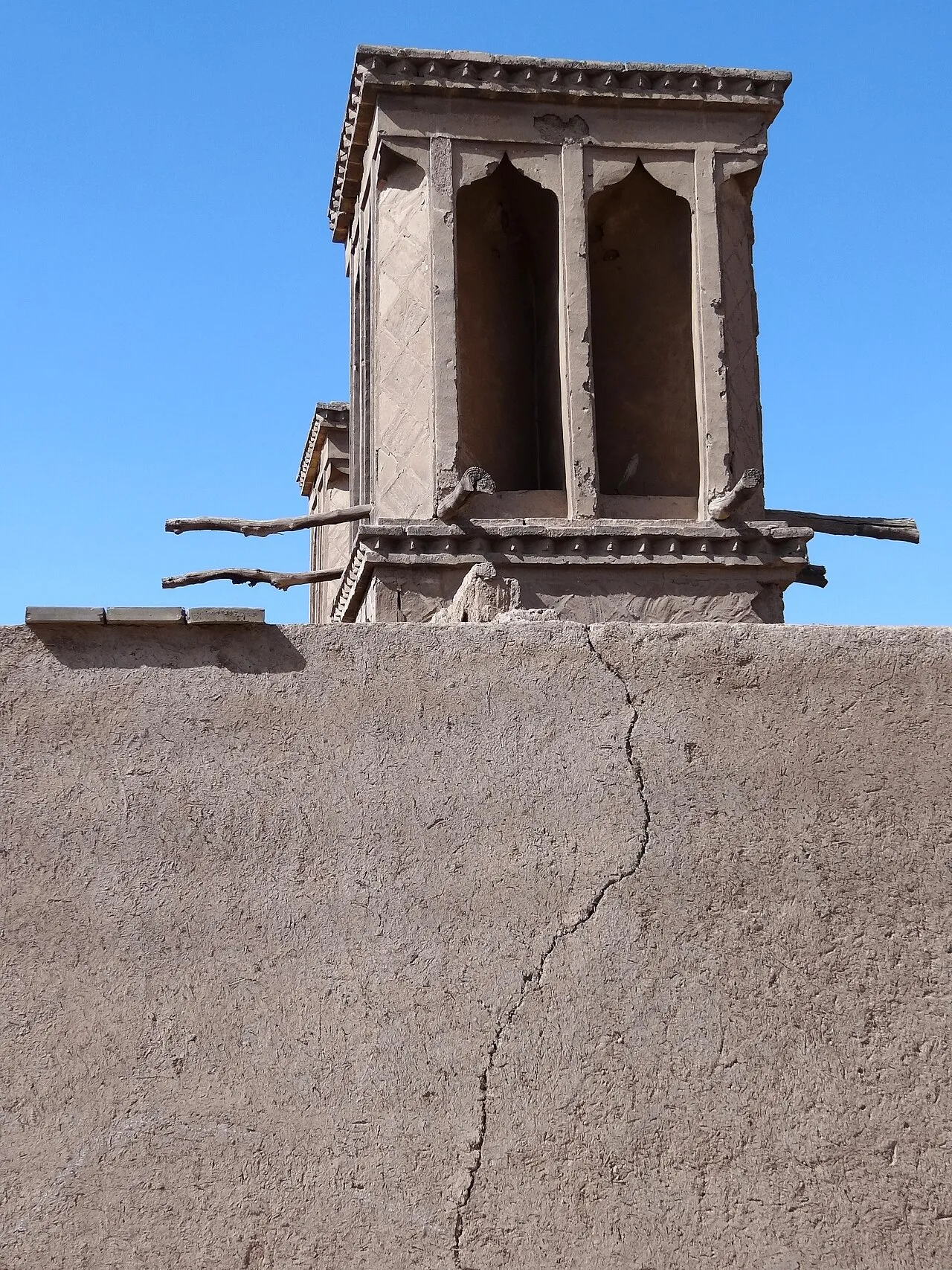
In Iran the old towers have fallen out of use. Mary Boyce, writing in Encyclopaedia Iranica, records that Tehran's dakhma was replaced by a cemetery in 1937, that Kerman and Yazd opened cemeteries in 1939 and 1960, and that the village of Sharifabad gave up its dakhma a decade later. In her 1977 book on Sharifabad she describes a new tower the village brought into use in 1963, and judged it likely to be "the last dakhma ever to be raised within Iran". A Down To Earth photo caption from November 2025 says the tower in Yazd is no longer in use. The vultures' part in all this is covered in Vultures and the Tower of Silence.
Frequently asked questions
Where are the Towers of Silence in India?
Ervad Ramiyar Karanjia puts the number at about 120 in 1906. Reports from 2017 to 2026 name towers in Mumbai at Doongerwadi, Surat, Ahmedabad, Navsari, Kolkata, and two in Hyderabad and Secunderabad. Older sources record dakhmas at Bharuch, Sanjan, Navsari and Deolali, and a 2024 Parsi Times article describes the 1940 dakhma at Bengaluru.
Which was the last dakhma consecrated?
A June 2024 Parsi Times article by Adil J. Govadia calls the Bengaluru dakhma at Hebbal the world's last, consecrated between 17 and 23 March 1940 by two priests from Udvada. But Mary Boyce recorded a new tower brought into use at Sharifabad, Iran, in 1963. We found no record of a dakhma consecrated after that.
How many dakhmas are there at Doongerwadi in Mumbai?
The Bombay Parsi Punchayet's page lists six structures built between 1672 and 1844: Mody Vachha Gandhi, Maneckji Sett, Anjuman, Chotra, Banaji and Bisni. The same undated page says in one place that three towers are constantly functional and in another that all five dakhmas are operational.
Is the Tower of Silence in Yazd still used?
No. A Down To Earth photo caption from November 2025 says the Yazd tower is no longer in use. Encyclopaedia Iranica records that the Zoroastrians of Yazd established a cemetery in 1960, after Tehran in 1937 and Kerman in 1939, and that Sharifabad abandoned its dakhma a decade later.
What does dakhma mean?
Dakhma, also spelt dokhma, is the word Parsis and Iranis use for the structure English speakers call a Tower of Silence. A Guide to the Zoroastrian Religion, edited by Dastur Firoze Kotwal and James Boyd in 1982, calls it "a controversial word" whose original meaning "appears to be 'grave'".


