 PalV's Kasti
On this page
- What does excarnation mean in Zoroastrianism?
- What did Herodotus and Strabo say about Persian funerals?
- Did Zoroastrians use dogs as well as birds?
- What does the Vendidad say about exposing the dead?
- Why did ancient Iranians practise excarnation?
- What were the ossuaries, or astodans?
- Is the Tower of Silence a Zoroastrian burial tower?
- Do Zoroastrians still practise excarnation?
- Frequently asked questions
Excarnation is the removal of the flesh from the bones of the dead before the bones are put away. Zoroastrians did it by exposure: the Vendidad tells them to lay the body on a high, open place where birds and dogs could reach it, and to gather the bones afterwards. Why? Encyclopaedia Iranica and the translator James Darmesteter both explain that the religion held a dead body to be the worst pollution, while fire, earth and water were holy and must not be defiled. The Greek historians Herodotus and Strabo recorded the rite among the Magi, Iranica dates it to at least the 5th and 4th centuries BCE, and the Bombay Parsi Punchayet still lists working dakhmas, or Towers of Silence, at Doongerwadi in Mumbai.
શહેરેવર રોજ
Shehrevar Roj, Tir Mah · 1396 Y.Z.
What does excarnation mean in Zoroastrianism?
The word describes a result, flesh taken away from bone, rather than a single method. In the Zoroastrian case the method is exposure. Down To Earth, in a November 2025 explainer, describes it as leaving the dead open to the elements so that birds or other animals take the flesh. Encyclopaedia Iranica, in Mary Boyce's article on the disposal of the dead, says that calling dogs and birds "excarnators" is standard.
Exposure was only the first stage. In the Vendidad, once the flesh was gone, the bones were to go into a receptacle out of reach of animals and rain, as set out below.
What did Herodotus and Strabo say about Persian funerals?
The earliest outside report comes from the Greek historian Herodotus. In G.C. Macaulay's translation he says it was "reported about their dead as a secret mystery" that a Persian man's body was not buried until a bird or a dog had torn it. He adds that he knows the Magi do this for certain, "for they do it openly", and that the Persians in general coat the body in wax and then bury it.
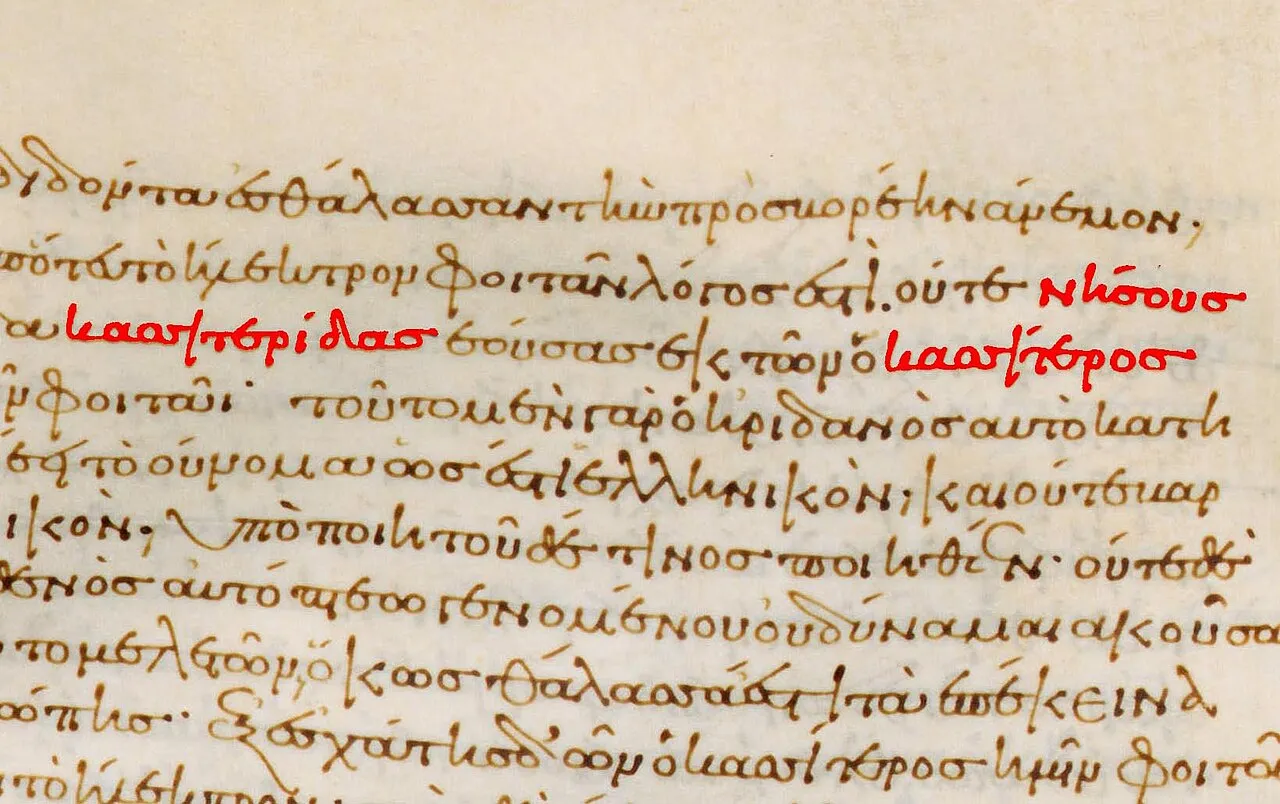
Strabo, writing later, gives the same split. Ordinary Persians, he says, smear the body with wax and inter it. The Magi are not buried at all: "the birds are allowed to devour them."
James Darmesteter, introducing his 1880 translation of the Vendidad, reads this as a change over time. Burning the dead had been forbidden for years, he writes, while burying "was still general". Later, as the Magian religion rose, the priests' observances "became the general law".
Did Zoroastrians use dogs as well as birds?
Yes, in parts of the old Iranian world. Iranica gathers classical and Chinese reports and concludes that dogs were kept as excarnators in Bactria, Sogdia and Hyrcania, with evidence running "from Achaemenid to late Sasanian times". It cites the Chinese traveller Wei-jie, writing of Samarkand soon after 605 CE, who says that once the flesh was gone, the bones were buried without a coffin.
For the Sasanian Persians, Iranica quotes the historian Agathias, who says they held it "irreligious" to lay the dead in a tomb or a box, or even in the ground.
What does the Vendidad say about exposing the dead?
The Vendidad, the Avestan book of purity law, gives the rule in its sixth chapter. In Darmesteter's translation (Vendidad 6.45 to 6.51), Ahura Mazda says the dead are to be taken "on the highest summits", where dogs and birds that eat the dead are always found. The body is to be fastened "by the feet and by the hair, with iron, stones, or clay", so that animals cannot carry the bones to water or to trees.
The bones then go into a receptacle that dogs, foxes and wolves cannot reach and where rain water cannot collect. A family that cannot afford one may lay the dead on the ground, under the open sky and "beholding the sun". Kotwal and Boyd's guide to the religion cites the eighth chapter as well: for the departed, "one should seek a high dakhma". Iranica points out that the Vendidad's rules differ slightly from passage to passage and may come from different centuries and places.
Practice varies between families and Agiaries; your family priest's guidance comes first.
Why did ancient Iranians practise excarnation?
Darmesteter and Iranica point to two beliefs underneath the rite.
The first is that the elements are holy. Darmesteter notes that fire, earth and water were already sacred in the Indo-Iranian period, and that the Vedas worship them as godlike beings. Yet the Indians still burned their dead, he writes, because death did not seem to them so plainly the demon's work. For Iranians it did, so both burning and burying became sins.
The second is the nature of death itself. Iranica explains that the body of a righteous person was counted the worst pollution in the world, because such a death "represented a triumph for evil". The corpse demon, Nasu, was believed to rush into the body and defile everything that touched it. Darmesteter adds one more point: in this scheme the body just after death, "still all but warm with life", is more unclean than one long dead.
Exposure answered both concerns. The editors of Kotwal and Boyd describe the body being taken far from where people live and given to "the birds of prey that God created" so that dead matter is removed fast. The 19th-century catechism they translate says vultures "do away with impurity without becoming impure". J.J. Modi, in his 1891 paper on Parsi funerals, put the principle in plain terms: respect the dead, and dispose of the body in the way least harmful to the living.
Practice varies between families and Agiaries; your family priest's guidance comes first.
What were the ossuaries, or astodans?
An ossuary is a box or chamber for bones. The Avestan word Iranica gives is uzdana, while Darmesteter's notes use the later word astodan. Iranica says ossuaries of both eastern and western Iranians show the rite of exposure from the 5th and 4th centuries BCE.

Darmesteter's notes to the Vendidad mention stone ossuaries found at Bushir and earthen ones from Susa taken to the Louvre. He also explains why an astodan had openings: the dead must see the sun, so holes were made to let the light in.
Is the Tower of Silence a Zoroastrian burial tower?
Not in the sense of burial, because the body is not put into the earth. Darmesteter describes the body laid on a mountain summit, kept off the earth by a layer of stones or bricks, and then turns to the "special buildings, the Dakhmas" that took this role. Kotwal and Boyd note that the word dakhma is itself debated and that its original meaning appears to be "grave". Our guide to the Tower of Silence explains how it is used.
Some customs around it are very old. Mary Boyce, in her 1977 study of the Iranian village of Sharifabad, argues that keeping a fire burning outside the funeral tower, to comfort the souls of the dead, must date from well before the 9th century, because Iranis and Parsis share it.
Do Zoroastrians still practise excarnation?
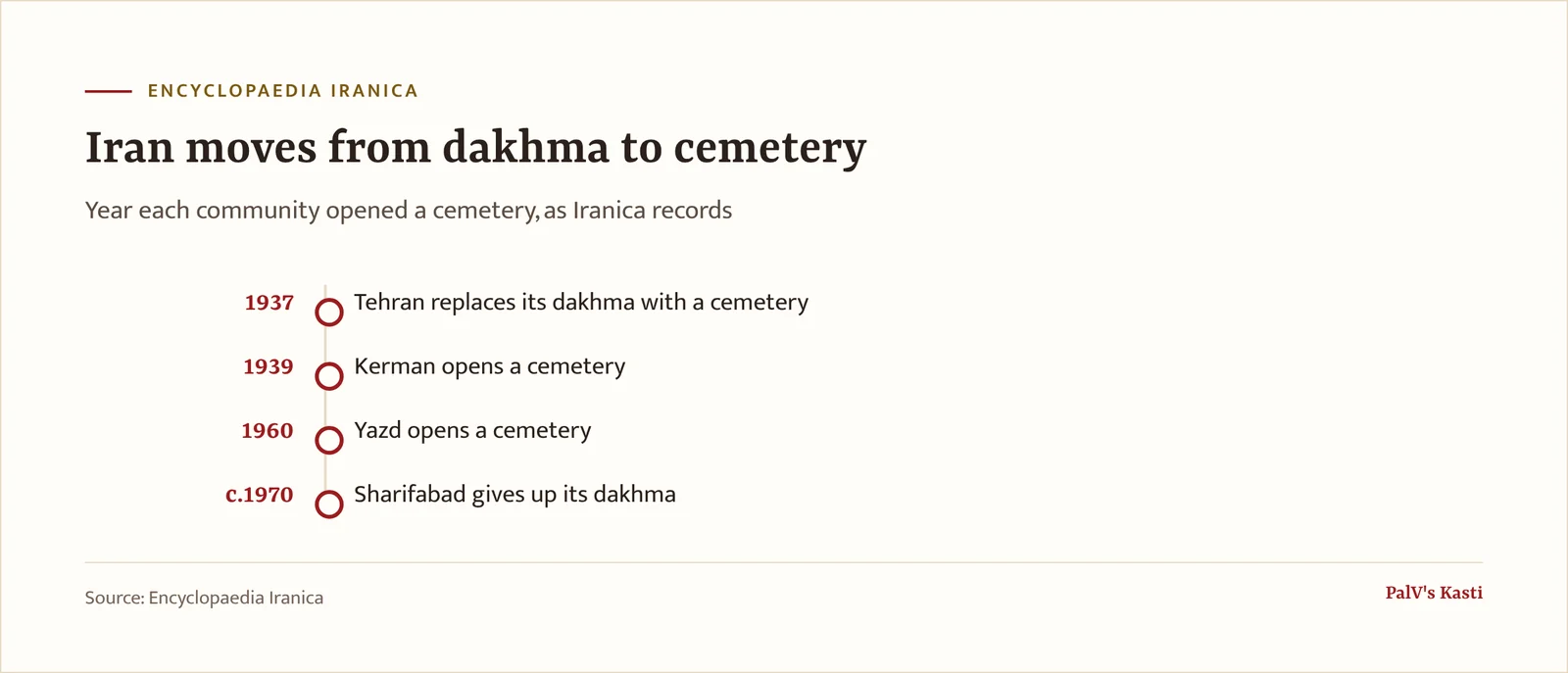
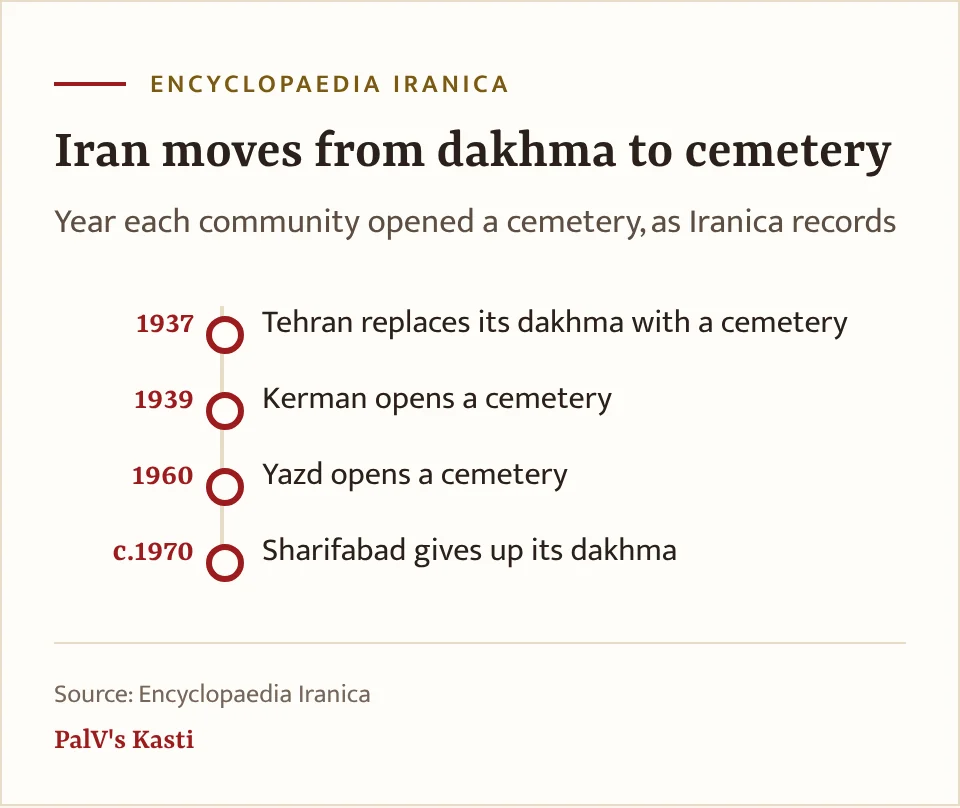
In Iran, largely not. Iranica records that Tehran replaced its dakhma with a cemetery in 1937, Kerman and Yazd opened cemeteries in 1939 and 1960, and Sharifabad gave up its dakhma about ten years after Yazd. A Down To Earth photo caption from November 2025 says the Tower of Silence in Yazd is no longer in use.
In India the rite continues at Doongerwadi in Mumbai, where the Bombay Parsi Punchayet's page, read in November 2026, describes its dakhmas as in use. Our page on Parsi dakhma locations lists which towers recent reports confirm, and Doongerwadi bungalows explains what a family does after a death in Mumbai. The loss of vultures has changed how the rite works, a story told in Vultures and the Tower of Silence.
Frequently asked questions
What is excarnation in Zoroastrianism?
Excarnation is removing the flesh from the bones of the dead. In the Zoroastrian rite this is done by exposure: the Vendidad has the body laid on a high, open place where birds and dogs reach it, and the bones later kept in a closed receptacle. The Bombay Parsi Punchayet still lists working dakhmas in Mumbai.
Did the ancient Persians bury their dead?
Many did, according to Greek writers. Herodotus and, later, Strabo wrote that ordinary Persians coated the body in wax and buried it, while the Magi left their dead to birds. Darmesteter concluded that the priests' rule of exposure later became general law, and Agathias found Sasanian Persians regarding burial as irreligious.
What is an astodan?
An astodan is an ossuary, a receptacle for bones after the flesh is gone. The Vendidad asks that it be out of reach of dogs, foxes and wolves, and that rain water cannot stay in it. Darmesteter's notes say it had holes to let the light in, because the dead must see the sun.
Is excarnation the same as sky burial?
Down To Earth's November 2025 explainer calls the Zoroastrian rite "sky burial". Strictly, the body is not buried: it is laid open under the sky until the flesh is gone, and only the bones are later put away. Parsis call the practice dokhmenashini, and the structure a dakhma or Tower of Silence.


