PalV's Kasti
On this page
- Who founded the Parsi Lying-In Hospital, and when did it open?
- What was it like to give birth at the Lying-In Hospital?
- Why did the Parsi Lying-In Hospital close?
- Who owns the hospital building?
- What plans have there been to revive or sell it?
- Where is the Parsi Lying-In Hospital?
- Frequently asked questions
The Parsi Lying-In Hospital is a former maternity hospital for Parsi women in Fort, south Mumbai, also called Dr Tehmulji's Parsi Lying-In Hospital or PLIH. Its stone building off D N Road went up in 1895, the year every newspaper account we read agrees on, and for generations Parsi women gave birth there. Mothers often stayed on for weeks after the birth. Once mothers began heading straight home after delivery, the wards emptied, and by 2015 the Times of India said it had not functioned for close to three decades. The Bombay Parsi Punchayet (BPP), which owns it, and the hospital's managing committee have tried a sale, a lease to a private hospital group and a public call for bids. None of these had brought the building back into use by the latest reports we could open, which date from 2019 and 2020.
અસપંદામેદ રોજ
Asfandarmad Roj, Tir Mah · 1396 Y.Z.
Who founded the Parsi Lying-In Hospital, and when did it open?
The hospital carries the name of its founder, Dr Tehmulji Bhicaji Nariman, according to a 2007 Times of India report by Nauzer Bharucha. The same report quotes the city historian Sharada Dwivedi, who said the hospital first opened in 1887, on Dr Nariman's initiative, in a small sea-facing house on Marine Lines. That house was too small, so a plot was taken in the Hornby Estate for a purpose-built hospital. The 1887 start rests on Dwivedi's account alone. We could not open a second source for it.
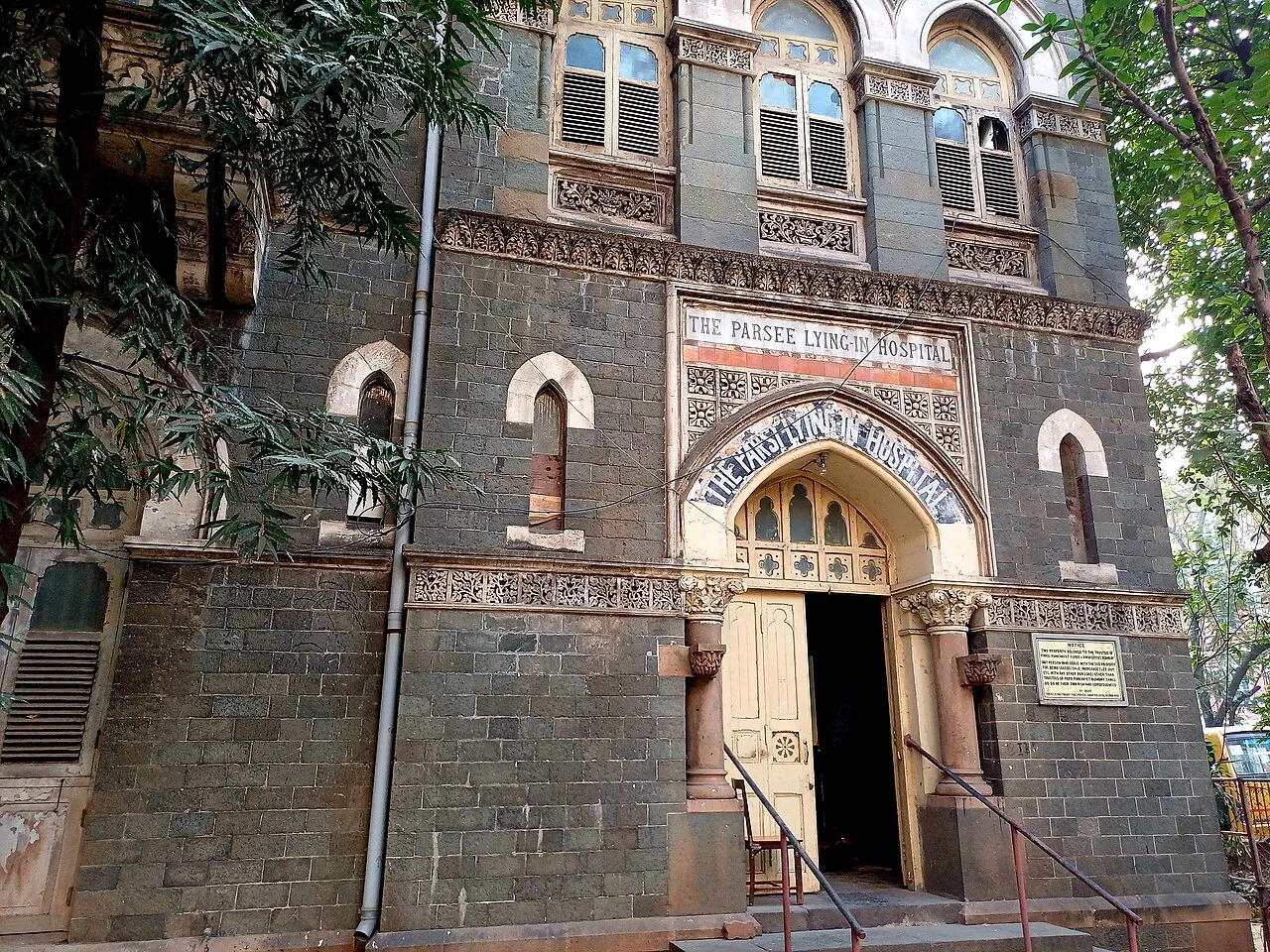
The 1895 building is better attested. The Times of India (2007, 2015 and 2020), Mumbai Mirror (2014) and DNA (2014) all give 1895 as the year it was built or started as a maternity hospital. Meher Mirza's 2014 history in DNA names the group of Parsi leaders who came together to build it: Jamsetjee Nusserwanji Tata, Nusserwanji Jehangir Wadia, Sorabji Framji Patel and Sorabji Shapurji Bengali, together with Dr Tehmulji Nariman himself. The Times of India lists the first four as members of its managing committee. The 2007 Times of India report says the hospital was billed as the first of its kind for Parsi women in India, while DNA calls it one of Mumbai's first maternity hospitals.
Who designed the building?
The Times of India names the architect as Muncherjee Cawasjee Murzban. DNA spells it Muncherji Marzban and calls him a star of the municipal corporation. DNA calls the style Gothic Revival. The Times of India mentions intricately carved stone screens. Sharada Dwivedi told the paper in 2007 that it was a Grade 2B heritage structure that could not be demolished, and Mumbai Mirror gave the same grade in 2014. The 2020 revival plan, covered below, spoke of demolishing and rebuilding while keeping the heritage features.
What was it like to give birth at the Lying-In Hospital?
The Times of India reported that Parsi mothers delivered in its high-ceilinged rooms and then stayed for as long as 40 days to recover, the post-natal practice of the time. DNA describes mothers resting in hospital beds for more than a month.
A community member told the Times of India in 2007 that "virtually an entire generation of Parsis was born in this hospital", and Mumbai Mirror wrote in 2014 that many Parsis were born there until the 1960s. One well-known birth is recorded in a 2018 Parsi Times profile by Dara M Khodaiji. It says Feroze Gandhi, the son of Jehangir and Ratimai Gandhi, was born on 12 September 1912 in this hospital, which the profile calls the Tehmulji Nariman Parsi Lying-in Hospital.
Why did the Parsi Lying-In Hospital close?
The reports put the closure down to a change in habits rather than a single event. According to the Times of India, mothers came to prefer going straight home after delivery, and the hospital fell into disuse. DNA says the patients dwindled until the trustees had to shut the doors. None of the sources we opened gives a closing year. Their estimates also differ: the Times of India found a single patient still there in 2007, while Mumbai Mirror said in 2014 that the building had been vacant for more than 25 years, and the Times of India in 2015 said it had not functioned for close to three decades.
Who owns the hospital building?
The Bombay Parsi Punchayet owns it, according to every report we opened up to 2020. The Times of India described the BPP as the owner of the two-storey building in 2007, when its chairman Minoo Shroff said any sale would need the charity commissioner's permission. A 2015 Times of India report calls the Punchayet both owner and trustee of the hospital, which also has its own managing committee. The land itself is held on a lease from the Collector, according to a 2019 Parsi Times report by the BPP's advocate Homiar N Vakil. Mumbai Mirror put the site at about 17,000 sq ft.
What plans have there been to revive or sell it?
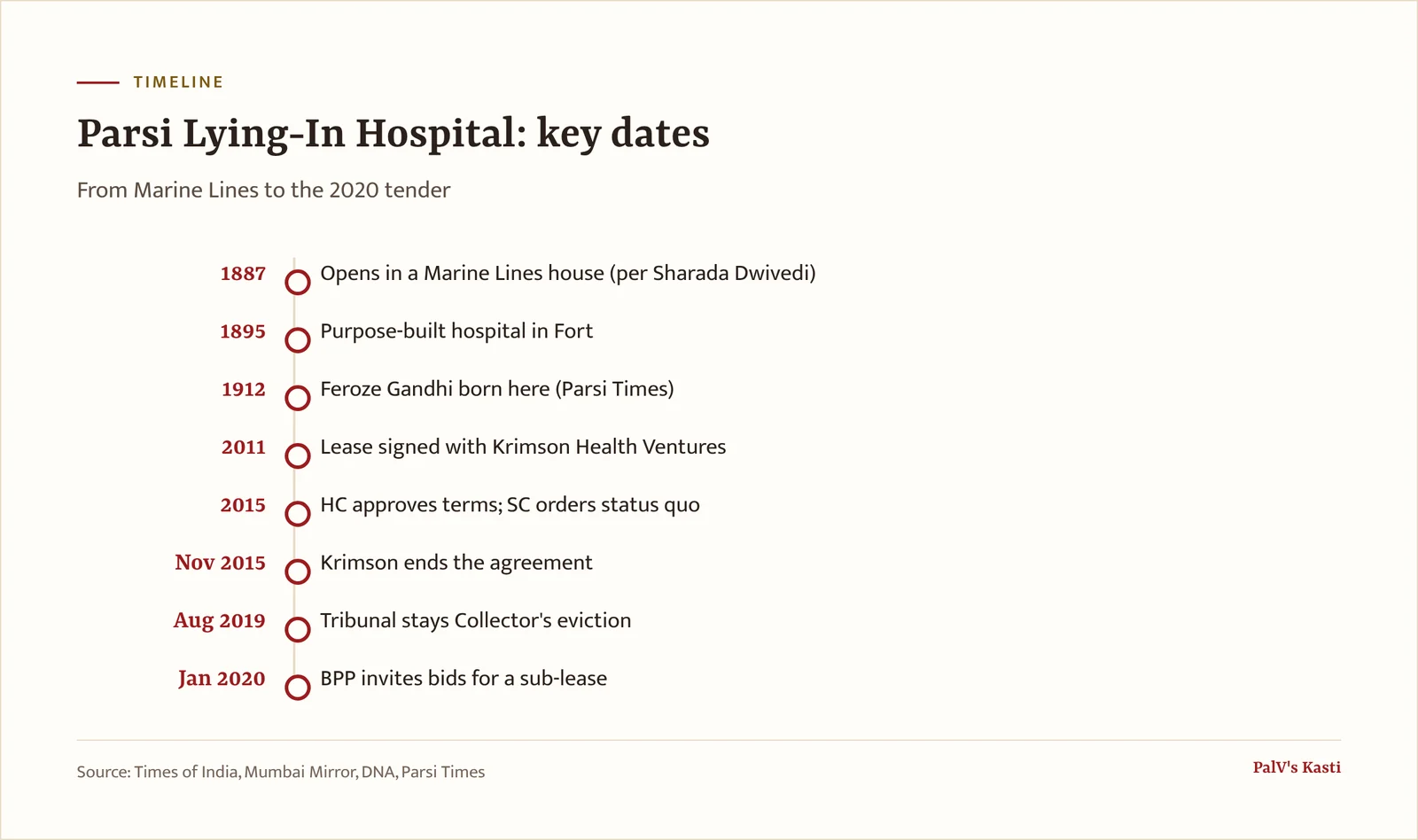
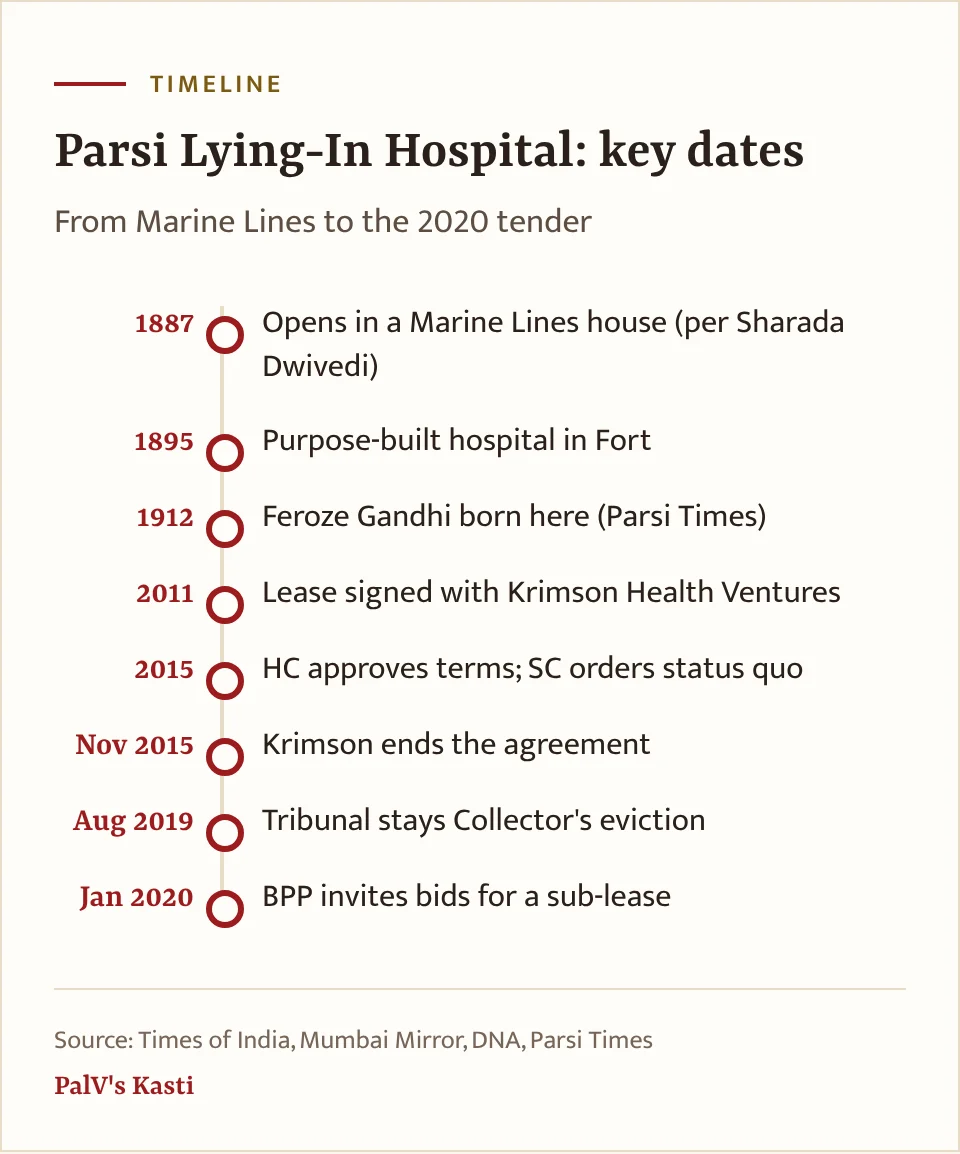
Offers before 2011
The 2007 Times of India report lists the suitors. Cathedral and John Connon School next door had offered Rs 35 crore, and the Hinduja Group a lower sum for a super-speciality hospital. About eight years before that report, the managing committee had considered a Rs 16 crore sale to the Ambanis, but one member objected that it would be like selling the family silver. A Shapoorji Pallonji offer to adopt the hospital was reportedly turned down when the group wanted its own family name on it.
The Krimson Health Ventures lease, 2011 to 2015
In 2011 the managing committee signed a lease with Krimson Health Ventures for an orthopaedic super-speciality hospital, Mumbai Mirror reported. BPP trustees argued the committee had no right to lease the property, and the matter went to court. In April 2014 lawyers for both sides told the Bombay High Court they had reached a settlement. As reported, the terms included a minimum lease rent of Rs 1 crore a year and free treatment for 10 per cent of community in-patients and out-patients. The Times of India added that Krimson would build a new hospital for about Rs 46 crore and give the BPP up to 6,000 sq ft for offices.
The deal split the trustees. Six of the seven signed consent terms in 2015, saying it was the best offer they had and would put an unused property to public use. The chairman, Dinshaw Mehta, challenged it, arguing that bids should have been publicly invited. The Times of India reported that the High Court approved the consent terms on 30 April 2015. Mehta and trustee Armaity Tirandaz then went to the Supreme Court, which ordered status quo in October 2015. In a letter dated 3 November 2015, Krimson's director Dr Prakash Khubchandani ended the agreement, citing "inordinate delay".
The Collector's lease rent and the 2020 call for bids
In January 2019 the Collector passed an order on the lease rent for the land. The BPP's trustees appealed to the Maharashtra Revenue Tribunal, which on 30 August 2019 stayed eviction and attachment of the land on condition that they deposit about Rs 70 lakh, according to a Parsi Times report written by the BPP's advocate. In January 2020 the BPP and the hospital committee issued a public notice inviting health care operators to build, equip and run a new hospital on the site on a sub-lease. The Times of India reported that the plan was to demolish the old structure and rebuild while keeping its heritage features. Trustee Kersi Randeria suggested a sub-lease of 25 to 30 years. The BPP put the property's yearly liability for collector's rent and other outgoings at more than Rs 3.5 crore.
Views in the community differed again. Dinshaw Mehta backed the 2020 move because bids were now being invited in public. Advocate Khushru Zaiwala warned the Times of India that a long lease would amount to transferring the property and would be against the trust deed. We could not open any report from after 2020 on what came of the tenders, so we cannot say whether a deal has been signed.
Where is the Parsi Lying-In Hospital?
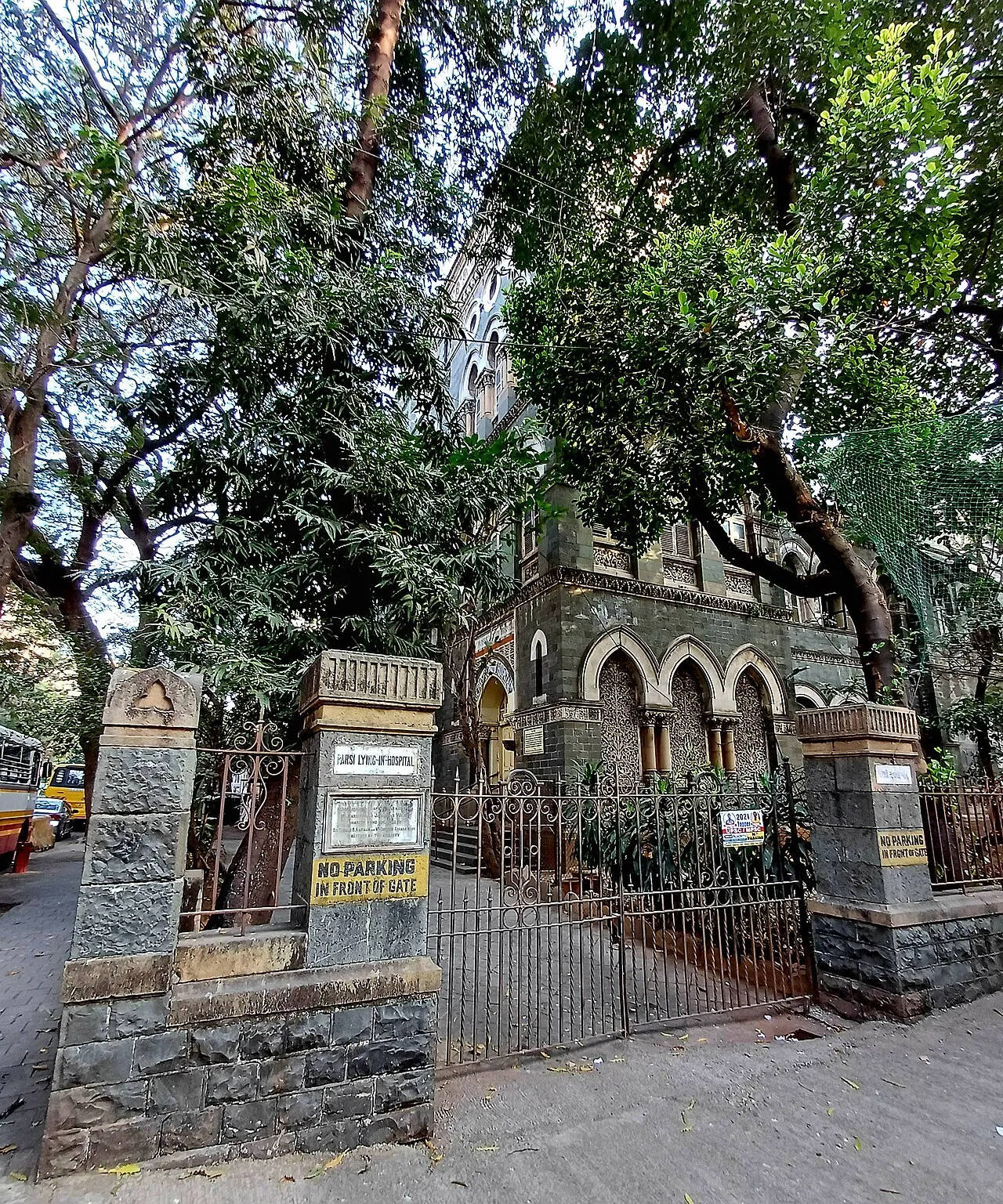
The building is on Prescott Road in Fort, in a lane off D N Road near New Excelsior cinema, and opposite the Cathedral and John Connon School. The Times of India described it as defunct and decrepit in January 2020, so it should not be treated as a working hospital. For a working Parsi hospital in the city, read our history of the Parsi General Hospital. Navsari had its own Parsi maternity hospital too, covered in our post on the D.N. Mehta Lying-In Hospital.
Frequently asked questions
Who founded the Parsi Lying-In Hospital in Mumbai?
The hospital is named after Dr Tehmulji Bhicaji Nariman, its founder. DNA reports that he built it in 1895 with Jamsetjee Nusserwanji Tata, Nusserwanji Jehangir Wadia, Sorabji Framji Patel and Sorabji Shapurji Bengali. Historian Sharada Dwivedi told the Times of India that Dr Nariman first started it in 1887 in a small house on Marine Lines.
When did the Parsi Lying-In Hospital open?
The present building on Prescott Road in Fort dates from 1895, a year that the Times of India, Mumbai Mirror and DNA all give. Historian Sharada Dwivedi told the Times of India in 2007 that it had first opened in 1887 in a smaller house on Marine Lines, before moving to the new building.
Why did the Parsi Lying-In Hospital shut down?
Parsi mothers once stayed up to 40 days after giving birth, but later preferred to go home straight after delivery, the Times of India reported. DNA says the trustees closed the doors once patients dwindled. No source we opened gives a closing year. Reports from 2014 and 2015 say it had stood unused for 25 to 30 years.
Who owns the Parsi Lying-In Hospital, and what will happen to it?
The Bombay Parsi Punchayet owns the building, according to every report we opened up to 2020, and it sits on land leased from the Collector. A 2011 lease to Krimson Health Ventures collapsed in 2015. In January 2020 the BPP invited operators to build a new hospital on a sub-lease. We found no later report confirming a deal.
Was Feroze Gandhi born at the Parsi Lying-In Hospital?
Yes, according to a 2018 Parsi Times profile by Dara M Khodaiji. It records his birth there on 12 September 1912 to marine engineer Jehangir Gandhi and Ratimai Gandhi. The same profile calls it the most popular Parsi maternity home for almost a century.