 PalV's Kasti
On this page
The Parsi bites we would put on a party table are chicken farcha, small meat kavabs, potato pattice with a mince filling, the chutney egg and slices of patrel, with crisp fried saria on the side. Most of them get a coat of beaten egg before frying, and most arrive with a sauce, because Parsi cooks don't like food served dry. If you came looking for Parsi tikkis, the words to know are kavab, cutlace and pattice. Below we go through each bite, what to serve alongside, and one named recipe for baked kavabs that scales well for a crowd. For the wider repertoire, start with our guide to Parsi recipes.
શહેરેવર રોજ
Shehrevar Roj, Tir Mah · 1396 Y.Z.
Which Parsi snacks make the best party starters?
Chicken farcha
Slurrp ranks farcha as probably the most popular Parsi snack after pattice. Chef Peri of Simply Bhonu calls it a dish served at most events and occasions. Her description: chicken thighs or drumsticks marinated in a farcha spice blend, rolled in flavoured crumbs or plain flour, then given a thick coat of spiced beaten egg and deep-fried. Slurrp lists farcha as a regular starter at weddings and birthday parties and compares it to American Southern fried chicken. Meher Mirza, writing in The Asian Age, describes the wedding version as fried chicken skirted with lacy batter. In a 2019 Deccan Chronicle feature on Navroz, Delzeen Watcha Mistry said lunch that day is usually ordered from a Parsi caterer, and chicken farcha was on her list.
For a party, cut it small. Chef Peri suggests bite-size pieces when farcha goes out as an appetiser rather than a main.
Kavab (gos na kavab, jhinga na kavab)
Kavab is the Parsi form of the word kebab, as both Chef Peri and the cookbook author Niloufer Mavalvala use it. In her column for The Cook's Cook, Mavalvala explains that kebab-making in a Parsi kitchen is a method more than a single dish. Fish, prawns, meat or chicken get shaped into small round balls (kavab), ovals or flat discs. Meat ones are gos na kavab. Prawn ones are jhinga na kavab. The small round shape is what makes kavabs such easy party food: one bite, no knife.
Cutlace and pattice
Mavalvala traces the Parsi cutlace back to the Persian kotlet, and says her mother always made hers in that oval shape. Fish versions are called machhi na cutlace. Pattice is the potato-based cousin. Slurrp describes Parsi pattice as potato patties stuffed with spiced minced meat (or lentils, for a vegetarian version), coated in egg and deep-fried until golden. Mavalvala adds that leftover vegetables and akuri, the Parsi scrambled egg, also get wrapped in mashed potato and called patties.
One warning if you are buying rather than cooking. In Mumbai the word also covers a pastry. Mirza describes the chicken pattice at PAC on Tardeo Road as a flaky, crumbly golden shell around a creamy chicken filling, which is closer to a puff than to a potato cake. Ask which kind you are getting before you order a tray.
Spiced mince is the classic pattice filling. The same mince, with eggs set on top, becomes Kheema per eedu, which is a good home for whatever filling is left after the party.
The chutney egg
Mavalvala calls this the Parsi version of the British Scotch egg. Hers wraps half a boiled egg in green coconut chutney, encloses it in mashed potato, dips it in egg and pan-fries it. Mirza rates the chutney egg as the best thing at the Dadar Parsi Youth Assembly's snack centre, where it is deep-fried to a crisp.
Patrel, saria and kolmi na patia
Patrel (also called patra or alu vadi) is the vegetarian standby. Slurrp describes a gram-flour paste spiced with tamarind, jaggery, turmeric and chilli, spread over colocasia leaves, rolled up, steamed and sliced, and sometimes shallow-fried for extra crunch. Mirza describes patrel as leaf and gram flour furled together, then fried or roasted.
Saria are sago papads. Slurrp lists them as a fried snack or an accompaniment, and Mirza names saria wafers as part of a Parsi wedding spread. For something saucier, Slurrp suggests serving kolmi na patia, the sweet-sour prawn dish in spiced tomato gravy, spooned onto crackers.
What sauce do Parsis serve with cutlets and kavabs?
Parsis dislike dry food. Mavalvala's term for it is suku bhonu, a dish with no rus (sauce or gravy). Her fix for cutlets, especially the egg-dipped, deep-fried kind, is tamota ni gravy: tomato ketchup cooked down with jaggery and a little spice. She adds ginger and fresh mint to hers.
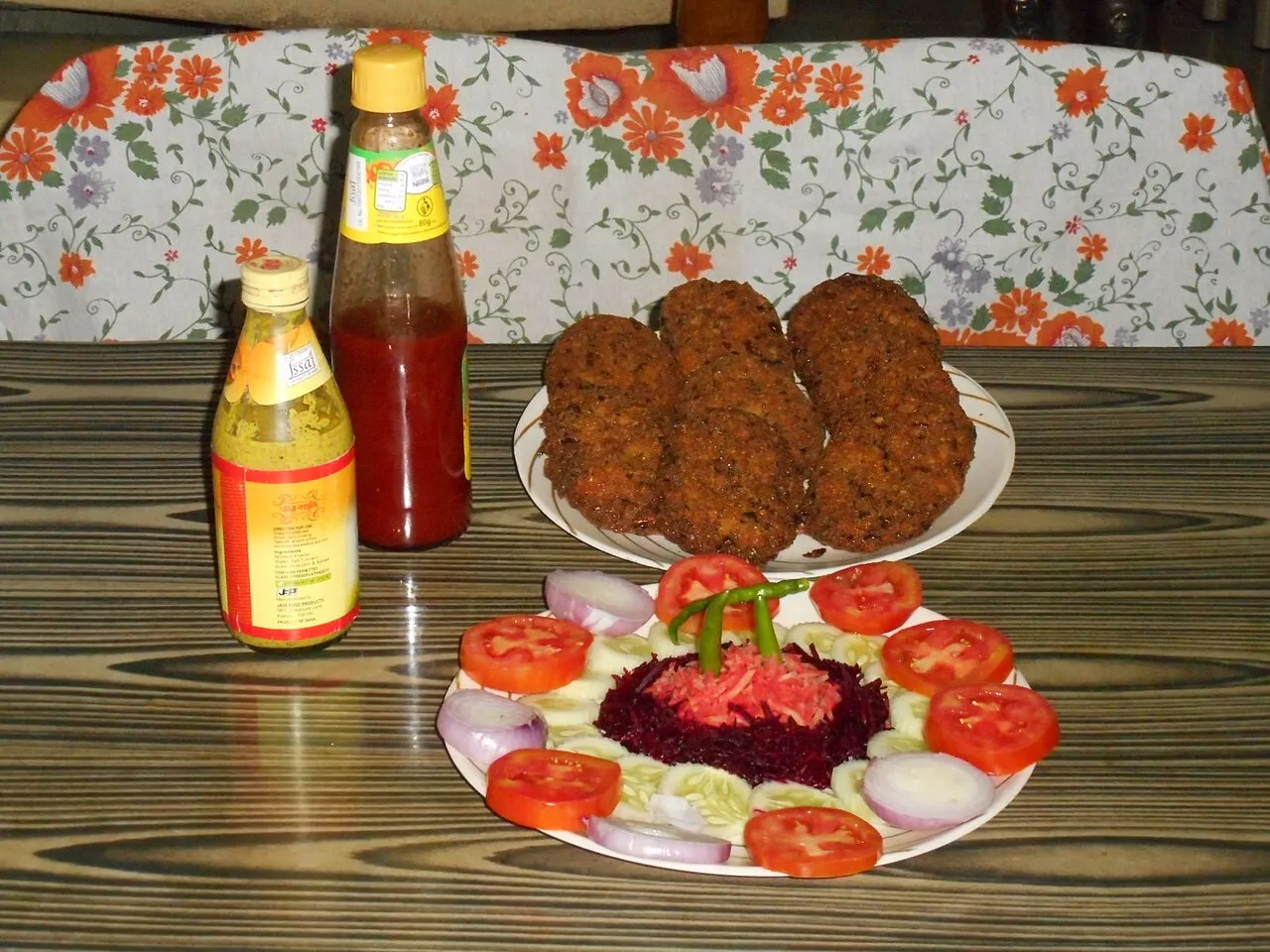
Chef Peri pairs her farcha with a mint yogurt dip, and finishes her kavabs with a squeeze of lemon and a chutney of your choice. So a party table needs two things beside the platters: one sweet-sour tomato gravy and one cooling dip. Between them they cover every bite on this list.
How do you make kavabs for a crowd?
Chef Peri of Simply Bhonu has a baked lamb kavab that suits a party. She worked it out with her mother's help, to keep the flavour of the usual version while skipping its rolling, dipping, coating and frying. Mashed potato, onion, coriander leaves, ginger-garlic, green chilli, lemon juice and dry spices go into a bowl first, and the mince is folded in gently. The mix then chills for at least two hours, and it can be made up to a day ahead, which is the real help on party day.
Semolina and a beaten egg go in just before cooking. Scoops of about two tablespoons go onto an oiled sheet and bake at 400°F (about 200°C, our conversion) for 12 to 14 minutes. Her recipe makes 25 pieces. They get a squeeze of lemon and five minutes' rest, then go out with chutney. For a children's batch she halves all the spices and the green chilli.
Lamb, mutton, chicken or turkey mince all work in her version. For a full mutton kebab method with quantities, see our guide to Parsi mutton kebabs.
Can you bake Parsi party snacks instead of frying them?
Yes, and Parsi cooks abroad often do. Mavalvala writes that in the West her community pan-fries, air-fries or bakes its cutlets and kavabs. Deep-frying is unpopular there. The cleanup is a chore, closed, climate-controlled homes hold the smell for days, and breading and frying each piece by hand takes time. Baking a whole sheet pan of kavabs is far less work.
Chef Peri cooks her farcha in a convection oven or an air-fryer, and prefers Japanese panko to ordinary breadcrumbs for the crust. Mavalvala's fish cakes can go in the oven too: she uses less breadcrumb so the mix stays moist, presses it into a greased 13 x 9 inch dish, and bakes it for 40 minutes at 350°F (about 175°C) until the top turns golden.
Our suggestion for a home party with one cook: bake the kavabs, make the mix the day before, and save your frying time for the farcha.
Party food is only one corner of the table. For what families cook on an ordinary Tuesday, read our Everyday Parsi home cooking guide, and for the cuisine as a whole, our overview of Parsi food.
Frequently asked questions
What is a Parsi kavab?
A Parsi kavab is a small round ball of spiced mince, fish or prawn, often bound with potato and egg and then fried or baked. Kavab is the Parsi form of the word kebab. Meat ones are called gos na kavab and prawn ones jhinga na kavab, according to cookbook author Niloufer Mavalvala.
What is chicken farcha?
Chicken farcha is Parsi fried chicken. Pieces are marinated in a farcha spice blend, rolled in crumbs or flour, coated in spiced beaten egg and deep-fried, which gives a lacy, crisp edge. It is a fixture at Parsi weddings, birthdays and other celebrations, and works well as a starter when cut into bite-size pieces.
What sauce goes with Parsi cutlets?
The classic partner is tamota ni gravy, a tomato sauce made by cooking ketchup down with jaggery and a little spice. Niloufer Mavalvala calls it a crucial side for egg-dipped, fried cutlets, because Parsis dislike food without a sauce. A mint yogurt dip or green chutney also works with kavabs and farcha.
Are there vegetarian Parsi party snacks?
Yes. Patrel is one: colocasia leaves rolled with spiced gram-flour paste, steamed, sliced and sometimes fried. Saria, fried sago papads, are a crisp side. Pattice can be stuffed with lentils instead of mince, and vegetable patties are made by wrapping cooked vegetables in mashed potato before frying.
Can you bake Parsi kavabs instead of frying them?
Yes. Chef Peri's baked lamb kavabs go into a 400°F (about 200°C) oven for 12 to 14 minutes on a greased sheet. Parsi cooks living in the West often bake, air-fry or pan-fry kavabs and cutlets to avoid deep-frying, and a full sheet pan is far quicker than frying each piece.


