 PalV's Kasti
On this page
Parsi cooking runs on a short list of spices and a shorter list of herbs. The base is ginger-garlic paste, and cookbook author Niloufer Mavalvala names cinnamon, turmeric, cumin and chillies as the spices that carry the flavour. Spices are ground into four house blends: dhansak masala, Parsi sambhar masala, garam masala and dhana jeera. The fresh herbs in the recipes we read are coriander leaves, mint, methi (fenugreek) leaves and curry leaves, with green chillies close behind. Vinegar and jaggery then round the heat into the spicy-sour-sweet balance Parsis call tikhu-khatu-mithu. For the wider story of the cuisine, start with our guide to Parsi food.
શહેરેવર રોજ
Shehrevar Roj, Tir Mah · 1396 Y.Z.
Which spices form the base of Parsi cooking?
Ginger-garlic paste comes first. Meher Mirza, writing in Saveur, calls it the cornerstone of Parsi cooking: it marinates meat and chicken and starts many gravies. She grinds half a cup at a time in a mixer and keeps it in the fridge for up to three weeks. Mavalvala, author of The Art of Parsi Cooking, says garlic, ginger, onion and tomato make up the base of most Parsi recipes.
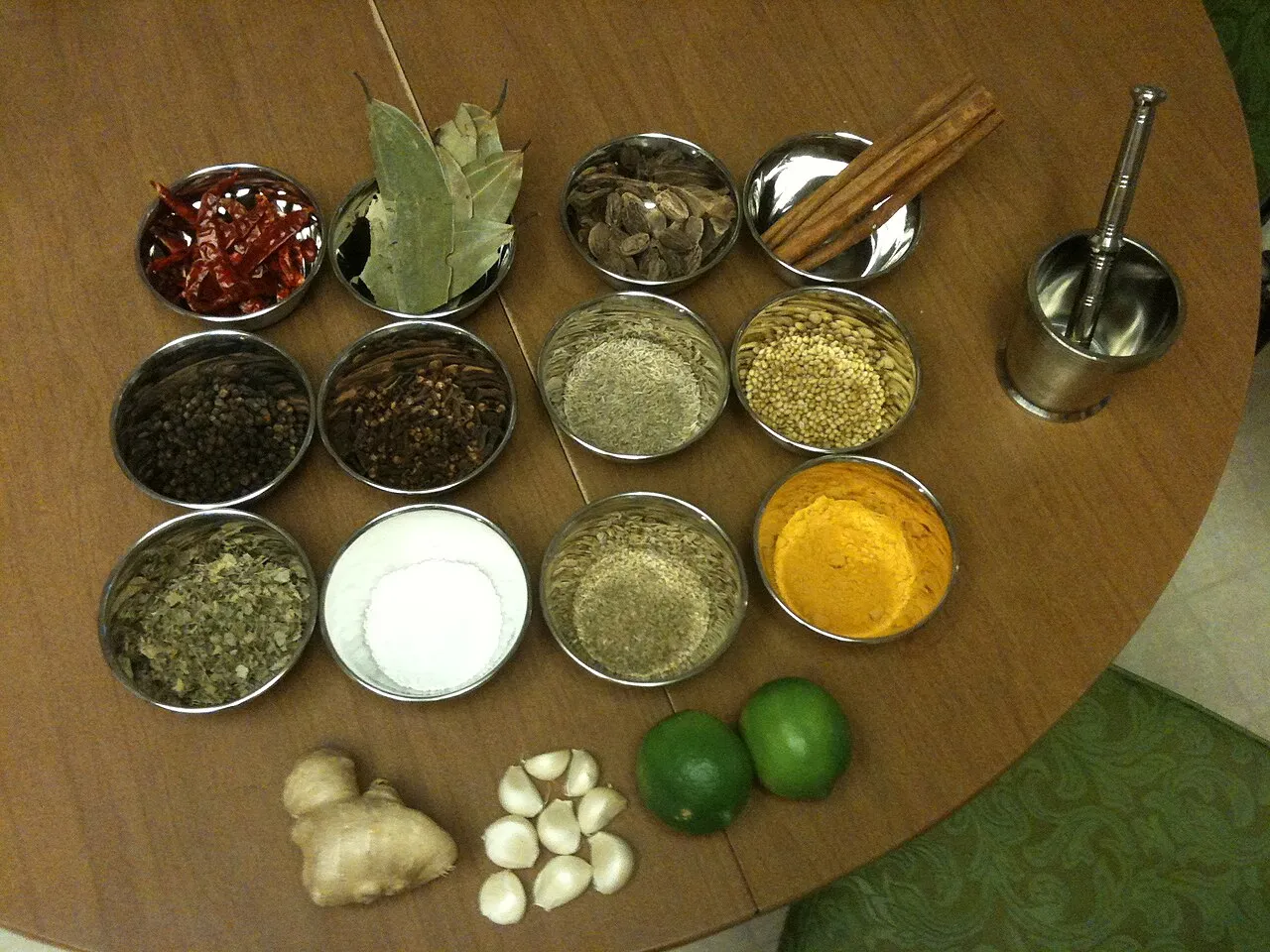
On top of that base come cinnamon, turmeric, cumin and chillies, the four spices Mavalvala singles out. Shabnam Minwalla, in Outlook Traveller, notes that the plain Persian pulaos picked up local spices once the community settled in Gujarat. For the legend of how the first settlers were received there, read our piece on sugar in the milk and Parsi food.
Whole spices matter as much as powders. In Perzen Patel's dhansak recipe, the caramelised brown rice gets bay leaves, cloves, star anise and cumin seeds. Beyniaz Edulji's brown rice in Newsmeter uses cinnamon, cloves, bay leaves, peppercorns, cardamom, cumin and shahjeera.
What are the four Parsi spice blends?
Meher Mirza lists four masalas behind Parsi dishes: Parsi dhana jeera, garam masala, sambhar masala and dhansak masala. Every household, she says, thinks its own is the finest. Niloufer Ichaporia King's My Bombay Kitchen calls its set of house mixtures "the big three", the masalas you need for many Parsi recipes to taste right.
| Blend | What goes in (per the recipes named here) | Where it's used, according to Mirza |
|---|---|---|
| Dhansak masala | Cumin, coriander seed, dried red chillies, cinnamon, cloves, bay leaves, black peppercorns and mustard seeds appear in both Mirza's and Edulji's versions | Dhansak above all, and also Bombay duck cutlets and eggplant and meat buriani |
| Parsi sambhar masala | Mirza says it is nothing like South Indian sambhar powder | Added to dhansak, and to vegetable and meat dishes such as sambharya bheeda (okra) |
| Parsi garam masala | Cloves and cinnamon in the basic version; other spices vary by family | Titori (sprouted field beans), minced meat, meat pulaos |
| Parsi dhana jeera | Named for coriander and cumin seed, but with more spices; Kashmiri chilli for colour | Masoor dal, dhansak dal, mutton cutlets |
Dhansak masala
Perzen Patel describes dhansak masala as "half an Indian shop's worth of spices", with cumin, coriander and cinnamon to the fore and a touch of chilli. The two published versions we read don't match spice for spice. Mirza's Saveur recipe adds turmeric, fresh curry leaves, mace and poppy seeds, and uses whole Kashmiri chillies. Edulji's adds cardamom, star anise, fenugreek seeds and a quarter teaspoon of shahjeera. That gap is normal: Patel calls the recipe a closely guarded secret.
Parsi sambhar masala
Don't swap in a South Indian sambhar powder. Mirza is clear that the Parsi blend is a different thing. Patel's 2016 mutton dhansak for the Global Pulse Confederation uses one tablespoon of dhansak masala and one tablespoon of Parsi sambhar masala together in the tadka.
Parsi garam masala and dhana jeera (dhana jiru)
Mirza's grandmother disliked nutmeg, left it out of her garam masala and used black peppercorns instead. Another relative kept separate blends for meat and for rice. Dhana jeera is where the names get muddled. Mirza treats Parsi dhana jeera and dhansak masala as two blends. King titles her recipe "Dhana jiru (Dhansak masala)", so in her kitchen they're one. Ask which one a family recipe means before you buy.
Which herbs go into Parsi food?
Coriander leaves, mint, methi and curry leaves do most of the herb work in the recipes we read.
- Coriander leaves (kothmir). In Edulji's Sunday lunch they go into the dhansak, the kebabs and the kachumbar. Saveur's Parsi pantry piece finishes a quick sali-and-egg dish with them.
- Mint. Edulji uses fresh mint in the same three dishes. Sona Bahadur, writing on dhansak in Scroll, lists mint with the vegetables cooked into the dal, and credits coriander and mint for its citrusy notes.
- Methi (fenugreek) leaves. Bahadur says methi gives dhansak its bitterness. Patel's 2016 recipe takes 50 g of fresh methi, and her 2024 version uses a tablespoon.
- Curry leaves. Patel crisps 10 to 12 in the hot fat before the onion goes in, and Mirza grinds them into her dhansak masala.
Green chillies sit alongside these, in Edulji's dhansak, kebabs and kachumbar, and in the gor amli kachumber described in The Telegraph.
How do vinegar and jaggery fit with the spices?
Mavalvala calls tikhu-khatu-mithu (spicy-sour-sweet) the essential trinity of Parsi cooking, with jaggery and vinegar added as a finishing touch to the spiced dish. That balance has its own guide on our site, so we leave the detail there.
Which spices flavour Parsi sweets?
Sweets get a gentler set. Mavalvala writes that Parsi sweets are often lifted with rosewater, cardamom and nutmeg, and sometimes a little vanilla. She also describes vasanu (vesanu), made with seeds, nuts, ginger and other spices, which she says is given to new mothers to restore their strength.
Do Parsi families still grind their own masalas?
Some do, and the sources disagree on how many. Mirza wrote in 2021 that most Parsi home cooks make their own blends, though packets exist, and that very few homes still use the grinding stone. An electric mixer-grinder does the job now. King, in 2007, wrote that not many urban Parsi households make their own dry mixtures any more, and that an electric coffee grinder kept only for spices makes the job easy. The old tool was the masala no patthar, a stone slab and roller. King lists one in her family's older Bombay kitchen kit, and Mirza's grandmother pounded sambhar masala on hers every morning.
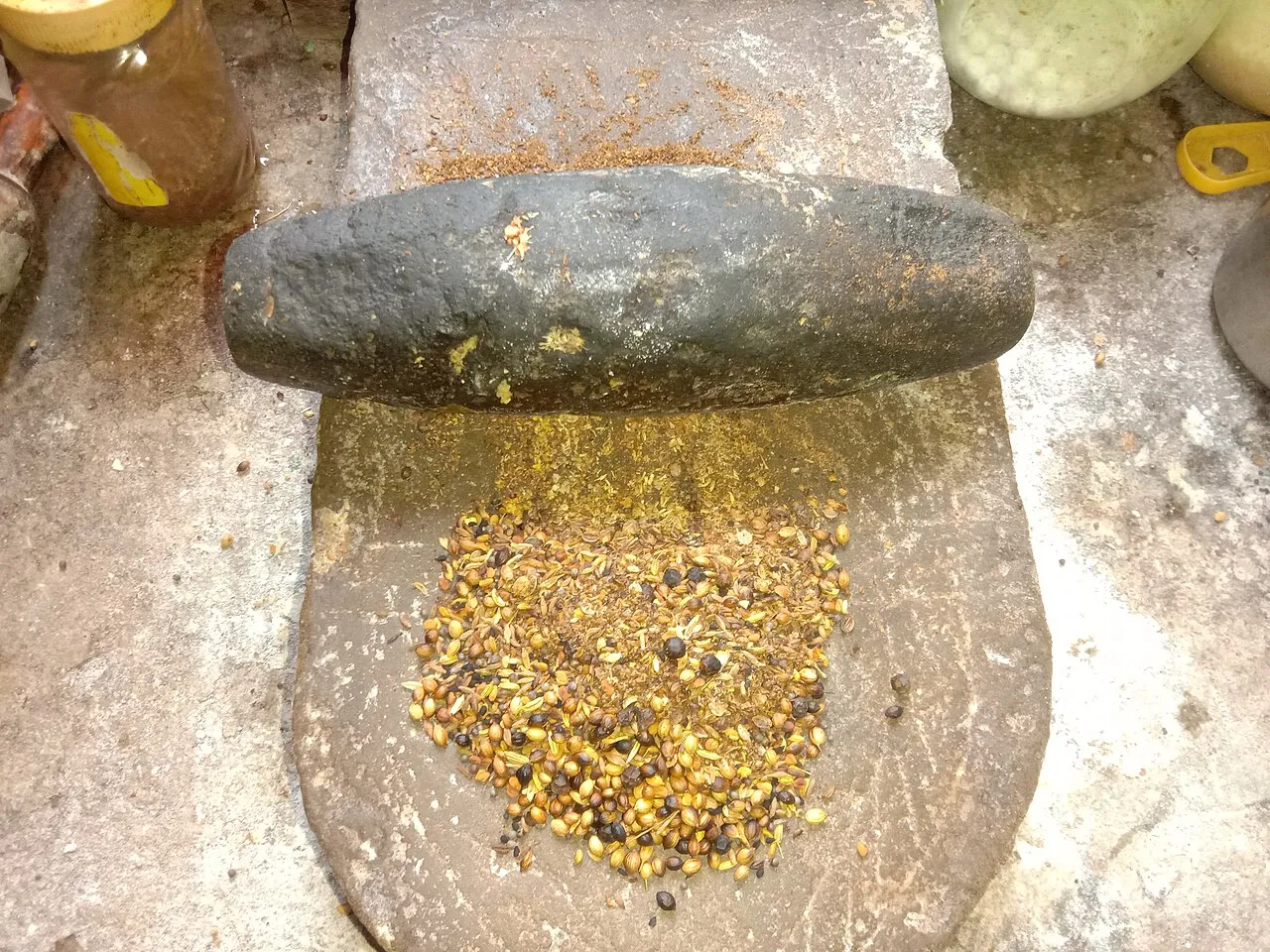
If you grind at home, Mirza's advice is to roast the whole spices on low to medium heat until lightly browned and fragrant, never dark. She says the blends keep their strength for about three months in an airtight container. If you live outside India and need to buy, Patel points to Mangal, Badshah or Ahura dhansak masala. Her emergency blend is 50 g coriander powder, 25 g cumin powder, 50 g garam masala and 5 g red chilli powder, and she says plainly that it won't give you an exact dhansak masala. Home-ground masala is one of the habits discussed in our piece on the decline of Parsi food, and you'll find the blends at work in our Parsi recipes.
Frequently asked questions
What is the most important spice in Parsi cooking?
Strictly it's a paste, not a spice. Meher Mirza calls ginger-garlic paste the cornerstone of Parsi cooking, used to marinate meat and as the base of many dishes. Among dry spices, Niloufer Mavalvala names cinnamon, turmeric, cumin and chillies as the ones that create the flavour, and much of it reaches the pot through house blends.
Is Parsi sambhar masala the same as South Indian sambhar powder?
No. Meher Mirza, writing in Saveur, warns readers not to confuse the two, saying they are very different blends. Parsi cooks add it to dhansak and to vegetable and meat dishes such as sambharya bheeda. Perzen Patel's 2016 mutton dhansak uses a tablespoon of it alongside a tablespoon of dhansak masala in the tadka.
What spices are in Parsi dhansak masala?
Recipes vary by family. The versions by Meher Mirza and Beyniaz Edulji both use cumin, coriander seed, dried red chillies, cinnamon, cloves, bay leaves, black peppercorns and mustard seeds. Mirza adds turmeric, curry leaves, mace and poppy seeds, while Edulji adds cardamom, star anise, fenugreek seeds and shahjeera.
Which fresh herbs are used in Parsi food?
In the recipes we read, coriander leaves, mint, methi (fenugreek) leaves and curry leaves are the main four. Beyniaz Edulji uses coriander and mint in her dhansak, kebabs and kachumbar. Sona Bahadur says methi gives dhansak its bitter note, and Perzen Patel crisps curry leaves before making the dal tadka.
How long does homemade Parsi masala keep?
Meher Mirza says her Parsi spice blends keep their strength for about three months in an airtight container, and her dhansak masala recipe suggests a glass jar with a tight lid. She recommends roasting the whole spices on low to medium heat until lightly browned and fragrant, then grinding them.


