 PalV's Kasti
On this page
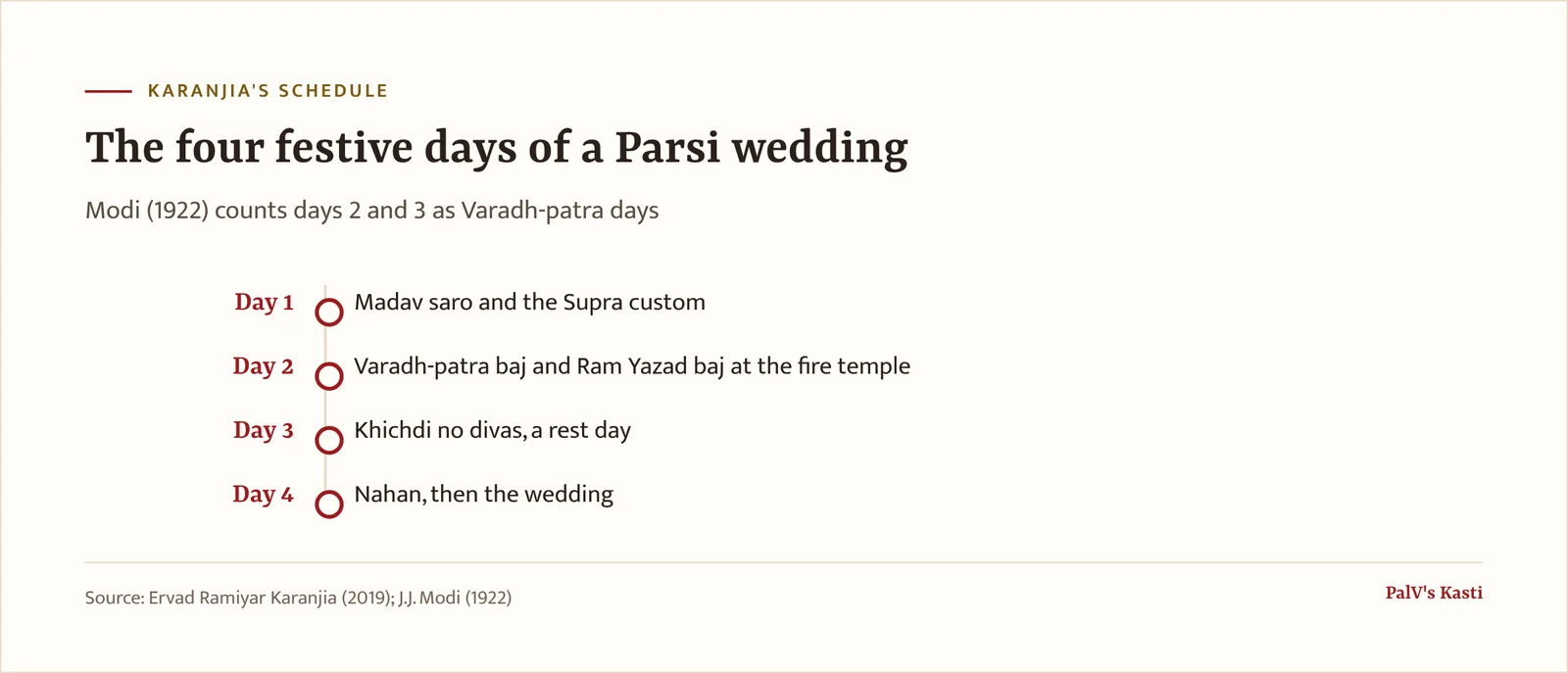
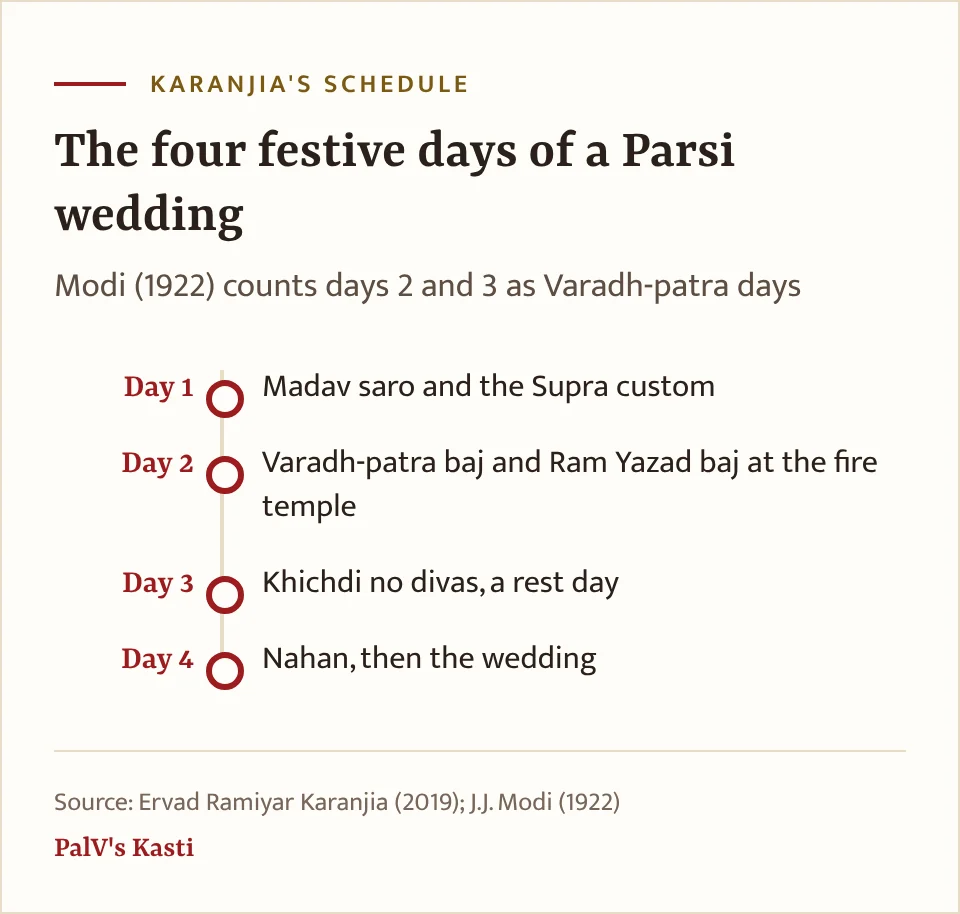
The day before a Parsi wedding is the third of the four festive days that J.J. Modi and Ervad Dr Ramiyar Karanjia describe, and their accounts do not agree on what it holds. Karanjia (2019) calls it Khichdi no divas, a light rest day on which nothing significant has to be done. J.J. Modi (1922) counts both the second and third days as Varadh-patra days, for ceremonies in memory of the family's departed. Both accounts place these remembrance prayers before the wedding, so the eve is when a family checks with its Agiary that they are done, then rests and confirms the wedding-day timings.
અસપંદામેદ રોજ
Asfandarmad Roj, Tir Mah · 1396 Y.Z.
What happens the day before a Parsi wedding?
Karanjia sets out the four days of a Shahenshahi wedding: Madav saro and the Supra custom on day one, the Varadh-patra baj at the fire temple on day two, khichdi and rest on day three, and the wedding on day four. On his schedule the eve is quiet. Modi instead treats days two and three alike as Varadh-patra days, and Ervad Marzban Hathiram's Frashogard site (2012) says only that a particular day before the marriage is kept for remembering the departed. For every ceremony across the four days, see our Parsi wedding guide.
What is the Varadh-patra, and why is it done before the wedding?
Karanjia explains that the Varadh-patra baj symbolically invites the family's departed to the wedding and asks for their blessings. In the fire temple the Satum is recited over a special sweet called Varadh, along with eatables such as sarya, and a baj is done for Ram Yazad, who in his words presides over marriage union and joy. He traces varadh to the Gujarati vruddhi, prosperity.
Frashogard gives more detail: Baj, Afringan, Farokshi and Stum recited in the morning for the souls of the departed, the Varadh nu Stum seeking blessings for the couple from Mino Ram, and a Mino Ram ni Baj performed by another priest. It adds that the family may book Machi offerings at its own Agiary or Atash Behram in all five gehs. A 2012 FEZANA Journal food feature, crediting Karanjia, describes the Varadh-vara sweet as made mainly from flour, semolina, ghee and sugar, consecrated a couple of days before the wedding. Ask your Agiary which day the prayers are booked for.
Should the bride and groom attend?
Frashogard says yes. The article objects that the couple is usually absent while one elderly relative sits through the prayers, and calls this a very wrong practice. It says that after the Mino Ram ni Baj the couple should take the chasni of the consecrated Daran, a small piece dipped in cow's ghee with a few pomegranate seeds, placed in the mouth without the hands touching it. This is one priest's published view.
Practice varies between families and Agiaries; your family priest's guidance comes first.
What is Khichdi no divas?
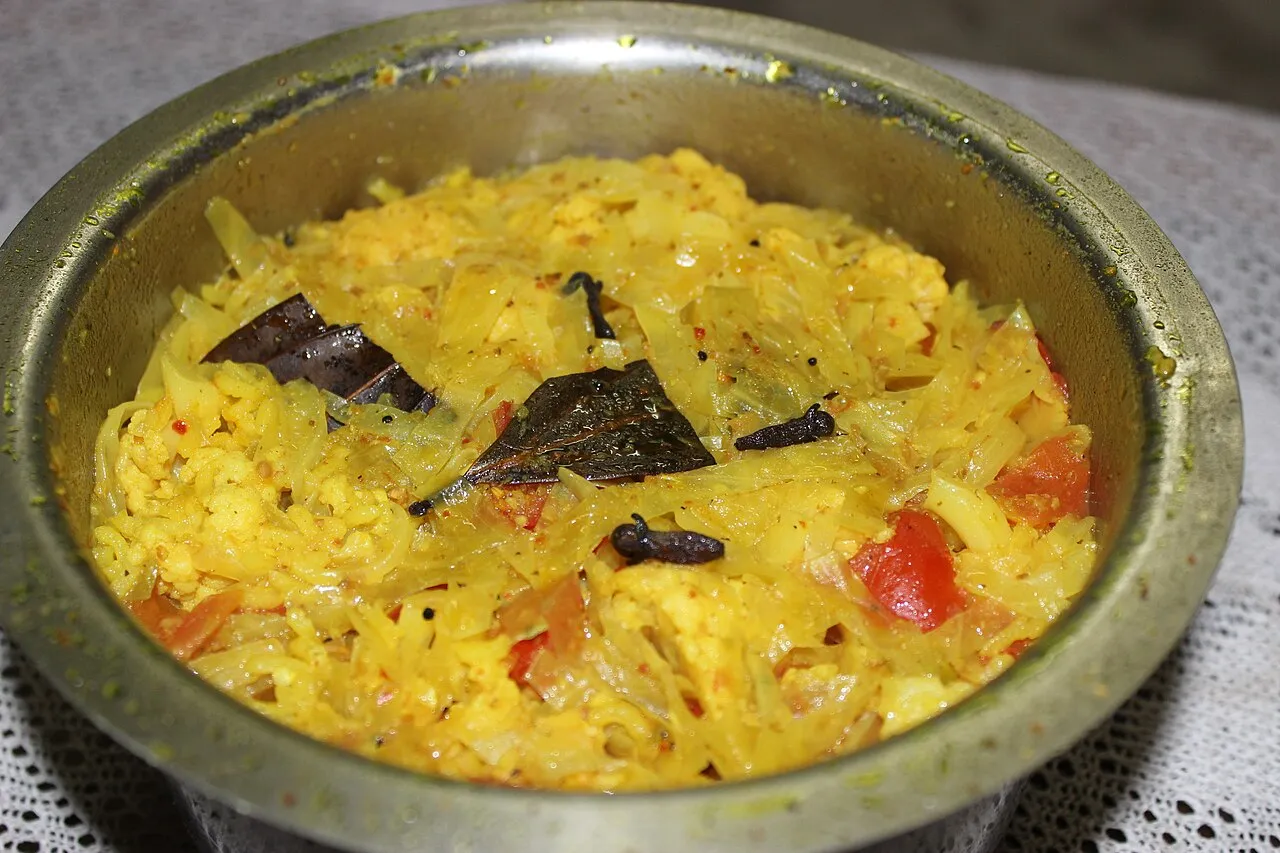
Karanjia names the third day Khichdi ni rit or Khichdi no divas. Khichdi is cooked because it is light and easy to digest, and the day is a pause before the main ritual. His own two write-ups differ on one detail. The 2019 article puts the Ukardi game, where young people from both sides playfully try to steal the eatables offered in the Varadh, on the evening of day two, while his summary page on marriage customs lists it on day three.
The eve was not always quiet. Dosabhai Framji Karaka wrote in 1884 that rich families held a run of dinners and nautch performances for several days before a marriage, and warned that poorer families ruined themselves trying to keep up.
What may still need doing on the eve?
Karanjia notes that the Adravanu and the Adarni gifts, if not done earlier, can be done during the four festive days, so a pending one can go on the quiet third day. The Nahan is not a day-before task: Modi records that the couple take the sacred bath on the wedding day, in the morning or afternoon. A few practical checks for the evening:
- Confirm the Nahan time and the ceremony time with the officiating priests.
- Confirm who will be witness for the bride and for the groom, and that both know the time.
- Give the venue, caterer and drivers the final timings.
- Keep the evening light so the couple is rested.
Our Parsi wedding planning guide has the full timeline, the Parsi wedding day checklist covers the stage items and paperwork, and the prayers themselves are explained in our page on the Parsi wedding Ashirwad.
Practice varies between families and Agiaries; your family priest's guidance comes first.
Frequently asked questions
What happens the day before a Parsi wedding?
It is the third of four festive days. Ervad Ramiyar Karanjia calls it Khichdi no divas, a light rest day with no set ritual. J.J. Modi (1922) counts it, with the second day, as a Varadh-patra day for remembering the departed. Families mainly make sure the remembrance prayers are done and the wedding-day timings are confirmed.
What is Varadh patra in a Parsi wedding?
Varadh-patra is the remembrance of the family's departed before a wedding. Karanjia describes a baj at the fire temple where the Satum is recited over a sweet called Varadh, inviting the departed to the festivities. Frashogard adds Baj, Afringan, Farokshi and Stum prayers, the Varadh nu Stum and a Mino Ram ni Baj.
Do the bride and groom need to go to the Agiary before the wedding?
A 2012 Frashogard article says they should attend the remembrance prayers in person and take the chasni of the consecrated Daran after the Mino Ram ni Baj. It criticises families who send one elderly relative instead. Not every family follows this, so ask your family priest what he expects for your wedding.
Is the Nahan done the day before a Parsi wedding?
No. J.J. Modi records that the bride and groom take the Nahan, the sacred bath with consecrated water, on the wedding day itself, either in the morning or in the afternoon. Karanjia also places it at the start of the wedding ritual. Confirm the exact Nahan time with the officiating priests the evening before.


