 PalV's Kasti
On this page
- Why does Parsi food heritage need preserving at all?
- How are families writing down their own Parsi recipes?
- Which Parsi cookbooks are keeping the recipes in print?
- Who keeps Parsi dishes cooked and eaten outside the home?
- How are social media and archives helping younger Parsis?
- How can your family preserve its Parsi recipes?
- Frequently asked questions
Parsi food heritage is being kept alive mostly by people rather than institutions. Families are turning a grandmother's memory into written recipes. Community cookbooks such as the Time & Talents Club book, first printed in 1935, have taught generations of Parsis to cook, and the heirloom Vividh Vani can now be seen online. Parsi authors keep publishing new cookbooks. Caterers, community banquets and a handful of restaurants keep the dishes cooked and eaten, while newsletters and home-food services reach new eaters. The weak spot is the everyday dish and the festive sweet that nobody wrote down. That part still depends on someone in each family sitting beside the person who cooks it.
શહેરેવર રોજ
Shehrevar Roj, Tir Mah · 1396 Y.Z.
Why does Parsi food heritage need preserving at all?
The short answer is numbers. In a written reply to the Lok Sabha in 2016, the Minister of State for Home put India's Parsi population at 1,11,791 in the 1951 census and 57,264 in the 2011 census, as reported by PTI. That's roughly half as many people in sixty years.
Smaller cities feel it first. A 2016 report in The News Minute said only around 200 Parsis live in Chennai, and caterer Mahair Shroff told the site that the community's monthly banquet was the only place to get a full Parsi meal outside a home. Tehnaz Bahadurji said in the same piece that her generation never learnt the old sweets, so the young never acquired a taste for them. Her family buys them from shops, mostly in Mumbai or Pune.
For a fuller picture of what Parsi cooking is and where it came from, start with our guide to Parsi food.
How are families writing down their own Parsi recipes?
The oldest method is a notebook. Cookbook author Niloufer Mavalvala has written that her mother, Shireen, kept handwritten books of all her recipes. Her aunt was the opposite. Mavalvala told World History Encyclopedia in 2019 that at 88 the aunt still cooked and baked from memory and refused to keep any diary of it.
Some recipes were kept close on purpose. Perzen Patel, who writes the Beyond Butter Chicken newsletter, says dhansak masala was guarded so carefully by grandmothers and aunties that few Parsis today know how to make it.
Secrecy protected a family's pride. It does nothing for a recipe once the last person who knows it is gone.
Which Parsi cookbooks are keeping the recipes in print?
The community cookbooks
The Time & Talents Club of Bombay, a charity group made up mostly of Parsi women, brought out its first recipe book in 1935. Scroll reported in 2018 that it was republished six times between 1935 and 1975, that it runs to about 500 pages and more than 2,000 recipes, and that Parsis everywhere have used it to teach themselves to cook. The same Scroll piece called it a book for the shelf of any serious Parsi cook, and noted it was then out of print. Even a famous title can slip away.
Hyderabad has its own version. Food writer Meher Mirza reported in Literary Hub in 2019 that the Zoroastrian Stree Mandal of Hyderabad and Secunderabad had launched a new edition of The ZSM Cookbook.
The old heirloom books, now online
Vividh Vani, the late 19th-century Gujarati cookbook by Meherbai Jamshedji Wadia, had grown to 2,050 recipes across two volumes by its 1915 edition. The Parzor Foundation, whose Parsi-Zoroastrian heritage project was initiated by UNESCO New Delhi according to Parzor's own page, features the book on Google Arts & Culture and calls it a Parsi woman's heirloom cookbook.
Writer Murali Ranganathan, who picked up a 1915 volume from a scrap dealer on Churchgate Street in 2009, points out a catch in Scroll. By the 1950s many Parsis had moved to English and could no longer follow the book's archaic language, and India's switch to metric weights left its measures all but unusable. A book on a screen is saved. It isn't usable until someone converts it into today's kitchen language.
Cookbooks by named Parsi authors
Single-author books carry family recipes to readers who never had a Parsi grandmother. Bhicoo Manekshaw wrote Parsi Food and Customs for Penguin; her Penguin author page says she was born in 1922 and was the first Indian admitted to the Advanced Course at the Cordon Bleu school in London. Niloufer Mavalvala has published four Parsi cookbooks, starting with The Art of Parsi Cooking in 2016 and most recently The Route to Parsi Cooking in 2024. Of The World of Parsi Cooking (2019), she said "this one is one for the records" and hoped it would be used in perpetuity.
If you want to start cooking from tested recipes, our collection of Parsi recipes is the place to begin.
Who keeps Parsi dishes cooked and eaten outside the home?
A recipe only stays alive if people keep eating it. Caterers do much of that work. Perzen Patel says she has cooked more than 5,000 litres of dhansak as a caterer. In Chennai, caterer Mahair Shroff cooks for the community's gatherings, including that monthly banquet.
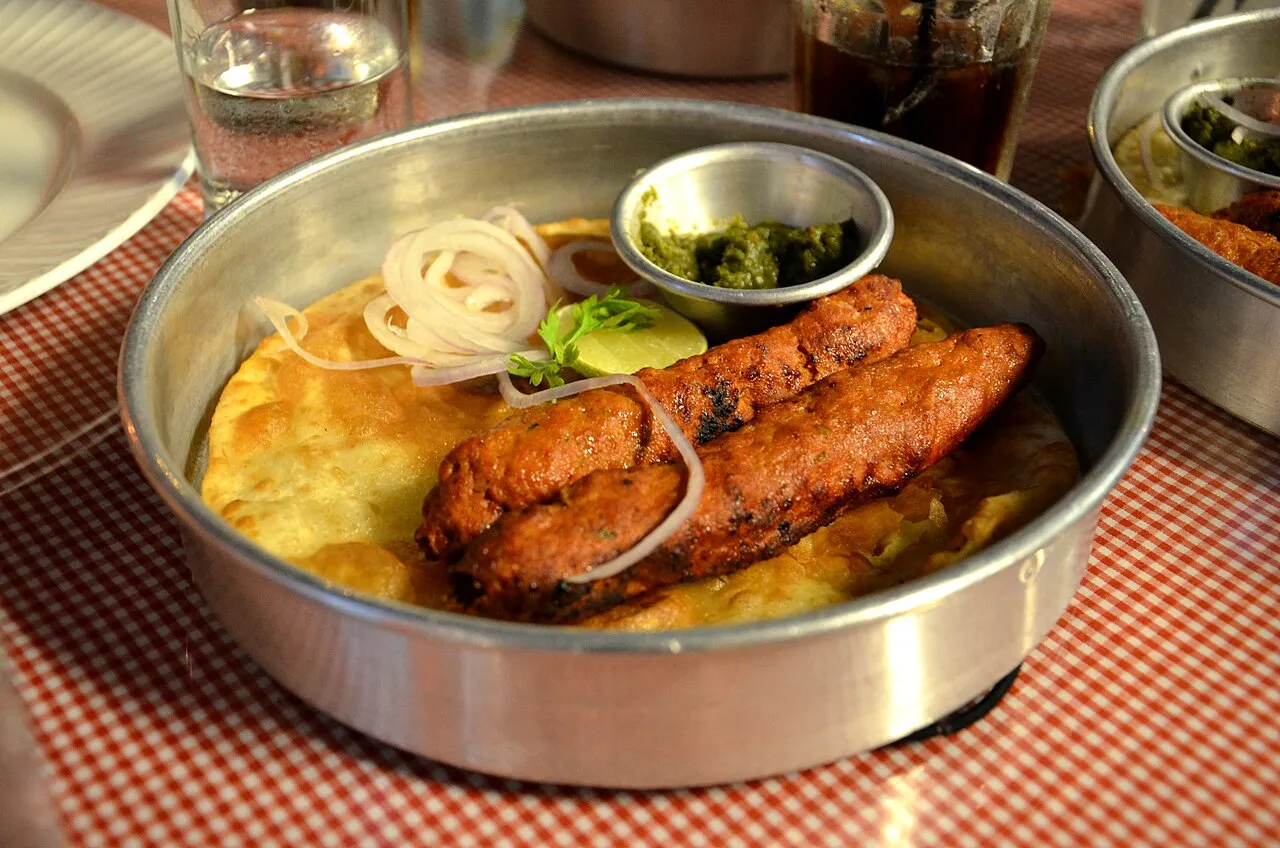
Restaurants have played a part too. According to a 2017 PTI report, Urvaksh Hoyvoy opened Parsi da Dhabha on NH-8, the Mumbai to Ahmedabad highway, in 2009 as his way of trying to preserve the community's food. In the same report, Anahita Dhondy, chef manager at SodaBottleOpenerWala, said the brand had made Parsi food "cool". Whether restaurant versions count as the real thing is a fair question, and one we take up in the Authentic Parsi cuisine debate.
Not everyone is hopeful. Farzana Contractor, editor and publisher of the food and travel magazine UpperCrust, told PTI in the same 2017 piece that she did not see much happening to preserve the food legacy. She added that the food stays authentic because it is still cooked at home.
How are social media and archives helping younger Parsis?
Hoyvoy told PTI in 2017 that Parsis had begun using social media to share their food with the world. In Karachi, Arab News reports, Gulnar Cowasjee started a home-food service called Ghar Se during the Covid lockdown. The paper described it as a small act of preservation, and noted that she learnt by watching her grandmother and has never cooked from books.
Pakistan's community is far smaller. Both Arab News and The Express Tribune cite a 2023 census count of 2,348 Parsis in the country, which makes every home cook there count. We compare the two kitchens in Parsi food: India vs Pakistan.
Archives work on the cafe side of the story. Irani Chai, Mumbai, a website that says it was established in 2006, uses oral history and visuals to document the Irani cafes of the city.
How can your family preserve its Parsi recipes?
Our view is that the big cookbooks are reasonably safe. What disappears is your family's own version. A few habits help:
- Start with the dish your family would miss most. For many that is a spice blend such as dhansak masala, or a festive sweet.
- Cook beside the person who knows the dish and weigh what they add, even when they say "a little".
- Write quantities in grams and millilitres. Vividh Vani's fate shows how quickly old measures stop making sense.
- Note which occasion each dish belongs to in your family.
- Record a short video while they cook.
- Share copies with cousins, so one notebook is never the only copy.
Mavalvala has written that Parsi recipes are guidelines rather than exact rules, with the spice, salt, sweet and sour fine-tuned for family and friends. That is why your family's version is worth saving.
Frequently asked questions
Is Parsi food dying out?
Parsi food is under pressure but still cooked. India's Parsi population fell from 1,11,791 in 1951 to 57,264 in 2011, according to census figures given in Parliament and reported by PTI, so there are fewer home cooks. Cookbooks, caterers, banquets, restaurants and home-food services keep the main dishes alive. The real risk is to family recipes never written down.
What is the best-known Parsi community cookbook?
Scroll called the Time & Talents Club cookbook a book for the shelf of any serious Parsi cook. It was first published in 1935 by a charity club made up mostly of Parsi women. The same report says it was republished six times between 1935 and 1975 and holds more than 2,000 recipes. Earlier still was Meherbai Wadia's Vividh Vani.
Where can I see Vividh Vani today?
The Parzor Foundation features Vividh Vani on Google Arts & Culture, describing it as a two-volume, late 19th-century book with 2,050 recipes. Writer Murali Ranganathan found a 1915 volume with a Mumbai scrap dealer. He notes that by the 1950s its archaic language and pre-metric measures had made it hard for many Parsis to use.
Who writes Parsi cookbooks today?
Niloufer Mavalvala has published four Parsi cookbooks between 2016 and 2024. Perzen Patel writes about family dishes such as dhansak in her Beyond Butter Chicken newsletter. Bhicoo Manekshaw's Parsi Food and Customs, from Penguin, is an older title. Literary Hub reported in 2019 that Hyderabad's Zoroastrian Stree Mandal had brought out a new edition of its community cookbook.
How do I start saving my family's Parsi recipes?
Begin with the dish your family would miss most, often a spice blend such as dhansak masala or a festive sweet. Cook it beside the person who knows it, weigh every ingredient, and write it down in grams and millilitres. Record a short video too, and share copies with cousins so one notebook is never the only copy.


