 PalV's Kasti
On this page
Taari (also written tari or tadi, and called toddy in English) is the fermented sap of palm trees. In the Parsi homes of south Gujarat it was a drink, a cooking liquid, a raising agent for bread and fried snacks, and a home cure for a bad stomach. Toddy also mattered to Parsi livelihoods. Encyclopaedia Iranica cites a Dutch officer at Broach who, in 1625, found Parsis working especially in the toddy trade, and it says that when prohibition came, most Gujarat Parsis had been earning their living from toddy, so many lost their work. Today, writes the food writer Meher Mirza, taari is drunk largely by rural Parsis, and the dishes built on it are fading.
શહેરેવર રોજ
Shehrevar Roj, Tir Mah · 1396 Y.Z.
What is taari, and how is it different from neera?
Neera and taari are the same palm sap at two different ages. Neera is the sap as it comes off the tree: sweet, slightly fizzy and unfermented. Writing in SAVEUR in 2021, Mirza compares fresh neera to sweet, carbonated coconut water. Left to stand, it sours and starts fermenting within a day or so, she adds in The Juggernaut. That soured, alcoholic liquid is taari.
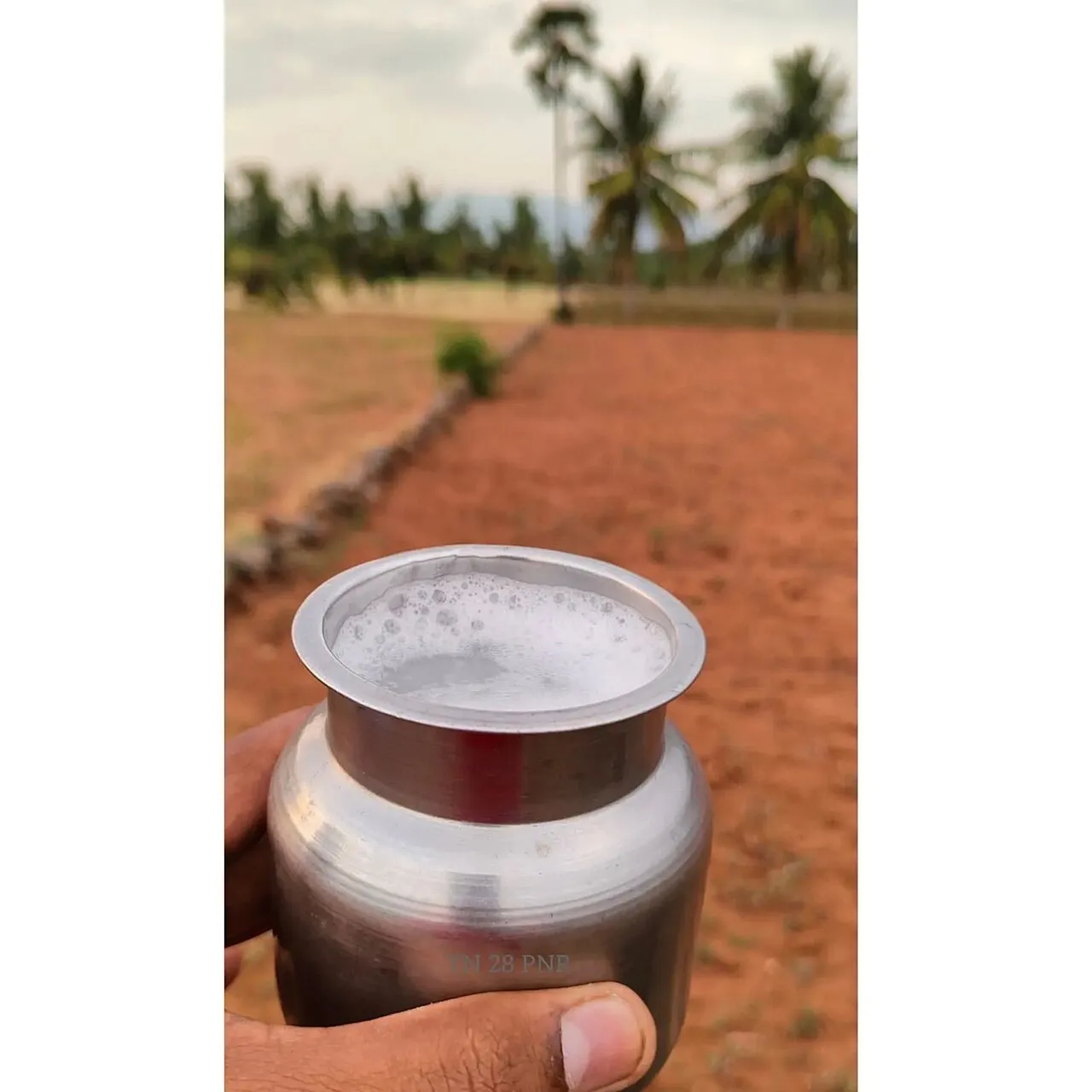
Homegrown, in a 2025 feature on taari, puts the difference down to timing: sap collected early enough is neera, and if you wait too long fermentation sets in.
The sap can come from more than one tree. Homegrown names the sugar palm, the coconut palm and the date palm. In The Juggernaut, Mirza describes old Parsi bungalows in Sanjan, Navsari and Udvada whose grounds are full of palmyra, date and coconut palms.
How is palm toddy collected in south Gujarat?
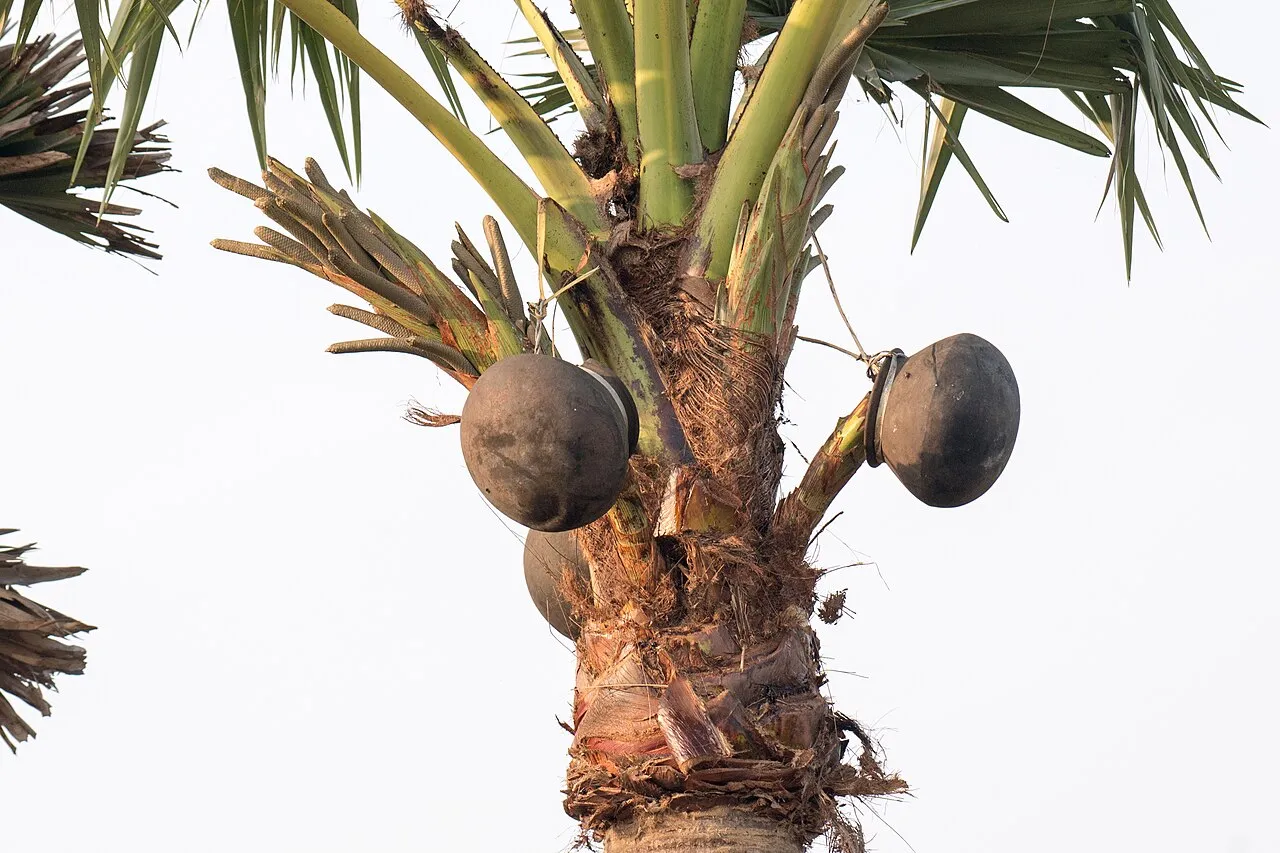
Tapping means climbing tall palms. According to Mirza's account in The Juggernaut, the tappers, who are usually Adivasis, go up the trees each evening and cut into the flowering stem. Clay pots (matkas) are placed to catch the sap, and they are collected early the next morning. Homegrown adds that the work usually passes down within families and that the sap is gathered before sunrise.
The trees often stand on Parsi land. Homegrown reports that tappers in south Gujarat commonly work on contract, taking toddy from palms on Parsi properties and keeping a share of the day's yield. The Juggernaut says most of the toddy is sold, and part of it goes to the Parsi landowners, who drink it fresh or cook with it.
Why is toddy important in Parsi history?
Outlook Traveller describes the Parsis as a mainly farming community until the East India Company drew them to Surat in the 1600s and later to Bombay, and the palm was part of that rural economy. Encyclopaedia Iranica draws on the account of W. Geleynssen de Jongh, who took charge of the Dutch factory (trading post) at Broach (Bharuch) in 1625. He found Parsis in many trades, and especially in the toddy trade. Iranica also cites the trader Alexander Hamilton, based in Surat until 1725, whose list of Parsi trades includes shipbuilding, weaving, ivory, agate, cabinet-making and toddy production.


The same Outlook Traveller piece, describing Navsari's past, writes of gentlemen farmers there who grew wealthy on forest produce, with timber and toddy at the top of the list. The scholar J. J. Modi, in his book The Parsees at the Court of Akbar, wrote that in the sixteenth century toddy was as familiar in Gujarat as Munich beer was in Europe. SAVEUR quotes the line.
The priests' declaration of 1570
SAVEUR reports one more historical detail: in 1570 a few priests signed a declaration that they would not drink taari during certain religious ceremonies. Homegrown repeats it, citing SAVEUR, so we have only one original source for it. It records what a group of priests agreed to at the time, not a general rule. Practice varies between families and Agiaries; your family priest's guidance comes first.
What happened to Parsi toddy under prohibition?
Prohibition hit the toddy trade hard. Encyclopaedia Iranica says prohibition came in under Mahatma Gandhi's influence, and since most Gujarat Parsis had lived off toddy production, many were left without work. The Juggernaut sees two blows. British policies that aimed to curb local liquor came first. Then Gujarat's strict prohibition laws, together with the Parsi move to Bombay, almost finished the tradition off.
Bakers felt it too. Dotivala, the old Parsi bakery in Surat, says on its website that once prohibition arrived in Gujarat after Independence, toddy could no longer be used because it is alcoholic. The bakery switched to a ferment made from hops and potatoes, and in its own words, the taste and texture that toddy gave were lost. Our separate post on Parsis and prohibition covers the wider story of how the ban changed community life.
Which Parsi foods use taari?
Taari does two jobs in the Parsi kitchen. It goes into slow-cooked dishes, and its ferment makes doughs and batters rise. The sources mention these uses:
- Meat stews and kadhi (the yogurt curry), both named by SAVEUR and by The Juggernaut.
- Fish poached in taari, according to SAVEUR.
- Bhakras, the sweet fried teatime snack. In a 2022 essay for the Smart Mouth newsletter, Anaita Vazifdar-Davar calls taari the ingredient that makes them light, and notes that sticklers refuse to make bhakras without it while others swap in yogurt. The bhakra recipe in FEZANA's 2012 book Eat, Live, Pray, contributed from Canada, uses yogurt and baking powder.
- Popatjees (puffy fritters) and karkarias (banana fritters), both listed by Homegrown.
- Tadi no batervo, mutton cooked in reduced palm toddy. Homegrown calls it one of the rarest dishes that still asks for taari, and we explain it in our post on Tadi no batervo.
- Bread. FEZANA's Eat, Live, Pray says five Parsi cooks working for the Dutch in Surat learned to raise bread with toddy. Dotivala adds that its toddy-raised bread did not spoil but dried out, and the dried loaves, sold cheaply, became what are now known as Irani biscuits.
Taari was medicine as well as food. SAVEUR mentions it as a remedy for an upset stomach, and Homegrown says it was warmed with ginger and jaggery for a stomach upset or a cold.
Where do Parsis get taari today?
Mostly by going to it. Meher Mirza writes in G5A Imprint that toddy is now drunk largely by rural Parsis, a shrinking group, and that the dishes based on it are slowly being forgotten. In The Juggernaut she describes Parsis travelling to quiet towns in and around Gujarat for a drink of it. A SAVEUR photo caption notes that toddy is sold at stalls along the Mumbai-Gujarat highway, and Outlook Traveller lists neera among the treats hawkers bring round in Udvada.
Taari does not stop fermenting on a journey, as Homegrown points out. Citing a 2024 Condé Nast Traveller piece, it says that in the 1970s and 1980s taari reached Maharashtra kitchens in glass bottles packed in aluminium containers, with some flour stirred in so the fizz would not burst the glass on the way. That flour-and-taari mix then went into batters. We could not open the Condé Nast original, so treat that detail as Homegrown's report.
Frequently asked questions
What is taari?
Taari, also spelt tari or tadi, is toddy: palm sap from the sugar, date or coconut palm after it has soured and fermented. Parsis in south Gujarat drank it and cooked with it, using it in meat stews, kadhi, poached fish and fried snacks like bhakras, and once in bread, according to SAVEUR, Homegrown and The Juggernaut.
What is the difference between neera and toddy?
Neera and toddy come from the same palm sap. Neera is the fresh, sweet, unfermented sap, collected early in the morning. Toddy, or taari, is that sap after it has been left to sour and ferment, which happens within about a day according to The Juggernaut. Neera is unfermented, while toddy is an alcoholic drink.
Why is toddy important to Parsis?
Toddy was a Parsi trade and a source of income. Encyclopaedia Iranica cites a Dutch officer at Broach in 1625 who found Parsis especially in the toddy trade, and says most Gujarat Parsis lived off toddy production when prohibition came. It also shaped the cooking, from stews and kadhi to bhakras and the toddy-raised bread of Surat.
Did prohibition stop Parsi toddy in Gujarat?
It nearly did. Encyclopaedia Iranica records that prohibition came in under Gandhi's influence and cost many Gujarat Parsis their toddy income. Dotivala bakery of Surat says toddy was banned in Gujarat after Independence because it is alcoholic. Writing in 2021, The Juggernaut described Parsis travelling to towns in and around Gujarat to drink it.
What Parsi foods use toddy?
Parsi dishes made with toddy include meat stews, kadhi, fish poached in taari, bhakras, popatjees, banana karkarias and tadi no batervo, a mutton dish slow-cooked in reduced toddy. Surat bakers once fermented bread dough with toddy, and Dotivala says the dried leftover loaves became Irani biscuits. Some cooks now use yogurt instead.


