 PalV's Kasti
On this page
Parsi food stands apart from other Indian cuisines because of how it tastes and what it puts on the plate. Most dishes balance three notes at once, spicy, sour and sweet, which Parsis call tikhu-khatu-mithu, usually by finishing a pot with a little jaggery and vinegar. Persian habits survive in the dried apricots, dates and nuts that go into savoury dishes. Eggs appear everywhere, cooked on top of potatoes, okra or chips. Meat, fish and eggs take a large share of the Parsi table, though vegetable dishes and dals are common too, and crisp potato salli crowns many dishes. Vinegar from the Portuguese and custard from the British were absorbed as well. The result is a home cuisine that is clearly Indian yet easy to tell apart from its neighbours.
This piece looks at those differences one by one. For the wider story of the cuisine and its best-known dishes, start with our guide to Parsi food.
શહેરેવર રોજ
Shehrevar Roj, Tir Mah · 1396 Y.Z.
What is Parsi food like to eat?
The defining trait is the balance of flavours. Niloufer Mavalvala, author of The Art of Parsi Cooking, calls tikhu-khatu-mithu (spicy-sour-sweet) the "Holy Trinity" of Parsi cooking, as The Telegraph quoted her in 2022. Speaking to Al Arabiya in 2014, she explained that the finished food does not actually taste sweet or tart. The sweet-sour touch works the way salt does, lifting the taste of the main ingredients.
To get there, a Parsi cook usually adds a small dash of jaggery or sugar and a splash of vinegar. Enobia Daruwala, manager of the Parsi Dharamsala in Secunderabad, said exactly this to The Times of India in 2015, and the Telegraph piece names E.F. Kolah's matured sugarcane vinegar as the usual choice. Food blogger Roxanne Bamboat told The Telegraph that most cooks tweak the spice level, or add more apricots, so that two of the flavours stand out. Mumbai-based Parsi chef Shernaz Dumasia described her dhansak to the Deccan Chronicle as sweet on the tongue first, then tangy, then spicy as you swallow.
The base of most dishes is familiar to any Indian kitchen. Mavalvala, writing for The Cook's Cook, lists garlic, ginger, onion and tomato as the base of most recipes, with chillies and spices as the Indian side of the cuisine. The difference is in the finish.
Where do the sweet and sour notes in Parsi food come from?
Sources do not agree on where the sweetness comes from. In FEZANA's 2012 book Eat, Live, Pray, Farishta Murzban Dinshaw describes the cuisine that grew up in India as a fusion of Persian and Gujarati influences, with nuts and fruit used in savoury food, such as carrot and date pickle or jardalu ma marghi, chicken with apricots. In the same book, Mavalvala writes that Persian food feels incomplete without a nut, a dried fruit or a berry, and suggests the Parsi liking for khatu-mithu possibly grew from that root.
Home chef Nilufer Babaycon offered a different reading to The Telegraph: the sweetness is probably Gujarati, while the dried fruit used as a base for curries is the Persian part. Both views appear in print, and the two influences are hard to separate on the plate.
The sour side owes much to vinegar. Mavalvala, writing for the ckbk blog in 2024, credits the Portuguese with giving Parsis vinegar. Firoza Mistry, a Secunderabad home-maker, told The Times of India that the patio, a sweet-sour Parsi dish, is Portuguese-influenced, since the Portuguese had settlements around Surat before the British came.
Why do Parsis put eggs on almost everything?
Eggs are the second giveaway. Food52 describes egg preparations as ubiquitous among Parsis and explains the family of dishes called kasa par eeda, which literally means eggs cooked on something. That something can be potato chips, okra, tomatoes or a range of other vegetables. The same piece mentions akuri, eggs scrambled with masala.
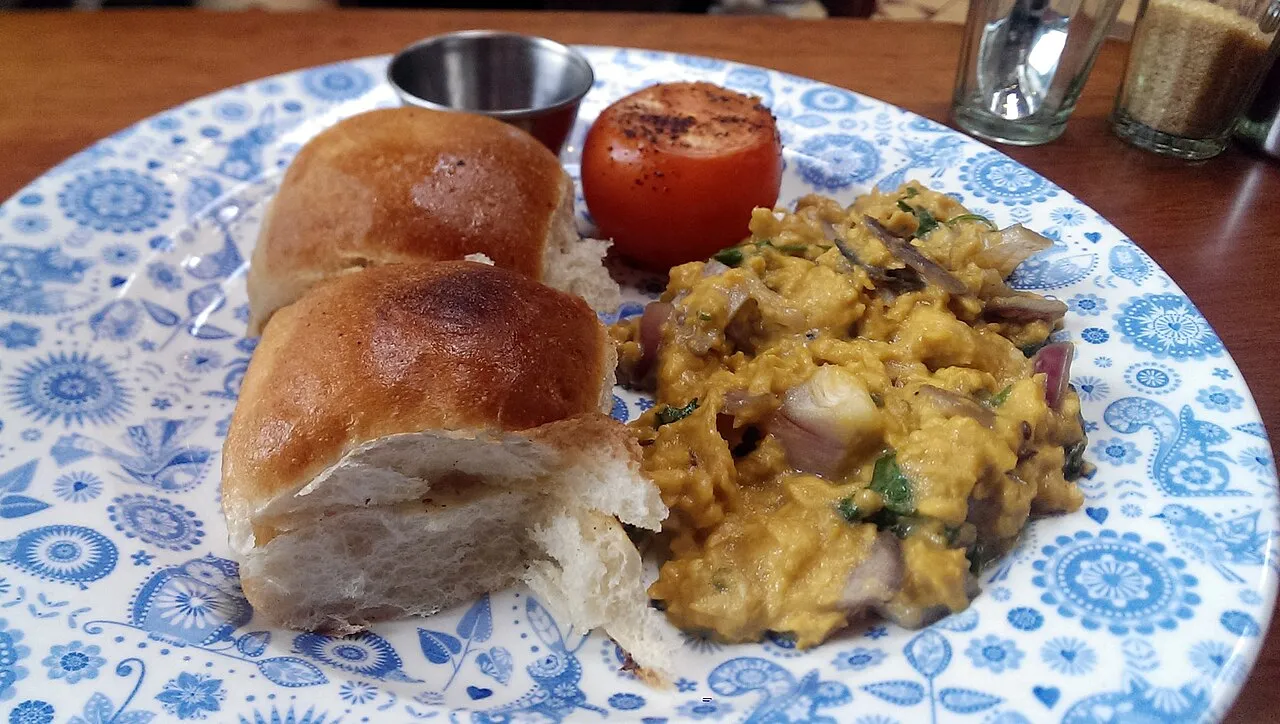
The habit runs deep. Secunderabad food blogger Beyniaz Edulji told The Times of India that the community considers eggs a symbol of fertility, and the same report calls the 18-egg omelette an expression of the Parsi love for eggs. Writing in Outlook Traveller, Shabnam Minwalla joked that Parsi cookbook writers are better acquainted with eggs than eggplants.
Is Parsi food vegetarian?
Mostly not, though the picture is contested. The News Minute described Parsi food in 2016 as strongly non-vegetarian, with meat, fish and eggs taking the lion's share in a Parsi cook's kitchen. At Mumbai weddings, Minwalla notes, vegetarian guests are often seated apart and served a Gujarati thali made by an outside caterer.
Archaeologist and culinary anthropologist Dr Kurush Dalal offered a counterpoint to the Free Press Journal in 2024. He said Parsi cuisine has a wide range of vegetarian dishes, that Parsis eat plenty of vegetables and dals such as chana and masur, and that most meat dishes are cooked with vegetables. He added that Parsi restaurants do not want to cater to vegetarians. Dalal describes dhansak itself as rice, dal and vegetables cooked with meat. The same report notes that eggs are added to leftover vegetables to make them more appetising, which brings us back to kasa par eeda.
What is salli in Parsi food?
Salli is the crisp, matchstick-thin fried potato that Parsis scatter over finished dishes. Pushpesh Pant, writing in The Tribune, describes it as fried potatoes the size of matchsticks giving their crunch to salli boti, a meat curry. Outlook Traveller describes sali murgi as chicken in a sweet-and-spicy red gravy topped with the same potato.
Which outside influences set Parsi food apart?
Parsi food kept absorbing new ideas after the community settled in Gujarat. Minwalla credits the Goan cooks who worked in Parsi homes with bringing in coconut and kokum. Mavalvala sums up the European layer in one line: the Portuguese gave Parsis vinegar, the British gave them custards and the Dutch gave them the biscuits Parsis call batasa. Writing in The Asian Age in 2018, Karishma Kirpalani adds Maharashtrian and Iranian influence to the list.
Parsi cooks rarely copied these foods as they found them. Mavalvala's recipe for lagan nu custard on The Cook's Cook describes the wedding pudding as British custard, which Parsis call custer, changed by adding plenty of nuts and cardamom. Parsi families also carried their cooking far beyond Gujarat, and our piece on Bangalore Parsi food looks at one such city.
How do occasions shape what Parsis eat?
Parsi food is closely tied to the event at hand. The wedding feast is called a patra because it is served on a banana leaf, as Outlook Traveller explains. The leaves are laid on tables set with white linen, and guests are called to eat with "Jamva chaloji", come and eat. Our Parsi feast menu walks through what is served, course by course.
Some dishes are kept away from happy events. Dhansak, which Mavalvala calls the king of Parsi food, is not served at weddings. Charmaine O'Brien's Food Guide to India, quoted in Dawn, says this is because it is customarily served four days after a death. Outlook Traveller similarly describes dhansak as traditionally served on the fourth day after a death, marking the end of mourning, and says Parsis traditionally avoided it at weddings, Navjotes and other auspicious celebrations. The same piece links it with Sunday lunches in Parsi homes.
Practice varies between families and Agiaries; your family priest's guidance comes first.
If you want to cook these dishes at home, our collection of Parsi recipes is the place to start.
Frequently asked questions
What is Parsi food?
Parsi food is the home cooking of India's Parsi Zoroastrians. FEZANA's 2012 book Eat, Live, Pray describes it as a fusion of Persian and Gujarati influences, using nuts and fruit in savoury food. Portuguese, British and Goan touches were absorbed too. Its signatures are the spicy-sour-sweet balance, eggs cooked over vegetables, meat-rich curries and salli potato.
Is Parsi food spicy?
Parsi food has heat, but chilli is only one of three notes. Cooks aim for tikhu-khatu-mithu, a balance of spicy, sour and sweet, finished with jaggery and vinegar. Food blogger Roxanne Bamboat, quoted in The Telegraph, says most cooks tweak the spice level to taste. We found no measured comparison with other Indian cuisines.
What do Parsis eat at home?
The News Minute describes the Parsi table as leaning heavily on meat, fish and eggs, though Dr Kurush Dalal points to plenty of vegetable dishes and dals too. Eggs turn up constantly, as akuri scrambled with masala or as kasa par eeda over potato chips, okra or tomato. Dhansak, dal and vegetables cooked with meat, is linked with Sunday lunch.
Why is dhansak not served at Parsi weddings?
Dhansak is linked with mourning. Charmaine O'Brien, quoted in Dawn, writes that it is customarily served four days after a death, so it is kept off wedding menus. Outlook Traveller adds that Parsis traditionally avoided it at Navjotes and other auspicious events too. Practice varies, so your family priest's guidance comes first.
Is there one standard Parsi masala?
No. Chef Akshata Karkaria told The Hans India in 2016 that Parsi food is distinct to each family, which is why even the masala varies. Some Parsi masalas use nutmeg and others leave it out. Most dishes still start from the same familiar base of garlic, ginger, onion and tomato, according to Niloufer Mavalvala.


