 PalV's Kasti
On this page
- What is bun maska, and is brun maska the same thing?
- What should you drink at an Irani cafe?
- What else can you eat with your chai?
- Which Irani dishes should you order for a full meal?
- What should you buy from the bakery counter?
- Which dessert should you finish with?
- What should you order if you can visit only once?
- Frequently asked questions
What to eat in an Irani cafe? Start with bun maska, a soft white bun split and loaded with butter, and a glass of milky Irani chai. That pairing is what every write-up of these cafes names first. If you're hungry, add akuri or kheema pav. For a full sit-down meal, the Iranian and Parsi plates are berry pulao, sali boti and dhansak, and Britannia & Co. is where writers keep going for them. Before you leave, look at the glass jars and the bakery counter for mawa cake and biscuits. A raspberry soda on the side and a caramel custard to finish round it off.
શહેરેવર રોજ
Shehrevar Roj, Tir Mah · 1396 Y.Z.
What is bun maska, and is brun maska the same thing?
Bun maska is the order Irani cafes are famous for. It's a white bun, sliced, spread thickly with butter and dunked in hot chai. The Tribune described Yazdani Bakery's version in Fort as white buns slathered in melted butter, meant for dipping in tea. Sahapedia's history of the Bombay cafes names butter buns and Irani chai as what the cafes were known for, and Outlook Traveller watched office-goers at Kyani & Co. eat it as a quick breakfast.
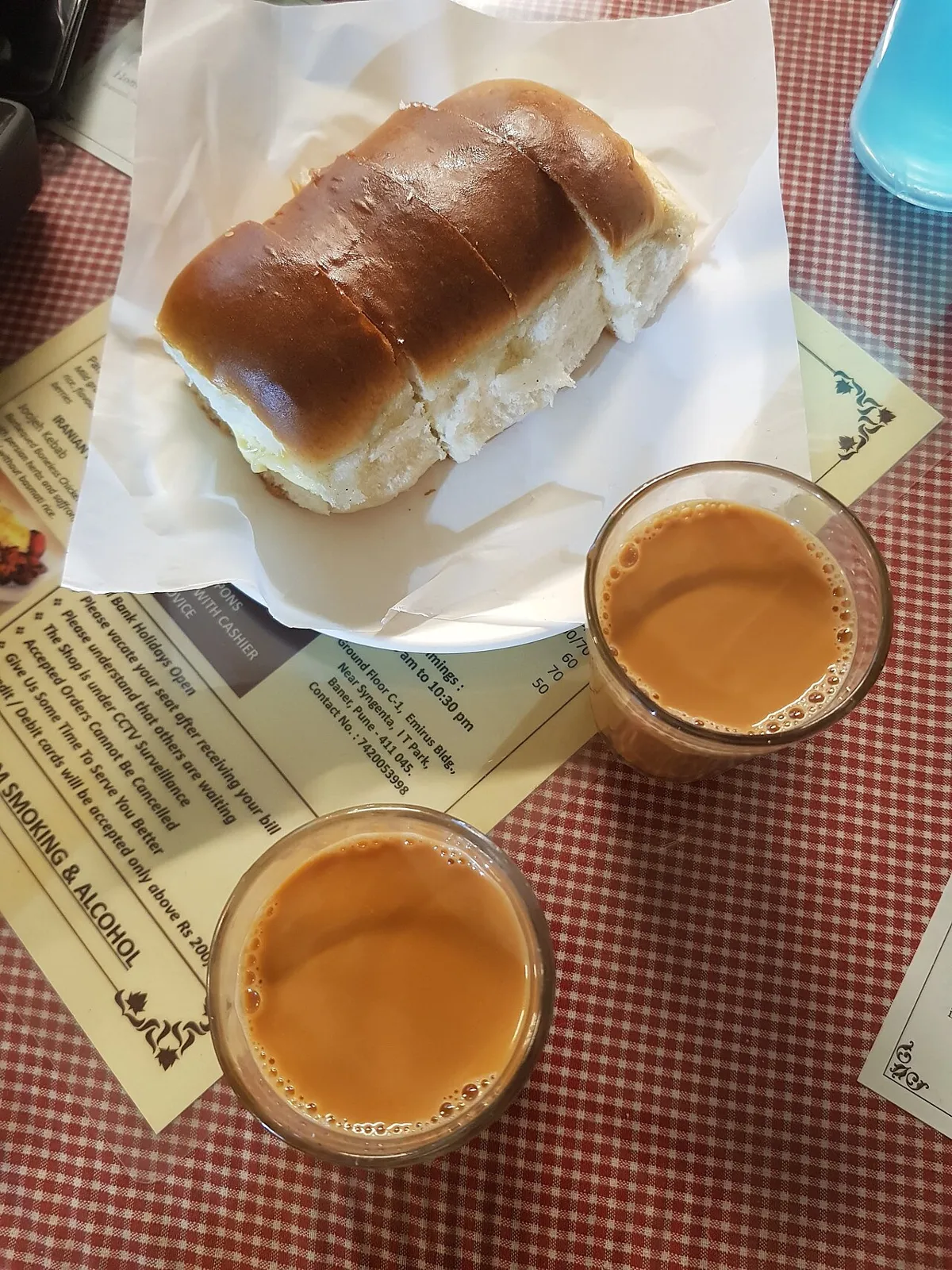
You'll also see brun maska on boards and in write-ups, especially at Yazdani. The Mail & Guardian called Yazdani's brun maska hot toasted white buns in melted butter with crunchy crusts, and Nik Sharma, writing for TASTE, used the same word. We haven't found a reliable source that separates bun and brun by recipe, so we won't invent a difference.
As for where the bun came from, Atlas Obscura credits Portuguese colonisers in Goa who were trying to bake their own pão. We have found only that one account.
What should you drink at an Irani cafe?
Irani chai first. Al Jazeera's 2014 photo essay on the cafes describes it simply as tea served with milk, and Atlas Obscura points out that this makes it an Indian drink rather than an Iranian one, since tea in Iran is served black. Brewing and milk are covered in our piece on Irani cafe chai.
Then raspberry soda. The Tribune and Outlook Traveller both name it as the drink at Britannia & Co., and Outlook Traveller names the brand as Pallonji's. At Cafe Military in Fort, Outlook Traveller wrote, the crowd favourite is keema pav with raspberry soda.
What else can you eat with your chai?
Akuri
Akuri is Parsi-style scrambled egg, as TASTE puts it. The Mail & Guardian found it at Kyani & Co. in Marine Lines, flecked with tomato, onion, turmeric, chilli and coriander. Roads & Kingdoms ate it at Cafe Military and got very soft, lightly mashed eggs, with thick slices of bread on a separate plate.
Kheema pav
Kheema pav is spiced minced meat with soft pav for mopping up. TASTE glosses it plainly as minced meat with bread. Outlook Traveller saw students sharing a mutton keema pav at Kyani & Co., and calls it the favourite order at Cafe Military. Spellings wander across menus and write-ups (kheema, keema, pao, pav, pau), but it's one dish.
Which Irani dishes should you order for a full meal?
This is where the Iranian side of the menu shows, and Britannia & Co. at Ballard Estate leads it. Rashid Kohinoor, who came from Yazd, opened it in 1923, according to The Tribune, and Al Jazeera gives the same year.
Berry pulao
Berry pulao is Britannia's version of the Iranian zereshk polo: rice with tart barberries, fried onions, nuts and mutton or chicken. Afshin Kohinoor told The Tribune that his mother, Bacha Kohinoor, introduced it, and Deccan Herald dates her Iranian and Parsi menu to 1982. Both papers say the barberries come from Iran. Both also explain the gravy. In Iran the dish is eaten dry, and the family added a gravy because diners here wanted one with their rice. In 2013, Boman Kohinoor told the Mail & Guardian that a plate had cost ₹40 in 1982 and cost ₹400 then.
Sali boti and dhansak
Sali boti is mutton in a thick gravy under a heap of crisp fried potato (sali). The papers don't agree on how to describe the topping. Deccan Herald calls it potato wafers, Outlook Traveller potato straws and The Tribune fried noodles. Dhansak is lentils cooked with meat or vegetables, served with brown rice. The Tribune lists it at Britannia, and Outlook Traveller at both Britannia and Cafe Military.
Persian sweets
Britannia also sells Persian sweets. One is baklava, spelt bhaglava in The Tribune, which says it is finished with pistachio and rose water, and baaghlava in Deccan Herald. The other is gaz, a Persian nougat that Deccan Herald says is made with rose water, honey and pistachios.
What should you buy from the bakery counter?
Mawa cake is the one to carry home. Outlook Traveller singles it out at B Merwan & Co., opposite Grant Road station, and lists it among Yazdani's old favourites, while The Tribune names it as a Yazdani speciality to pack. Nik Sharma, writing for TASTE, describes them baked in little tinfoil cases.
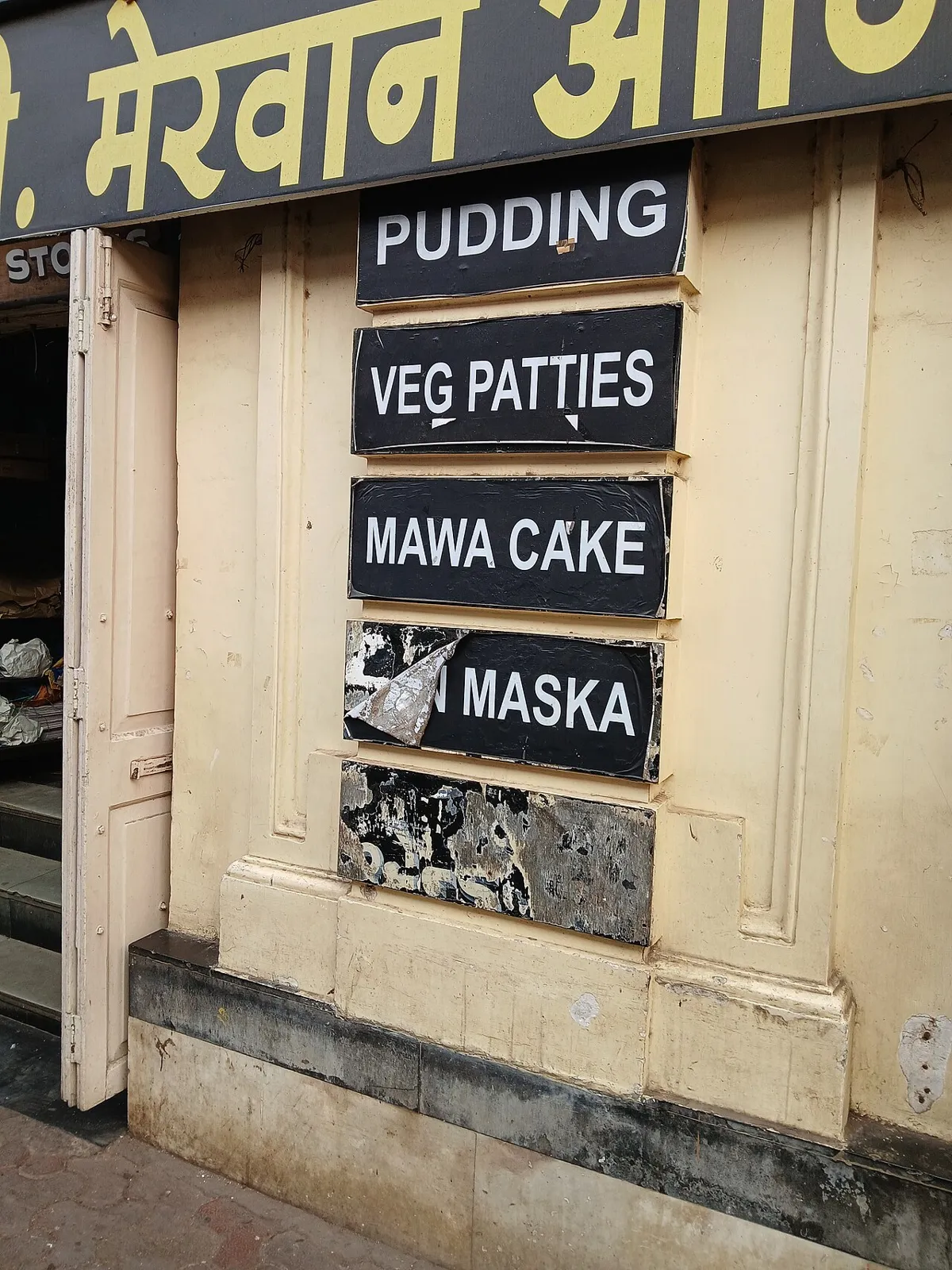
Go early. Al Jazeera reported in 2014 that B Merwan's breads, biscuits and cakes were usually gone by 7 a.m., and Outlook Traveller wrote in 2025 that its buns and puffs tend to disappear by mid-morning.
Then the glass jars of biscuits, which Al Jazeera and Kyoto Journal both describe. What's inside changes from cafe to cafe:
- Shrewsbury biscuits, apple pie and multigrain bread at Yazdani, per The Tribune. Outlook Traveller adds bread pudding.
- Wine-flavoured biscuits and almond sponges at Kyani & Co., per the Mail & Guardian, and kaju nankhatai, per Outlook Traveller.
- Khara biscuit, which TASTE called wafer-like.
Which dessert should you finish with?
Caramel custard, which The Tribune lists at Britannia as lagan nu custard. Deccan Herald quoted the family as saying Britannia's custard follows the mother's recipe, made with cow's milk, cream, sugar and eggs, and the Mail & Guardian's writer called it the best crème caramel of his life. Outlook Traveller lists caramel custard at Cafe Military and a cherry custard at Kyani & Co.
What should you order if you can visit only once?
Our pick is the simple one. Bun maska and chai, with a mawa cake to take away, is the order that runs through nearly every account of these cafes. For how these cafes came to Bombay, read our main guide to the Irani cafes of Mumbai, and for why so many stand on corner plots, our piece on Irani cafes on street corners.
Frequently asked questions
What is the most famous food at an Irani cafe?
Bun maska with Irani chai is the order Irani cafes are best known for. The bun is split, spread thickly with butter and dunked in hot, milky tea. Sahapedia's history of the Bombay cafes names the two together, and The Tribune and Outlook Traveller both put the pair in their headlines.
What is berry pulao made of?
Berry pulao is rice cooked with tart barberries, fried onions, nuts and mutton or chicken, served with a gravy. Britannia & Co. adapted it from the Iranian zereshk polo, which is eaten dry. The Tribune and Deccan Herald both report that Britannia's barberries come from Iran, and The Tribune adds that a vegetarian version is made.
Can vegetarians eat well at an Irani cafe?
Yes, though the choice is narrower. Bun maska and chai are meat-free. The Tribune reports that Britannia makes a vegetarian berry pulao, and Deccan Herald mentions a mixed vegetable stew of French beans, carrots, potatoes and peas. Akuri and caramel custard are egg dishes, so egg-free diners should also ask about the cakes and biscuits.
How is Irani chai different from tea in Iran?
Tea in Iran is served black, without milk or sugar, while the chai at Irani chai shops in India comes with both. Atlas Obscura calls Irani chai an Indian habit for that reason, even though the name points to Iran, and Al Jazeera describes it simply as tea served with milk.


