PalV's Kasti
On this page
Parsi Zoroastrians living in and around New York City set up the Zoroastrian Association of Greater New York (ZAGNY) in 1973. Its roots go back further: a small New York association met in 1929, and Navroz gatherings were held in the city from 1966. In December 1977 the community opened its first Dar-e-Mehr, the Arbab Rustam Guiv Dar-e-Mehr in New Rochelle. It moved to a property in Rockland County in 2001 and opened a new 22,000 sq ft Dar-e-Mehr there in March 2016. In July 2022 ZAGNY co-hosted the 12th World Zoroastrian Congress with FEZANA. Here is how that ZAGNY history unfolded, decade by decade.
શહેરેવર રોજ
Shehrevar Roj, Tir Mah · 1396 Y.Z.
When was ZAGNY founded?
ZAGNY dates itself to 1973, and two outside sources agree. Harvard's Pluralism Project names ZAGNY's formation in 1973 as part of a wider wave of formal Zoroastrian associations in the United States during the 1970s. Religion News Service, reporting on the 2022 World Zoroastrian Congress, gives the same year and describes the founders as Parsi Zoroastrians mostly from India and Pakistan.
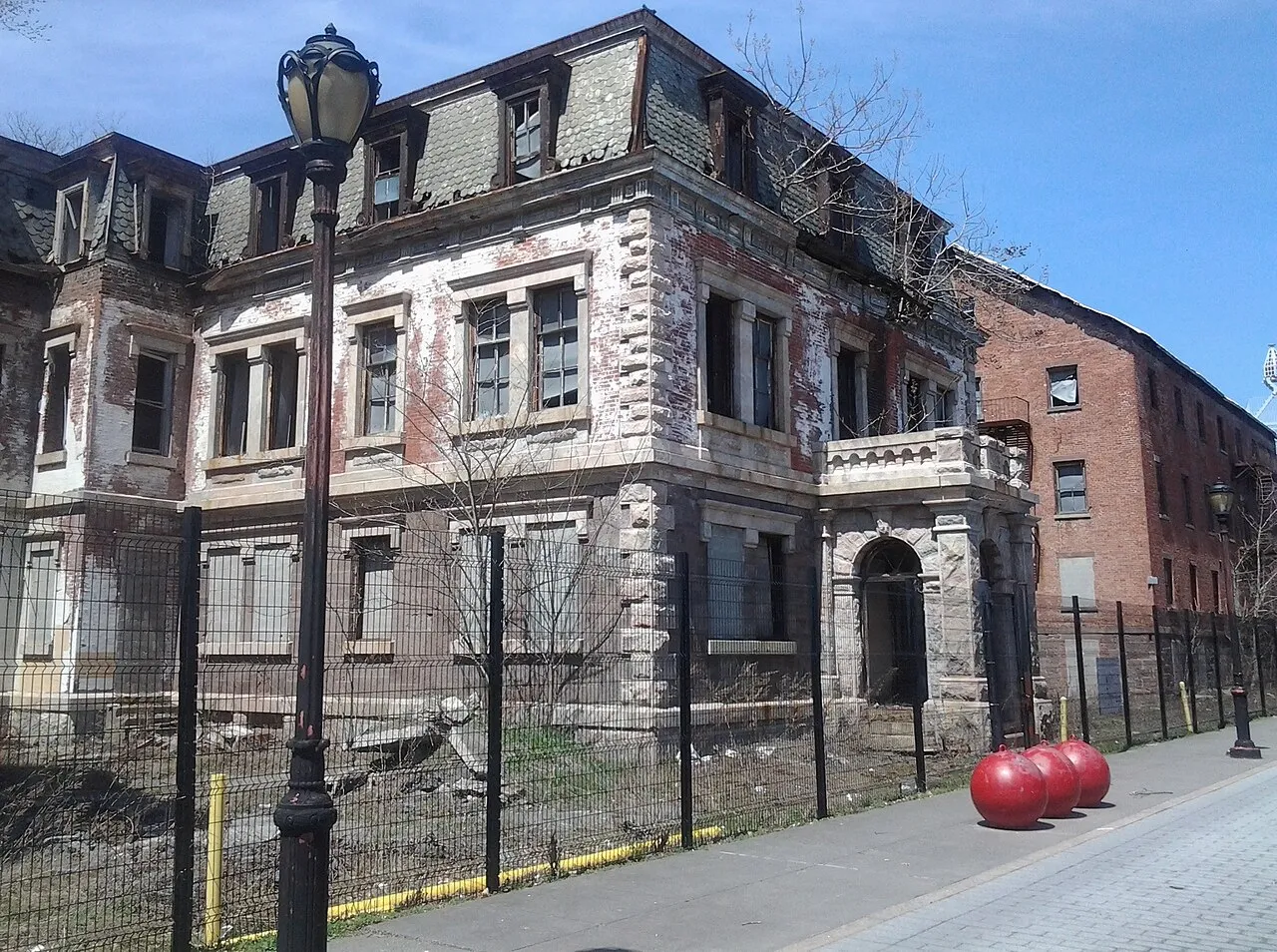
According to ZAGNY's own history, about 20 people met that year at the Staten Island home of Naval and Pervize Sidhwa and chose a nine-member committee. Erach Munshi was president of that first board. A lawyer, Lyle Stewart, helped with the incorporation without charge. The same account says religion classes for children began in 1973 and have run ever since, meeting on the first Sunday of each month from September to June.
Was there a Zoroastrian association in New York before 1973?
Yes, briefly. The Pluralism Project and ZAGNY both record that seven Zoroastrians met on 10 November 1929 in the New York living room of Phiroze Saklatwala to form an association. ZAGNY says the group dissolved after his death, as he had been both its founder and its main funder. His death came as the Great Depression began.
The next stretch is documented only in ZAGNY's account. In 1966 a brother and sister, Homi and Veera Dalal, arranged a Navroz function at International House, a hall that cost $5 to rent and held 50 people. From 1968 to 1972 the gatherings moved to Butler Hall at Columbia University, which could seat 100.
How did the first Dar-e-Mehr in New Rochelle come about?
The first building came from a donor whose name it still carries, Arbab Rustam Guiv. On the amount, the sources differ. ZAGNY's history says talks with Arbab Rustam Guiv and Khanum Morvarid Guiv began after a 1975 dinner, and that Arbab Guiv pledged $92,000, later raised to $125,000. ZAGNY lists the two as its founding benefactors. The Rockland County Times, reporting in April 2016, said he contributed $180,000 to buy the house. We give both figures because neither source explains the gap.
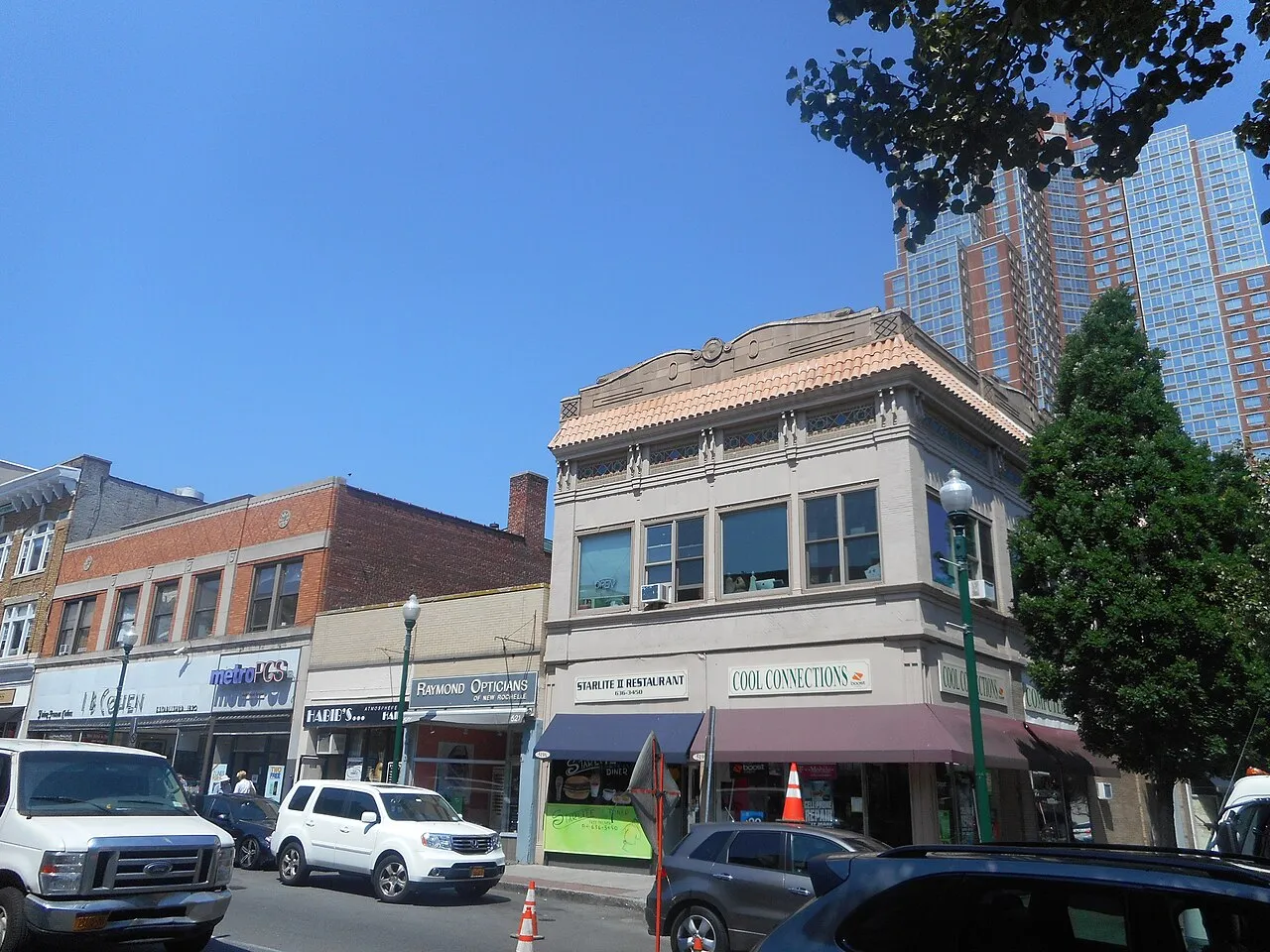
ZAGNY says the community bought a house at 246 Weyman Avenue, New Rochelle, in May 1977, and that a separate body, the Dar-e-Mehr Zoroastrian Temple (DMZT), was incorporated under New York State law the same year. The Pluralism Project lists the Arbab Rustom Guiv Darbe Mehr as following ZAGNY in 1977. The Rockland County Times gives the opening date as 3 December 1977, with more than 200 people present, and calls it the first Zoroastrian Dar-e-Mehr in North America. ZAGNY also dates the inauguration to December 1977 and adds that Nani A. Palkhivala, then India's Ambassador to the United States, attended.
A Dar-e-Mehr, as the 2016 Rockland report explains it, is a Zoroastrian place of worship without a permanently consecrated fire.
ZAGNY's history also records a dispute over the building. After Arbab Rustam Guiv died, the Guiv Foundation claimed ownership, and DMZT was confirmed as owner after a five-year legal fight that included an appeal to the New York Supreme Court. We have only ZAGNY's account of this case.
What did ZAGNY build in its first decades?
By ZAGNY's own timeline, the 1970s to the 1990s were about programmes as much as property. It hosted the Third North American Zoroastrian Congress in 1979, for which registration was $19.50. In 1982 it started the Ivy F. Gandhi Zoroastrian Kids Camp and a Good Life Program approved by the Boy Scouts of America. It went on to host the 11th North American Congress in 1998.
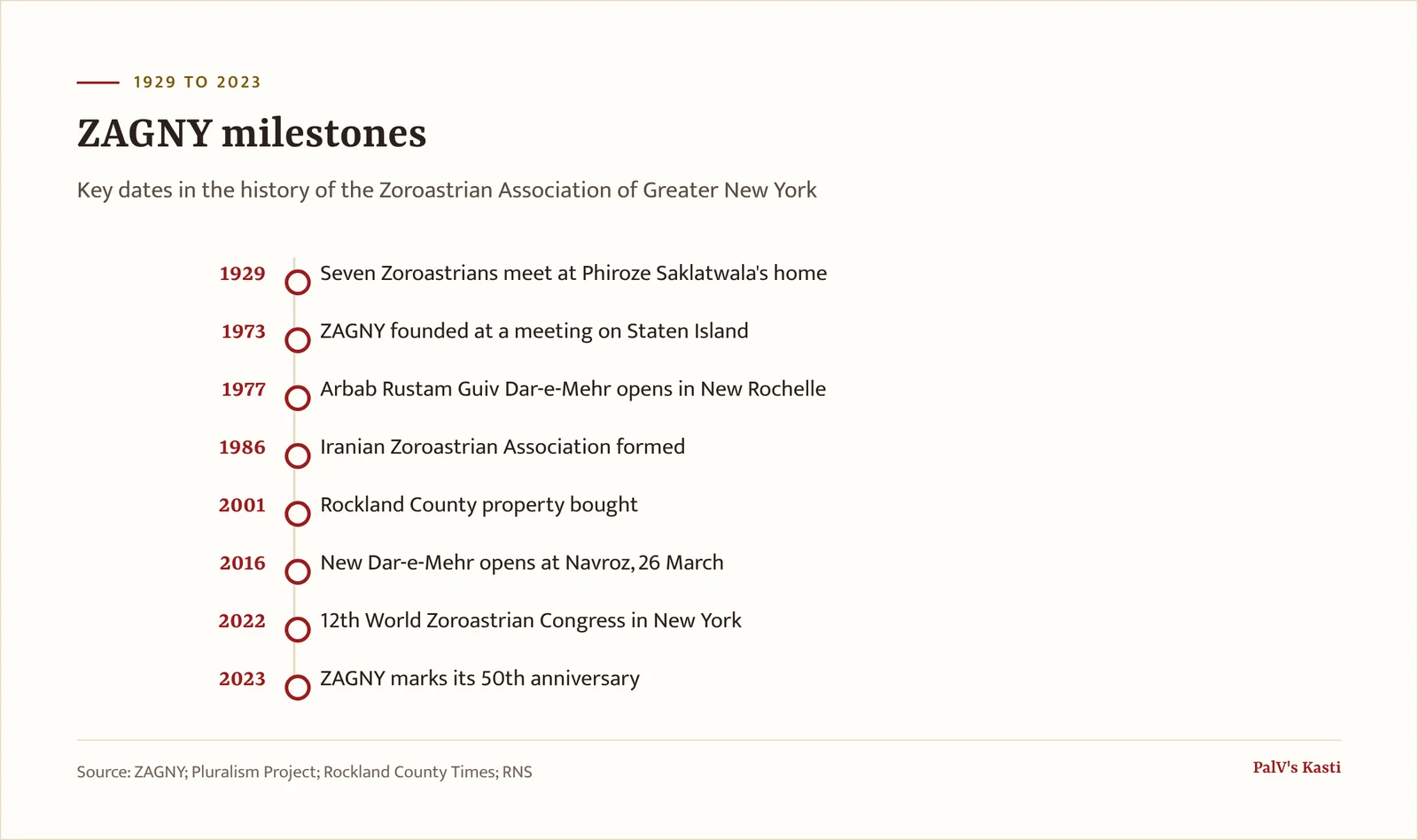
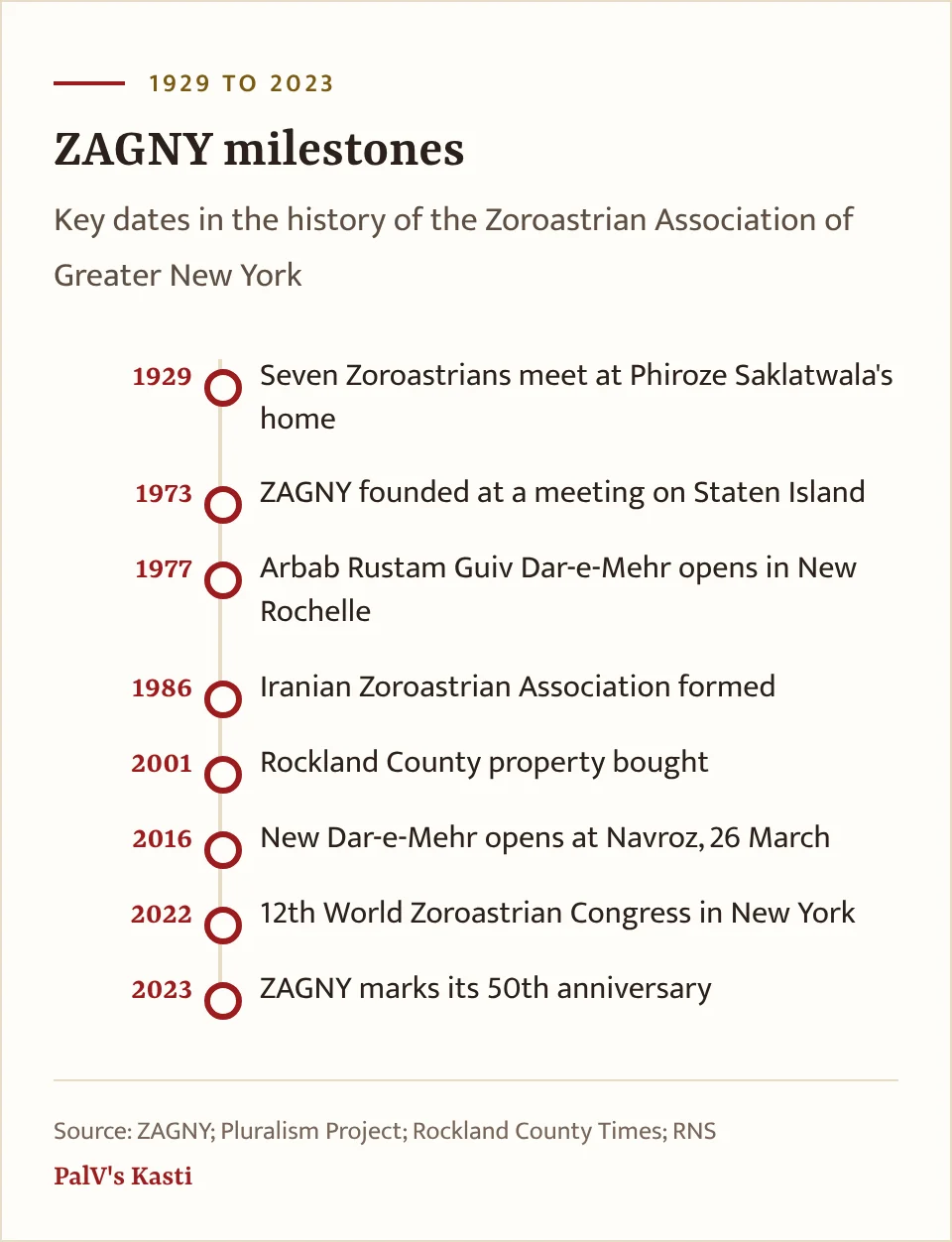
In 1986, ZAGNY says, Iranian Zoroastrians in the area formed their own body, the Iranian Zoroastrian Association (IZA). The two now share one Dar-e-Mehr. The Rockland County Times named ZAGNY, IZA and DMZT as joint hosts of the 2016 opening, and FEZANA today lists the Dar-e-Mehr under both ZAGNY and IZA.
Why did ZAGNY move from New Rochelle to Rockland County?
Space was the problem. ZAGNY's history says the New Rochelle Fire Department set a 99-person occupancy limit on the building in 1999. Fourteen families formed a company, Z-Land LLC, and put in $220,000 between them towards a new site.
At a special meeting on 10 December 2000, members approved buying the Pomona property for $1.2 million. ZAGNY says the deal for 106 Pomona Road closed on 16 March 2001, and the Rockland County Times also dates the Pomona purchase to 2001. The old New Rochelle house was sold on 12 July 2002 for $610,000, according to ZAGNY. By the Rockland report's count, it had served the community for 23 years.
When did the new Dar-e-Mehr open?
Groundbreaking took place on 29 March 2014, ZAGNY says. ZAGNY dates the inauguration to 26 March 2016, and the Rockland County Times placed it in Navroz week that year. Both describe thirty priests blessing the building. The newspaper reported about 600 people at the opening, from New York, New Jersey and Connecticut, and said Vada Dasturji Khurshed Dastoor had joined them from Udvada.
The same report describes the building, designed by architect Dinyar Wadia, as 22,000 sq ft with four classrooms, three meeting rooms, a library, a prayer hall and a main hall for up to 400 guests. It put the community in the tri-state area at about 1,000 members in 2016. We have not found a later figure.
What has ZAGNY done since 2016?
ZAGNY's history lists these milestones for the decade after the new building opened:
- An operations and maintenance fund launched in 2017 with a $1 million target over five years, which ZAGNY says it met by March 2023.
- A bequest from the estate of the philosophy professor Kaikhosrov D. Irani, who died on 29 June 2017, of about $545,000 by June 2023, restricted to education.
- In April 2020, at its first virtual annual meeting, the election of Dr Khursheed Navder as ZAGNY's second woman president, 36 years after Ivy Gandhi.
- A 50th anniversary celebration on 16 September 2023 with more than 425 guests.
Prof. Irani's own books and papers went elsewhere. City College of New York Libraries says it received about 45 boxes of books and 20 boxes of his writings from his estate on 18 December 2018, and has since digitised selected writings.
Did ZAGNY host the World Zoroastrian Congress?
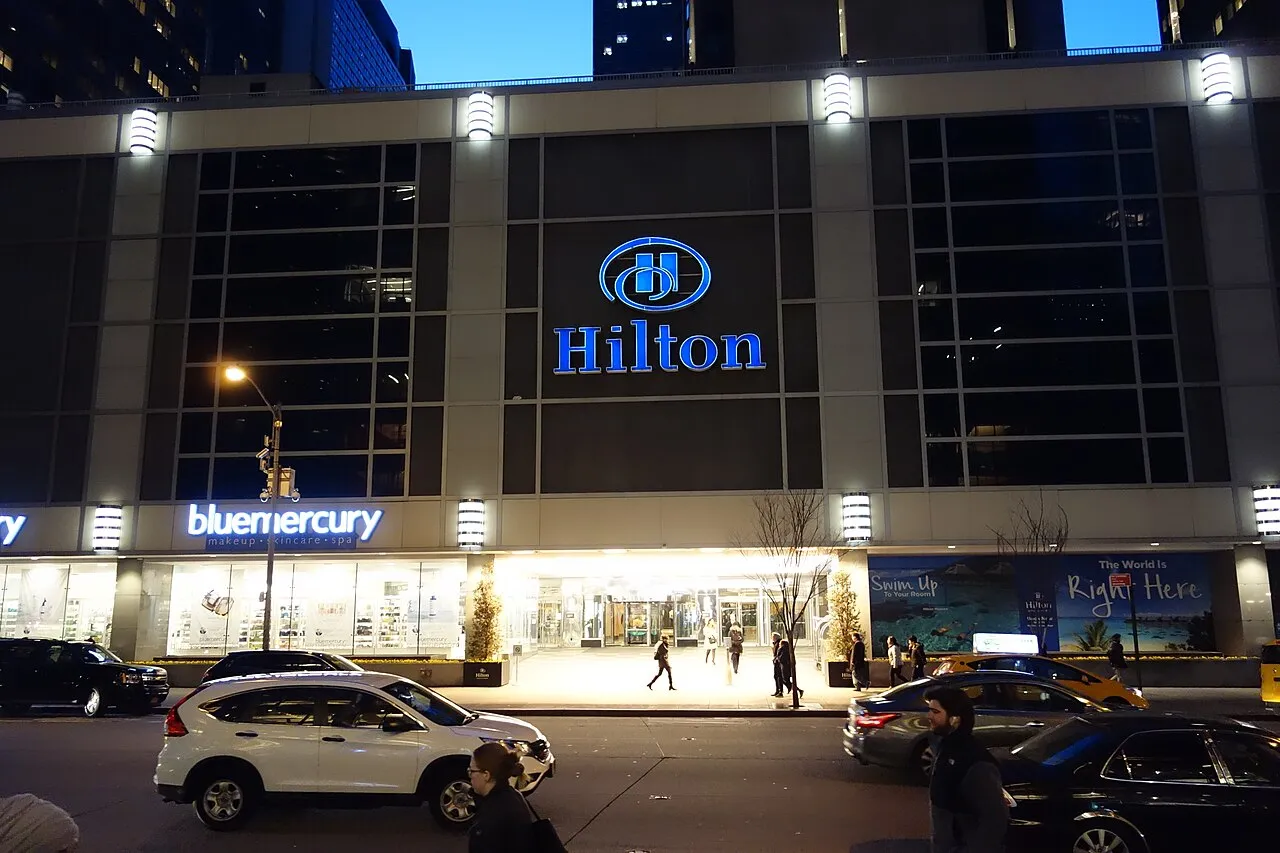
Yes, as co-host. Religion News Service reported that FEZANA, in partnership with ZAGNY, held the 12th World Zoroastrian Congress from 1 to 4 July 2022 at the New York Hilton Midtown. It drew more than 1,200 attendees from 16 countries and was the first World Zoroastrian Congress in North America since 2000. ZAGNY's history gives nearly 1,200 participants from 16 nations.
Where is ZAGNY today?
FEZANA, the federation of North American Zoroastrian associations, lists ZAGNY as a member association at Suffern, New York, with the Arbab Rustam Guiv Dar-e-Mehr shared by ZAGNY and IZA. News reports call the location Pomona. Both names point to the same site in Rockland County, which ZAGNY's history gives as 106 Pomona Road, Suffern. For current timings, classes and office-bearers, ZAGNY's own website is the place to check. We have not named the present leadership because we could not confirm it from a 2025 or 2026 source.
ZAGNY's story is one chapter in a much larger movement of Parsis and Iranis out of India, Pakistan and Iran, which we trace in our guide to the Zoroastrian diaspora.
Frequently asked questions
When was ZAGNY founded?
The Zoroastrian Association of Greater New York was founded in 1973. ZAGNY's own history, Harvard's Pluralism Project and Religion News Service all give that year. About 20 Parsi Zoroastrians met at a home on Staten Island to set it up, and Erach Munshi became president of the first board, according to ZAGNY.
Where is the ZAGNY Dar-e-Mehr?
The Arbab Rustam Guiv Dar-e-Mehr is in Rockland County, New York. FEZANA lists it at Suffern, and news reports call the area Pomona. ZAGNY bought the property in 2001 and opened a new 22,000 sq ft building there on 26 March 2016. The first Dar-e-Mehr, opened in 1977, was in New Rochelle.
Who was Arbab Rustam Guiv?
Arbab Rustam Guiv was the donor behind ZAGNY's first Dar-e-Mehr, opened in New Rochelle in December 1977, and the Dar-e-Mehr still carries his name. ZAGNY lists him and Khanum Morvarid Guiv as founding benefactors. Sources differ on the amount: ZAGNY says he pledged $92,000, later $125,000, while the Rockland County Times reported $180,000.
What was the first Zoroastrian association in America?
The Pluralism Project and ZAGNY both record a small association formed by seven Zoroastrians in New York on 10 November 1929, in the home of Phiroze Saklatwala. ZAGNY says it dissolved after his death. The Pluralism Project also records that thirty Chicago-area Zoroastrians formed the Zoroastrian Association of America on 23 May 1965, though it disbanded within a few years.
Did ZAGNY host the World Zoroastrian Congress?
Yes. ZAGNY co-hosted the 12th World Zoroastrian Congress with FEZANA from 1 to 4 July 2022 at the New York Hilton Midtown. Religion News Service reported more than 1,200 attendees from 16 countries, and noted it was the first World Zoroastrian Congress held in North America since the year 2000.