PalV's Kasti
On this page
- What is the Bombay Parsi Panchayat?
- What does "panchayat" mean, and why is it spelt "Punchayet"?
- When was the Bombay Parsi Panchayat founded?
- How did a dispute council become a charitable trust?
- What does the BPP do today?
- How big is the Bombay Parsi Panchayat?
- Who runs the BPP, and how are trustees chosen?
- Where is the Bombay Parsi Panchayat office?
- Frequently asked questions
શહેરેવર રોજ
Shehrevar Roj, Tir Mah · 1396 Y.Z.
What is the Bombay Parsi Panchayat?
The Bombay Parsi Panchayat (BPP), which spells its own name Bombay Parsi Punchayet, is the community trust of Mumbai's Parsis. It started life as a small council that settled disputes inside the community. Since 1884 it has been a trust holding property given for religious and charitable purposes, and its election scheme gives its legal name as the "Funds and Immoveable Properties of the Parsee Punchayet of Bombay" and calls it a registered public charitable trust. Seven trustees, elected by registered Parsi voters, run it. According to its website, it manages housing, the Doongerwadi estate at Malabar Hill, and medical and education aid. Encyclopaedia Iranica calls it "the largest Zoroastrian institution in modern history."
This page is our overview. Two companion articles go deeper: one on BPP history 1860–1960, and one on how the BPP is run now.
What does "panchayat" mean, and why is it spelt "Punchayet"?
Encyclopaedia Iranica defines a panchayat as government of a caste or community by five people, a traditional Indian form. The BPP's own history says the first Parsi council was a "caste – council" of five men.
In 1908 a Bombay High Court judge made the same point from the bench. In Sir Dinshaw Manockji Petit v. Sir Jamsetji Jeejeebhoy, decided on 27 November 1908, Justice Davar wrote that such an institution "was wholly unknown to ancient Persians" and called it "essentially Indian."
Parsi Panchayat, Parsi Punchayet, Parsee Punchayet: all of these name the same body. The trust uses "Punchayet" on its website and in its legal title. Iranica writes "Panchayat", while the Free Press Journal, in its 2026 reports, keeps "Punchayet". You'll also meet the word anjuman. In the older Bombay system, Iranica explains, community rules were agreed at public meetings called anjumans, and the panchayat acted on them.
When was the Bombay Parsi Panchayat founded?
The two main sources don't give quite the same answer, so here are both.
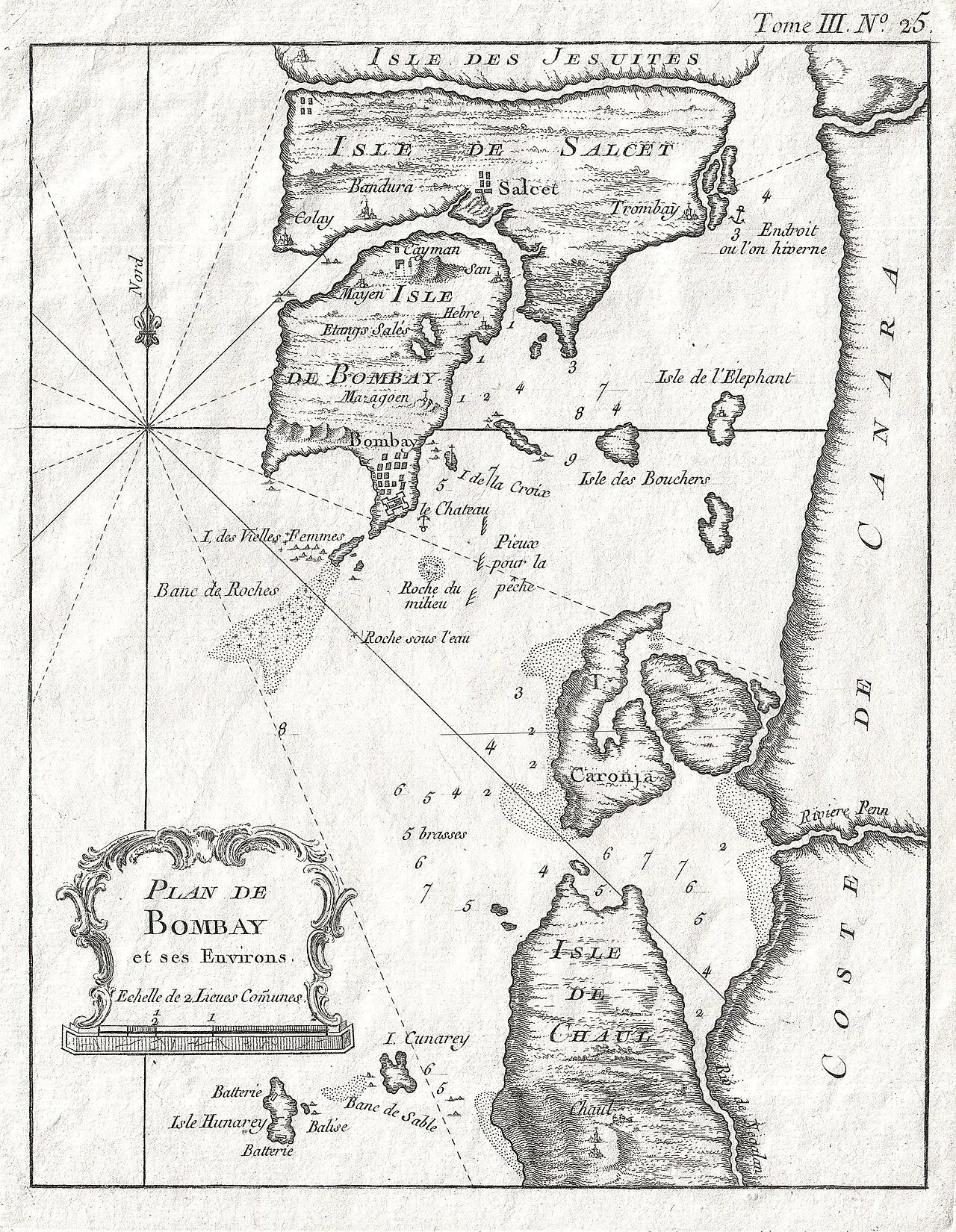
- The BPP's website says it was formed in 1672 at the behest of Gerald Aungier, then the British Governor, who asked several communities to set up councils to keep order among their own people.
- Encyclopaedia Iranica (J. R. Hinnells, 1989) says the earliest Parsi panchayat in Bombay is commonly dated to the 1670s, and adds that no 17th-century records survive.
So 1672 is the year the BPP itself uses. Both sources agree on the decade. The exact year rests on the BPP's own account.
How did a dispute council become a charitable trust?
The main steps, as recorded by the BPP and by Iranica:

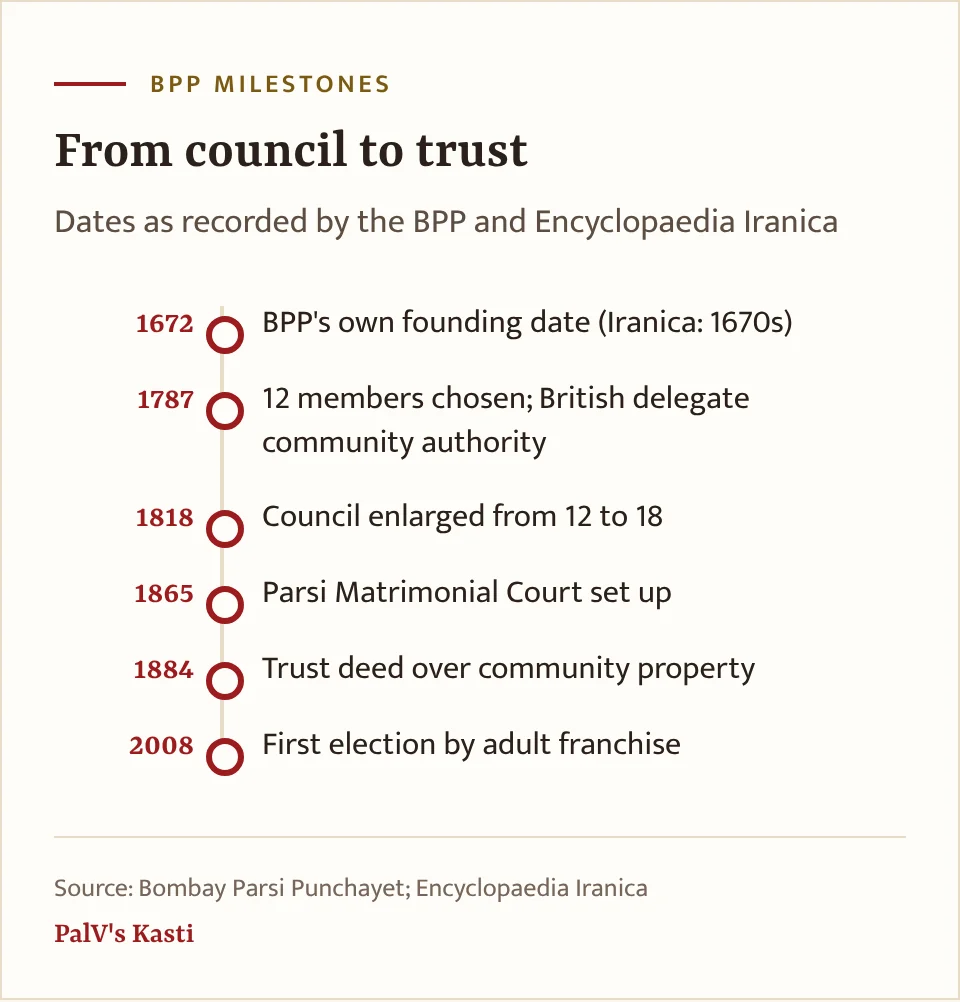
- 1778. The BPP says its members petitioned the Governor as the "Managers of the Punchayet of Parsis at Bombay".
- 1787. The British handed authority over community matters to the panchayats of the caste groups (Iranica). The BPP records that 12 members were chosen on 1 January 1787, six of them practising priests.
- 1818. The council grew from 12 to 18 members, a change both the BPP and Iranica record.
- 1826. After the death of the leader Hormusji Bomanji Wadia, Iranica says, members began to inherit their seats.
- 1865. The Parsi Matrimonial Court was set up. Iranica treats this as the effective end of the Panchayat's role as guardian of community law.
- 1884. A formal trust deed brought its movable and immovable property, including the lands of the Towers of Silence, under one trust. The Bombay High Court still referred to the "Deed of Trust of 1884" in a 2011 judgment.
The BPP's history lists the matters the council once adjudicated: marital discord, adoption, succession, domestic strife and land disputes. After 1884 its job changed. In the BPP's words, it became the recognised custodian and manager of property given to it "for religious, benevolent and other purposes".
One more change came out of a suit filed in the Bombay High Court in November 1906 over rights claimed for R. D. Tata's French wife, whom Iranica names as Susanne Brier. Iranica records that the court found against Mrs Tata but also held that the Panchayat's members had not been legally chosen, and that an electoral college, with votes weighted by donations, came to select them. We tell this period in full in BPP history 1860–1960.
What does the BPP do today?
According to its own website, the BPP's services today include:
- Housing. Application forms for BPP flats on leave and licence, for exchanging one BPP flat for another, and for buying ownership flats in Buildings A and B at Panthaky Baug, Andheri. Our guide to Parsi baugs covers the colonies themselves.
- Doongerwadi. The BPP manages the Doongerwadi estate on Gibbs Road, Malabar Hill, which its website describes as "approximately 57 acres" (another line on the same page says 58). More than 100 staff work there in shifts.
- Medical help. A lump sum, once a year, for Parsi and Irani Zoroastrians who can't afford treatment. Applicants submit income papers and a cost estimate from the hospital or doctor, and the trustees decide each case.
- Certificates and religious items. Death certificates, minority certificates, Kusti and Kusti wool, religious books and Avesta classes.
- Education and institutions. Education help and child finance, the Gamadia Boys Hostel, the F. S. Parukh Dharamshala, the Gamadia Poly Clinic, Sir JJ College of Commerce and the Framji Dadabhoy Alpaiwalla Museum all appear in its list of services.
Writing in Encyclopaedia Iranica in 1989, J. R. Hinnells said its 20th-century prestige rested on charity: it supported hospitals, hostels, schools and a madressa for training priests, and paid for temples, funeral grounds and help to poor Parsis. The wider story of community giving is in our article on Parsi charitable trusts.
How big is the Bombay Parsi Panchayat?
We could not find a recent official figure for its total assets or number of endowments, so the numbers below are dated snapshots, each from the source named.
- 1961: about 1,000 endowments administered, some in rural Gujarat (Iranica).
- 1980s: 1,797 flats administered, with its work overseen by 24 committees (Iranica, 1989).
- 1983: assets estimated at Rs 88,090,560, with about 200 staff in its Bombay offices (Iranica).
- 2026: "nearly 4,500 trust-owned flats" across Mumbai's Parsi baugs, about 1,900 of them on leave and licence and the rest tenanted (Free Press Journal, 13 July 2026).
Who runs the BPP, and how are trustees chosen?
Seven trustees run the BPP. That number is fixed by the election scheme the trust publishes on its website, which also sets a five-year term.
For 97 years, the BPP says, trustees were elected every seven years through that electoral college. In 2008 it held its first elections by adult franchise, letting community members vote directly for the seven. The most recent election was on 29 May 2022, and the BPP's list of boards shows the current trustees' terms running to 29 May 2027.
Voting has two registers. A general voter has one vote. A donor voter, who has personally given a single donation of Rs 10 lakh or more, has one vote "counted as two", in the words of the scheme. Nobody can be on both registers at the same time. Eligibility, the election rules and the chairman's role are explained in how the BPP is run, along with the 2026 board split over converting leave-and-licence flats to tenancies.
Where is the Bombay Parsi Panchayat office?
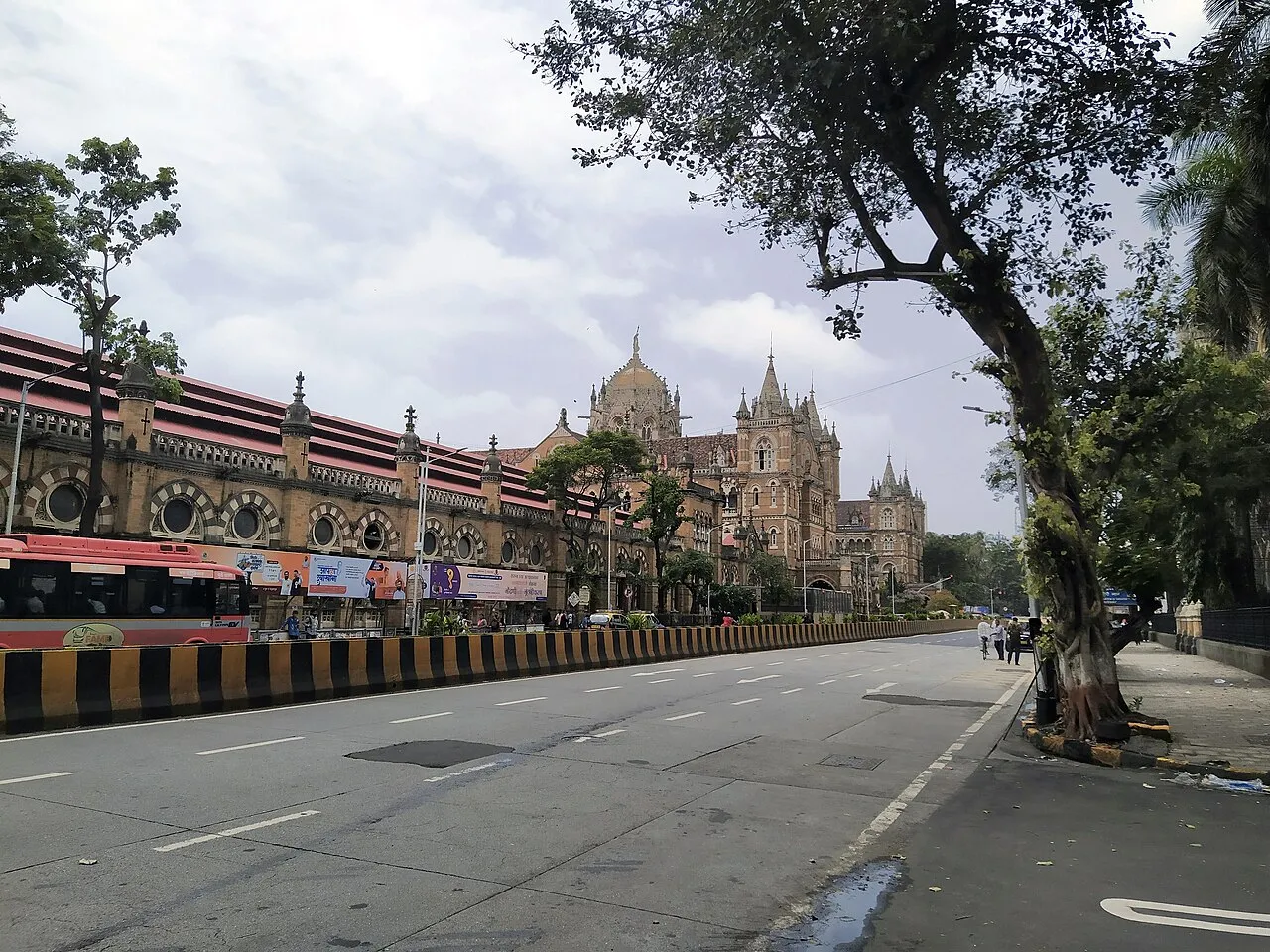
The BPP's head office is at 209, Dr. D. N. Road (Dr Dadabhai Naoroji Road), Fort, Mumbai 400001. Its website lists the phone numbers 022-22617421, 22 and 23, and the email queries@bombayparsipunchayet.org. A sub-office runs from the F. S. Parukh Dharamshala building at Khareghat Colony, and the Lady Jehangir Gamadia Health Unit is at Gamadia Colony, Tardeo.
Frequently asked questions
What is the Parsi Panchayat?
The Bombay Parsi Panchayat (BPP), which calls itself the Parsi Punchayet, is the community trust of Mumbai's Parsis. It began as a council that judged disputes within the community and, since a trust deed of 1884, has managed property given for religious, benevolent and other purposes. Seven elected trustees now run it, and it handles housing, Doongerwadi and welfare aid.
Is it "Punchayet" or "Panchayat"?
Both spellings name the same body. The trust writes Bombay Parsi Punchayet, and its legal name is the Funds and Immoveable Properties of the Parsee Punchayet of Bombay. Encyclopaedia Iranica uses Panchayat, and the legal name keeps the older spelling Parsee. Search for either and you'll reach the same institution, whose head office is in Fort, Mumbai.
When was the Bombay Parsi Panchayat founded?
The BPP's website says it was formed in 1672 at the request of Governor Gerald Aungier. Encyclopaedia Iranica dates the first Parsi panchayat in Bombay to the 1670s but notes that no 17th-century records survive. Its present form as a trust dates from a formal trust deed of 1884, which the Bombay High Court cited in a 2011 judgment.
Who can vote in BPP elections?
Parsis holding a BPP voter certificate can vote, either on the general register with one vote or on the donor register, where a single personal donation of Rs 10 lakh or more gives one vote counted as two. Nobody can be on both registers at the same time. A scheme approved by the Bombay High Court sets the rules.
How many flats does the BPP have?
The Free Press Journal reported in July 2026 that the BPP owns nearly 4,500 flats across Mumbai's Parsi baugs, about 1,900 of them on leave and licence and the rest tenanted. For comparison, Encyclopaedia Iranica recorded 1,797 flats in the 1980s. The BPP's website offers forms for leave-and-licence flats and for exchanging flats.
Where is the BPP office?
The head office of the Bombay Parsi Panchayat is at 209, Dr. D. N. Road, Fort, Mumbai 400001. Its website gives the phone numbers 022-22617421, 22 and 23 and the email address queries@bombayparsipunchayet.org. A sub-office works from the Parukh Dharamshala building at Khareghat Colony.