 PalV's Kasti
On this page
- What was served at Chennai's Parsi community banquets?
- Where does the banana leaf come into Parsi food?
- How did living in Chennai change Parsi home cooking?
- Which Parsi dishes were Chennai families losing?
- Could you eat Parsi food at a restaurant in Chennai?
- Did old Parsi cookbooks include Madras dishes?
- Frequently asked questions
Chennai Parsi food was, above all, home food and banquet food. In April 2016 The News Minute reported that only about 200 Parsis lived in Chennai, and that they kept their cuisine going in two places: their own kitchens, and monthly community banquets where dhansak, pulao and lagan nu custard were served. Parsi restaurants were scarce. The banana leaf belongs to the wider Parsi feast: Outlook Traveller and Dawn both describe feast food served on a banana leaf, and patra ni machhi is steamed inside one. Chennai families, the report found, also leaned on chicken and vegetarian versions of dishes, partly because many guests in the city eat vegetarian.
This post looks at the food. For the community's history in the city, read our page on the Parsis of Chennai, and for the cuisine as a whole, start with Parsi food.
અદીબેહેસત રોજ
Ardibehesht Roj, Tir Mah · 1396 Y.Z.
What was served at Chennai's Parsi community banquets?
The monthly banquets were the centre of Parsi eating in Chennai. The News Minute's 2016 report, written by Gitika Gitanjali, names dhansak, pulao and lagan nu custard (a caramelised custard) as the dishes the community gathered for. Mahair Shroff, a Parsi caterer who cooked for these events, told the paper that the banquet was the only place a Parsi in Chennai could sit down to a full Parsi meal away from home.
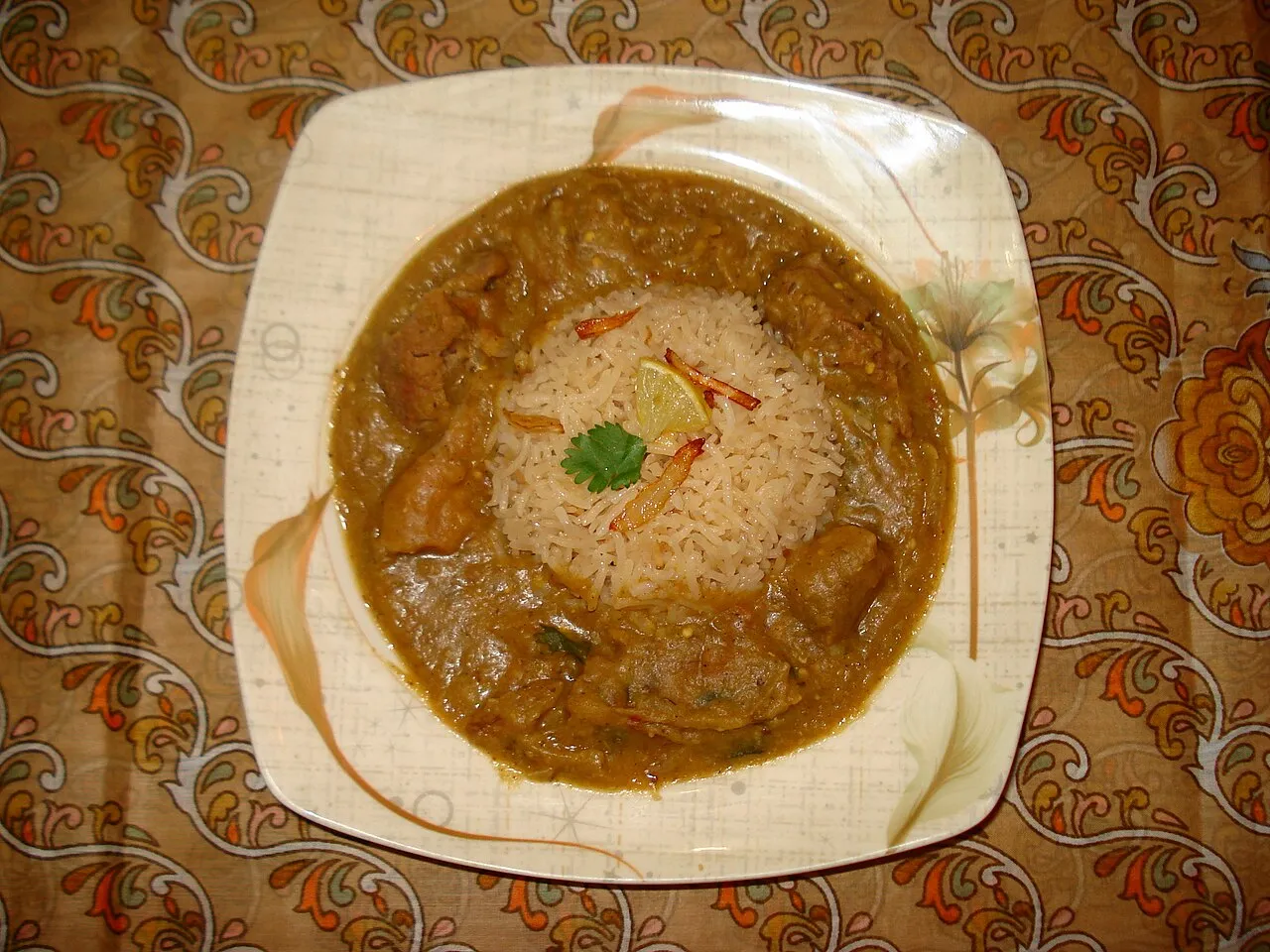
The dhansak described in that report is the classic version: meat cooked with vegetables and four dals (arhar, Bengal gram, red masoor and brown masoor), usually served with caramelised brown rice and kachumbar. Zavera Shahuna, a former schoolteacher quoted in the piece, reached for a local comparison and said dhansak looks similar to sambar.
Other dishes the article lists as part of Parsi cooking in Chennai homes:
- Sali boti, mutton curry topped with crisp potato straws
- Sali par edu, eggs baked over kheema, described in the report as cupcakes finished with potato straws
- Masoor ma gos, mutton cooked with masoor dal
- Patra ni machhi, pomfret coated in green chutney and steamed in a banana leaf
Where does the banana leaf come into Parsi food?
The banana leaf is part of the Parsi feast everywhere, not only in the south. Writing in Outlook Traveller in 2018, Shabnam Minwalla explained that the Parsi wedding feast is called a patra because it is served on a banana leaf, with damp leaves laid over white tablecloths before the call of "Jamva chaloji". Dawn's 2011 feature on Parsi feasts in Pakistan and India says the same of community meals: the food goes on a banana leaf instead of a plate, at long parallel tables with diners on one side and servers moving down the channel between them.
Gahambars are the six seasonal feasts of the Zoroastrian year, according to both Encyclopaedia Iranica and Dawn. Iranica says the religious services were followed by communal banquets where the consecrated food was shared, and Dawn describes the whole community coming together for the same meal. Meher Mirza's 2021 piece in Saveur pictures gahambar diners eating off banana leaves well into the night. The leaf also turns up inside the food, as the wrapper for patra ni machhi.
One honest gap: The News Minute's report does not describe how the Chennai banquets were laid out, so we cannot say whether they used banana leaves or plates. For more on how Bawas host and serve, see our guide to Parsi bhonu culture.
Practice varies between families and Agiaries; your family priest's guidance comes first.
How did living in Chennai change Parsi home cooking?
According to the people The News Minute interviewed, Chennai pushed Parsi kitchens towards chicken and vegetarian versions. Tehnaz Bahadurji, who had lived in the city for 30 years when The News Minute spoke to her, said Parsi food is basically non-vegetarian, and that having vegetarian guests, common in Chennai, was a real worry for a Parsi host. Kashmira Dubash, then 28 and living in Thiruvanmiyur, said her family ate mutton or chicken about twice a week.

The report notes that masoor ma gos was often made with chicken or scrambled egg in place of mutton. Zavera Shahuna said a vegetarian or chicken dhansak had become acceptable in her circle, though in her view it never tasted like the original. Convenience mattered too: Dubash said she would rather cook with what was already in her fridge than hunt across the city for ingredients a traditional recipe needs.
Which Parsi dishes were Chennai families losing?
Sweets were the clearest loss in that report. "We have lost many traditional Parsi foods," Tehnaz Bahadurji told The News Minute, and the paper added that the younger generation barely recognised the old sweets. Two she named, dal ni pori and khajur ni ghari, were by then mostly bought from shops in Mumbai or Pune instead of being made at home. The paper also noted that hard-to-find ingredients were pushing younger cooks towards easier food. Why Parsi cooking later came back into fashion elsewhere is a separate story, told in our page on the Parsi food revival.
Could you eat Parsi food at a restaurant in Chennai?
Rarely, going by the 2016 report. Kashmira Dubash put it down to numbers: with so few Parsis, hardly anyone in the community ran restaurants. The News Minute also observed that several Chennai cafes advertising Parsi cuisine were in fact serving Iranian food. In 2016 the paper singled out one newcomer, Batlivala and Khanabhoy, a vintage-styled restaurant whose owner, Uday Balaji, spoke of understanding the nuances of the cuisine. On its non-vegetarian menu, chicken stood in for mutton. We could not confirm whether it still operates, so check before you go.
Did old Parsi cookbooks include Madras dishes?
At least one did. Murali Ranganathan, writing in Scroll in 2020, says the Gujarati cookbook Vividha Vaani, self-published by a Parsi woman named Meherbai, first appeared on 9 August 1894 with 1,248 recipes. He notes that alongside Goan and Bohri recipes it carried a number of Madrasi items. So a Parsi kitchen in Bombay was already borrowing from the south in the 1890s. If you want to cook the classics yourself, our collection of Parsi recipes is the place to start.
Frequently asked questions
How many Parsis live in Chennai?
The News Minute put the figure at around 200 Parsis in a report published in April 2016. That estimate came from a food feature rather than a census count, so treat it as approximate. A community that small explains why Parsi food in Chennai lives mainly in homes and at monthly banquets, not in restaurants.
Why is Parsi wedding food served on a banana leaf?
Outlook Traveller explains that the Parsi wedding feast is even called a patra because it is served on a banana leaf. Dawn describes the same custom at community meals in Pakistan and much of India, with leaves used instead of plates along long parallel tables, and servers walking the channel between them.
What is patra ni machhi?
Patra ni machhi is pomfret coated in a green coconut chutney, wrapped in a banana leaf and steamed. Outlook Traveller names it as one of the fish courses at a Parsi wedding feast, and The News Minute listed it among the dishes Chennai Parsis cooked. The banana leaf is both wrapper and cooking vessel here.
Is Parsi dhansak like sambar?
A Chennai Parsi quoted by The News Minute said dhansak looks similar to sambar. The two are different dishes, though. The dhansak in that report is meat and vegetables cooked with four kinds of dal (arhar, Bengal gram, red and brown masoor), usually eaten with caramelised brown rice and kachumbar.


