PalV's Kasti

On this page
Chronicle of a Corpse Bearer is Cyrus Mistry's 2012 novel, published by Aleph, about a priest's son in pre-Independence Bombay who becomes a khandia, one of the men who carry the Parsi dead to the Tower of Silence. Through its narrator, Phiroze Elchidana, the book shows khandias as a group living at the edge of Parsi society, and shows what it costs a man to cross into their work. It won the DSC Prize for South Asian Literature in January 2014. Its two main reviewers disagreed on how well it portrays khandias, and one of them pointed out that the novel is set in a more orthodox time than today.
અસપંદામેદ રોજ
Asfandarmad Roj, Tir Mah · 1396 Y.Z.
What is Chronicle of a Corpse Bearer about?
The narrator is Phiroze Elchidana, called Elchi, the son of a revered Parsi priest. As Bakhtiar K. Dadabhoy summarises it in Outlook, Elchi falls in love with Sepideh (Seppy), whose father Temoorus is a khandia. Temoorus agrees to the marriage on one condition: Elchi must take up his work. He does. Seppy dies of snakebite not long after their daughter, Farida, is born.
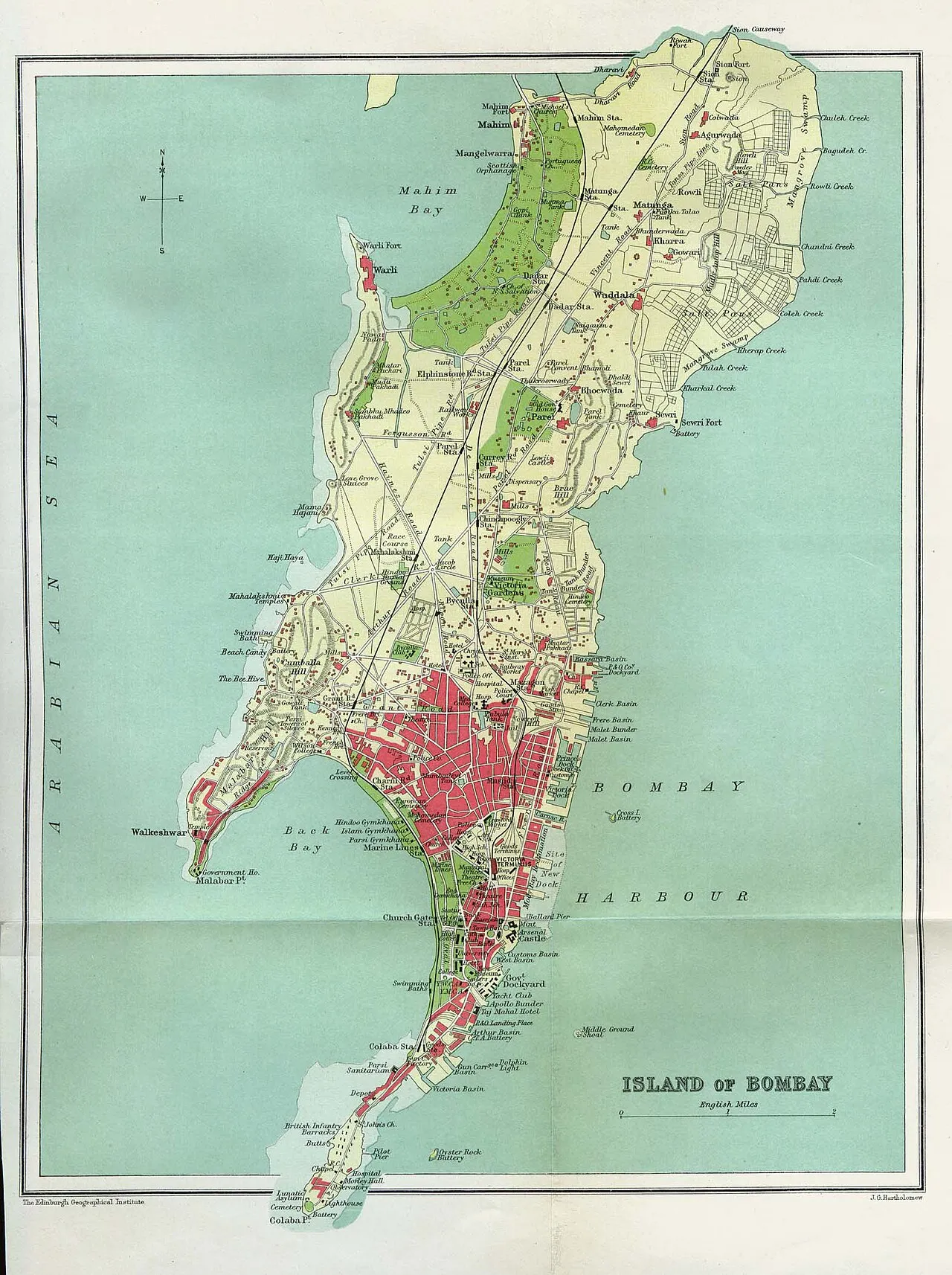
Most of the book is Elchi looking back. Business Standard's reviewer, Deepa Dharmadhikari, noted that the main tragedies arrive within the first ten pages, and she described Elchi as the idle younger son of a priest, estranged from his devout father. Outlook places the story before Independence, and the Press Trust of India's prize report says it is set in Mumbai, then Bombay.
Who wrote it, and what prize did it win?
Cyrus Mistry is a Mumbai-born novelist and playwright, and the brother of the novelist Rohinton Mistry. Open magazine's 2019 profile calls Chronicle his second novel, the book that brought him recognition in 2012. Business Standard's review lists it as an Aleph/Rupa title of 224 pages, priced at Rs 495.
On 18 January 2014, the Press Trust of India reported that Mistry had won the DSC Prize for South Asian Literature, worth US$50,000, at a ceremony at the Jaipur Literature Festival. He was the fourth winner of the prize. A five-member jury chaired by the writer and critic Antara Dev Sen chose the book from a shortlist of six that included Mohsin Hamid and Nadeem Aslam. After receiving the award, Mistry said he had tried to stay detached about the possibility of winning.
Open's profile notes that he went on to publish a story collection, Passion Flower (2014), and, seven years after Chronicle, a novel set mostly on a Kerala cardamom farm, The Prospect of Miracles (Aleph), which has no Parsi characters.
Is the story based on a real khandia?
Partly. Both main reviews say the novel grew from a true story: a Parsi dock worker of the 1940s who married a khandia's daughter. Dadabhoy adds that Mistry came across it while working on a proposal for a Channel 4 documentary on the bearers of the dead, a film that was never made.
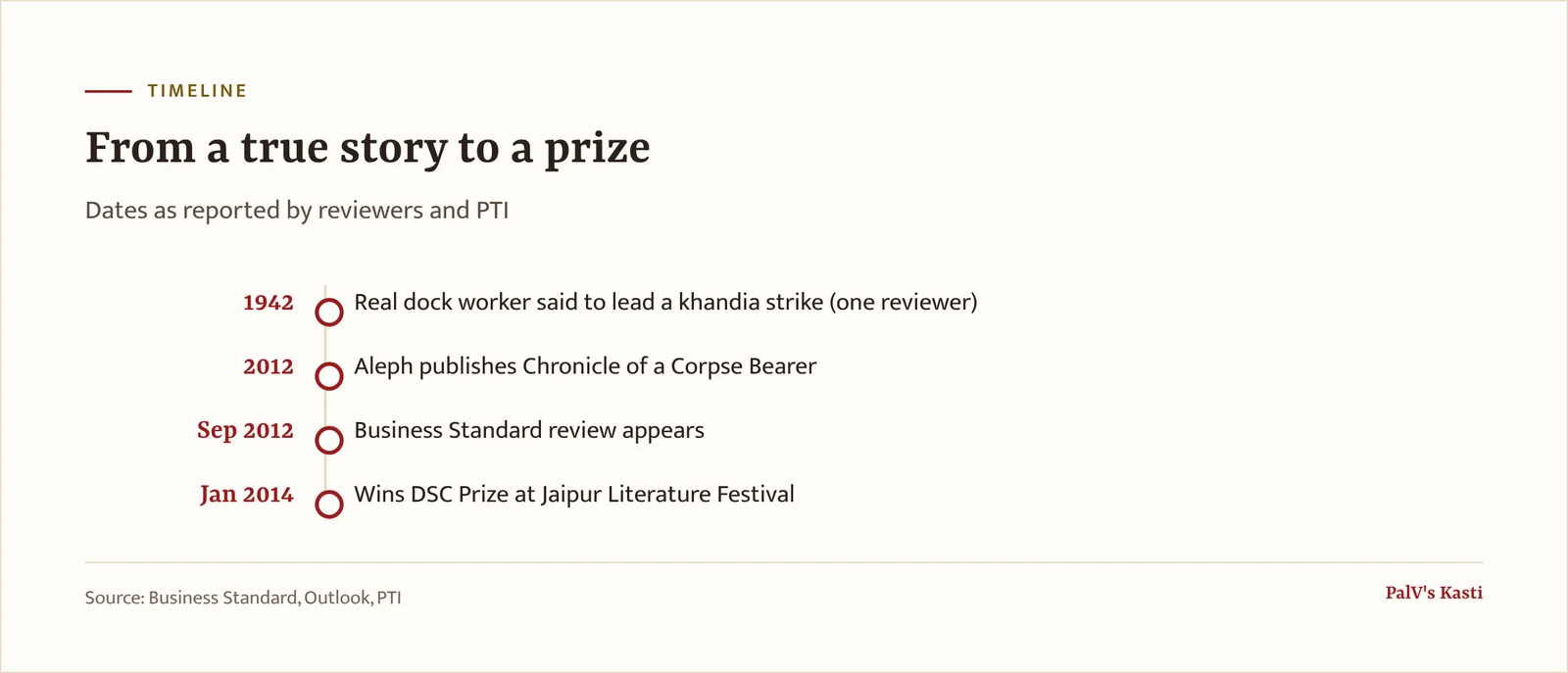
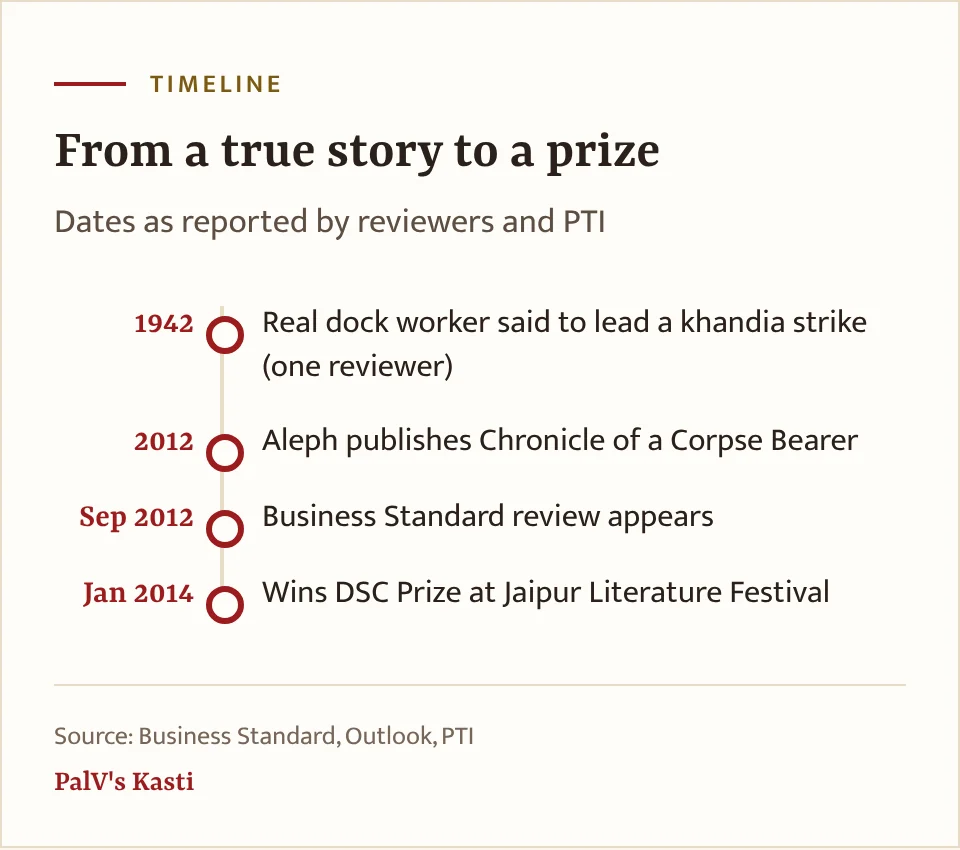
Dharmadhikari's review gives more of the real man's story. In her account, the bride's father forced the dock worker to give up his job and become a khandia himself, and in 1942 he is said to have organised the first and only khandia strike, which, his son told her, the authorities quickly suppressed. That strike rests on this one telling, and we could not find it recorded elsewhere. Dharmadhikari found the novel's fictional portrait duller than the real man's life would have been as a biography.
What does the novel reveal about khandias' lives?
The book's subject is the khandias, the men employed to carry the bodies of the dead to the Tower of Silence. PTI's prize report described them as a group rarely heard of and rarely seen within the Parsi community. Open's profile called them "shunned". For the real role, see our guide to Khandias (corpse bearers).
Through Elchi, the novel shows the cost of taking up this work: Dharmadhikari notes that Mistry uses his break with his devout father to sharpen his isolation. Dadabhoy wrote that Mistry portrays the hardships of a khandia and his low standing in Parsi society with poignancy and a wry, grey humour. Dharmadhikari read it differently. She argued that the khandia world serves mainly as "window-dressing" for one man's sorrow, and that the work appears in the book as scattered, exoticised details.
Does the novel describe khandias accurately?
Its two main reviewers disagree. Dadabhoy objected to the novel calling the khandias a sub-caste. "The Parsis do not have castes and sub-castes," he wrote, and he read Mistry's word as loose usage. In his view, the khandias' lower ritual standing comes from their contact with the dead and can be removed by purificatory rites, and he wrote that there are no rules today against eating with them. He also noted that the novel is set in a time of greater orthodoxy, and that whatever distance remains today has more to do with poverty and anonymity than with ritual.
Dharmadhikari took the stronger view, writing that the rest of the community deems the khandias "untouchable". Mistry himself, in the Open profile, objected to being described only as a Parsi writer and said such a work should be "universal enough to appeal to anyone".
Practice varies between families and Agiaries; your family priest's guidance comes first.
Why fewer people take up the work now, and the disputes over wages at Doongerwadi, are covered in Decline of the khandia profession.
How was the novel received by critics?
Outlook's review was warm. Dadabhoy praised Mistry's clear prose and ended with: "this well-crafted book is a winner." Business Standard's review, first published on 5 September 2012, was harsh. Dharmadhikari found Elchi's first-person voice "self-absorbed" and ponderous, and she faulted the way the khandias' speech switches awkwardly between italicised Gujarati and Parsi phrases. Sixteen months after that review, the DSC jury chose the book over five other shortlisted titles.
Frequently asked questions
What is Chronicle of a Corpse Bearer about?
It follows Phiroze Elchidana, a Parsi priest's son in pre-Independence Bombay, who becomes a khandia so he can marry Sepideh, a khandia's daughter. She dies of snakebite soon after their daughter is born. The novel is mostly his memory of these losses, of his estrangement from his devout father and of his work carrying the dead.
Who wrote Chronicle of a Corpse Bearer?
Cyrus Mistry, a Mumbai-born novelist and playwright and the brother of the novelist Rohinton Mistry, wrote it. Aleph published it in 2012. It was his second novel. He later published the story collection Passion Flower in 2014 and, seven years after Chronicle, the novel The Prospect of Miracles, set mostly in Kerala.
What prize did Chronicle of a Corpse Bearer win?
It won the DSC Prize for South Asian Literature, worth US$50,000, presented at the Jaipur Literature Festival on 18 January 2014. A five-member jury chaired by Antara Dev Sen picked it from a shortlist of six books. Mistry became the fourth winner of the prize, according to the Press Trust of India.
Is Chronicle of a Corpse Bearer a true story?
It is a novel inspired by a true story. Reviewers in Outlook and Business Standard say Mistry drew on the story of a 1940s Parsi dock worker who married a khandia's daughter. Business Standard's reviewer adds that the man was made to take up the work himself. In the novel, the hero is a priest's son instead.
Are khandias a caste among Parsis?
Reviewers differ. Outlook's Bakhtiar K. Dadabhoy wrote that Parsis have no castes or sub-castes, that the khandias' ritual impurity can be removed by purificatory rites, and that their distance today comes more from poverty than ritual. Business Standard's Deepa Dharmadhikari wrote that the rest of the community deems them "untouchable".