PalV's Kasti
On this page
- What is the Dadar Athornan Institute?
- When and where was the Dadar Athornan Institute founded?
- How has the Institute changed in over 100 years?
- How does the Institute train a boy to become a priest?
- Who can study at the Dadar Athornan Institute, and is it free?
- How many students does it have today?
- Who has studied and taught at the Institute?
- Frequently asked questions
The Dadar Athornan Institute is a free residential school in Mumbai's Dadar Parsi Colony where boys from Parsi priestly (Athornan) families train to become full priests while finishing ordinary school. The Athornan Mandal, an association of priests, founded it on 9 November 1919 as the Athornan Boarding Madressa. It began in Parel with 10 students, moved to Dadar in 1924, shut for a year in 1965 for lack of money, reopened in 1966 and marked its centenary in 2019. Over seven years of daily memorisation, a boy learns the Yasna, Visperad and Vendidad prayers he needs for Navar and Maratab. The Institute says more than 500 students have studied there. Its intake has shrunk: its website lists 14 students for 2026–27.
અસપંદામેદ રોજ
Asfandarmad Roj, Tir Mah · 1396 Y.Z.
What is the Dadar Athornan Institute?
It is a boarding institute run by the Athornan Mandal, Mumbai, for the sons of Parsi priests. Its website describes the aim as giving the children of priests, especially those from mofussil (small-town and village) areas, scriptural, ritual, religious and secular education with boarding and lodging, all without charge. It was formerly known as the Athornan Boarding Madressa, Dadar.
Writing in Parsi Times in July 2025, the Principal, Ervad Dr Ramiyar P. Karanjia, called it the only functional residential place that trains full-fledged priests for the Parsi community. A 2019 Hindustan Times report went further and described it as the only institute in the world training the community's priestly class. Neither is an independent count. For how priests fit into Parsi religious life more broadly, see our guide to Zoroastrian priests.
When and where was the Dadar Athornan Institute founded?
The Institute's history page dates its founding to 9 November 1919. It opened with 10 students under its first Principal, Ervad Barjorji Erachji Bajan, in a bungalow at Golanji Hill, Parel, that Bomanji Hormasji General had donated. The Hindustan Times account of the centenary also places the 1919 start in a Parel bungalow.
Why found it at all? In that 2019 interview Karanjia told the paper that the Institute came up when the Parsi population in Gujarat's villages was very high, and a place was needed to educate children from the priest community.
The Parel house soon proved too small. Bai Dhunbaiji Pestonji Hakimji paid for a one-storey building in Dadar Parsi Colony, and the boys moved there in 1924. A couple of years later the Athornan Mandal added a second floor at a cost the Institute puts at around ₹50,000. The address today is 651–52 Firdausi Road, Dadar Parsi Colony, Mumbai 400 014.
How has the Institute changed in over 100 years?
The Institute's own history, drawn from its 1971 and 1994 jubilee souvenirs, gives these turning points:
- 1919: founded by the Athornan Mandal in Parel with 10 boys.
- 1924: moved to its own building in Dadar Parsi Colony.
- 20 April 1965: closed for lack of funds.
- 20 June 1966: reopened under new management, with Ervad Rustomji N. Panthaki as Principal. He and his wife Jalamai ran it for almost 30 years; he had first arrived there as a student in 1928.
- 1966: students began attending the nearby Dadar Parsee Youths Assembly (DPYA) High School for their schooling up to SSC.
- 1971: Golden Jubilee.
- 1973: college students allowed to stay on, at first only in the Arts stream with Avesta-Pahlavi as their main subject.
- 1990: an annexe of ground plus three floors opened, holding the Mancherji Joshi Hall, a library on Indo-Iranian and Zoroastrian subjects, a medical centre and staff quarters.
- 1994: Platinum Jubilee, with a special First Day Cover from India Post.
- 2005: college students free to choose any stream, keeping Avesta as an additional language.
- 2019: centenary.
Before 1965 the boys were taught their secular subjects by in-house teachers and did not go to an outside high school. The change after 1966 matters: Karanjia wrote in 2025 that the DPYA school has given every Institute student free schooling since 1966, so a boy can finish SSC and his priestly training at the same time.
How does the Institute train a boy to become a priest?
Training is mostly memorisation, four or five lines at a time, with constant revision. The Institute's history and admissions pages, read with Karanjia's 2025 article, set out the stages:
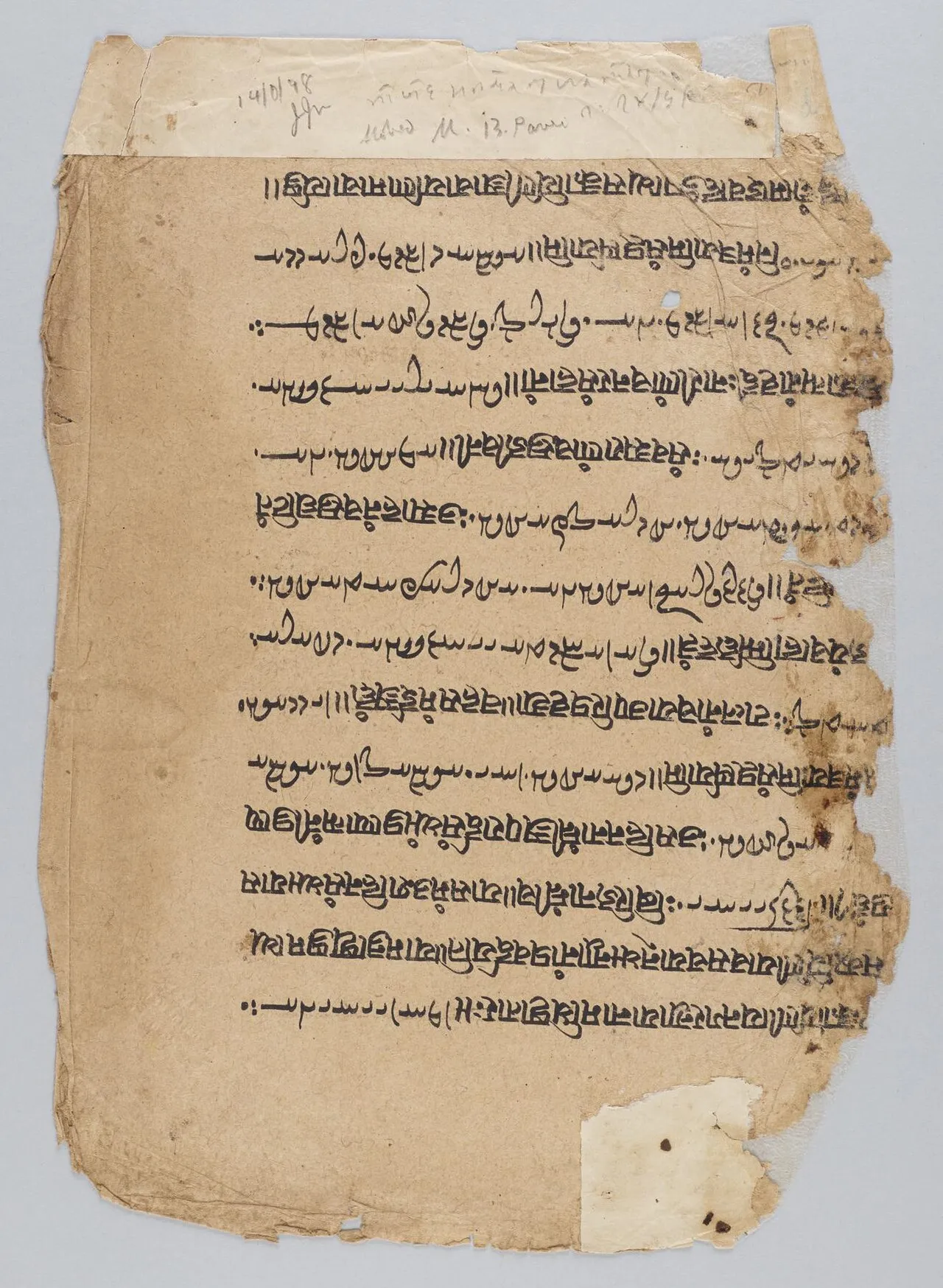
- The boy learns the Khordeh Avesta prayers in Gujarati script.
- He then moves to the Avestan script and learns by heart the Yasna's 72 chapters and the Visperad's 23.
- Praying about three hours a day for nine months a year, this takes roughly five years.
- The last two years prepare him for Maratab, the higher initiation, which includes learning to read the Vendidad.
The Institute calls this a seven-year course. Karanjia's 2025 article gives a range of five to seven years. He writes that Navar, the first initiation, has to take place before puberty, by about the age of thirteen, which is why boys must join at around seven. By about twelve a boy has usually finished the priestly prayers and is ready for Navar; Maratab follows after about another year of preparation. Weekly classes also cover the meaning of basic prayers, ethics, rituals and Iranian history. In the Institute's early decades, its history page records, students woke at 5:30 a.m. and learnt scriptures by rote until noon. Our guide to Navar and Martab explains the two initiations themselves.
Practice varies between families and Agiaries; your family priest's guidance comes first.
Who can study at the Dadar Athornan Institute, and is it free?
Admission is limited to boys from priestly families. The admissions page says boys from Athornan families in Std I to III are eligible. Karanjia's 2025 article puts it plainly: since priesthood is hereditary in the religion, only sons of priest families are admitted.
According to the Institute's website, new students join each June. Forms are collected from the office in January and handed in by March, and families are called for formalities in mid-April.
Everything is free, according to the Institute: priestly training, schooling at DPYA High School up to SSC with private tuition, computer classes, boarding and lodging, laundry and medical care. College students also get free boarding plus their college and tuition fees, and in return help with residential duties and teach the younger boys.
The Institute runs on donations. Parsi Times (2025) notes that money comes from individuals and charity trusts, and that the Athornan Mandal can receive gifts from abroad through its FCRA account. There is also a savings incentive for boarders who complete both their schooling and their Navar and Maratab, the Zarine Neville Sarkari–WZO scheme, which we have covered in a separate post.
Practice varies between families and Agiaries; your family priest's guidance comes first.
How many students does it have today?
Fewer than it used to. Each figure below comes from a different year and source, so read them as snapshots rather than a measured trend.
| Year | Students | Reported by |
|---|---|---|
| Early 1980s | 40 | Hindustan Times, 2019 |
| 2011 | 22 | The National, 2011 |
| 2025 | 14 | Parsi Times, 2025 |
| 2026–27 | 14 (13 in school, 1 in college) | Institute website |
The Hindustan Times said enrolment usually averaged about 30; the Institute's history page gives the same average for the years before 1965. Karanjia told the paper that numbers fell because families have fewer children and are reluctant to send them away from home.
Mumbai once had a second seminary. The M. F. Cama Athornan Institute in Andheri was founded in 1923; The National found just four students there in 2011, and by 2019 the Hindustan Times reported that it had stopped functioning and its students had moved to Dadar.
Who has studied and taught at the Institute?
The Institute says more than 500 students have passed through it since 1919, from places including Bharuch, Navsari, Surat, Udvada, Nargol, Bulsar, Ahmedabad, Indore, Hyderabad and Pune. Its listed alumni include Dasturji Meherji K. Mehrji Rana, Dasturji Dr Hormazdyar K. Mirza, Dasturji Khurshed K. Dastur, Dasturji Kaikobad P. Dastur and Dasturji Nadirshah P. Unwala.
Among its principals, the Institute names Ervad Barjorji Bajan (1919–1926), Ervad Edalji Faramji Madan (from 1934 until his death in 1947), Ervad Rustomji N. Panthaki (from 1966, for almost 30 years) and, after Panthaki, an alumnus of the Institute. Its admissions page names the present Principal as Ervad Dr Ramiyar P. Karanjia.
Frequently asked questions
When was the Dadar Athornan Institute founded?
The Athornan Mandal, an association of Parsi priests, founded it on 9 November 1919 as the Athornan Boarding Madressa. It began with 10 students in a donated bungalow at Golanji Hill, Parel, and moved to its own building in Dadar Parsi Colony in 1924. It completed 100 years in 2019 and is still run by the Athornan Mandal.
Who can get admission to the Dadar Athornan Institute?
According to its admissions page, boys from priestly (Athornan) families in Std I to III are eligible, and new students join every June. Forms are collected in January and returned by March. Because priesthood is hereditary, the Principal wrote in Parsi Times in 2025, only sons of priest families are admitted to the Institute.
How long does priest training take at the Institute?
The Institute describes a seven-year course. About five years go into memorising Khordeh Avesta prayers plus the Yasna's 72 chapters and the Visperad's 23, at roughly three hours a day. The final two years prepare for Maratab. The Principal's 2025 article gives a range of five to seven years overall.
Is the Dadar Athornan Institute free?
Yes, according to the Institute. Boarding, lodging, laundry, medical care, priestly training and schooling up to SSC at the nearby DPYA High School cost the family nothing. College students also get free boarding plus college and tuition fees. The Institute is funded by donations from individuals and charitable trusts, collected through the Athornan Mandal.
How many students study at the Dadar Athornan Institute now?
Its website lists 14 students for 2026–27: 13 in school and one in college. Parsi Times also reported 14 in 2025. That is well below earlier years: The National counted 22 in 2011, and the Hindustan Times said the Institute once averaged about 30 students and housed 40 in the early 1980s.
What happened to the Cama Athornan Institute in Andheri?
The M. F. Cama Athornan Institute in Andheri, founded in 1923, was Mumbai's other priest seminary. The National reported only four students there in 2011. In 2019 the Hindustan Times said the Andheri institute had become non-functional and that its remaining students had been moved to the Dadar Athornan Institute.