 PalV's Kasti
On this page
Many Parsis keep dhansak off the table at weddings, Navjotes and Navroz because they think of it as the meal of mourning. After a death, the family gives up meat for three days. On the fourth day, the chahrum, meat comes back into the house, and the dish that brings it back is dhansak: lentils, vegetables and meat cooked together and eaten with caramelised brown rice. Because of that link with death, it is felt not to belong at a happy occasion. The same dish is also the Sunday lunch in Parsi homes. So "when is dhansak eaten" has two answers: on the fourth day after a death, and on Sundays. Not every family keeps the celebration rule, and we explain below where people differ.
શહેરેવર રોજ
Shehrevar Roj, Tir Mah · 1396 Y.Z.
Why is dhansak not served at Parsi weddings and Navjotes?
The reason is association, not taste. Outlook Traveller's 2026 guide to the dish says that weddings, Navjotes and other auspicious days go without it, since Parsis connect dhansak with death and mourning. A piece on Slurrp makes the same point about Navroz: dhansak is cooked by the grieving family on the fourth day after a death, and Navroz is meant to mark a fresh start, so the mourning dish stays off both New Year menus.
Ashoo Saam Chinoy, quoted in the Deccan Chronicle in 2019, put it plainly. Dhansak, Chinoy said, is not prepared for auspicious occasions, and it is always had on the fourth day after a death. That is why, although dhansak is the first dish that comes to mind when you say Parsi New Year, it isn't made for it.
Practice varies between families and Agiaries; your family priest's guidance comes first.
What does dhansak have to do with the fourth day after a death?
Why the family stops eating meat for three days
The meat fast is well documented. In his 1928 study of Parsi funeral ceremonies, Jivanji Jamshedji Modi wrote that for three days after a death the family abstains from meat as a sign of mourning, eating mostly vegetables and fish, and that even the nearest friends give up meat too. He added that until recently in Bombay, and still in some mofussil towns in his day, no food was cooked in the house where the death had taken place. The nearest relatives cooked and sent meals over. Mary Boyce, writing in the Encyclopaedia Iranica, also records that the bereaved family abstains from meat for the three days.
The custom has a scriptural root. In James Darmesteter's translation of the Vendidad (Fargard 8, verse 22), the faithful are allowed to cook meals with meat and wine in that house "afterwards". His footnote, drawing on the traditional commentary, explains "afterwards" as the fourth day and adds that cooking meat in the house is forbidden for three days and nights after the death.
One food writer counts differently. Perzen Patel's 2024 newsletter speaks of abstaining from meat for four days. Modi, Boyce, the Vendidad commentary and Parsi Times all count three, with meat allowed again on the fourth day, and this post follows that count.
Why dhansak is the meal on the fourth day (chahrum)
Boyce describes the čahārom service being held just after sunrise on the fourth day, with those attending sharing meat afterwards to mark the end of the abstinence. Among Parsis in India, Parsi Times, Outlook Traveller and Slurrp all name dhansak as that fourth-day meal.
Noshir H. Dadrawala, writing in Parsi Times in 2023, describes the fourth day this way: the house is properly cleaned, the floor scrubbed, the threshold decorated with chalk once again, and mutton or chicken can now be brought home. The meal is dhansak, a complete meal of lentils, vegetables and rice. He is clear that eating meat on the fourth day is not mandatory, that adding mutton is optional and a matter of individual choice, and that in the past the meal was shared with neighbours, who had brought simple food to the bereaved family. Outlook Traveller reads the same meal as the end of the restriction and the beginning of everyday life.
Practice varies between families and Agiaries; your family priest's guidance comes first.
Does every Parsi family keep the rule?
No, and the sources say so openly. Perzen Patel, the food writer known as the Bawi Bride, calls the idea that dhansak can't be eaten on happy days "a bit of a myth". In her 2024 newsletter she writes that Parsis do eat dhansak on birthdays and at new year as well as on Sundays.
The same Deccan Chronicle article that quotes Chinoy also quotes Delzeen Watcha Mistry, whose family's New Year lunch, usually ordered from a Parsi caterer, includes mutton dhansak. Both positions exist within the one community. If you are planning a menu for a mixed gathering, ask the hosts rather than assume.
What do Parsis serve at celebrations instead of dhansak?
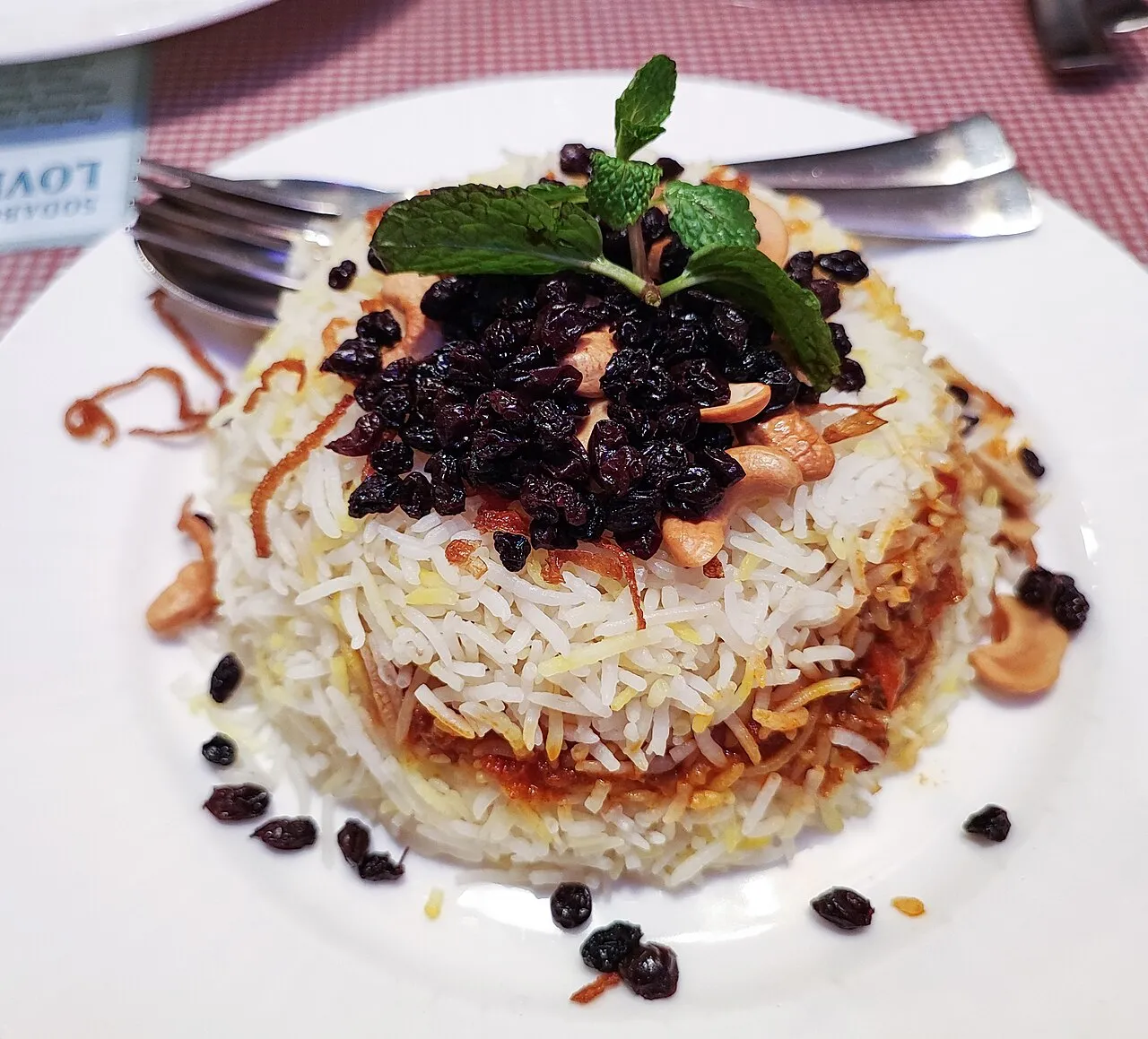
For a wedding, Outlook Traveller points to pulao-dar, which gives the table meat and rice with dal but none of dhansak's link to mourning. Perzen Patel describes a closely related workaround for happy days: cook the meat with the rice into a mutton pulao and serve the dhansak dal alongside. If the meat is not cooked in the dal, she says, it is called masala ni dar, not dhansak.
For Navroz, Chinoy told the Deccan Chronicle that the New Year is incomplete without sali gosht and patra ni machhi. You can read more about the wider festive table in our guide to Parsi food.
When else is dhansak eaten?
Away from mourning, dhansak is the Sunday lunch. Perzen Patel's explanation is practical: it takes the better part of the morning to prepare, so it suits a day when nobody is rushing. Outlook Traveller and Slurrp both tie it to Sunday meals in Parsi homes. We look at that weekly habit in Why Parsis love dhansak, and at the best-known restaurant version in our piece on the Ripon Club dhansak. For what the dish actually is, start with our main page on Dhansak.
Frequently asked questions
Why do Parsis not eat dhansak on happy occasions?
Many Parsis link dhansak with mourning. After a death the family avoids meat for three days, and dhansak is the meal that brings meat back on the fourth day. Because of this, many families keep it off the table at weddings, Navjotes and Navroz. Not everyone agrees: food writer Perzen Patel says Parsis also eat it on birthdays.
Is dhansak eaten after a death in a Parsi family?
Yes. The family gives up meat for three days after a death, as Jivanji Jamshedji Modi recorded in 1928. On the fourth day, the chahrum, meat may return to the house, and the meal is dhansak. Parsi Times notes that adding mutton is optional, and that in the past the meal was shared with neighbours who had brought food.
Is dhansak served at Parsi New Year (Navroz)?
According to Slurrp and to Ashoo Saam Chinoy in the Deccan Chronicle, it is not, because Navroz marks a fresh start and dhansak is linked with mourning. Chinoy names sali gosht and patra ni machhi as the New Year dishes. Practice is mixed, though: another family quoted in the same 2019 article orders mutton dhansak for its New Year lunch.
How many days do Parsis avoid meat after a death?
Three days, according to J. J. Modi's 1928 account, Mary Boyce in the Encyclopaedia Iranica, and the commentary note in Darmesteter's Vendidad translation. Meat may be cooked again on the fourth day, when dhan-sak, as it is sometimes written, is served. Food writer Perzen Patel speaks of four days, so ask your own family.
What is the difference between dhansak and masala ni dar?
According to food writer Perzen Patel, when the meat is cooked inside the lentils the dish is dhansak. When the mutton goes into the rice as a pulao and the dal is served next to it, the dal is called masala ni dar. She gives this pairing as the workaround for happy occasions.


