 PalV's Kasti
On this page
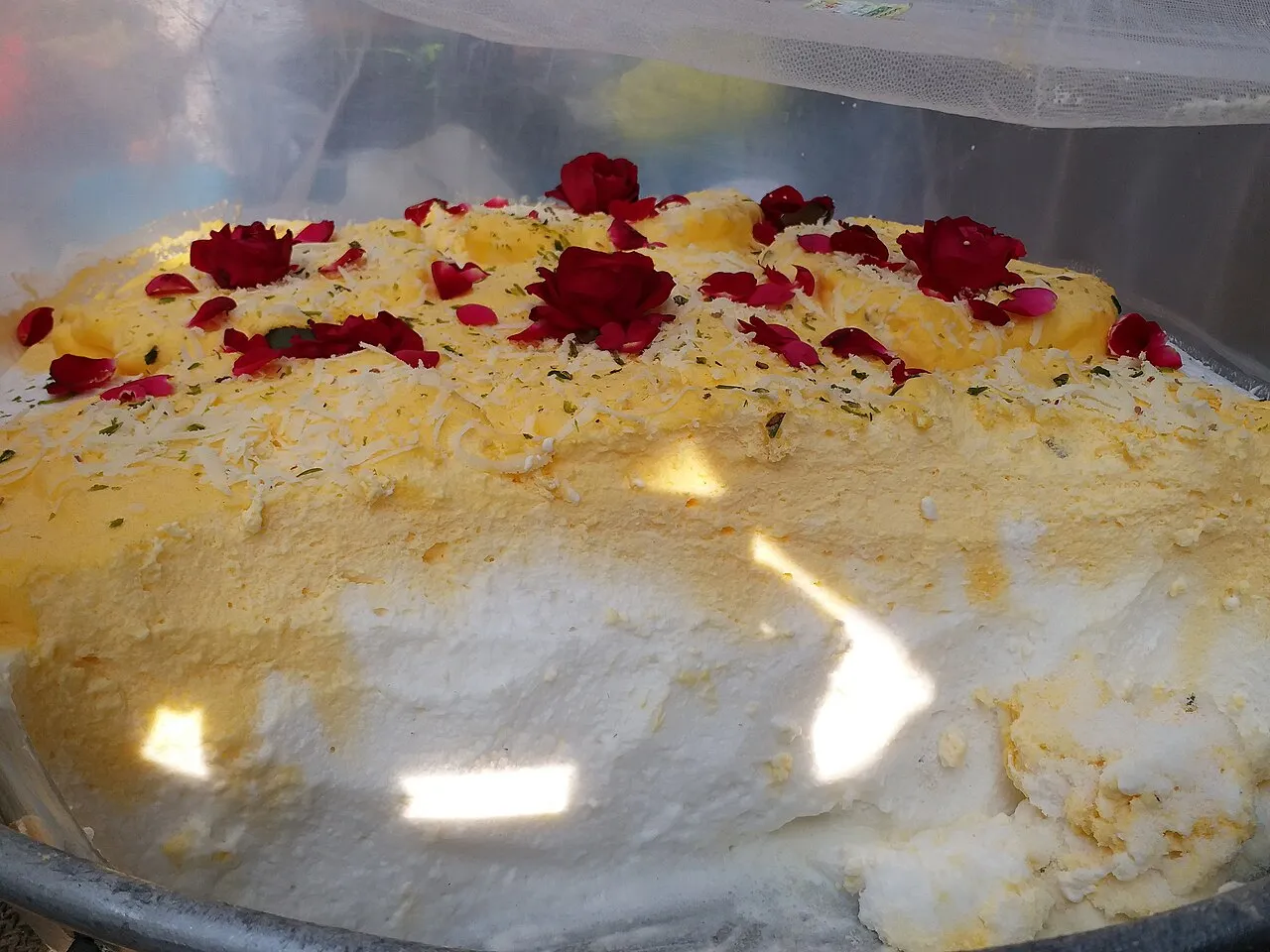
Doodh na puff is a Parsi milk froth. Full-fat milk is boiled with sugar, left to go completely cold overnight, then whisked in the morning until a light foam rises, and the foam is spooned into glasses and eaten at once. It belongs to winter mornings because the old method needed a cold night. Before refrigerators, the sweetened milk was put out on a terrace or roof, or hung outdoors in a covered pot, so the night chill and dew could cool it before dawn. It was whisked early, because once the sun got hot the froth would not hold. Today the refrigerator does the cooling that the night air once did.
અદીબેહેસત રોજ
Ardibehesht Roj, Tir Mah · 1396 Y.Z.
What is doodh na puff made of?
Very little. Milk and sugar are the base in every recipe we read. You will also see it spelt dudh na puff, and Rita Kapadia's site gives it the English name milk froth.
The flavouring is where cooks differ. The Parsi cookbook writer Rita Kapadia keeps it to a single optional drop of rose essence. A recipe printed by the food magazine Upper Crust, in a set of dishes from Udvada, Devka, Dahanu and Gholvad, adds rose water to the milk and grates nutmeg over each glass. Food writer Anjali Koli, describing the doodh na puff she eats on her family's yearly visits to Udvada for India Food Network, says the milk is laced with cardamom and nutmeg as it is churned. So a glass may taste of rose, of nutmeg or of cardamom, depending on whose kitchen it came from.
Koli also gives the best description of eating it. You spoon up the foam, it disappears in the mouth, and you are left with a spoon or two of milk at the bottom of the glass. Is it a drink or a dessert? Koli says you can't quite tell. Kapadia simply calls it a drink.
Why do Parsis make doodh na puff only on winter mornings?
Because the method depends on cold. Rita Kapadia writes that the drink was made in winter, with the boiled milk set out on an open terrace or flat roof overnight to cool. Anjali Koli describes the pot being hung outside all night so that the dew and the low temperature can work on it before dawn. Mint, in a 2017 piece by Priyadarshini Chatterjee on lesser-known Parsi dishes, describes the same thing: reduced milk left out in the open overnight.
The Upper Crust recipe spells out the timing. You start at sundown, bring the sweetened milk to the boil three or four times and keep stirring as it cools. Then it goes into a ceramic pot with a cloth tied over the mouth, and the pot hangs on the terrace for the night. In the morning the cream that has formed on top is stirred back in, and the milk is beaten until foam rises. The same recipe warns that the dish has to be made early, before the sun gets too hot, and that even in a refrigerator the froth lasts only about an hour before it starts to sink.
None of the sources we found gives a health or religious reason for the winter timing. The reason they give is practical: the milk needed a cold night, and the froth needed to be eaten before the day warmed up. Kapadia and Upper Crust both say the refrigerator now takes the place of the terrace.
Where do Parsis eat doodh na puff?
The sources tie it most closely to Udvada, the Parsi pilgrimage town. Koli puts it on her list of things to eat on a trip there, alongside fried boi and mawa cakes, and Mint mentions it in the same breath as the Udvada pilgrimage. Upper Crust groups its recipe with the food of Udvada, Devka, Dahanu and Gholvad. Kapadia's version, made in a home fridge and served the next morning, shows how it travels to city kitchens.
Doodh na puff is one of several Parsi foods tied to the cold months. Our post on Vasanu covers another, and Kharia ni jelly is an older home dish worth reading about.
How do you make doodh na puff at home?
This method follows Rita Jamshed Kapadia's recipe from her cookbook Parsi Cuisine: Manna of the 21st Century, which she has also published on her website ParsiCuisine.com. It makes three to six glasses, depending on how full you pile them.
Ingredients
- 2 cups milk
- ½ cup sugar
- 1 drop rose essence (optional)
Method
- Bring the milk to a full boil.
- Stir in the sugar and let it boil for another 5 minutes.
- Let it cool, then pour it into a glass bowl, cover it tightly and refrigerate overnight.
- Next morning, add the rose essence if you are using it.
- Whisk, or use an egg beater, until a froth forms on top.
- Spoon the froth into glasses and serve at once.
Kapadia's recipe uses no spice. If you want the Udvada-style finish that Koli and Upper Crust describe, a little grated nutmeg over the top is the addition both mention. Upper Crust also spoons the froth into chilled glasses. Don't make it far ahead: Kapadia says to serve it straight away.
Is doodh na puff the same as daulat ki chaat?
They are close in spirit but not the same dish. Koli makes the comparison directly: Delhi has daulat ki chaat, Benares has malaiyo, and Parsis have doodh na puff at Udvada, with the same airy quality but served in a glass. Food52, writing about daulat ki chaat, mentions doodh na puff as a foamy, nutmeg-flavoured milk drink loved by Parsis, in a passage that only guesses at a shared Iranian ancestry. We found no source that shows the two dishes share an origin, so we do not claim one.
Frequently asked questions
What is doodh na puff made of?
Doodh na puff is made of full-fat milk and sugar, boiled together, chilled overnight and whisked into a froth. The flavouring changes by cook. Rita Kapadia adds an optional drop of rose essence, the Upper Crust recipe uses rose water and nutmeg, and Anjali Koli describes cardamom and nutmeg in the version she eats at Udvada.
Why is doodh na puff made in winter?
The old method needed a cold night. Rita Kapadia, Anjali Koli and Mint all describe the sweetened milk being left out in the open overnight, on a terrace or roof or in a hung pot, so the chill and dew could cool it. The Upper Crust recipe adds that it must be whisked early, before the sun gets too hot.
Can you make doodh na puff without leaving the milk outside?
Yes. Both Rita Kapadia's recipe and the Upper Crust recipe say the refrigerator now does the job the terrace once did. In Kapadia's method you boil the milk with sugar, let it cool, keep it covered in the fridge overnight, then whisk it the next morning and spoon the froth into glasses.
How long does doodh na puff last?
Not long. Kapadia says to serve it immediately once the froth is spooned into glasses. The Upper Crust recipe says it keeps in the refrigerator for only about an hour, after which the froth starts to sink back into the milk. So make it just before you plan to eat it, ideally first thing in the morning.
Is doodh na puff the same as daulat ki chaat?
No, though food writers do compare them. Anjali Koli likens doodh na puff to Delhi's daulat ki chaat and to Benares' malaiyo, noting that the Parsi version comes in a glass. Food52 only speculates about an Iranian link between them. We found no reliable source showing the two dishes share a common origin, so treat them as cousins.


