 PalV's Kasti

On this page
Nothing in the Special Marriage Act, 1954 asks a Parsi to give up their religion, and trust rules such as Nagpur's, as described to the Supreme Court, leave a Parsi man who marries out with his religious status intact. The open question is about women. In 2012 a Gujarat High Court majority held that a Parsi woman who married a Hindu under that Act ceased to be a Parsi unless a court declared otherwise; Justice Akil Kureshi dissented. Some traditionalists go further: Ervad Marzban Hathiram has written that anyone, man or woman, who marries outside the faith can no longer call themselves Zoroastrian. The question is before a nine-judge Supreme Court bench, pending as of 16 November 2026.
અસપંદામેદ રોજ
Asfandarmad Roj, Tir Mah · 1396 Y.Z.
Does the law take away a Parsi's identity on an interfaith marriage?
The 1954 Act itself contains no renunciation. Noshir Dadrawala, writing in Parsi Times in October 2017, noted that, unlike the older law, it has no declaration renouncing one's religion. From that he inferred that a Parsi Zoroastrian woman who marries under it remains Parsi by birth and keeps her religion. How such a marriage works in law is in our hub, Can Parsis marry non-Parsis.
The one section that cuts a tie on marriage is narrow. Under section 19, a Hindu, Buddhist, Sikh or Jaina who marries under the Act is deemed severed from their undivided family. Parsis are not mentioned. At the Supreme Court hearing on 5 May 2026, LiveLaw reported, Chief Justice Surya Kant pointed to sections 19, 21 and 21A and remarked that a Parsi, Muslim or Christian who marries under the Act does not "lose religious identity". That was a remark, not a decision.
Do Parsi men and women keep their identity on the same terms?
The Gujarat High Court's majority treated a woman's religion as merging with her husband's on marriage, which the Oxford Human Rights Hub (February 2018) called the "archaic doctrine of coverture". Justice Kureshi's dissent, as DNA reported it on 24 March 2012, held that a born Parsi Zoroastrian woman does not lose that status merely by marrying under the 1954 Act: "Professing one's religion is a matter of faith." He also found proof of any custom to the contrary "hazy and at best inconsistent".
For men, the starting point is the Bombay High Court's 1908 Petit judgment. Its definition, as Dadrawala points out, takes in the children of Parsi fathers and 'alien' mothers admitted to the faith, but not those of Parsi mothers. The older cases are in our article on Half-Parsis. Arguing for Dina Budhraja on 25 May 2026, senior advocate Shyam Divan told the court that under the Nagpur Parsi Panchayat's rules a Parsi man's wife and children may be denied benefits from its funds, but his own religious status is untouched, LiveLaw reported.
Is "Parsi" the same as "Zoroastrian"?
Budhraja's petition separates them. As the Indian Express summarised it in March 2026, it argues that "Parsi" means lineage and community, rooted in descent, while "Zoroastrian" means religion, and that "such ethnic identity cannot be extinguished by marriage". On day 12 of the hearing, the Supreme Court Observer reported on 6 May 2026, advocate Karl Tamboly argued that treating a woman married under the 1954 Act as having stopped being both Parsi and Zoroastrian would defeat the purpose of that Act.
The traditionalist answer is a religious one, and it applies to both sexes. Ervad Marzban Hathiram, writing on his Frashogard site on 13 October 2016, said the discouragement of interfaith unions applies "equally to both" men and women, and that a Zoroastrian who enters one "cannot, unfortunately, continue to call himself or herself as Zoroastrian". Dadrawala's 2017 article takes the other view: he found no evidence in the scriptures that a person ceases to be Zoroastrian by marrying a non-Zoroastrian.
Practice varies between families and Agiaries; your family priest's guidance comes first.
What have the Supreme Court judges said so far?
Only oral remarks. In the same Day 12 report, the Observer recorded that Justice Ahsanuddin Amanullah noted that the Gujarat High Court had found no religious text supporting the exclusion, and Justice B.V. Nagarathna observed that, by marrying outside the community, "she cannot lose her religion".
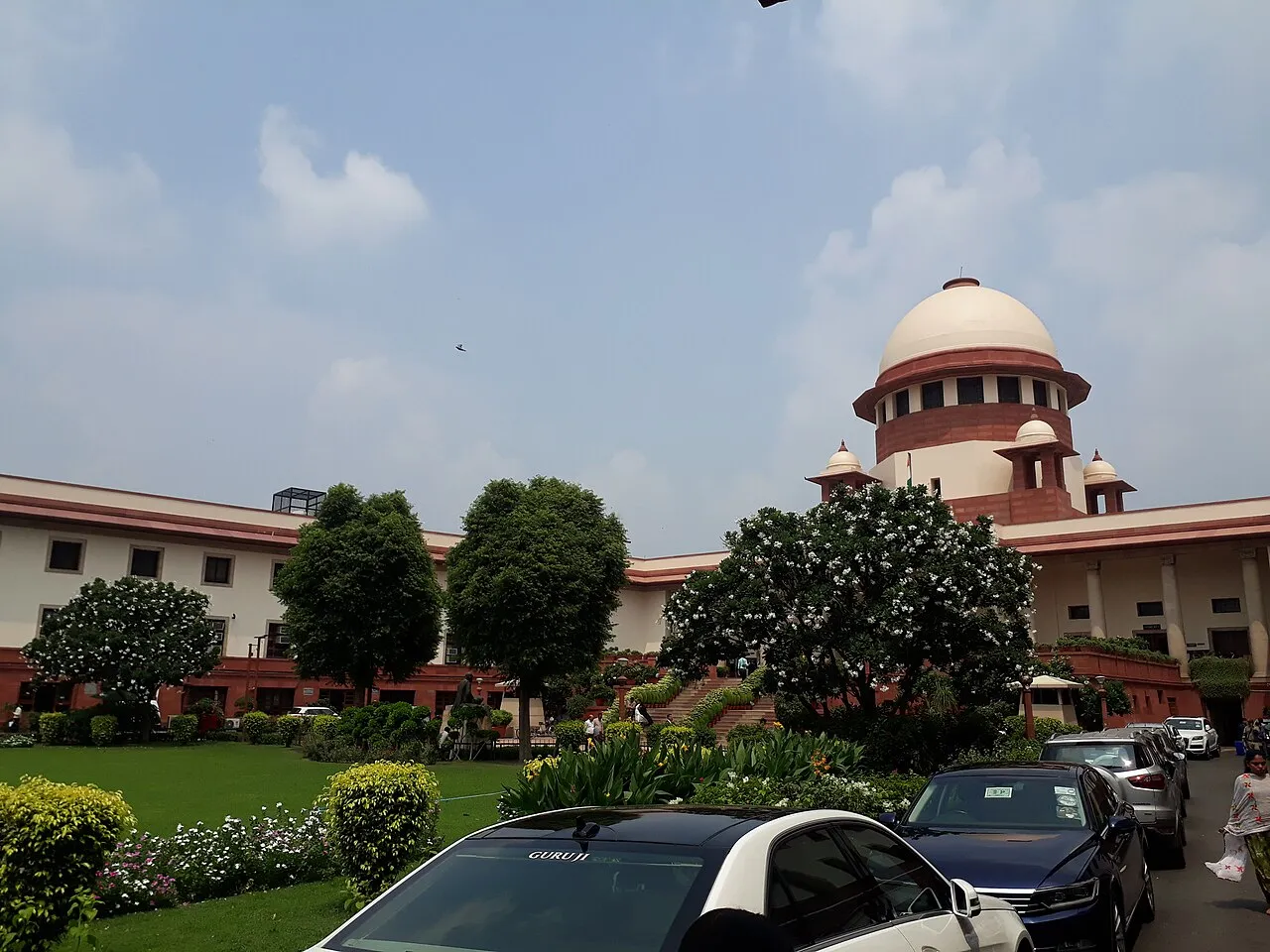
The bench reserved its verdict on 14 May 2026, as IANS reported that day, and LiveLaw's page on the reference showed no verdict when we checked on 16 November 2026. What courts have said about expulsion itself is in Excommunication for marrying out.
This is general information, not legal advice; for a specific case, speak to a lawyer.
Frequently asked questions
Does a Parsi woman lose her religion if she marries a non-Parsi?
The Special Marriage Act, 1954 contains no renunciation. But a 2:1 Gujarat High Court majority held in 2012 that Goolrokh Gupta lost Parsi status through such a marriage, unless a court declared otherwise. Her appeal is before a nine-judge Supreme Court bench, pending as of 16 November 2026.
Does a Parsi man lose his identity if he marries out?
Generally not, by the accounts given to the Supreme Court. In May 2026 Shyam Divan told the court that Nagpur's rules leave a Parsi man's own religious status unaffected, and the 1908 Petit judgment accepted his admitted children as Parsis. Ervad Marzban Hathiram, a traditionalist writer, says the bar on marrying out binds both sexes.
Is a Parsi still a Parsi after a Special Marriage Act wedding?
Nothing in the 1954 Act requires giving up a religion, and its section 19 severs only Hindu, Buddhist, Sikh or Jaina members from an undivided family. Chief Justice Surya Kant remarked in May 2026 that a Parsi marrying under it does not lose religious identity, but that was an oral remark, and the appeal against the Gujarat ruling is pending.
Is "Parsi" different from "Zoroastrian"?
Dina Budhraja's 2026 Supreme Court petition says so: "Parsi" denotes lineage rooted in descent, "Zoroastrian" denotes religion, so marriage cannot end Parsi birth. Ervad Marzban Hathiram, writing from the traditionalist side, treats it as a religious question and says a Zoroastrian who marries out cannot continue to call themselves Zoroastrian.


