 PalV's Kasti

On this page
Yes, as far as the sources go, birds did the same work in Iran. The Vendidad names dogs and birds as the creatures that consume the dead, and a 2017 study of the dakhmas around Yazd describes bodies being left for vultures there, with the Yazd Zoroastrian Council's own information boards explaining why vultures were preferred. What happened next is different. Iran's Zoroastrians gave up their dakhmas during the twentieth century and now bury their dead in cement-lined graves. The sources disagree on the exact years, and none we found links the change to a loss of vultures. They point instead to reformers, growing cities and outside pressure.
શહેરેવર રોજ
Shehrevar Roj, Tir Mah · 1396 Y.Z.
Did vultures do the same work at Iran's dakhmas?
In her Encyclopaedia Iranica entry on the disposal of the dead (1993), the scholar Mary Boyce writes that in the Vendidad, dogs and birds are the standard excarnators, and that both belong to the good animal creation. J.J. Modi, writing in Bombay in 1922, makes the same point: the Vendidad speaks of bodies exposed on mountain tops for vultures and dogs, which he calls "scavengers of Nature".
For Iran in particular, the fullest account we found is a 2017 article by the Turkish scholar M. Emin Sular in the journal of Bitlis Eren University's Institute of Social Sciences. Drawing on Persian-language works about the Zoroastrians of Yazd, Sular describes how the bearers, called salars there, laid the body facing east, tore the shroud open at the chest and locked the dakhma door so the vultures could come quickly. Once the birds had finished, the salars gathered the bones with a ceremony and placed them in the central pit. Sular records the belief that the faster the body was consumed, the more content the soul would be. Citing the numbered boards the Yazd Zoroastrian Council has put up at the site, he adds that vultures were preferred to other animals because they ate where the body lay and did not carry anything away.
Boyce also describes a dog being brought to the body soon after death. Sular records this rite, the sagdid, at the Yazd dakhmas, where the body was laid on open ground near the dakhma and a dog was let up to it before it was carried in. Practice varies between families and Agiaries; your family priest's guidance comes first.
When did Iran's Zoroastrians stop using the dakhmas?
Between the 1930s and the 1970s, but the sources give different years for each city. Here is what each one says.
| City | Mary Boyce, Encyclopaedia Iranica (1993) | M. Emin Sular (2017) |
|---|---|---|
| Tehran | Dakhma replaced by a cemetery in 1937 | Dakhma abandoned in 1931 |
| Kerman | Cemetery established in 1939; dakhma still in alternative use until the 1970s | Dakhma abandoned in 1941 |
| Yazd | Cemetery established in 1960; dakhma still in alternative use until the 1970s | Dakhma abandoned in 1961 |
Other accounts put the decisive moment elsewhere. The journalist Coomi Kapoor, in her book on Parsi history excerpted by Scroll in July 2021, writes that the Iranian monarch Reza Shah banned the method in the 1940s. The podcast 99% Invisible (April 2024) says sky burials were declared a health hazard in Iran in the 1970s, and a 2022 report by the Immigration and Refugee Board of Canada, citing The Guardian, says Iran made dakhmas illegal in the 1970s. We could not find the text of any Iranian law or order, so we cannot say which date is right.
Why did Iran give up the dakhmas?
Boyce traces it to reform within the community. She writes that reformist influence was first strongly felt in Iran in the 1930s, and that the practice was finally abandoned after reformers introduced coffins and graves. Sular gives three reasons: cities grew, the dakhmas ended up inside built-up areas, and non-Zoroastrians objected. Kapoor and the 1970s reports describe a decision by the state.
None of these sources mentions vultures dying out in Iran. That is the main difference from India, where, Kapoor writes, the vulture population practically vanished towards the end of the twentieth century; 99% Invisible dates the first villagers' reports of missing vultures to the late 1990s. That story is told in Vultures and the Tower of Silence.
How do Iranian Zoroastrians bury their dead now?
In graves built so the body does not touch the soil. Boyce describes the Tehran cemetery, called aramgah or "place of rest", where the body usually goes in an iron coffin into a cement-lined grave that is then cemented over, and the grounds are planted with trees and flowers. In Kerman and Yazd, she writes, cement is used but there is not usually a coffin. Sular describes a sheet of tin laid in the grave under the body and concrete blocks placed above it before the earth is filled in, so the body stays between them, though he notes the tin is sometimes left out.
Sular also notes that the Zoroastrian sources he consulted still defend the dakhma as the correct method, even though it is no longer used in Iran. Practice varies between families and Agiaries; your family priest's guidance comes first.
What remains of the dakhmas in Iran?
According to Sular's 2017 survey, the best-preserved dakhmas are around Yazd. Two stand side by side on what locals call Dakhma mountain, south-east of the city centre: one named after Manekji Limji Hataria and one called Golestan. There are two more at the village of Sharifabad and one each at Aliabad and Cham. Sular writes that the Yazd site now lies inside the built-up city, that visitors buy a ticket at the gate, and that the Yazd Zoroastrian Council has put up numbered boards explaining each structure.
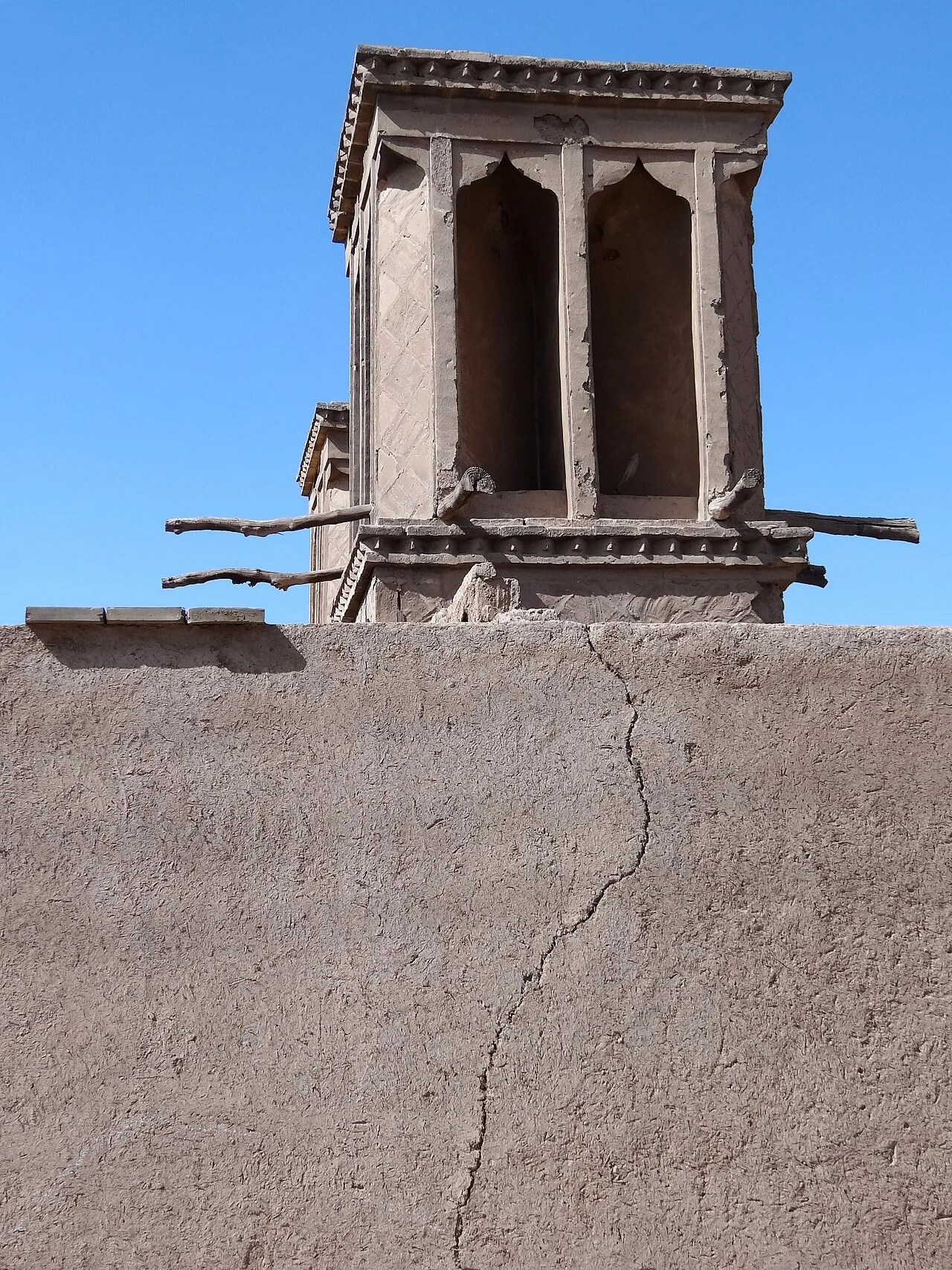
The Manekji name carries an Indian link. Sular identifies Manekji Limji Hataria as the man the Parsis of India sent to Iran in 1854 to help their co-religionists there, and writes that his work led to old dakhmas being repaired and new ones built.
Where does this leave the debate in India?
For how the dakhma is used in India, see our guide to the Tower of Silence. The case made by those who see dokhmenashini as an ecological method is set out in Zoroastrian green funeral, and a newer proposal is covered in the Human composting debate.
Frequently asked questions
Do Iranian Zoroastrians still use the Tower of Silence?
No. According to Mary Boyce in the Encyclopaedia Iranica and the Turkish scholar M. Emin Sular, Iran's Zoroastrians moved from dakhmas to cemeteries between the 1930s and the 1970s. Today they bury their dead in cement-lined graves, built so the body does not touch the soil.
When did Iran stop dakhma funerals?
Sources disagree. Boyce dates the Tehran change to 1937 and says Kerman and Yazd dakhmas stayed in alternative use until the 1970s. Sular gives 1931, 1941 and 1961 for Tehran, Kerman and Yazd. Coomi Kapoor names Reza Shah and the 1940s, while other reports say the 1970s.
Did Iran lose its vultures like India?
We found no source on vulture numbers around Iran's dakhmas. The accounts we read explain Iran's change by reform within the community, the growth of cities around the dakhmas, objections from non-Zoroastrians and, in some reports, a state ban. In India, Coomi Kapoor writes, vultures practically vanished towards the end of the twentieth century.
Can you visit the dakhmas in Yazd?
Sular's 2017 article describes the two Yazd dakhmas on Dakhma mountain as a site visited by local and foreign tourists, with tickets sold at the gate and numbered boards from the Yazd Zoroastrian Council. We have not confirmed current opening arrangements, so check locally before planning a visit.


