PalV's Kasti
On this page
- What was the Jiyo Parsi ad campaign?
- Why were the 2014 Jiyo Parsi ads called sexist?
- What happened to the "Hindu Colony" ad?
- What did critics say about the 2017 Phase II ads?
- Did critics question the money and the number of births?
- How is the campaign tied to the debate on Parsi women who marry out?
- How did the organisers and the ad makers respond?
- Frequently asked questions
The Jiyo Parsi campaign (sometimes spelt Jio Parsi) is the advertising side of the government scheme meant to slow the fall in India's Parsi population. Its print ads, first shown in November 2014 and followed by a second phase in 2017, drew criticism on several fronts. Critics quoted by Scroll, Outlook and Open said the 2014 ads put the weight of the decline on women. One ad that pictured Dadar Parsi Colony renamed "Hindu Colony" was dropped after complaints. A columnist in The Wire called the 2017 ads racist, elitist and classist. Others questioned the public money spent, the small number of births, and the exclusion of Parsi women who marry out. The organisers replied that the humour was deliberate and that nobody was being forced.
Each view below is given in the words of the person who holds it. We don't take a side.
શહેરેવર રોજ
Shehrevar Roj, Tir Mah · 1396 Y.Z.
What was the Jiyo Parsi ad campaign?
According to a Ministry of Minority Affairs reply in the Rajya Sabha on 9 December 2024, the Jiyo Parsi scheme was formulated in September 2013. The scheme has three parts: medical help, support for families, and Advocacy, which the Ministry describes as raising awareness among young people of marriageable age and young couples. The ads belong to that Advocacy part. Our page on the Jiyo Parsi scheme explains who is eligible and what the scheme pays for.
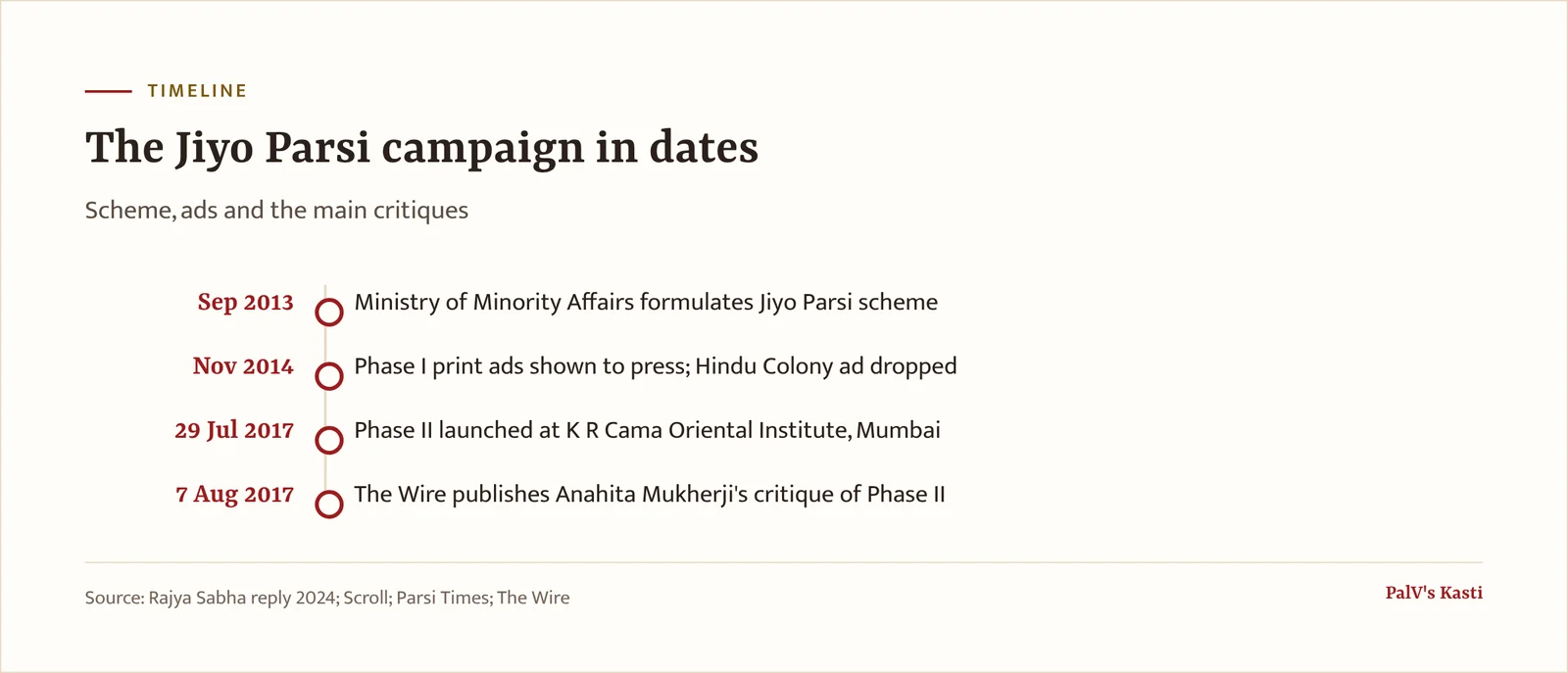

Scroll reported on 11 November 2014 that the scheme planned to spend Rs 10 crore over four years, with 7% set aside for advocacy. It said Sam and Lara Balsara of Madison Advertising, both Parsis, made the campaign without a fee. The trade site afaqs! named Madison BMB as the creative agency and said the Parzor Foundation produced the campaign with help from the Bombay Parsi Punchayet and the Ministry.
A second phase followed. Parsi Times reported that it was launched on 29 July 2017 at the K R Cama Oriental Institute in Mumbai, with Minister of State Mukhtar Abbas Naqvi as chief guest. The trade site medianews4u said this phase had 12 ads.
Why were the 2014 Jiyo Parsi ads called sexist?
The line most people remember told couples: "Be responsible. Don't use a condom tonight." Outlook reported that Sam Balsara and his daughter Lara put that ad together. Open magazine reported that some young Parsi women were not amused, and several of them spoke on the record.
- Simin Patel, a Mumbai researcher working on the social history of the city's Parsis, told Scroll that the pressure the ads put on women and their bodies was "appalling". To Open magazine she described the programme as a "state-sponsored system of breeding racially pure children". In her own column for Scroll on 13 November 2014, she wrote that the campaign took women back to an age when they "were confined to the domestic".
- Divya Cowasji, a filmmaker who co-directed Qissa-e-Parsi, told Outlook: "The burden is being put squarely on the woman."
- Priya Prakashan, writing for India.com on 14 November 2014, said the ads had come across as sexist, offensive and insensitive.
The advertising trade was split. Partho Sinha, then creative head at DigitasLBi, told afaqs! that the campaign shouldn't have discouraged condom use. In the same report, Swapan Seth of Equus Red Cell called it "a glorious effort".
What happened to the "Hindu Colony" ad?
One 2014 ad showed Dadar's Parsi Colony with a sign reading "Hindu Colony", warning that the area would get a new name within the reader's lifetime if Parsis didn't marry and have children. Scroll reported that it caused outrage at the launch itself.
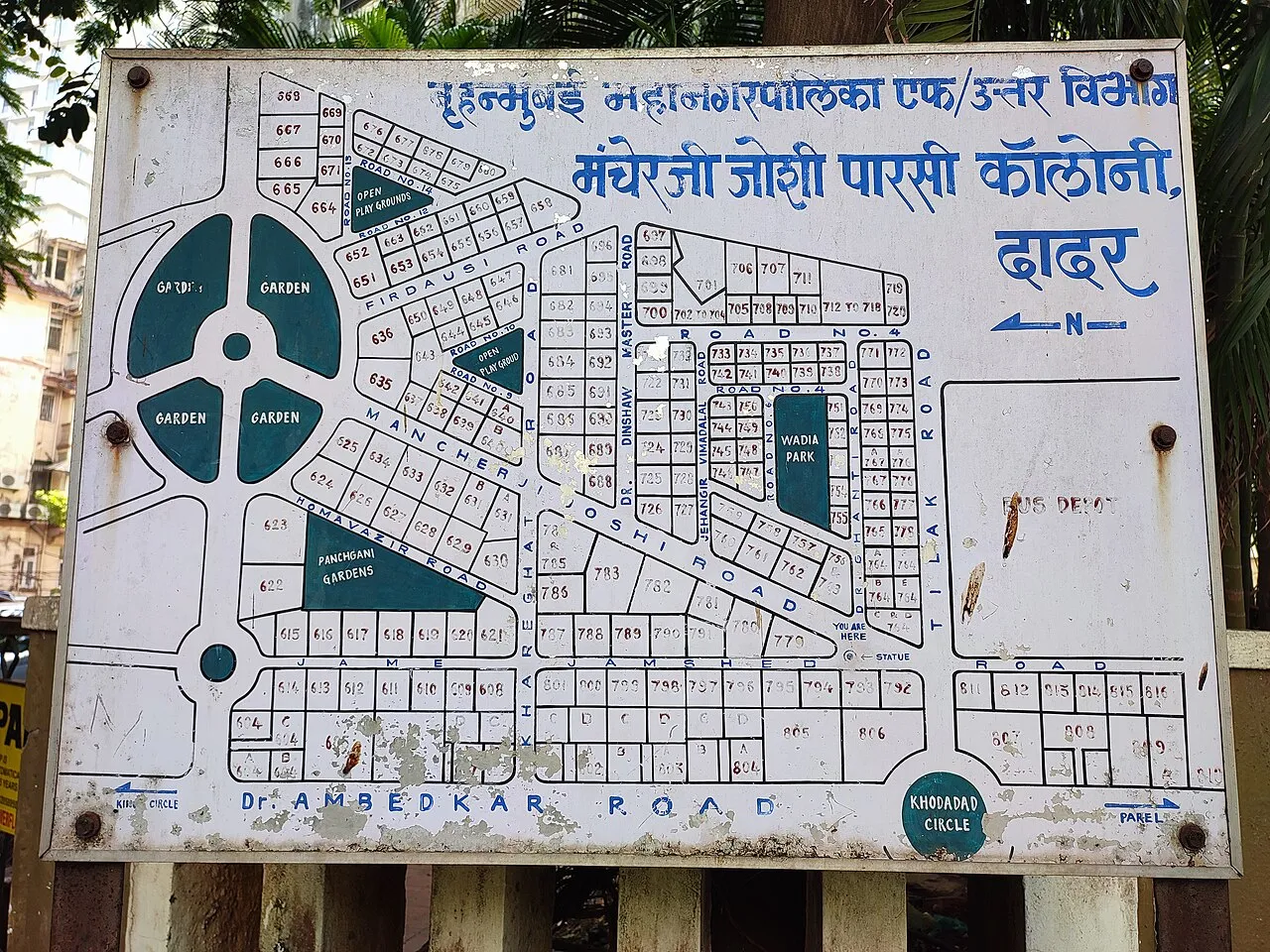
Shernaz Cama, director of Parzor, told Scroll that the ad would not be published because of the community's negative feedback. "We have deepest respect for the Hindu community," she said.
What did critics say about the 2017 Phase II ads?
The sharpest attack came from Anahita Mukherji, a US-based journalist, in an opinion piece in The Wire on 7 August 2017. She opened by asking readers to imagine a khap panchayat running the same kind of campaign, and suggested it wouldn't have been received so kindly.

- On an ad warning an ageing bachelor that his servant would one day inherit the family home, she wrote that it was a display of "racism, elitism and classism". ThePrint, looking back in August 2023, said the servant ad drew sharp criticism from people who saw it as sexist, classist and regressive.
- She said the campaign shamed single people and couples with fewer than two children. One ad compared having an only child to a job "half done".
- She objected that the ads never mentioned romance or compatibility as reasons to marry, and that single people were shown as sad and lonely. She wrote that in Mumbai, where she had spent most of her life, she had met many single men and women who led full and happy lives.
Did critics question the money and the number of births?
Yes, from both directions. Some objected to the spending itself. Divya Cowasji told Outlook she was appalled that the rest of India was being told to have fewer children while government money was sanctioned for Parsis to have more. Outlook called it the "10 crore question". Mukherji argued in The Wire that the money should have gone to preserving India's dying Adivasi cultures instead.
Others doubted the scale. In Outlook's report on the 2014 ads, Jehangir Patel, editor of Parsiana, asked how many more babies the scheme could lead to, "20 in a year?", and said that wouldn't change the community's demographics. In 2017 Mukherji wrote that 104 children born with medical help over three years wouldn't save the community. In March 2024 Patel told the Free Press Journal that around 400 births were too few to revive it. How the Ministry and the organisers count and judge those births is covered on our page on Jiyo Parsi results, and the census figures behind the worry are on Parsi population in India.
How is the campaign tied to the debate on Parsi women who marry out?
Several critics linked the ads to the older argument over Parsi women who marry non-Parsis, and over their children.
- Outlook reported at the time that the scheme's medical and financial help was not offered to women who had married non-Parsis.
- Jehangir Patel told Outlook that a community that really wanted to survive would have accepted women who marry out, and their children.
- Goolrukh Gupta, who married a non-Parsi in 1991 and has campaigned for equal rights for Parsi women, told Outlook the campaign was a symptom of contradictions within the community.
- Mukherji wrote that children of Parsi fathers and non-Parsi mothers are accepted while those of Parsi mothers and non-Parsi fathers are not, and called this "patriarchy, conservatism and bigotry". She suggested promoting adoption instead of fertility treatment.
Cama, replying in Outlook, said she agreed there was a need for more open discussion about women marrying out.
Practice varies between families and Agiaries; your family priest's guidance comes first.
How did the organisers and the ad makers respond?
They defended both the tone and the purpose, in their own words:
- Shernaz Cama (Parzor) told Outlook at the time: "We are not neo-Nazis." She said nobody was being forced to marry or have children, and that the ads were kept light-hearted and sarcastic on purpose. She also told Outlook that every community in danger of dying out is protected in India. To India.com she said the community has a great sense of humour. Looking back in 2023, she told ThePrint the ads "were meant to shock people" and had started a huge debate.
- Sam Balsara (Madison World) told Outlook: "Good advertising often stirs the pot!" He said humour was chosen to reach young Parsis. At the 2017 launch, Parsi Times reported, he said the second phase would speak from the individual's point of view, not the community's.
- Lara Balsara told Outlook the ads spoke to men too, telling them to stop being "mama's boys", and that no one was being forced into anything.
- Raj Nair, chief creative officer at Madison BMB, told afaqs! the team chose humour so the message wouldn't be bleak or morbid.
Frequently asked questions
What was the Jiyo Parsi ad campaign?
It is the awareness campaign under the Advocacy part of the Ministry of Minority Affairs' Jiyo Parsi scheme, formulated in September 2013. Its first print ads, shown in November 2014, urged Parsis to marry early and have children. A second phase of 12 ads was launched in Mumbai on 29 July 2017, according to trade and community press.
Why were the Jiyo Parsi ads criticised?
Critics quoted by Scroll, Outlook and Open said the 2014 ads placed the burden of the decline on women. A "Hindu Colony" ad was dropped after complaints. In The Wire, Anahita Mukherji called the 2017 ads racist, elitist and classist. Others questioned the Rs 10 crore budget and said the births were too few.
Who made the Jiyo Parsi ads?
Scroll reported in November 2014 that Sam and Lara Balsara of Madison Advertising made the campaign without charging a fee. afaqs! named Madison BMB as the creative agency and said the Parzor Foundation produced it with the Bombay Parsi Punchayet and the Ministry. Parsi Times said Madison also worked on the 2017 phase.
What did the organisers say in response to the criticism?
Shernaz Cama of Parzor told Outlook the ads were light-hearted and sarcastic by design and that nobody was being forced to marry. Sam Balsara said good advertising stirs the pot and that humour was chosen to reach the young. In 2023, Cama told ThePrint the ads were meant to shock and had started a debate.
Was there a second phase of the Jio Parsi campaign?
Yes. Parsi Times reported that Phase II was launched on 29 July 2017 at the K R Cama Oriental Institute in Mumbai, with Minister of State Mukhtar Abbas Naqvi present. Sam Balsara said it would speak from the individual's point of view. A Wire opinion piece on 7 August 2017 criticised its servant and single-life ads.