 PalV's Kasti
On this page
- Who was K. R. Cama, and why is the institute named after him?
- When and how was the K. R. Cama Oriental Institute founded?
- What does the Cama Institute library hold?
- Why does the institute matter to Zoroastrian scholarship?
- Does the K. R. Cama Oriental Institute publish a journal?
- What lectures, courses and events does the institute run?
- Where is the K. R. Cama Oriental Institute and when is it open?
- Frequently asked questions
The K. R. Cama Oriental Institute is a research institute and library in Fort, Mumbai, set up in 1916 to keep alive the memory of Kharshedji Rustomji Cama, the oriental scholar who died in 1909. It matters to Zoroastrian scholarship because its library gathers the private collections of a long line of community scholars, from Mulla Firoze to Sir Jivanji J. Modi, under one roof. Business Standard reported in 2012 that the library held 27,000 books and 2,000 manuscripts in Avesta, Sanskrit and Pahlavi. Alongside the library, the institute funds research, holds endowed lectures and publishes a journal and reprints of old Zoroastrian texts.
અસપંદામેદ રોજ
Asfandarmad Roj, Tir Mah · 1396 Y.Z.
Who was K. R. Cama, and why is the institute named after him?
The institute's own website describes Kharshedji Rustomji Cama as an oriental scholar, linguist, social reformer and educationist, and says he passed away in 1909. A 2007 profile of the library, prepared for the International Association of Law Libraries conference, adds that he knew ten languages and took an interest in the sciences as well as the humanities. The institute says it was founded as his memorial with funds collected from the citizens of Bombay. His life and work have their own page: read our post on K. R. Cama.
When and how was the K. R. Cama Oriental Institute founded?
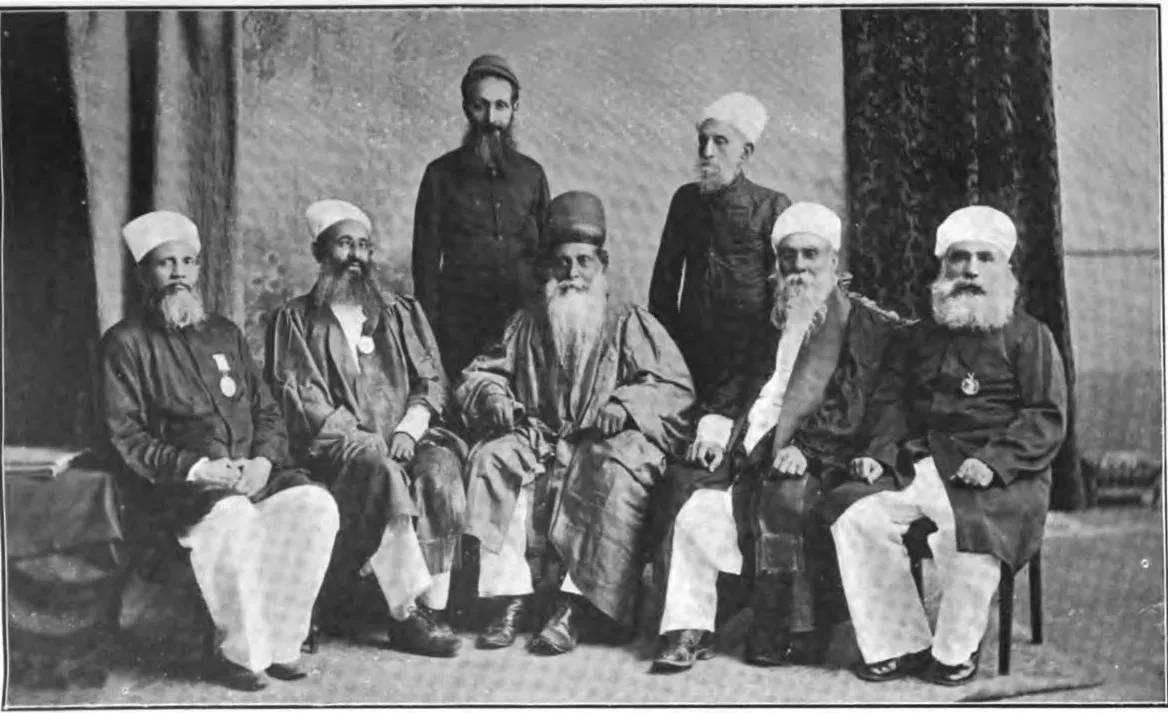
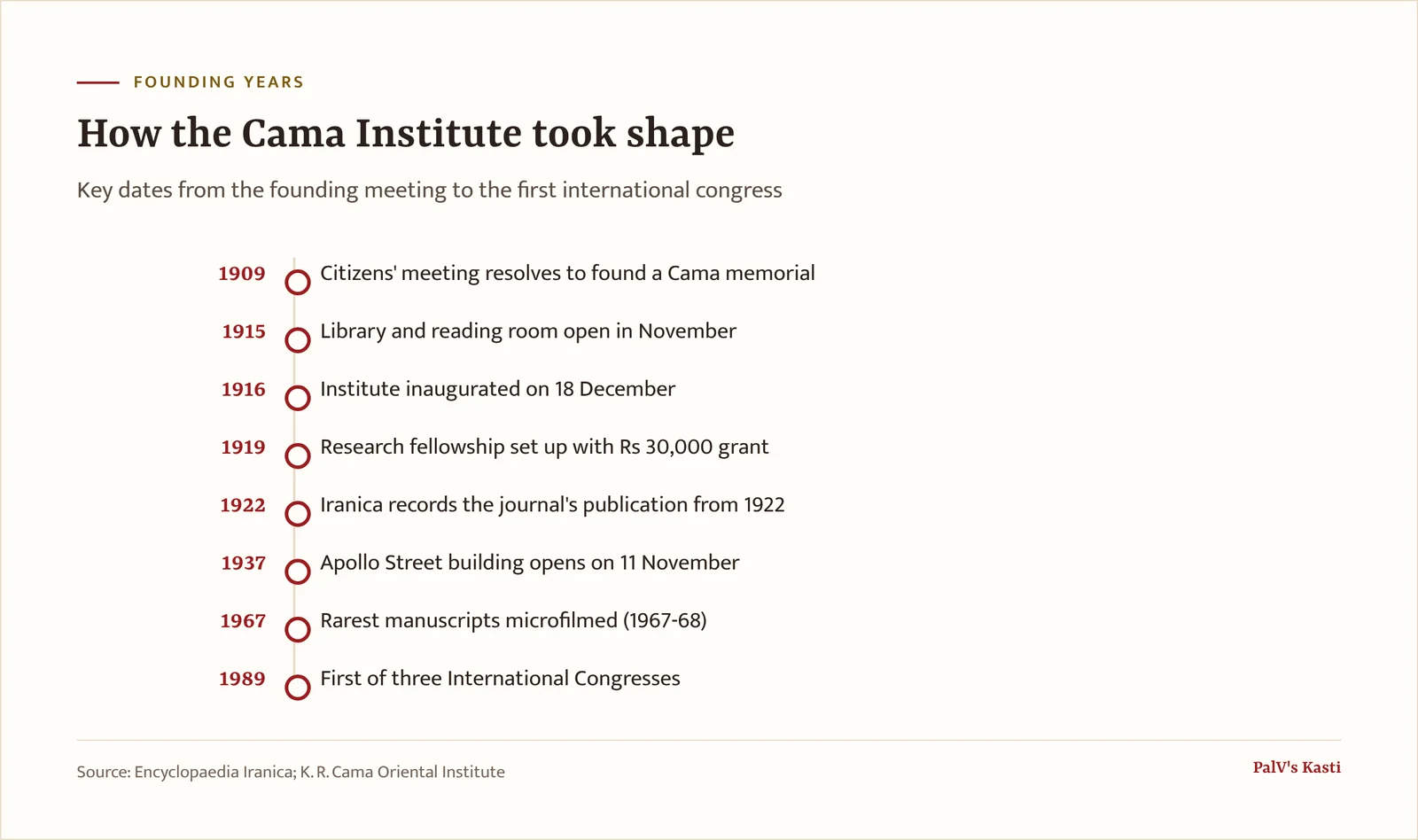
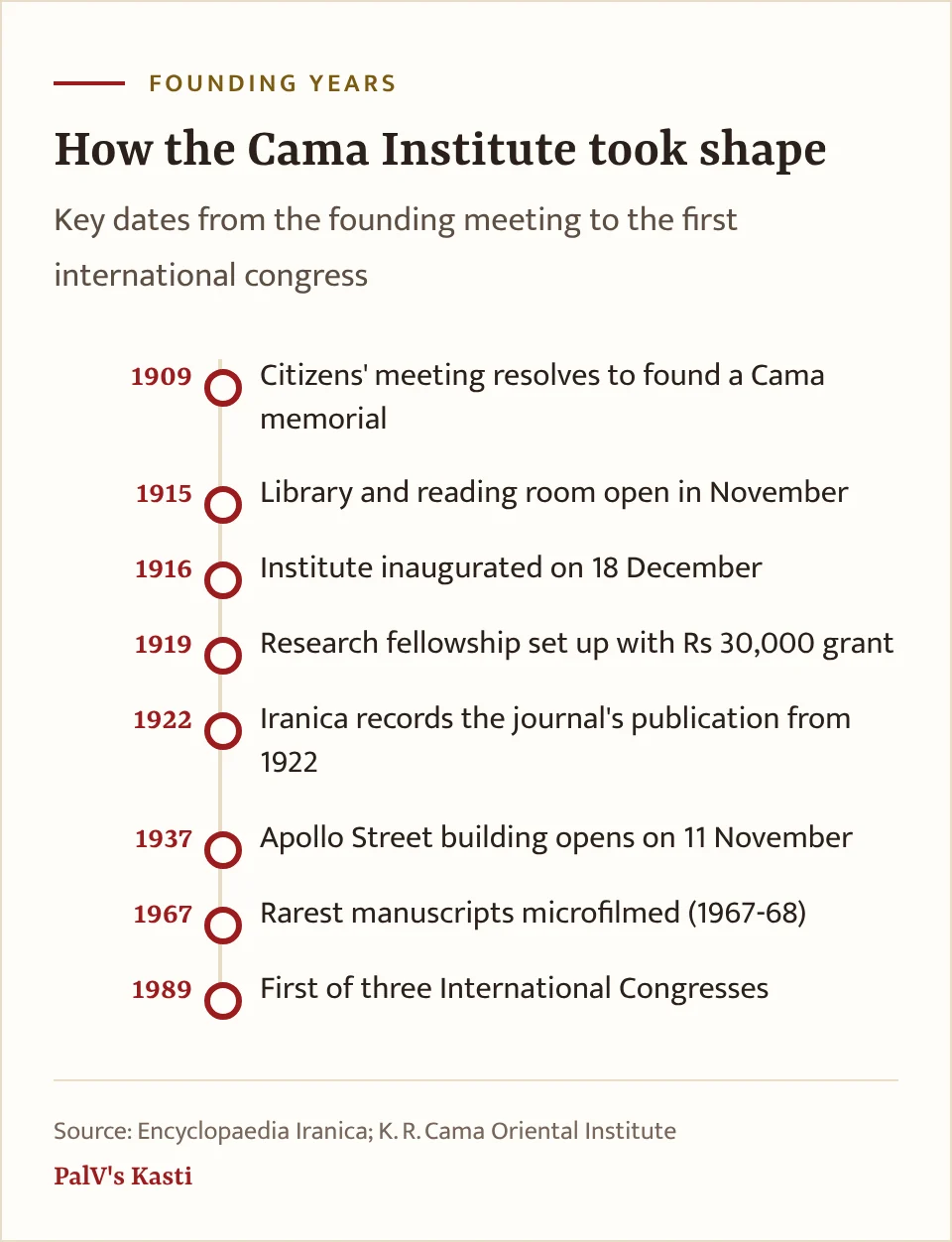
Seven years passed between the first meeting and the opening ceremony. Encyclopaedia Iranica's entry on the institute (Kanga and JamaspAsa, 1990) records that after Cama's death a meeting of leading citizens was held on 8 December 1909, with the Governor of Bombay (later Lord Sydenham) in the chair. According to Iranica, the meeting favoured a research institute for oriental studies, with Iranian studies at its centre, as the right way to remember him.
One of the major donors was not a Parsi. The IALL profile names a Hindu philanthropist, Damodardas Gordhandas Sukhadwalla, and puts his gift at Rs 1,00,000. Iranica lists a Damodardas G. Sukhadwalla Fund for the promotion of oriental studies among the institute's endowments.
The library came first. According to Iranica, the library and reading room opened first, in November 1915, in rooms in the then-new Sukhadwalla Building on Hornby Road, and the institute itself was inaugurated on 18 December 1916 by Lord Willingdon, the next governor. The institute's website, Business Standard and the IALL profile all give 1916 as the founding year.
The early milestones, as Iranica records them
- Dr D. Mackichan was the first president, from 1910 to 1917.
- In 1919 a research fellowship was set up with a Rs 30,000 grant from the Government of Bombay. The institute still lists Government Research Fellowship Lectures among its activities.
- A new building on Apollo Street opened on 11 November 1937.
What does the Cama Institute library hold?
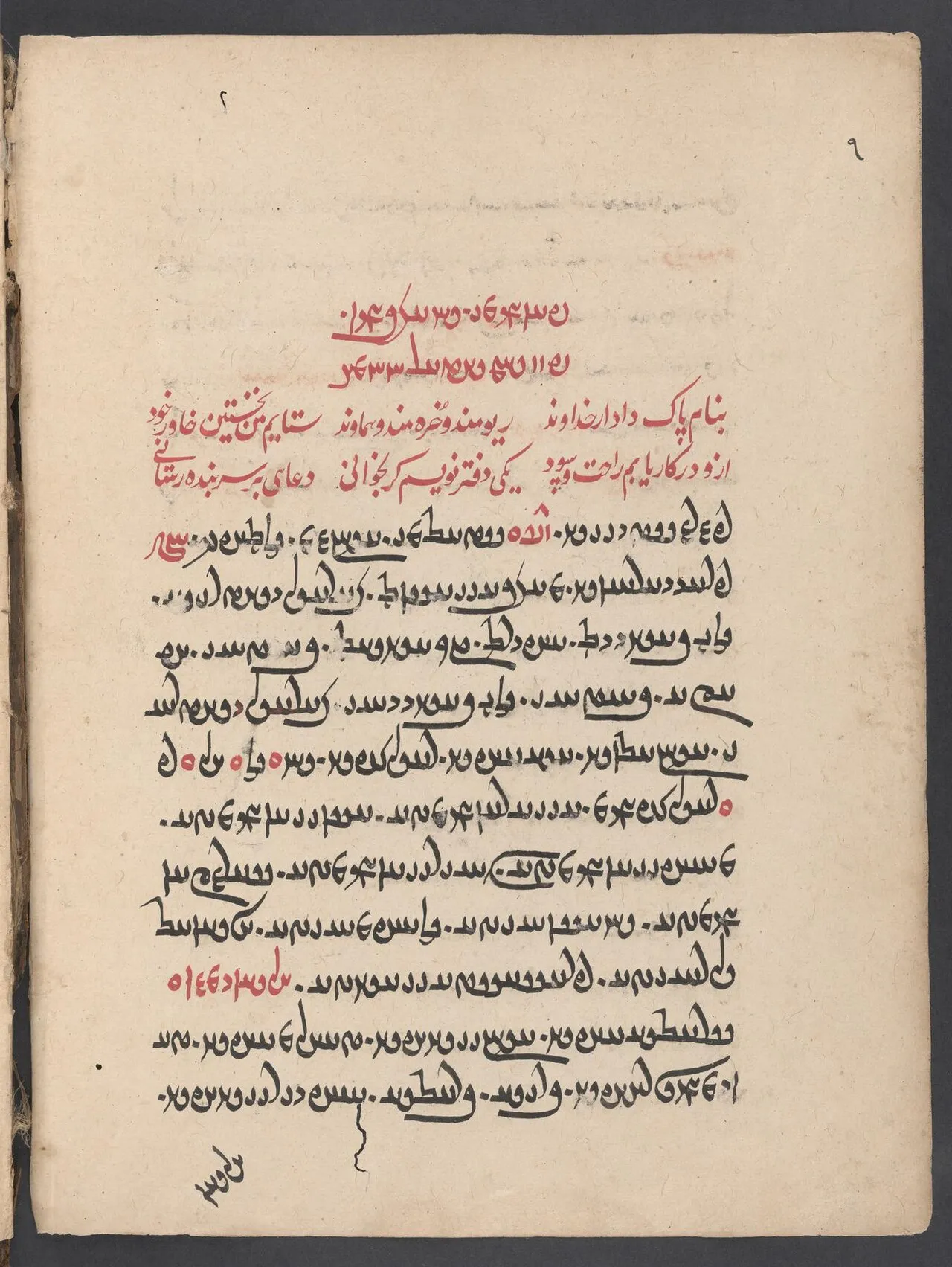
Iranica says the nucleus of the library was K. R. Cama's private library, presented by his family. Around it, over the decades, the institute took in the private libraries of other scholars. Iranica says the Mulla Firoze library was kept as a distinct part of the collection. The IALL profile lists further collections from Maneckji Limji Hataria, Sir Jivanji J. Modi, Sir Dorab Tata, Dastur Darab Sanjana, Jamshedji Unvala and Tehmurasp Anklesaria. Many of these names come up again in our post on Parsi Avesta and Pahlavi scholars.
How big is the collection?
Two published counts exist, 22 years apart. We have not found a newer figure from 2025 or 2026.
| Source and year | Books | Manuscripts |
|---|---|---|
| Encyclopaedia Iranica, 1990 | about 20,000 | 1,828 |
| Business Standard, 2012 | 27,000 | 2,000 |
Iranica lists the manuscript languages as Avestan, Middle Persian, Pazand, Persian, Arabic, Turkish, Gujarati, Urdu, Hindustani and Punjabi, and noted that only about half of the manuscripts had been classified. The 2012 report says the books are in English, Persian, Gujarati, German, French and other languages, and that the shelves also carry books on Hinduism, Sikhism, Islam and other faiths.
Which manuscripts stand out?
Iranica singles out four: a Vendidad Sade with Nirang (D 58, dated 1721 or 1741), a Yasna with Pahlavi translation (D 90, undated), a copy of books 3 to 9 of the Denkard made in 1659 (D 13), and a divan of Hafez from 1594 (R 176). It also notes that the rarest manuscripts were microfilmed in 1967 and 1968. In 2012 Business Standard reported that very old Avesta and Pahlavi manuscripts were being conserved with INTACH, whose experts cleaned each page and wrapped it in Japanese paper before rebinding.
Why does the institute matter to Zoroastrian scholarship?
Its library brings together the private collections of several of the community's own scholars, which the IALL profile describes as an amalgamation of the collections of distinguished scholars of their time. The same profile calls the library the main and most comprehensive source of information on Zoroastrianism, and Business Standard described it in 2012 as one of the world's major resources on the subject.
The institute also pays for new work. Its website says it awards research projects to young scholars and annual fellowships to senior and junior researchers. One beneficiary, Priya Maholay-Jaradi, then a PhD student at the National University of Singapore, told Business Standard in 2012 that the institute "went beyond the scope of its collection" to back her work. Her study of Raja Ravi Varma's portraits of Parsi sitters was published by the institute.
Its readers are not only Parsis. Nawaz B. Mody, then joint honorary secretary, told the same paper that more foreign scholars than Indians used the library. She added that several of its books are in Gujarati and so have few readers. "We want to be recognised as a secular institute," she said, explaining why it hosts speakers and keeps books from all faiths.
Does the K. R. Cama Oriental Institute publish a journal?
Yes. Iranica records that the institute published the Journal of the K. R. Cama Oriental Institute between 1922 and 1944. The institute's online shop today sells later numbers, including Journal No. 70 (2010) and No. 73 (2013). Its About page says the journal comes out every year and is sent to universities and scholars worldwide.
Books are the other half of the publishing work. The institute reprints out-of-print Zoroastrian titles with a grant from the Zarthosty Brothers (Faridoon and Mehraban) Fund. One example is the K. R. Cama Memorial Volume, essays collected by Jivanji Jamshedji Modi and published in 1900 for Cama's seventieth birthday, which the institute reissued in 2005. In 2012 Business Standard listed books the institute had brought out on Parsis and cricket, on Zoroastrian law and ethics, and on the Baj-dharna ceremony.
What lectures, courses and events does the institute run?
The institute's About page lists a long programme. It holds the Avabai Wadia Memorial Lectures and the Dinshaw J. Irani Memorial Lectures each year, runs regular courses in World Religions, and has an exchange agreement with the Department of Persian Studies at the University of California, Irvine. It organised International Congresses in 1989, 1995 and 2000, and national seminars between 2001 and 2010 on subjects from Ferdowsi's Shahnameh to Sir J. J. Modi's life. For students, the Goolestan Bilimoria Endowment funds yearly inter-school and inter-college seminars, debates and essay contests.
Where is the K. R. Cama Oriental Institute and when is it open?
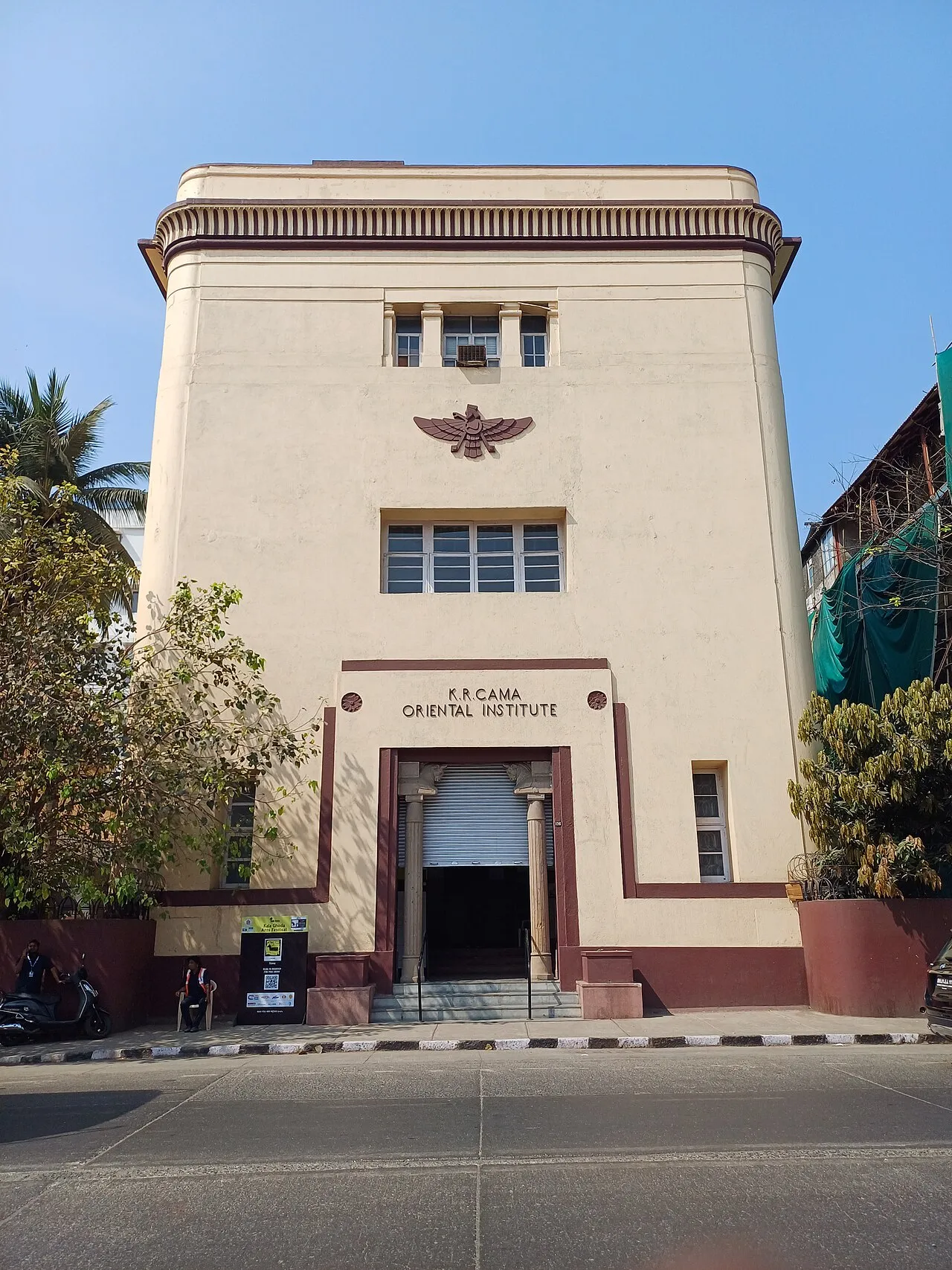
According to the institute's contact page, it is on the second floor of the K. R. Cama Institute Building, 136 Bombay Samachar Marg, Fort, Mumbai 400023, across from Lion Gate. The same page gives its hours as 10:30 am to 4:30 pm Monday to Friday and 10:30 am to 1 pm on Saturday, closed on Sunday, with the phone number 022-2284 3893. The website doesn't set out who may use the library or on what terms, so ring before you go.
Frequently asked questions
What is the K. R. Cama Oriental Institute?
The Cama Oriental Institute is a research institute and library in Fort, Mumbai, founded in 1916 in memory of the oriental scholar Kharshedji Rustomji Cama. It holds a large collection of books and manuscripts on Zoroastrianism and Iranian studies, funds research fellowships, hosts endowed lectures and publishes its own journal.
When was the Cama Oriental Institute founded?
The institute gives 1916 as its founding year. Encyclopaedia Iranica adds detail: a citizens' meeting on 8 December 1909 decided to create it, the library and reading room opened in November 1915, and the formal inauguration by the Governor of Bombay, Lord Willingdon, took place on 18 December 1916.
How many manuscripts does the K. R. Cama library have?
Encyclopaedia Iranica counted 1,828 manuscripts in 1990, in languages from Avestan, Middle Persian and Pazand to Persian, Arabic and Gujarati. Business Standard reported 2,000 manuscripts in Avesta, Sanskrit and Pahlavi in 2012, along with 27,000 printed books. We have not found a more recent published count from the institute itself.
Whose collections are in the Cama Institute library?
K. R. Cama's own library forms its core. A 2007 IALL profile names further collections from Mulla Firoze, Maneckji Limji Hataria, Sir Jivanji J. Modi, Sir Dorab Tata, Dastur Darab Sanjana, Jamshedji Unvala and Tehmurasp Anklesaria. Encyclopaedia Iranica notes that the Mulla Firoze library is kept as a separate part of the collection.
What are the K. R. Cama Oriental Institute's timings?
The institute's contact page lists 10:30 am to 4:30 pm from Monday to Friday and 10:30 am to 1 pm on Saturday, with Sunday closed. It is on the second floor of the K. R. Cama Institute Building on Bombay Samachar Marg, opposite Lion Gate in Fort. Phone 022-2284 3893 to confirm before visiting.


