 PalV's Kasti
On this page
- What are the seven items of the haft-seen, and what does each mean?
- Why seven, and is there a Zoroastrian meaning?
- What else goes on the Nowruz table?
- What do Iranians eat for the Nowruz meal?
- What happens to the food on the thirteenth day?
- How does this compare with Parsi Navroz in India?
- Frequently asked questions
At Nowruz, Iranian families set a haft-seen table of seven things whose Persian names begin with the letter "seen": sprouted grains for rebirth, samanu (a sweet wheat pudding) for plenty, senjed for love, garlic for medicine, apples for health and beauty, sumac for the colour of sunrise and vinegar for age and patience. The meal itself centres on fish with herbed rice, sabzi polo ba mahi. Kuku sabzi, a baked herb and egg dish, joins it, along with ash reshteh noodle soup, nuts and plenty of sweets. The greens stand for spring, the eggs for fertility and the fish for abundance. On the thirteenth day the sprouts are thrown away and families eat outdoors.
This post is about the Iranian table. What Parsi families in India cook for the day is covered in our hub on Parsi New Year food.
શહેરેવર રોજ
Shehrevar Roj, Tir Mah · 1396 Y.Z.
What are the seven items of the haft-seen, and what does each mean?
FEZANA's 2012 cookbook Eat, Live, Pray gives the list as Mobed Mehraban Firouzgary set it out. Saveur's 2014 Nowruz feature by Farideh Sadeghin gives the same seven with nearly the same meanings.

- Sabzeh: wheat, barley or lentils sprouted in a dish over the weeks before the festival. Rebirth.
- Samanu: a sweet, slow-cooked pudding of sprouted wheat. Affluence.
- Senjed: the dried fruit of the oleaster tree (Saveur calls it dried lotus fruit). Love.
- Sir: garlic. Medicine.
- Sib: apples. Beauty and health.
- Somaq: sumac berries, for the colour of the sunrise.
- Serkeh: vinegar, for age and patience.
The meanings shift a little between writers. Al Jazeera's 2025 Nowruz explainer, for example, ties samanu to patience, strength and abundance, because the wheat takes time to sprout, and adds wisdom to both senjed and vinegar.
Are the seven items always the same?
No. The Encyclopaedia Iranica entry on the haft sin, by A. Shapur Shahbazi, lists a different seven: sprouts, wild rue seeds (sepand), apples, newly minted coins (sekka), garlic, vinegar and samanu. Sumac and senjed are not in it. Smithsonian adds that other items, some starting with "s" and some not, are often put out as well.
How is samanu made?
Iranica describes wheat left to soak for three days, ideally in collected rainwater, then sprouted and ground. The sap from it is mixed with hot water, oil and flour and cooked very slowly, often through the whole night, until it becomes a thick, sweet, reddish paste. In Kurdish areas, Iranica notes, women cook samani with ceremony.
Why seven, and is there a Zoroastrian meaning?
FEZANA's cookbook calls seven an auspicious number in Zarathushti heritage and says the seven items of the Nowruz spread stand for the seven Amesha Spentas and the seven creations, along with piety, ethics and values. Iranica makes similar links object by object: the candles for Ardibehesht and fire, the coins for Shahrivar and wealth, the milk for Bahman, the hyacinth for Khordad and Amardad, and the musk willow and wild rue for Spenta Armaiti.
The custom's age is another matter. Iranica calls its history obscure and says the haft-sin in its present form looks recent, catching on only in the last century, helped by the media. Smithsonian Magazine likewise says the original meaning is hard to pin down.
Komaj, the one cooked dish on a Zoroastrian table
According to Mobed Mehraban Firouzgary, writing in the FEZANA cookbook, komaj (also spelled komach) is the only cooked food placed on the Zoroastrian NoRooz table. He describes a cake of flour, sugar, ghee, walnuts, almonds and rosewater baked in copper pots, and reads every ingredient as one of the Amesha Spentas: butter and milk for Bahman, the baking fire for Ardibehesht, the metal pot for Shahrivar, flour and sugar from the soil for Spenta Armaiti, water for Khordad, and dried fruit and nuts for Amardad. A recipe in the same book, from Minoo Mehrayin, says komach began as a ceremonial bread for occasions such as death anniversaries and only later gained sugar, dates and walnuts.
Practice varies between families and Agiaries; your family priest's guidance comes first.
What else goes on the Nowruz table?
Iranica describes a mirror placed at the head of the cloth with candles on either side, a bowl of water holding a goldfish or red fish, milk, cheese, fresh herbs such as tarragon, leek and basil, and coloured eggs (one, three, five or seven of them). Fruit, nuts and sweets fill the rest. The favoured fruits used to be apples, sour oranges, lemons, quinces, grapes and pomegranates, and the nuts pistachios, almonds, walnuts and roasted chickpeas.
The eggs carry their own meaning. FEZANA's cookbook explains that Zarathushtis still decorate eggs at NoRooz as a sign of spring and renewal, because the festival falls at the vernal equinox, when days start to grow longer. Smithsonian compares the custom to Easter eggs.
What do Iranians eat for the Nowruz meal?
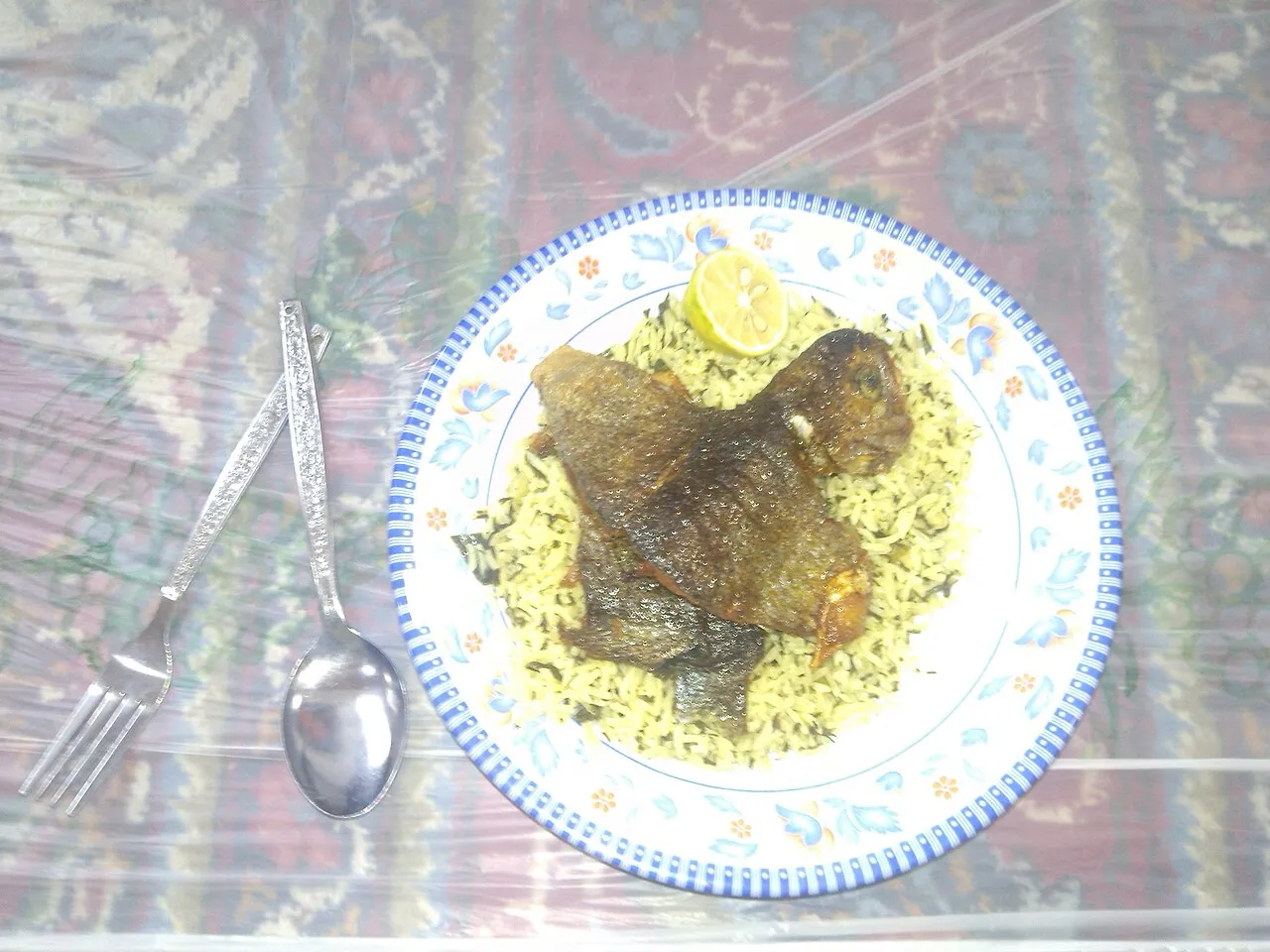
The dish named most often is fish with rice cooked with plenty of fresh herbs. Iranica records this as the usual meal on the eve of the new year, and Al Jazeera and Smithsonian both name it as sabzi polo ba mahi (Smithsonian spells it "va mahi"). Saveur explains the fish simply: it is there for abundance.
- Kuku sabzi: eggs beaten with a large amount of chopped herbs and baked until set. Saveur says Nowruz dishes are picked for their eggs, for fertility, and their greens, for the colours of the season and the waking earth. FEZANA's cookbook calls kuku-ye-sabzi one of the most traditional dishes on the NoRooz table.
- Ash reshteh: a thick noodle soup. Smithsonian says it is thought to bring good luck and is eaten at the start of anything new.
- Ajeel: a mix of seven nuts and dried fruits that Smithsonian says is handed round. FEZANA's cookbook calls the Zoroastrian version lork.
- Sweets: Iranica singles out sowhan, samanu, and small cookies of chickpea or rice flour. Sweets, nuts and coloured eggs go round once the year turns.
Not every region eats the same thing. Iranica notes that in Herat the special meal is rice pilaf with a rooster stew, and that in Badakhshan a dish called baj, sheep's head and trotters cooked with whole wheat, is part of the feast. It also records an older custom from the scholar Biruni: tasting honey three times on Nowruz morning was meant to keep illness away.
For the dishes Parsi homes cook on the day, our Parsi New Year recipes page walks through a full menu, and falooda has its own page, Navroz falooda.
What happens to the food on the thirteenth day?
Nowruz lasts thirteen days. On the last, families go out for a picnic in a park or by a river, and Iranica says large meals, fruit, nuts and sweets are eaten outdoors. The sabzeh goes too. FEZANA's cookbook says the sprouted grains are thrown into running water to carry away the past year's bad luck. Iranica and Al Jazeera both record the sprouts being thrown away on that day.
How does this compare with Parsi Navroz in India?
We have not found a source that documents Parsi homes in India laying a haft-seen, so we make no claim either way. The Parsi menu and its customs are on our Parsi New Year food page, and the festival itself is explained in Parsi New Year (Navroz).
Frequently asked questions
What are the 7 items of haft-seen?
The list FEZANA and Saveur both give is sabzeh (sprouts), samanu (sweet wheat pudding), senjed (dried oleaster fruit), sir (garlic), sib (apple), somaq (sumac) and serkeh (vinegar). Each name starts with the Persian letter seen. Encyclopaedia Iranica gives a different set, swapping in wild rue seeds and coins, so lists vary.
What is eaten for Nowruz dinner?
The best-known Nowruz meal is sabzi polo ba mahi, fish served with rice cooked with lots of fresh herbs. Encyclopaedia Iranica records fish with herbed pilaf as the usual meal on the eve of the new year. Kuku sabzi, ash reshteh noodle soup, nuts, dried fruit and sweets are commonly served alongside it.
Why is fish eaten at Nowruz?
Saveur's Nowruz feature says the fish dish is there for abundance. Fish also appears on the haft-seen table itself, as a goldfish or red fish in a bowl of water. Encyclopaedia Iranica links that fish to Kara Mahi, a fish said to swim in the Vourukasha sea and keep harmful creatures away.
What does samanu symbolise?
FEZANA's cookbook and Saveur both say samanu stands for affluence. Al Jazeera adds patience and strength, because the wheat in it must be sprouted slowly before it is cooked. Encyclopaedia Iranica describes samanu as a thick, sweet, reddish paste made from sprouted wheat and cooked very slowly, often overnight, before the festival.
When is Nowruz celebrated?
Nowruz begins at the vernal equinox, so its date moves between 19 and 22 March, according to FEZANA's cookbook. In 2025 it fell on 20 March, Al Jazeera reported. The celebrations run for thirteen days and close with an outdoor picnic, when the sprouted sabzeh from the table is thrown away.
Is the haft-seen table an ancient custom?
Probably not in its present form. Encyclopaedia Iranica calls the custom's history obscure and says the haft-sin as known today seems to have become popular only in the last century. Smithsonian Magazine also says its original meaning is hard to pin down.


