 PalV's Kasti
On this page
- What is on a Parsi New Year menu, from breakfast to lunch?
- How do you make sagan ni sev with sweet yogurt?
- How do you make ravo for Navroz morning?
- How do you set mithoo dahi at home?
- How do you cook mori dar for the New Year lunch?
- Which festive dishes do families add to the Navroz lunch?
- In what order should you cook for Navroz day?
- Are the same recipes cooked for Jamshedi Navroz in spring?
- Frequently asked questions
A Parsi New Year menu is cooked in two parts. Breakfast is sweet: sagan ni sev with mithoo dahi, or a bowl of ravo. Lunch is built on mori dar and plain white rice with a sharp fish or prawn patio, and families add festive dishes such as patra ni machhi, salli boti, farcha or a pulao. Below are Parsi New Year recipes for the four core dishes, each from one named cook, plus the order to make them in so everything is ready on Navroz morning.
શહેરેવર રોજ
Shehrevar Roj, Tir Mah · 1396 Y.Z.
What is on a Parsi New Year menu, from breakfast to lunch?
Families quoted by the Deccan Chronicle in 2019 said the New Year begins with something sweet: sagan ni sev, mitthu dahi or ravo. NewsMeter's 2025 piece calls sev the first dish at breakfast on any auspicious day, eaten with sweet yogurt.
At lunch, Saveur describes rice with butter-yellow mori dar under crisp fried garlic, with prawn or fish patio on the side, and NewsMeter also names lentils and white rice. For the story behind each dish, read our guide to Parsi New Year food, and for how the plate is laid out course by course, see the Navroz Parsi thali.
How do you make sagan ni sev with sweet yogurt?
This method follows Sanjeev Kapoor's "Sagan ni Sev" recipe (SK Khazana, sanjeevkapoor.com), which serves 4. Kapoor calls the dish a must at any special occasion in a Parsi household. The sweet yogurt needs 7 to 8 hours to set, so start it the night before.
Ingredients
- For the sweet yogurt: 1 cup warm milk, 1/4 cup caster sugar, 1 tbsp yogurt, a few fresh rose petals
- For the sev: 100 g vermicelli, caster sugar for the syrup, 1 cup water, 1/4 cup ghee. The sugar quantity on Kapoor's published page is garbled (it reads "43 cup"), so we can't give you a reliable figure for it.
- 1 tbsp chironji, 8 to 10 almonds (blanched, peeled and sliced), 8 to 10 cashews (broken), 2 tbsp raisins
- 2 to 3 tsp rose water and 1/4 tsp green cardamom powder
Method
- Dissolve the sugar in the warm milk, stir in the spoon of yogurt and pour it into an earthen pot. Leave it somewhere warm and dry for 7 to 8 hours to set.
- In the morning, break the vermicelli into small pieces.
- Simmer the sugar with 1 cup of water in a non-stick pan until it dissolves and the syrup thickens a little.
- Heat the ghee and fry the chironji, almonds, cashews and raisins for 2 to 3 minutes. Lift them out.
- In the ghee left in the pan, fry the vermicelli over low heat until golden brown.
- Pour in the syrup, stir, cover and cook for 5 minutes.
- Stir in the rose water and cardamom. Mix most of the fried nuts and raisins into the sev and keep a few back.
- Top with the reserved nuts and serve at once, with the yogurt in a separate bowl under rose petals.
How do you make ravo for Navroz morning?
Ravo is the other sweet start. Mumbai chef and academic Rukshana Billimoria told Outlook India that making ravo is "absolutely mandatory" in her house on Navroz. This version is Arnavaz Chubb's semolina pudding from Eat, Live, Pray: A Celebration of Zarathushti Culture and Cuisine, the 2012 FEZANA cookbook compiled by Farishta Murzban Dinshaw. It serves 8 and is eaten chilled, so you can cook it the evening before.
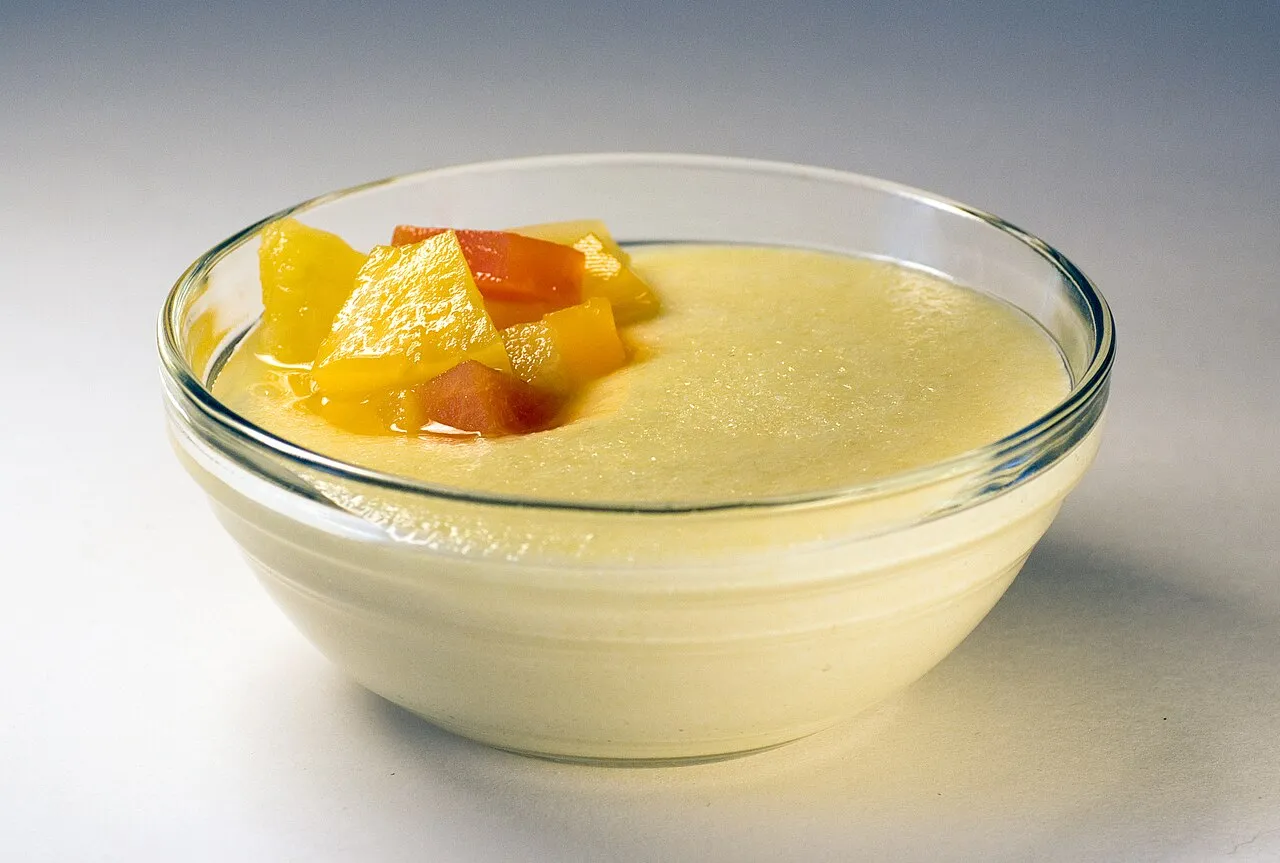
- 4 cups (1 litre) milk
- 3 to 4 tbsp (50 g) semolina
- 3 tbsp (45 g) butter
- 2 tbsp (25 g) sugar
- To finish, to taste: rosewater or vanilla essence, sultanas, slivered almonds, a little extra butter
- Melt the butter in a deep pan, add the semolina and cook until the grains swell slightly. Don't let it catch.
- Add the milk and sugar a little at a time, stirring all the while, until the mixture coats the back of a wooden spoon. It sets further as it cools.
- Cool it a little, stir in the rosewater or vanilla and pour it into a serving dish. Cover the surface with cling film so no skin forms, and chill.
- Fry the almonds golden and the sultanas plump in the extra butter, cool, and scatter over the ravo before serving.
Not every family serves it cold. Freny Bharda told Goya in 2017 that her family's Navroz rawa is cooked in milk for a long time over a slow flame and topped with nuts and raisins.
How do you set mithoo dahi at home?
The FEZANA cookbook says Parsis serve mithoo dahi covered with rose petals, alongside sev, on auspicious occasions such as navjotes. Arnavaz Chubb's recipe in the same book reduces the milk before setting it, and makes one bowl.
- 4 cups (1 litre) full-cream milk
- 2 to 3 tbsp (30 to 45 g) live yogurt as a starter
- 4 tbsp (50 g) sugar, or to taste
- Bring the milk to the boil in a heavy pan and simmer, stirring constantly, until it has reduced a little.
- Add the sugar and keep cooking until the milk is down to half.
- Take it off the heat and let it cool to blood heat, warm but not hot.
- Brush the inside of the setting bowl with some of the starter and stir the rest into the milk.
- Pour into the bowl, cover and leave in a warm place overnight.
Dinoo Nari Dastur's tip in the same book: use an earthenware bowl. The porous clay lets water evaporate slowly, which thickens the dahi. A low oven speeds things up.
How do you cook mori dar for the New Year lunch?
Mori dar is plain toor dal, flavoured only with turmeric and cumin. The FEZANA cookbook explains that "mori" means without salt, and that dar served with white rice becomes "dhun daar". Dhun, it notes, comes from a Sanskrit word for wealth: rice was expensive, ordinary households ate rotli, and rice was kept for special occasions. This recipe is Diana Dinshaw-Parmenter's, from the same book, and serves 4 to 6.
- 1/2 cup (100 g) toor dal
- 1/2 tsp turmeric
- 1 tsp cumin seeds
- 2 tbsp cooking oil
- 1 clove garlic, chopped
- A pat of butter, and fried onions if you like
- Wash the dal and soak it overnight, or for about half an hour in twice its volume of water if you forgot.
- Pressure-cook the dal with the turmeric until soft.
- Fry the cumin seeds in hot oil until they pop, then stir them into the dal.
- Thin with hot water to the consistency your family likes, mash or blend until smooth, and simmer for 3 to 5 minutes.
- Fry the garlic pale golden and spoon it over just before serving, with butter and fried onions if using.
- Serve with boiled white rice, a fish or prawn patio, and mint-coriander chutney.
What patio goes with the dar?
Saveur names prawn or fish patio as the classic partner for mori dar. The FEZANA book carries Dinaz Kutar Rogers's "gaam no patio", a recipe that travelled with her grandmother from Nargol to Bombay. The book notes that her grandmother cooks without set measurements, so its quantities are estimates. In outline: pomfret pieces simmer, covered, in about one and a half cups of malt or cider vinegar with browned onion, a pounded cumin-garlic-green chilli paste and Parsi sambhar masala, and roughly half a cup of jaggery goes in towards the end.
Which festive dishes do families add to the Navroz lunch?
Each home picks its own spread, and the Deccan Chronicle's 2019 report noted that lunch is usually ordered from a Parsi caterer. Dishes named in press accounts include patra ni machhi, salli boti, marghi na farcha, berry or mutton pulao and lagan nu custard. What each one is, and why it belongs on the day, is in our Parsi New Year food guide.
Dhansak is the dish people disagree about. Saveur and Slurrp say it is not eaten on Navroz, and Ashoo Saam Chinoy told the Deccan Chronicle it is eaten on the fourth day after a death. Yet the same Deccan Chronicle piece lists mutton dhansak among caterers' lunch dishes, and The Better India includes it among foods made on the day. Practice varies between families and Agiaries; your family priest's guidance comes first.
In what order should you cook for Navroz day?
The recipes set the timetable: both yogurts need hours to set, the dal soaks overnight and the ravo is served chilled. Here is the plan we would follow:
- The evening before: cook the ravo and chill it under cling film. Reduce the milk for the mithoo dahi, cool it to blood heat and leave it to set. Put the dal to soak.
- Early morning: fry the nuts, make the sev and serve breakfast with the dahi.
- Late morning: pressure-cook the dal, cook the rice and simmer the patio.
- Just before lunch: fry the garlic for the dar and add whichever festive dishes you are cooking or collecting.
Are the same recipes cooked for Jamshedi Navroz in spring?
Parsis mark two new years. The Better India explains that the Shahenshahi calendar followed in India has no leap years, which is why its New Year does not fall on the spring equinox. Jamshedi Navroz is kept on 21 March. NewsMeter's 2025 article on Jamshedi Navroz describes the same sev breakfast and lentil-and-rice lunch for the March day, so this menu works for both. For more on the two dates, see our page on Parsi New Year (Navroz), and for the Iranian spring table, read Nowruz foods and symbolism.
Frequently asked questions
What is sagan ni sev?
Sagan ni sev is vermicelli fried golden in ghee, cooked in sugar syrup and finished with rose water, cardamom, fried nuts and raisins. Sanjeev Kapoor calls it a must at any special occasion in a Parsi household. On Parsi New Year it is eaten at breakfast, and both NewsMeter and Kapoor's recipe pair it with sweet yogurt.
How do you make mithoo dahi?
In Arnavaz Chubb's FEZANA recipe, a litre of full-cream milk is simmered, sweetened with about 4 tablespoons of sugar and reduced to half. Once it cools to blood heat, live yogurt is stirred in and the bowl is left covered somewhere warm overnight. An earthenware bowl gives a thicker set.
What is cooked for Navroz lunch?
The base of a Navroz lunch is mori dar, plain toor dal with turmeric and cumin, served with white rice and a fish or prawn patio. Families then add festive dishes of their choice. Those named in press accounts include patra ni machhi, salli boti, chicken farcha, berry or mutton pulao, and lagan nu custard.
Why is it called mori dar?
According to the FEZANA cookbook Eat, Live, Pray, "mori" means without salt. Mori dar is toor dal flavoured with only turmeric and cumin, then topped with fried garlic. Served with white rice it is called dhun daar, from a Sanskrit word for wealth, because rice was once expensive and kept for special occasions.
Which sweet dishes are eaten on Parsi New Year morning?
Families quoted by the Deccan Chronicle start the New Year with something sweet: sagan ni sev, mithoo dahi or ravo, a semolina pudding made with milk, butter and fried nuts. NewsMeter adds that sev is the first dish eaten at breakfast on any auspicious day, served with sweet yogurt.


