 PalV's Kasti

On this page
Parsi chicken biryani is chicken cooked in yoghurt and spices, layered with rice and steamed in a sealed pot, and it usually has potatoes in it. Canada-based Parsi cookbook author Niloufer Mavalvala calls the potatoes "a deal breaker". She also says Parsis like their biryani with yoghurt, saffron and cardamom, and that the rice is par-boiled and layered before it steams. Some home cooks split the rice in two, colouring one half yellow or orange with saffron, so the finished dish comes out in bands. Then comes the plate: the Parsi cooks we quote serve it with a bowl of dal, and one Mumbai Parsi restaurant has listed biryani dal as a must-have. Dawn reports that Parsis call the dish murghi no palau, and we explain that name in a separate post.
શહેરેવર રોજ
Shehrevar Roj, Tir Mah · 1396 Y.Z.
What makes Parsi chicken biryani different?
Start with the potatoes. In her column for The Cook's Cook, Mavalvala writes that potatoes are not a given in other palaus but are an absolute must in the Parsi one, and she compares the habit with Kolkata biryani. In the introduction to her Gos no Palao (meat biryani) recipe in her book The World of Parsi Cooking, she repeats the point: potatoes are a must, along with plenty of bone-in meat.
Not everyone is that strict. Shelley Subawalla, who runs the Parsi spice label Zarin's Secrets, lists potatoes as an optional extra in the biryani recipe she shared with The Telegraph. So the cooks do not fully agree, though Mavalvala's line is the firmer one.
The other markers are in the pot itself:
- A yoghurt base. Mavalvala names yoghurt, saffron and cardamom as what Parsis love in their biryani, and Subawalla marinates the meat in beaten curd.
- Two-tone rice. Subawalla colours half the rice yellow, with saffron or food colouring. Rita Jamshed Kapadia of ParsiCuisine.com makes an orange saffron rice "like zarda" and layers it with plain white basmati.
- Fried onions. Mavalvala cooks crushed fried onion into the chicken, Kapadia fries hers golden brown for the layers, and Subawalla adds them on top if you like.
- Lime juice and fresh coriander over the top, in Subawalla's version.
Is Parsi biryani spicy?
It has warmth rather than fire. In a Dawn feature from March 2026, Mavalvala's cooking is described as balanced, spicy but not hot, and never oily. Her chicken biryani uses red chilli powder and a single green chilli for 500 g of chicken, with yoghurt to soften it. Heat is the cook's call. Her advice in the same piece is to make the dish your own.
Is Parsi chicken biryani the same as murghi no palau?
Usually, yes. Mavalvala titles her recipe "Murghi no Palau | Chicken Biryani", and Dawn's 2026 feature on it opens by saying Parsis call the dish murghi no palau. She writes that Parsis keep the word palau but cook something best described as a biryani. Why the name stuck, and her full one-pot oven recipe with quantities, are in our post on Murghi no palau. This page looks at the layered biryani style and at what goes on the table with it.
How is Parsi chicken biryani cooked?
The layered method has four stages: cook the chicken in a spiced yoghurt gravy, part-cook the rice, build the layers, then seal the pot and steam it. Mavalvala's meat biryani follows this pattern: the rice is par-boiled and layered, then steamed on the stove. Below are two named Parsi home methods, described in our words. We give the steps only, without quantities.
Shelley Subawalla's layered biryani
This method follows the pulao or biryani recipe Shelley Subawalla shared with The Telegraph's My Kolkata section. Her label is built on recipes handed down by her grandmother, Zarin Gimi, and the recipe calls for the brand's own pulao and biryani masala.
- Marinate the chicken in the masala and beaten curd for two to three hours, or overnight.
- Brown sliced onions, add tomatoes, then ginger-garlic paste, salt and chilli powder. Add the chicken with its marinade and cook it through.
- Keep plenty of gravy in the pan. Subawalla stresses this, because the rice soaks it up and a thin gravy leaves the biryani dry.
- Split the rice into two portions and colour one yellow with saffron or food colouring.
- Layer the chicken, then the yellow rice, then the white rice, with ghee between the layers. Finish with lime juice, chopped coriander and, if you like, fried onions.
- Seal the pot and cook it as you would on dum. She also gives an oven option at 200°C for about 30 minutes, and a microwave option of about 20 minutes.
Rita Kapadia's six-stage outline
On ParsiCuisine.com, Rita Jamshed Kapadia lays out her "Parsi Pulao Biryani style" as separate components that come together at the end. She fries potatoes cut very small in hot oil, cooks the chicken in yoghurt and spices, makes an orange saffron rice and a pot of white basmati, and fries onions golden brown. Everything is then assembled in layers. Her advice after that is unusual. She seals the biryani in an airtight container, preferably glass, and keeps it overnight or for up to three days before serving, for the fullest flavour.
How the big ceremony pots are done
Mavalvala describes palau and biryani for a ceremony cooked over a wood fire in a deg, the largest pot available. The cooking starts a few hours before the ceremony, and the rice and spices are sealed in with a soft dough of wheat and water before the pot is left to steam.
What do Parsis serve with chicken biryani?
Dal comes first. Kapadia says to serve her biryani with dhansak masala dal. Subawalla's pairing is masala dal and kachumbar. The habit shows on Mumbai menus too. A Free Press Journal guide to Parsi restaurants (last updated May 2019) listed "Biryani Dal" among the must-haves at Ideal Corner in Fort. The Better India reported in August 2024 that customers of Farida Nanavaty's Karrylicious Kitchen ordered mutton biryani with dhansak daal well in advance. For the mutton version of this pairing, see our post on Mutton pulao dal.
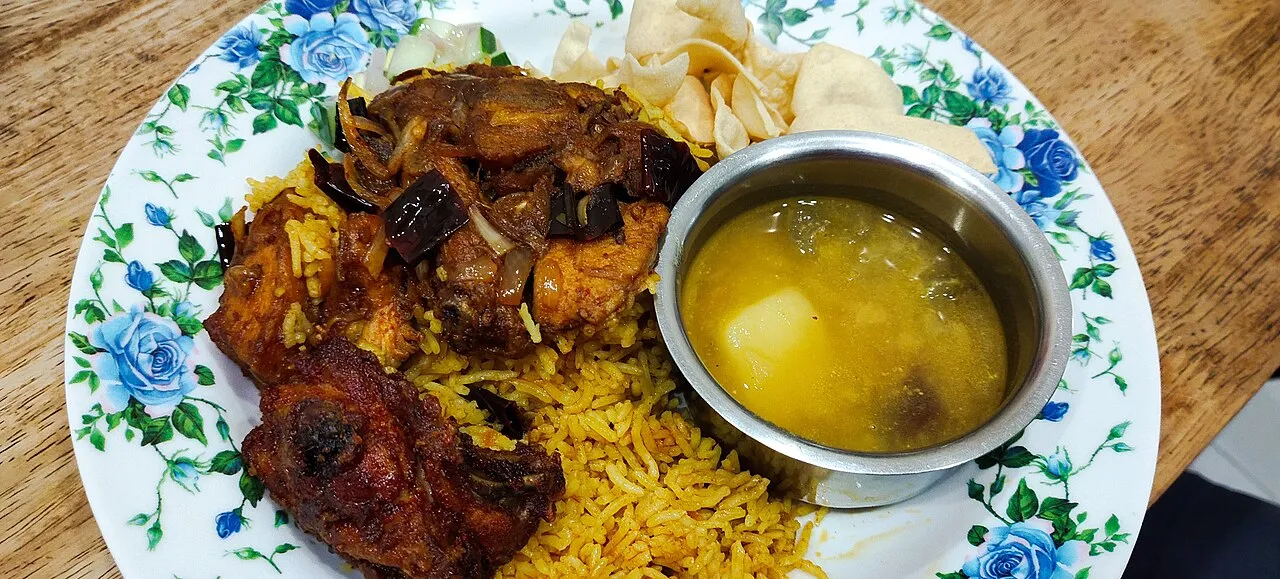
There is also a side dish made for it. Kapadia records a buryani, a separate dish of fatty meat pressure-cooked with bottle gourd, cucumber, brinjal or ridge gourd, which she says is meant to be eaten with a biryani or rice pulao. She took it from Meherbai Jamshedji Wadia's cookbook Vividh Vani and notes that the book does not explain the name.
Where can you eat Parsi biryani in Mumbai?
The same Free Press Journal guide named Stadium Restaurant near Churchgate for its biryani, made with mutton, chicken, egg or vegetables, and listed biryani among the regular staples at Britannia & Company in Ballard Estate. At Ideal Corner, the guide said, the menu rotates and different dishes are served on different days, so biryani dal will not be on every day. Menus change, and that guide is several years old, so call ahead before you make the trip.
Frequently asked questions
Is Parsi biryani the same as murghi no palau?
Usually, yes. Cookbook author Niloufer Mavalvala titles her recipe "Murghi no Palau | Chicken Biryani" and writes that Parsis still call these dishes palau while cooking them as biryani. Dawn's 2026 feature on her recipe also says Parsis call the dish murghi no palau, so for most families the two names point to the same pot of chicken and rice.
Why do Parsis put potatoes in biryani?
Because the Parsi version is expected to have them. Niloufer Mavalvala calls potatoes a must and "a deal breaker", and compares the habit with Kolkata biryani. No source we found explains how the custom began. Cooks either fry small potato pieces separately, as Rita Kapadia does, or cook them with the chicken, as Mavalvala does.
Is Parsi chicken biryani spicy?
It is warm rather than fiery. Dawn describes Niloufer Mavalvala's cooking as spicy but not hot, and her chicken biryani balances red chilli powder and one green chilli with a full cup of yoghurt. She tells cooks to make the dish their own, so adjust the chilli to taste.
What do Parsis eat with biryani?
Dal is the usual partner. Rita Kapadia serves her biryani with dhansak masala dal, and Shelley Subawalla pairs hers with masala dal and kachumbar. Mumbai's Ideal Corner has listed "Biryani Dal" as a must-have dish. Kapadia also records buryani, a side dish of fatty meat cooked with gourd or brinjal, meant to be eaten with biryani.
Why is Parsi biryani rice two colours?
Some home cooks divide the rice before layering and tint one portion with saffron. Shelley Subawalla colours half her rice yellow, while Rita Kapadia makes an orange saffron rice "like zarda" alongside plain white basmati. Both layer the two rices with the chicken, and Subawalla adds ghee between the layers. This gives the finished dish its bands of colour.


