 PalV's Kasti
On this page
- When did the Parsis settle in India, and what food did they bring?
- How did Gujarat change Parsi cooking?
- What did the coast and village life add?
- How did European trade bring bread into Parsi homes?
- What changed when the Parsis moved to Bombay?
- How has Parsi cooking changed in recent decades?
- Frequently asked questions
Parsi cuisine changed in layers after the Parsis settled in India. The Iranian base of meat, eggs, dried fruit and a sweet-sour taste stayed. In Gujarat the community took on the local language, swapped Iranian beans for Indian pulses and gained a taste for jaggery and tamarind, while the coast added fish and coconut. From the 17th century, European trade in Gujarat brought bread and bakeries. In 19th-century Bombay, English dishes were taken in and given spice. Today, smaller city households cook simpler versions of the long recipes. So the Parsi food on a table now is the sum of these stages, not a copy of anything cooked in Iran.
અસપંદામેદ રોજ
Asfandarmad Roj, Tir Mah · 1396 Y.Z.
When did the Parsis settle in India, and what food did they bring?
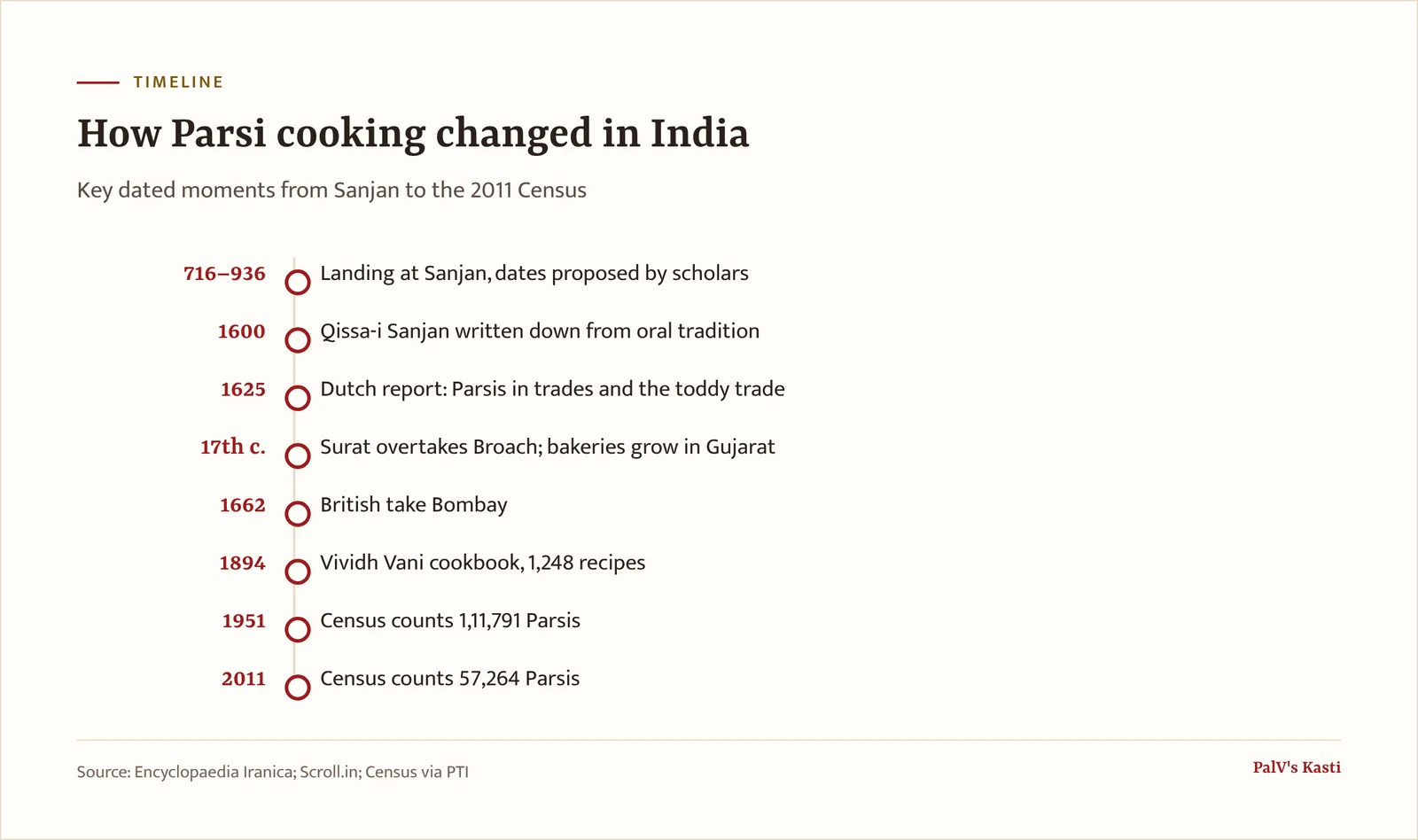
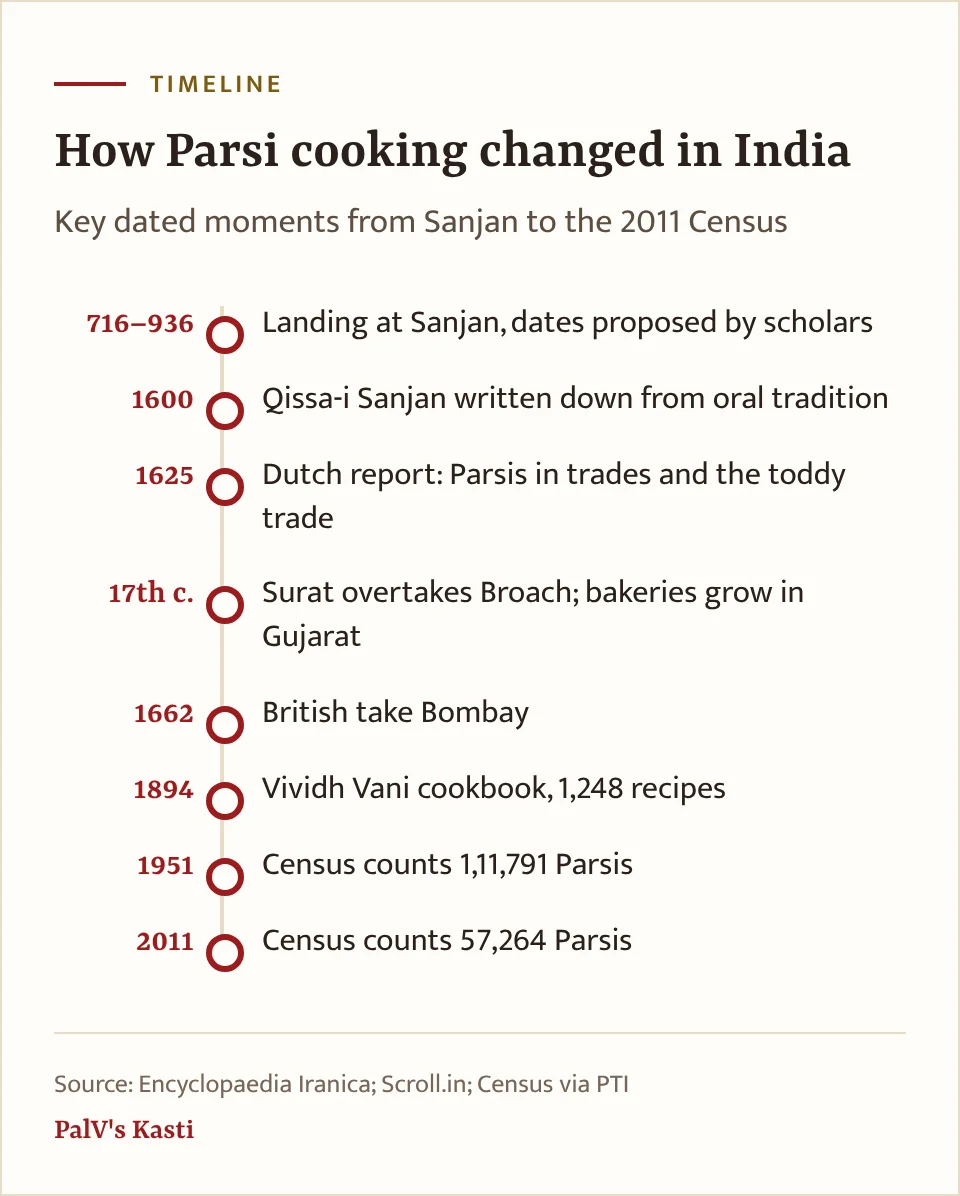
Nobody knows the exact year. The only account of the landing at Sanjan is the Qissa-i Sanjan, which, as Encyclopaedia Iranica points out, says it was written down in 1600 from oral tradition and uses round figures. Scholars have read it to give dates ranging from 716 CE to 936 CE. Sona Bahadur's book An Invitation to Feast settles on the 8th century. Be wary of any article that gives one confident year.
The settlers carried a way of eating more than a set of recipes. Writer Meher Mirza sums up that Iranian inheritance as a liking for meat, eggs, fresh and dried fruit, and sweet-sour flavours. For how that Iranian base formed in the first place, see our piece on Zoroastrian food and migration, and for the dishes it led to, our guide to Parsi food.
How did Gujarat change Parsi cooking?
According to the Qissa, as summarised by Iranica, the local ruler Jadi Rana asked the newcomers to use the local language and dress their women in local style. Mirza notes that Parsi saris are still draped the Gujarati way.
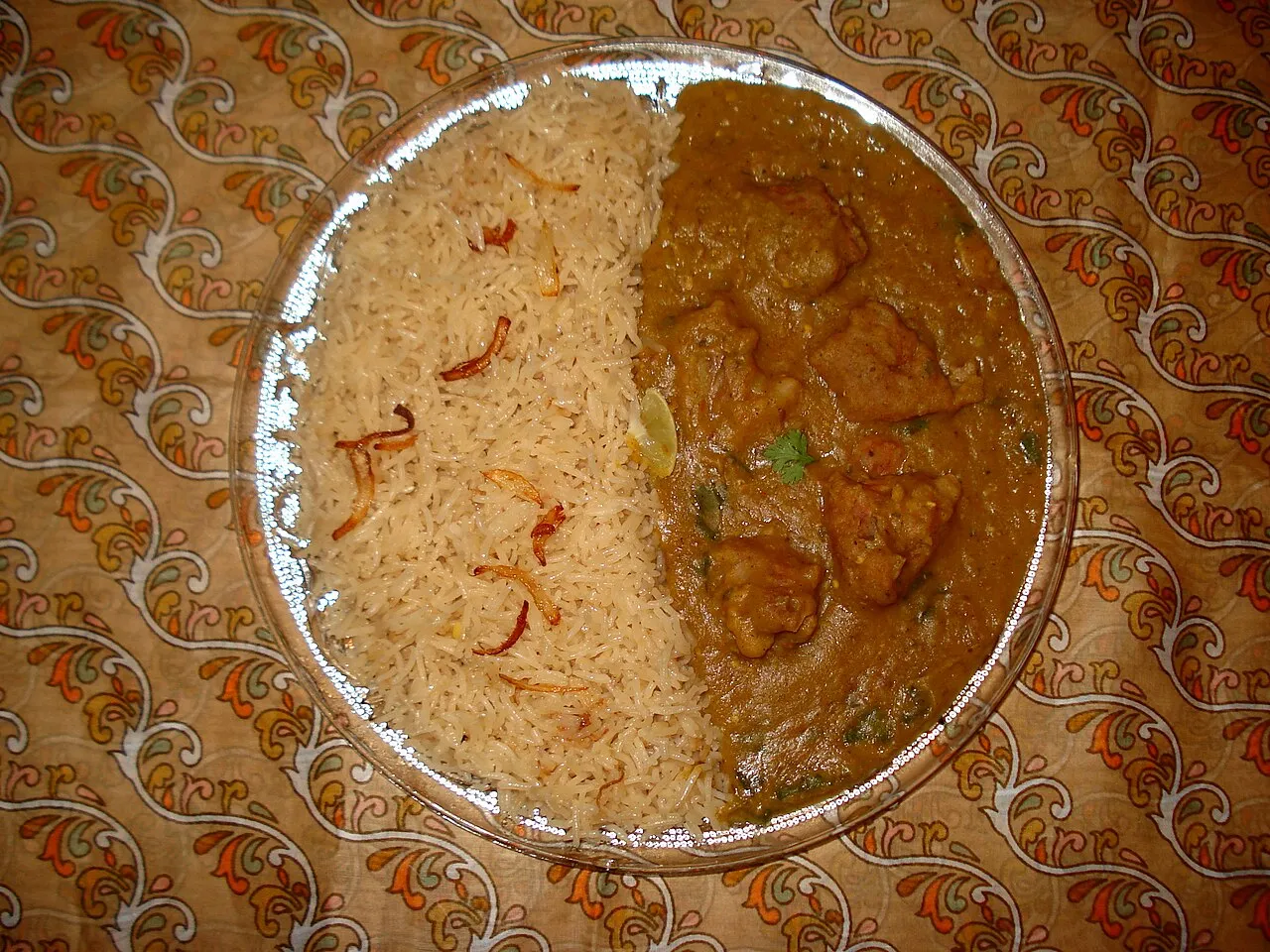
Dhansak is the clearest example of what happened in the kitchen. Niloufer Mavalvala, a cookbook author and food blogger, told Al Arabiya News that the Persian khoresh, a stew of lentils, greens and meat, turned into dhansak once the community reached India. The food historian K. T. Achaya, quoted by Bahadur, suggested that Indian pulses took the place of the beans and spinach used in Iran, and that the old dish used at least three dals and as many as nine. Historian Lizzie Collingham, quoted in Dawn, reads the tamarind and jaggery in dhansak as the mark of the Gujarati love of sweet and sour. Mirza calls this sour-sweet note the base of most Parsi dishes, often as vinegar softened with jaggery or sugar. Garlic, ginger and chillies came in from India too, writes Girinandini Singh for the Museum of Art & Photography.
Gujarati sweets were also adopted. Homegrown lists ravo, malido and doodh pak among the local sweets the Parsis took on. We go dish by dish through the Gujarati and wider Indian borrowings in Indian influences on Parsi food.
What did the coast and village life add?
Before Bombay, Parsi life was centred on the towns of Gujarat. Iranica traces the community's spread north from Sanjan to Broach, Navsari, Ankleshwar and Cambay. Mirza credits Gujarat's coast with the seafood and coconut in Parsi cooking, and gives kharo rus, a light gravy made with fresh coconut milk, as one example.
Toddy was part of that rural world. A Dutch report of 1625 described the Parsis as merchants, craftsmen and farmers, and above all as people in the toddy trade, according to Iranica. Mirza quotes the scholar J. J. Modi, who wrote that tari was as well known in Gujarat as the beer of Munich was in Europe. Toddy went into the cooking too. Iranica records that prohibition after Independence cost many Gujarati Parsis their toddy livelihoods, and Mirza describes the dishes built on toddy slowly disappearing as rural Parsis thin out.
How did European trade bring bread into Parsi homes?
Surat overtook Broach as the main Parsi trading base in the 17th century, Iranica says. Mirza points to the Dutch, Portuguese and English trading communities of that century as the force that made Gujarat a centre for bakeries, and quotes B. G. Gokhale: European ships needed bread, and that demand grew a baking trade in Broach. The Broach bakeries have since closed. In Surat, the Parsi-owned Dotivala bakery claims descent from the Dutch bakeries of that time, Mirza wrote in 2021.
What changed when the Parsis moved to Bombay?
The British took Bombay in 1662, but Iranica notes it only became western India's commercial capital in the 19th century. The silting of Surat's port pushed Parsi trade south, and after the Crown took over India's government in 1858 the pull of Bombay grew stronger.
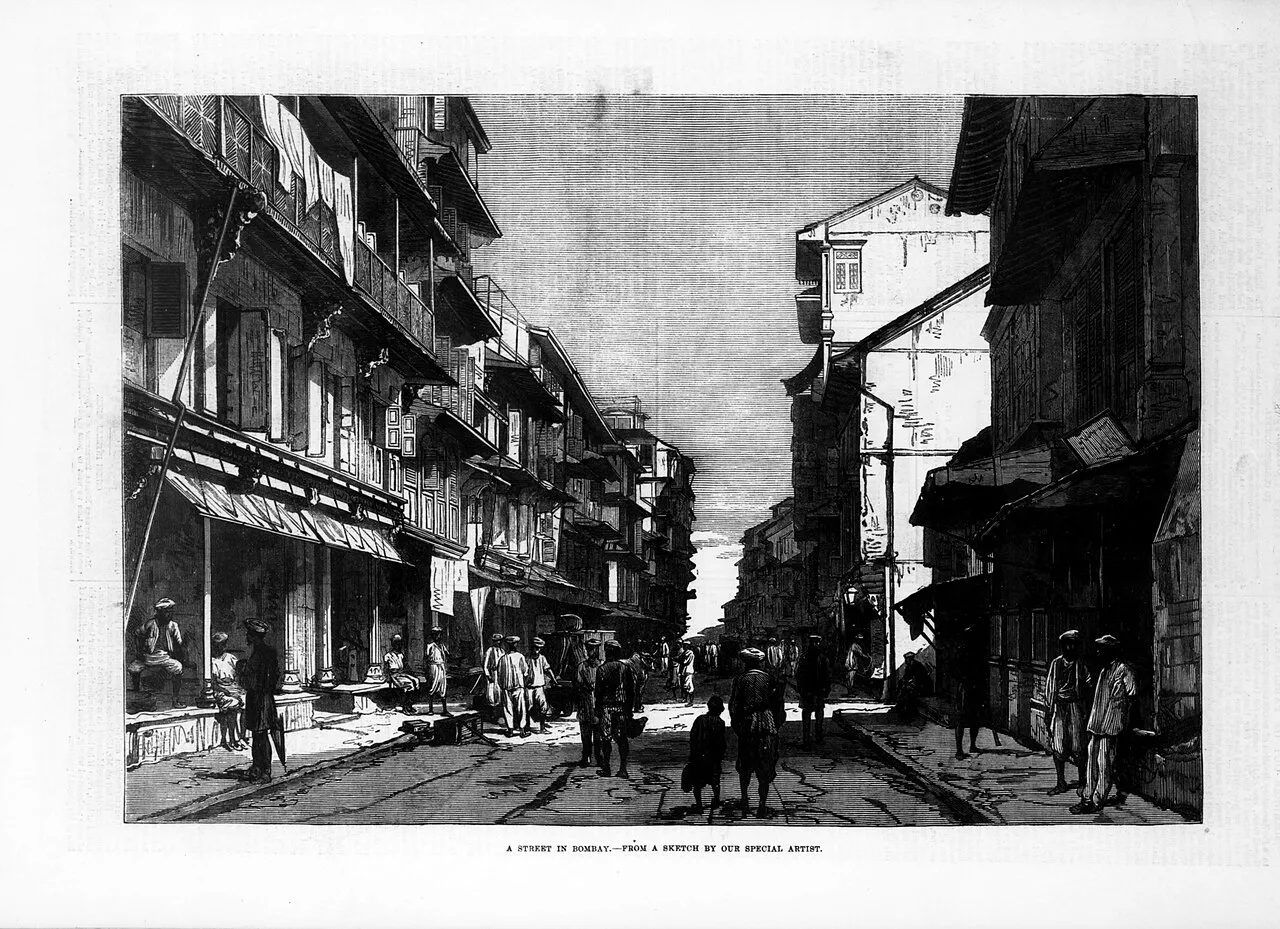
In the city, English dishes were taken up and given spice. Mirza writes that British influence sits behind Parsi baked custards, roast meats and egg-thickened sauces.
What does Vividh Vani tell us about the Bombay kitchen?
Meherbai Wadia's Gujarati cookbook Vividh Vani is a snapshot of that mixed kitchen. Historian Murali Ranganathan, writing in Scroll, dates the first edition to 9 August 1894 with 1,248 recipes, and the 1926 fourth edition to 2,180. Alongside akuri and patiyo it carried cakes, jams, tarts and creams, plus Goan, Bohri and Madrasi dishes, many worked out with cooks who had served in European homes.
How has Parsi cooking changed in recent decades?
The main change is less time and fewer hands. Bahadur notes that dhansak was once cooked over a wood fire with masalas ground at home. Today cooks use far fewer dals, leave out the tripe, and rely on blenders and pressure cookers. Mirza writes that many Parsis are now office-going city dwellers, and with fewer joint families there are fewer hands for slow dishes like malido, so Parsi-owned shops have started to meet the demand.
The community has also shrunk. India counted 1,11,791 Parsis in the 1951 Census and 57,264 in the 2011 Census, figures the Minister of State for Home Affairs gave the Lok Sabha in 2016. If you want to cook the classics the long way, start with our Parsi recipes.
Frequently asked questions
Is Parsi food the same as Persian food?
No. Parsi food keeps Iranian traces such as meat, eggs, fresh and dried fruit and a sweet-sour taste, but it grew up in India over many centuries. Indian pulses, Gujarati jaggery and tamarind, coastal fish and coconut, garlic, ginger and chillies, and British custards all shaped it. The result is an Indian cuisine with Iranian roots.
How did dhansak evolve from Persian food?
Cookbook author Niloufer Mavalvala links dhansak to the Persian khoresh, a stew of lentils, greens and meat. Food historian K. T. Achaya suggested that in India, local pulses replaced the beans and spinach used in Iran. Lizzie Collingham reads its tamarind and jaggery as a Gujarati sweet-sour touch. Modern cooks use far fewer dals than the old recipe did.
When did the Parsis arrive in India?
No one can name a single year. The Qissa-i Sanjan, the only account of the landing, was written down in 1600 from oral tradition and uses round figures. Scholars have read it to give dates from 716 CE to 936 CE, as Encyclopaedia Iranica sets out. Sona Bahadur's book places the landing in the 8th century.
How did bread and bakeries enter Parsi food?
Through 17th-century trade in Gujarat. Meher Mirza credits Dutch, Portuguese and English trading communities with making Gujarat a centre for bakeries, and quotes B. G. Gokhale saying European ships' demand for bread grew a baking trade in Broach. Surat's Parsi-owned Dotivala bakery claims descent from the Dutch bakeries of that period.
What is Vividh Vani?
It is a Gujarati cookbook by Meherbai Wadia. Historian Murali Ranganathan dates its first edition to 9 August 1894, with 1,248 recipes, growing to 2,180 by the 1926 edition. It mixed Parsi dishes such as akuri and patiyo with cakes, jams and tarts, and Goan, Bohri and Madrasi recipes.


